
Why Asking “What Do You Think?” Can Change the Way Children Learn
When a child asks why the moon follows the car, why a tower keeps falling, or whether a cardboard box could become a spaceship, adults have a choice.
We can give them the answer.
Or we can pause and ask, “What do you think?”
That small change can turn an ordinary moment into an opportunity for thinking. Instead of receiving information alone, children get to share an idea, make a prediction, explain their reasoning, and discover what happens when they test it.
Of course, children need direct answers, explanations, and guidance, too. The goal is not to turn every conversation into a quiz or make children work out everything independently. It is to recognize that their ideas are worth exploring, even when those ideas are incomplete or mistaken.
When adults ask thoughtful questions and genuinely listen to the answers, learning becomes more interactive. Children have opportunities to practice curiosity, communicate their thinking, and participate in the process of discovery.
What Happens When We Invite Children to Think?
Children learn through many experiences: observing, listening, experimenting, imitating, asking questions, and talking with other people. Open-ended questions can connect these experiences by encouraging children to explain what they notice and consider possibilities.
The National Association for the Education of Young Children (NAEYC) highlights how questions that invite children to analyze, evaluate, and create can support rich conversations, language development, and critical thinking.
Consider a child building a tower with blocks.
An adult could say, “Put the bigger blocks at the bottom.”
That instruction may be useful, particularly when a child is learning how to build. But another approach is to ask, “What do you think would happen if we put the biggest block on top?”
Now the child has a question to investigate. The tower might wobble or fall. The child can notice what happened, adjust the arrangement, and try again.
The learning comes not only from the final tower but also from the thinking and experimenting along the way.
1. Questions Encourage Curiosity
Curiosity often begins with noticing something that does not quite make sense.
Why does a shadow move? How can a bird stay on a branch? Why does one paper airplane travel farther than another?
When adults welcome these questions instead of rushing to close the conversation, children have more opportunities to explore what interests them.
Try responding with questions such as:
-
“What do you notice?”
-
“What are you wondering about?”
-
“What do you think might happen next?”
-
“How could we find out?”
You do not need to know every answer. Saying, “I'm not sure. Let's investigate together,” shows children that learning can begin with uncertainty.
This is especially valuable in everyday situations. Cooking, gardening, building, reading, and walking outdoors all offer things to notice and questions to explore.
Curiosity does not require a special lesson. Sometimes it simply needs an adult who is willing to stop and look a little longer.
2. Children Get to Practice Explaining Their Thinking
There is a difference between choosing an answer and explaining why that answer makes sense to you.
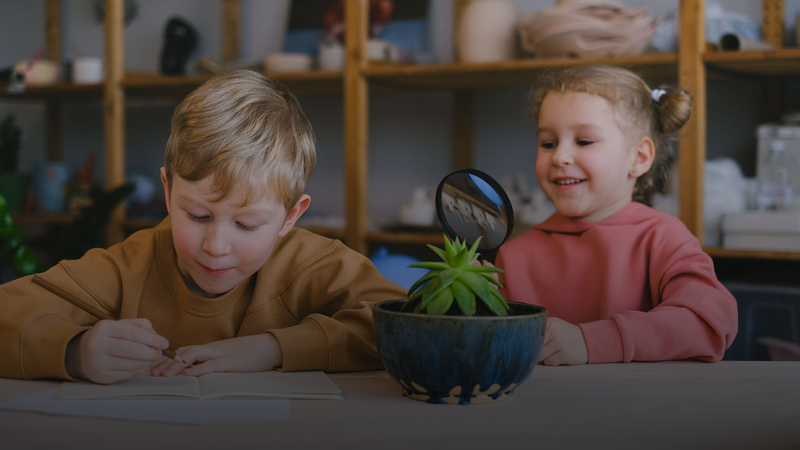
A child might say that a plant needs water because “it gets thirsty.” That explanation may be incomplete, but it gives an adult a starting point for a conversation about what plants need to grow.
You could ask, “What have you noticed about the plant when we water it?”
The child might remember that the leaves looked droopy before watering or that new leaves appeared over time. You can then introduce more accurate information about plants and help connect it to those observations.
The purpose is not to judge every response for correctness. It is to understand how the child is approaching the question and build from there.
Helpful prompts include:
-
“What made you think that?”
-
“Can you tell me a little more?”
-
“What did you notice that gave you that idea?”
-
“Could there be another explanation?”
For younger children, these conversations may be brief and supported by gestures, pictures, or demonstrations. Older children may be ready to compare explanations or explain their reasoning in more detail.
In both cases, the adult is helping the child put thoughts into words while making room for new information.
3. Questions Make Mistakes Part of Learning
Many children enjoy getting things right. Some may also become hesitant when they are unsure of an answer or worry about making a mistake.
The way adults respond can influence whether a child feels comfortable sharing an unfinished idea.
Imagine a child attempting a puzzle and insisting that a piece belongs in the wrong place. Rather than immediately correcting them, you might ask, “What makes you think it fits there?”
The child may rotate the piece, examine the picture, and notice that the colors do not match. They can revise their idea with a little time and support.
This does not mean adults should withhold help when a child is frustrated. Sometimes a hint, demonstration, or direct explanation is exactly what is needed.
The important distinction is between helping a child move forward and taking over every difficult moment.
You might say, “That piece doesn't seem to fit yet. What else could we try?” This communicates that an unsuccessful attempt is information, not a personal failure.
Children do not have to solve every problem alone to become capable thinkers. They need opportunities to try, receive support, and try again.
4. Open-Ended Questions Give Imagination Room to Grow
Some questions have a clear answer. Others invite many possibilities.
“What color is the ball?” may help a child identify a color. “What could this ball become in an imaginary story?” opens up a different kind of thinking.
Suddenly, the ball might be a planet, a magical egg, a treasure, or the center of a made-up game.
Open-ended questions are particularly useful during pretend play, drawing, storytelling, and building because they allow children to develop ideas without needing to follow a single predetermined outcome.
Try asking:
-
“What could we turn this box into?”
-
“Who might live in the world you're drawing?”
-
“What do you think happens after the story ends?”
-
“How else could we use these materials?”
-
“What would happen if your character made a different choice?”
You may be surprised by the directions a child's imagination takes. Resist the temptation to improve every idea or redirect it toward the result you had in mind.
Sometimes, the most useful contribution an adult can make is to become an interested audience.
5. Questions Help Children Make Connections
Learning becomes more meaningful when children can connect a new experience to something they already know.
After reading a story about a character who feels disappointed, for example, you could ask, “What do you think the character might do next?”
The child might suggest asking for help, trying again, or finding another solution. You can discuss how different choices might change the story.
Similarly, after building a bridge from blocks, ask, “Where else have you seen something that helps people cross a gap?”
A child may remember a bridge over a river, a walkway at a park, or a picture in a book. These connections help make learning part of a wider understanding of the world.
Questions can also help children reflect on their own experiences without turning every moment into a lesson.
After an activity, you might ask, “What was the trickiest part?” or “What would you like to try differently next time?”
If your child does not want to answer, that is fine. Reflection works best as an invitation, not a demand.
6. Being Asked for an Opinion Can Help Children Feel Heard
“What do you think?” is not only a learning question. It can also communicate that a child's perspective matters.
Children are often told what to do, what to wear, when to leave, and how to complete tasks. Necessary boundaries and adult decisions are part of family life. But children also benefit from appropriate opportunities to contribute ideas and preferences.
Ask which book they would like to read, how they might organize their toys, or what rules would make a family game fair.
Listen to their answers, even when you cannot follow every suggestion.
You might respond, “I understand why you want to stay longer. We still need to leave now, but would you like to choose the song for the drive?”
This acknowledges the child's perspective without pretending that every decision is negotiable.
When adults take children's ideas seriously, conversations become more reciprocal. That back-and-forth interaction also reflects the broader principle of “serve and return,” described by Harvard University's Center on the Developing Child: responsive exchanges between children and caring adults support early language, social development, and the foundations for later learning.
7. Everyday Ways to Ask Better Questions
You do not need to prepare a list of educational questions or turn family life into a classroom. Start with moments that already invite conversation.
During reading
Instead of asking only, “What happened in the story?” try, “Why do you think the character did that?” or “What would you have done?”
During building or drawing
Ask, “What are you trying to make?” or “What could help it stand up?” Follow the child's lead rather than evaluating the finished product.
During everyday problem-solving
If a child cannot find a missing toy, ask, “Where do you remember having it last?” Help them retrace their steps rather than immediately searching on their behalf.
During outdoor exploration
Ask, “What do you notice about these leaves?” or “How could we find out which object rolls farther?” Make observations together.
During family conversations
Try, “What was something you found interesting today?” or “Was there anything you would like to understand better?”
During imaginative play
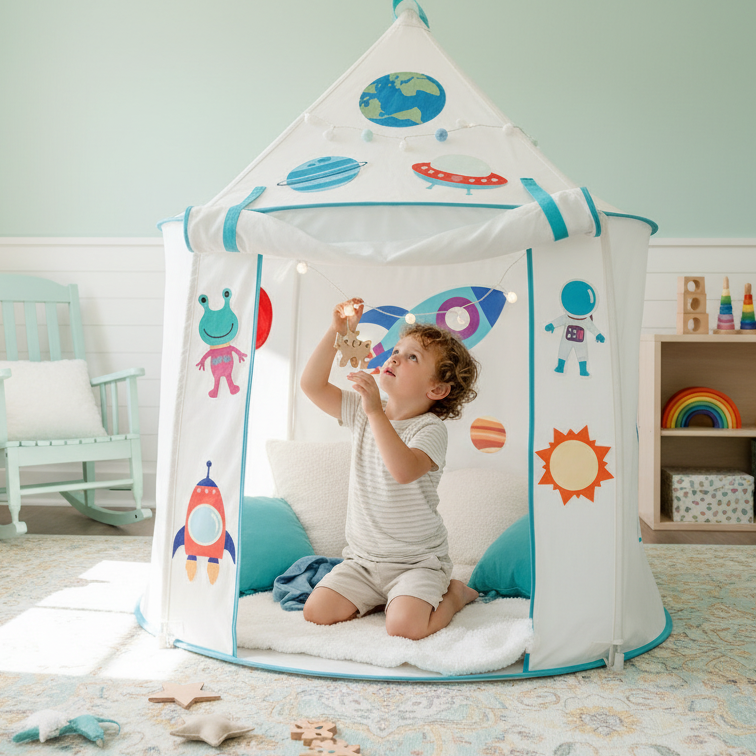
Families using ZeeZee Adventures can turn a familiar play space into a setting for open-ended questions: “Who do you think lives in this castle?” or “What might we discover on this space mission?” The changing story becomes an opportunity to listen to children's ideas and build on them.
Across all these situations, the aim is to create a conversation rather than test a child's knowledge.
How to Ask Without Making Children Feel Quizzed
Even a thoughtful question can feel uncomfortable if a child is asked to answer one after another.
A few simple habits can help.
Ask one question, then wait. Children may need time to organize their thoughts. Resist the urge to answer your own question immediately.
Follow the child's interest. If your child is fascinated by a tiny insect, explore that interest instead of redirecting them to the topic you planned.
Accept different kinds of answers. A child might explain an idea with words, drawings, gestures, demonstrations, or pretend play.
Offer support when needed. If a question feels too broad, narrow it gently: “Do you think the tower needs a wider base or a taller top?”
Share your own thinking. Say, “I wonder why that happened,” or “I used to think that too, but then I noticed something different.”
Know when to stop. If your child says “I don't know,” shrugs, or loses interest, you can offer an explanation, demonstrate the idea, or move on.
Children need opportunities to think independently, but they also need adults who provide information, encouragement, and appropriate guidance.
Frequently Asked Questions
Does asking questions make children smarter?
Questions alone do not guarantee better learning outcomes. Open-ended conversations can provide opportunities to practice language, reasoning, reflection, and problem-solving, especially when adults listen and respond to children's ideas.
What if my child always says, “I don't know”?
Try giving more time, offering two possible starting points, or exploring the question together. You can also say, “That's okay. We can think about it together.” Not every question needs an immediate answer.
What age should parents start asking open-ended questions?
Even babies participate in back-and-forth interaction through sounds, expressions, gestures, and attention. As children grow, adults can adapt their questions to their language and developmental abilities, gradually inviting more detailed explanations and possibilities.
Should parents correct wrong answers?
Yes, when accurate information matters—but correction can be respectful and collaborative. Ask what led to the idea, share what you know, and investigate together when possible. A child's mistaken explanation can be a useful starting point for learning.
How can parents encourage independent thinking without giving too much freedom?
Offer meaningful choices within clear boundaries. Children can suggest how to approach a task or choose between acceptable options while adults remain responsible for safety, important rules, and decisions that children are not ready to make.
The Question Is Only the Beginning
Asking “What do you think?” is a small change in language, but it can change the role a child plays in a conversation.
Instead of being only the person receiving an answer, the child becomes someone who notices, wonders, suggests, tests, and revises ideas.
That does not mean adults should stop teaching or explaining. Children need knowledge and guidance. They also need room to contribute their own thinking and discover how ideas develop.
The next time your child asks a question, pauses over a puzzle, or invents an unusual explanation, try leaving a little space for their response.
Ask what they think. Listen carefully. Explore the answer together.
Sometimes, the most valuable part of a learning moment is not the answer an adult gives, but the thinking that happens before it.



Comment (0)