
How to Create Family Rituals That Help Children Feel Secure
Some of the childhood memories that stay with us longest are surprisingly ordinary. A parent asking the same question at dinner every evening. A familiar story read before bed. A special handshake before school. A Saturday morning spent making pancakes together.
These moments may seem small, but they give family life a rhythm children can recognize and look forward to.
Family rituals help children experience connection in predictable, meaningful ways. They create opportunities to feel noticed, included, and close to the people they depend on. When life feels busy, unfamiliar, or difficult, familiar moments can offer a reassuring point of connection.
The best part? A family ritual does not require elaborate planning, expensive activities, or a perfectly organized household. It can begin with something your family already enjoys doing together.
What Are Family Rituals?
Family rituals are repeated activities that carry personal meaning for the people who share them. They may happen every day, once a week, or during special occasions.
A bedtime story, a family walk after dinner, a birthday breakfast tradition, or a particular way of saying goodbye can all become rituals.
It helps to distinguish rituals from routines.
Routines organize everyday life. Brushing teeth before bed, packing school bags, and eating breakfast at a regular time help children understand what happens next.
Rituals add a sense of connection or shared meaning. A bedtime routine might include washing up and putting on pajamas, while a bedtime ritual could be choosing a story together and ending with the same reassuring phrase.
The two often overlap. A predictable routine can become emotionally meaningful when it includes warmth, attention, and shared participation.
Research has associated family routines with children's social-emotional well-being and with aspects of family relationships. These findings describe associations rather than guarantees, but they offer a useful reason to make room for regular moments of connection.
Why Family Rituals Can Help Children Feel Secure
1. They make everyday life more predictable
Children spend much of childhood learning what to expect from the world around them. Changes in plans, unfamiliar environments, school transitions, and new responsibilities can sometimes feel overwhelming.
A familiar ritual gives children something recognizable within that uncertainty.
For example, a child who feels nervous before school might enjoy a short goodbye ritual: one hug, a special handshake, and a reminder that the parent will return at pickup time.
The ritual does not remove every worry. Instead, it provides a familiar sequence and a clear message of connection.
Predictability is particularly useful during transitions such as starting school, welcoming a new sibling, moving homes, or adjusting to a changed family schedule.
2. They create regular opportunities for connection
Children do not always announce when they need attention or reassurance. Sometimes they communicate through repeated questions, lingering at bedtime, or wanting to show a parent something they have made.
A small family ritual creates a dependable opportunity to be together without needing a special reason.
Consider a nightly question: “What was one thing that made you smile today?” A child might answer enthusiastically, shrug, or say nothing at all. The value lies in making conversation available, not requiring a particular response.
The American Academy of Pediatrics recommends meaningful family activities and communication as ways to strengthen family bonds. Shared reading, singing, meals, and conversations can all become opportunities to listen and connect.
3. They help children experience belonging
Rituals often carry a quiet message: You are part of this family. Your presence matters here.
That message might come from everyone taking turns choosing the weekend activity, letting a child stir the pancake batter, or celebrating each family member's small achievements at dinner.
Children can also help invent traditions. Perhaps your child creates a silly family greeting or decides that Friday evenings are for building something together.
When children have a voice in family traditions, they can experience themselves as contributors rather than simply participants following adult instructions.
4. They make room for feelings and conversations
A ritual does not have to be serious to be emotionally meaningful. A playful question during dinner or a quiet conversation during a walk can make it easier for children to share what is on their minds.
Try asking, “Was there anything difficult about today?” alongside questions about what went well.
If your child shares a disappointment, resist the urge to immediately correct, solve, or minimize it. You might say, “That sounds frustrating. Do you want to tell me more?”
Some days, children will talk freely. On others, they may prefer silence or play. A supportive ritual leaves room for both.
8 Simple Family Rituals You Can Start at Home
The most sustainable rituals are usually the ones that fit naturally into your family's existing life.
1. Create a personal goodbye
Before school or another separation, share a hug, a wave from the window, a special phrase, or a handshake.
Keep it short enough to work on busy mornings. For younger children, a consistent goodbye can make the transition more familiar. As children grow, invite them to change the ritual to suit their preferences.
2. Share one moment at dinner
If your family eats together, introduce one optional question:
-
What made you laugh today?
-
What is something you learned?
-
Did anything surprise you?
-
What would you like to do this weekend?
Adults should answer too. Children may feel more comfortable sharing when conversations are mutual rather than feeling like an interview.
If dinner schedules rarely align, try the same practice during breakfast or a short evening check-in.
3. Make bedtime a time for connection
A bedtime ritual might include choosing a story, talking about tomorrow, sharing a quiet cuddle if your child enjoys physical affection, or repeating a familiar goodnight phrase.
The order matters less than finding a sequence that feels comfortable and manageable.
For older children, a brief chat, listening to music together, or giving them uninterrupted time to talk may feel more appropriate than a storybook.
4. Protect a small pocket of child-led play
Set aside ten or fifteen minutes when your child chooses what to do and you join without directing every step.
You might build a blanket fort, invent a story, draw imaginary maps, arrange cushions into a mountain range, or simply follow your child's ideas.
The aim is not to produce something impressive. It is to share attention and let your child experience their interests being taken seriously.
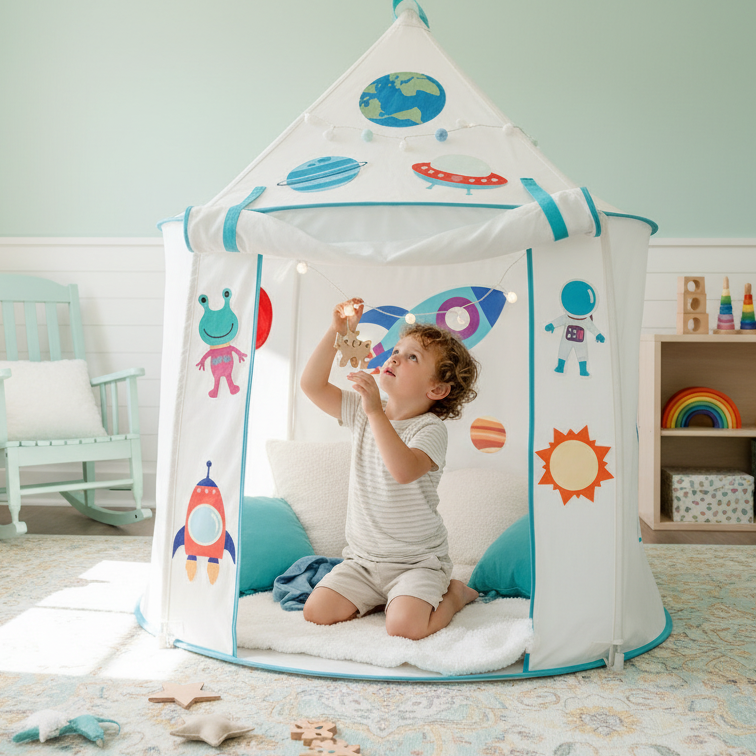
A familiar play space can help this ritual feel inviting. For example, families using ZeeZee Adventures can turn a play tent into a recurring setting for storytelling, pretend adventures, or quiet time, adapting the theme to match a child's changing interests.

5. Start a weekly family tradition
Choose something simple to repeat each week: a park walk, library visit, board game, homemade pizza night, or building challenge.
Let the activity reflect your family's interests, budget, energy, and schedule. A twenty-minute activity you enjoy together is more sustainable than an elaborate tradition that creates stress.
6. Make a small ritual for difficult days
Family rituals can be especially meaningful when a child has had a hard day.
You might offer a familiar snack, sit together quietly, take a short walk, or ask, “Would you like to talk, play, or have some quiet time first?”
This ritual should not force a child to explain their feelings. It simply communicates that connection remains available, even when the day has been difficult.
7. Celebrate ordinary milestones
Marking the end of a school week, the completion of a challenging project, or a family member's return home can create shared moments of recognition.
You do not need gifts or grand celebrations. A special song, a favorite meal, or a few minutes to share what everyone is proud of can be enough.
8. Create a family tradition around change
Rituals can help families acknowledge transitions instead of rushing past them.
Before the first day of school, you might choose a breakfast together. When a new sibling arrives, an older child could help select a book for the baby. Before a move, everyone could choose one memory to share about the old home.
These traditions do not have to make change easy. They provide a familiar way to approach something new together.
How to Make Family Rituals Stick
A ritual becomes useful when it fits real family life. Start with one small idea rather than introducing several new traditions at once.
Choose an existing moment. Attach the ritual to breakfast, the school run, dinner, or bedtime instead of creating an entirely new commitment.
Keep it simple. A ritual should not become another task that parents feel they are failing to complete.
Let children help shape it. Ask what they enjoy and whether they would like to add, change, or replace a tradition.
Focus on connection, not performance. The goal is not a perfectly executed routine or a picture-perfect family moment. It is an opportunity to be together.
Adapt as children grow. A preschooler may enjoy the same bedtime story every night. A teenager might prefer a weekly walk or an occasional breakfast outside the house. The form can change while the underlying connection remains.
Allow for missed days. Work deadlines, illness, travel, and unexpected events will interrupt family traditions. Missing a ritual does not erase its meaning. Simply return to it when you can.
What If Your Family Schedule Is Unpredictable?
Not every household has consistent work hours, shared mealtimes, or the ability to spend every evening together. Shift work, caregiving responsibilities, separated households, financial pressures, and changing schedules can make daily rituals difficult.
That does not mean your family cannot create meaningful traditions.
Choose rituals that can travel across schedules: a voice message before bed, a familiar phrase at drop-off, a shared song in the car, or a weekly activity when everyone is available.
If a parent travels, a short recorded story or a regular video call may help maintain a sense of connection. In co-parenting arrangements, similar comforting practices in both homes can be helpful when practical, while allowing each household to have its own traditions.
Consistency does not always mean the same time and place. Sometimes it means a familiar experience that returns whenever circumstances allow.
Common Mistakes to Avoid
Family rituals are intended to support connection, not create pressure.
-
Making the ritual too elaborate: If it requires extensive preparation, it may be hard to maintain.
-
Expecting every child to participate in the same way: One child may love group conversations, while another prefers listening or sharing privately.
-
Using rituals to demand emotional disclosure: Children should be able to pass on a question or choose not to talk.
-
Treating missed rituals as failure: Flexibility is part of a healthy family rhythm.
-
Keeping a tradition simply because it is familiar: If it no longer suits your family, change it together.
A meaningful ritual should feel like an invitation to connect, not an obligation to perform happiness or closeness.
How Play Can Become a Family Ritual
Play offers a flexible way to build shared family traditions because it can change with a child's interests.
Perhaps Sunday afternoons become storytelling time. A cardboard box becomes the starting point for a new invention every weekend. A familiar corner of the living room becomes the place where everyone draws, builds, or imagines together.
These experiences allow children to bring their own ideas into a shared activity. Parents do not have to control the story; they can participate, ask questions, and follow the child's lead.
For families who enjoy creating adaptable play environments, ZeeZee Adventures offers a way to revisit a familiar space while changing its imaginative possibilities. The wider lesson is simple: a family ritual can stay recognizable even when the activity, story, or setting evolves.
Frequently Asked Questions
At what age can children benefit from family rituals?
Families can introduce simple, repeated experiences from infancy onward, adapting them to a child's developmental stage. Babies may respond to familiar songs and soothing sequences; preschoolers may enjoy repeated stories; school-age children may help invent traditions; and teenagers may prefer flexible rituals that respect their independence.
How often should we have family rituals?
There is no universal frequency. Some rituals happen daily, such as a goodbye phrase, while others occur weekly or seasonally. Choose a rhythm that is realistic for your household.
Can family rituals help children through stressful changes?
Predictable routines and familiar rituals may offer continuity during transitions. They cannot remove every source of stress, but they can create opportunities for reassurance, conversation, and connection.
What if my child refuses to participate?
Avoid turning the ritual into a battle. Offer choices, shorten it, or try again later. Children may want to participate differently as their interests and need for independence change.
Do family rituals have to be unique or traditional?
No. A ritual can be as ordinary as a shared joke, a regular walk, or a phrase you say before leaving home. Its meaning comes from the connection your family builds around it.
Small Moments Can Become Lasting Memories
Children are unlikely to remember every meal, school run, or bedtime. But familiar moments of warmth and attention can become part of how they experience family life.
You do not need to create a perfect tradition or fill the calendar with special activities. Start with one moment that already belongs to your day. Make room for conversation, play, laughter, or quiet companionship. Let your child help shape what happens next.
Over time, these small rituals can become familiar reminders that they belong, that their presence matters, and that connection is something they can return to.
A family ritual does not have to be extraordinary to be meaningful. Sometimes, its greatest value is simply that it happens again—and that you are there together.





Comment (0)