

15 Everyday Moments That Help Children Practice Empathy
Empathy rarely begins with a grand lesson about kindness. It often starts in the smallest moments of family life: noticing that someone is upset, wondering why a friend is disappointed, or deciding to help when nobody has asked.
Children aren't born knowing exactly how other people feel. They gradually develop the ability to notice emotions, consider different perspectives, and respond with care. Parents can support this process through ordinary conversations, shared experiences, and opportunities to practise kindness.
The best part? You don't need a special activity or a complicated parenting strategy. Everyday life offers plenty of opportunities to help children understand others.
1. When Someone in the Family Has Had a Difficult Day
Imagine coming home tired after a long day. Your child notices that you're quieter than usual and asks what's wrong.
You might say, “I've had a busy day, so I'm feeling a little tired. I'm going to sit down for a few minutes.”
This helps children notice that other people have feelings and experiences of their own. It also shows them that emotions can be communicated without blaming anyone.
Keep the explanation age-appropriate. Children don't need to carry adult worries; they simply need opportunities to understand that people sometimes have difficult days.
2. When a Sibling Feels Left Out
Sibling disagreements are common, especially when children want the same toy, game, or attention.
Rather than immediately deciding who is right, help each child explain their perspective.
“You wanted to play together, and you felt left out when your brother walked away. Let's hear what happened for him, too.”
This encourages children to consider more than one point of view without forcing them to agree.
The goal isn't to eliminate every disagreement. It's to help children practise listening, explaining, and finding ways forward.
3. When a Friend Loses a Game
Winning and losing can bring out strong emotions. When a child wins, they have an opportunity to notice how the other person feels.
You might ask, “How do you think your friend felt when the game ended?”
Avoid insisting that your child must feel guilty for winning. Instead, help them recognize that another person can feel disappointed even when they themselves are happy.
They might offer to play again, congratulate their friend, or simply give them a moment.
Empathy doesn't require giving up your own happiness. It means making room for someone else's experience, too.
4. When Someone Makes a Mistake
A spilled drink, a broken crayon, or a forgotten item can quickly become an opportunity for blame.
Try modelling a more constructive response.
“Accidents happen. Let's see what we can do to help.”
Children learn from how adults respond when things go wrong. When they see mistakes met with patience rather than ridicule, they have an example of how to treat others who make mistakes.
You can still involve children in cleaning up or fixing what happened. Kindness and responsibility can go together.
5. When Reading a Story Together
Books offer a natural way to explore feelings from someone else's perspective.
Pause when a character feels disappointed, frightened, excited, or misunderstood. Ask questions such as:
-
“What do you think this character might be feeling?”
-
“Why do you think they did that?”
-
“What else could the character try?”
-
“Would you have felt differently?”
There isn't always one correct answer. Let children interpret the story in their own way.
Stories give children room to consider experiences beyond their own without having to navigate those situations personally.
6. When a Child Sees Someone Crying
A child may notice a crying friend, a sad character on television, or someone who looks upset in a public place.
Instead of immediately telling them to cheer the person up, help them think about what a caring response could look like.
“Maybe they're having a difficult moment. What are some ways we could be kind?”
Possible responses include asking whether the person needs help, offering a comforting word, or giving them space.
Explain that not everyone wants the same kind of comfort. Empathy involves noticing others, but it also means respecting their preferences and boundaries.
7. When Playing With Stuffed Animals or Pretend Characters
Pretend play allows children to explore different roles and situations.
A stuffed animal might be afraid of the dark. A toy character might lose something important or feel left out of a game.
You can join the story without deciding how it must end.
“What do you think the little bear needs?”
“What could the other characters do?”
“Would the bear want help, or would it prefer a little space?”
These questions encourage children to imagine what another character might be experiencing.
The story doesn't need to mirror a real-life situation. The opportunity to consider different perspectives is valuable in itself.
8. When a Child Is Frustrated With a Younger Child
Older children sometimes become impatient when younger siblings interrupt games, struggle with simple tasks, or don't follow the rules.
Rather than demanding that the older child always be patient, acknowledge both children's needs.
“You wanted to finish your game, and your little sister wanted to join you. How could we make room for both?”
Possible solutions might include taking turns, choosing a different activity, or agreeing that some toys are for individual play.
Empathy doesn't mean children must always share or sacrifice their own needs. It means learning to consider others while communicating their own boundaries.
9. When Helping With Everyday Household Tasks
Preparing a meal, tidying a room, or putting away groceries can help children notice how people contribute to a shared household.
You might say, “When we put these things away together, it makes the kitchen easier for everyone to use.”
As children grow, they can begin noticing when someone needs assistance without being asked every time.
Keep responsibilities age-appropriate. The aim isn't to make children responsible for managing adult emotions or household stress. It's to help them understand cooperation and shared responsibility.
10. When Someone Has Different Preferences
One child may love loud games, while another prefers drawing quietly. A friend might dislike a food that everyone else enjoys. A sibling may want to play a different game.
These differences create opportunities to discuss perspective.
“Your friend enjoys a different kind of game. What could you play together that both of you might enjoy?”
Children learn that other people can have preferences that differ from their own without either person being wrong.
This also helps them understand that kindness doesn't mean everyone has to like the same things.
11. When Deciding What to Do as a Family
Family decisions can provide simple opportunities to practise listening.
When choosing a game, a weekend activity, or a story to read, invite everyone to share an idea.
Ask, “What would make this enjoyable for everyone?”
Not every decision can satisfy every preference. Sometimes a family takes turns choosing; other times, an adult needs to make the final decision.
What matters is showing children that listening to other perspectives is worthwhile, even when the final outcome isn't exactly what everyone wanted.
12. When Caring for Plants or Animals
Caring for a plant or observing an animal can help children practise noticing needs beyond their own.
A child might help water a plant, refill a pet's water bowl with adult supervision, or observe how an animal responds to noise and movement.
You can ask, “What does the plant need to grow?” or “How can we tell whether the dog wants to be petted?”
With animals, emphasize safety and respect. Children should learn to give animals space, recognize that animals may not want interaction, and follow an adult's guidance.
These experiences encourage observation, patience, and respect for living things.
13. When a Child Sees Someone Being Excluded
Exclusion can be difficult to navigate, particularly when children want to fit in with a group.
If your child describes someone being left out, listen before telling them exactly what they should have done.
Ask, “How do you think that child might have felt?” and “What could someone do to make the situation kinder?”
Depending on the situation, a child might invite the person to join, check in with them privately, or ask an adult for help.
It's important not to make one child responsible for fixing every social problem. Empathy can include recognizing when adult support is needed.
14. When Apologizing After a Hurtful Moment
A forced “sorry” doesn't necessarily mean a child understands the impact of their behavior.
When everyone is ready, help the child reflect on what happened.
“What happened when you grabbed the toy?”
“How do you think your friend experienced that?”
“What could you do to help make things right?”
A meaningful repair might involve returning the toy, checking whether the other child is okay, or practising a different way to ask for a turn.
An apology can be part of repair, but it shouldn't be treated as a magic word that instantly resolves every hurt.
Children learn empathy by considering the impact of their actions and taking appropriate steps to repair harm.
15. When You Talk About Your Own Mistakes
Parents are among the most important examples children have of how to treat other people.
When you interrupt someone, lose your patience, or make an unfair assumption, you can acknowledge it.
“I interrupted you earlier. I'm sorry. I should have listened before responding.”
This shows children that caring behavior isn't about being perfect. It's about noticing when something has gone wrong, taking responsibility, and trying to do better.
It also demonstrates that empathy applies to adults as well as children.
How to Encourage Empathy Without Forcing It
Children develop empathy at different rates, and they won't respond perfectly in every situation. A child may understand that a friend is sad but still struggle to share a favorite toy. Another may want to help but feel uncertain about what to say.
You can support the process by:
-
Modelling empathy: Let children see you listen, apologize, and consider other people's perspectives.
-
Asking open-ended questions: Invite children to think rather than giving them a single expected answer.
-
Respecting boundaries: Don't force hugs, apologies, or emotional displays as proof of kindness.
-
Acknowledging their own feelings: Children can learn to care about others without ignoring their own needs.
-
Noticing thoughtful actions: Recognize specific moments of consideration, such as waiting for a turn or checking whether someone needs help.
Most importantly, avoid turning empathy into a test of whether a child is good or bad. The goal is to help them practise perspective-taking, compassion, and responsible behavior over time.
Where Everyday Play Fits In
Play creates many opportunities for children to explore how different characters think, feel, and respond. Building an imaginary world, inventing a story, or pretending to care for a character can invite children to consider perspectives beyond their own.
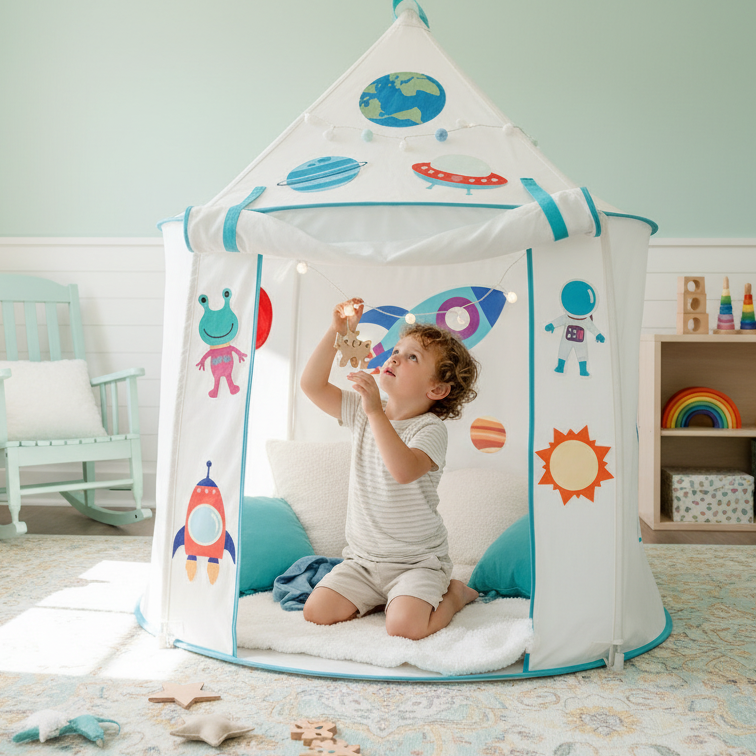
An adaptable play space can support this kind of exploration by giving children the freedom to change the setting and direct the story themselves. A tent might become a campsite where characters help one another, a castle with different roles, or a hideaway where a character needs comfort.
This is one of the ideas behind ZeeZee Adventures: a changeable play environment that leaves room for children's evolving interests and imaginative stories. The environment doesn't guarantee empathy, but it can provide another setting for open-ended play and storytelling.

Small Moments Can Make a Difference
Empathy isn't learned through one conversation or one carefully planned activity. It develops gradually through relationships, observation, practice, and opportunities to consider other people's experiences.
A story at bedtime, a sibling disagreement, an apology after a mistake, or a conversation about a friend's feelings can all become meaningful moments.
You don't need to explain everything or turn every interaction into a lesson.
Sometimes, the most useful question is simply:
“What do you think it might be like for them?”
Asked with curiosity rather than judgment, that question can open the door to a wider understanding of other people—one everyday moment at a time.
FAQs
1. How can I teach my child empathy in everyday life?
Model considerate behavior, talk about feelings in stories and daily situations, encourage listening, and help children think about how their actions affect others. Everyday interactions often provide natural opportunities to practise.
2. At what age do children begin developing empathy?
Children show early forms of social responsiveness in infancy, while understanding other people's perspectives and responding thoughtfully develop gradually throughout childhood. Development varies, and empathy becomes more complex with experience and support.
3. What are some simple empathy activities for children?
Reading stories, discussing characters' feelings, caring for plants or animals, resolving sibling disagreements, practising apologies, and inventing pretend-play scenarios can all create opportunities to explore empathy.
4. How can pretend play support empathy?
Pretend play lets children explore different roles and imagine what characters might think, feel, or need. It offers opportunities to consider different perspectives without requiring children to experience those situations themselves.
5. Should I make my child share to teach empathy?
Not necessarily. Forced sharing doesn't automatically teach empathy. You can help children practise taking turns, recognizing others' needs, and communicating boundaries while respecting that some belongings or play activities may be personal.
6. How do I teach empathy when my child hurts someone's feelings?
First, make sure everyone is safe. When the situation has settled, help your child understand what happened, consider its impact, and choose an appropriate way to repair the harm. Focus on learning rather than shame.
7. Can children learn empathy by watching their parents?
Parents can model empathy by listening carefully, acknowledging feelings, respecting boundaries, apologizing when necessary, and treating others with consideration. Children have opportunities to learn from seeing these behaviors in everyday life.






Comment (0)