
50 Indoor Activities That Beat Screen Time: Easy, Creative Ideas for Kids
A child can have a room full of toys and still announce, “I’m bored,” five minutes after turning off the tablet.
That doesn't necessarily mean children need more entertainment. Often, they need something they can do, change, imagine, build, or turn into their own story.
The goal isn't to make every screen-free moment educational or perfectly productive. It is to create opportunities for play where children have some control over what happens next.
From blanket forts to treasure hunts, storytelling, sensory exploration, and living-room obstacle courses, here are 50 indoor activities for kids that can make screen-free time feel less like a restriction and more like an invitation.
Quick Answer: What Can Kids Do Instead of Screens?
Try rotating activities across five kinds of play:
-
Create — drawing, building, crafting, making.
-
Imagine — pretend play, storytelling, role-play.
-
Move — dancing, balancing, obstacle courses.
-
Explore — sensory activities, sorting, experimenting.
-
Connect — games, conversations, reading, collaborative play.
The key is variety without turning your home into an activity factory. Children don't need a new parent-directed activity every hour. An open-ended setup can sometimes be enough for them to take the lead.
1. Create: Activities That Give Children Something to Make
Creative activities are especially useful when you want to move away from passive entertainment without replacing it with another highly structured task.
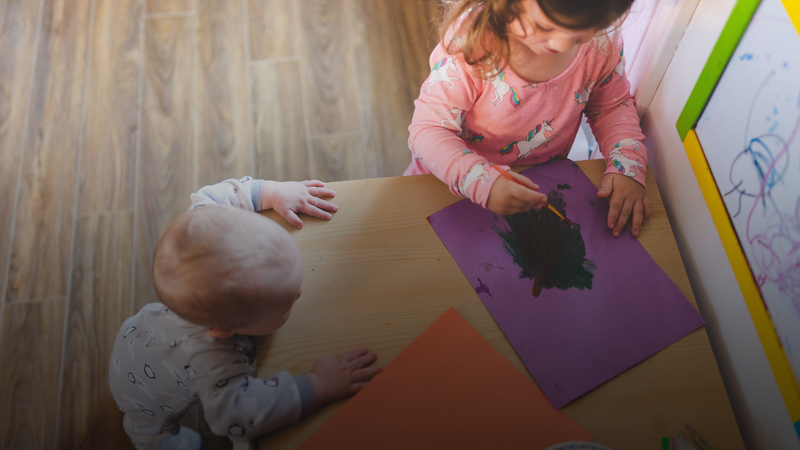
1. Draw a New World
Give your child paper and crayons and ask them to invent a place that doesn't exist. Is it underwater? On another planet? Inside a cloud?
2. Build a Cardboard City
Save a few boxes and let children turn them into houses, shops, garages, or castles. Don't worry about making it look perfect.
3. Make a Paper Crown
A simple strip of paper can become a royal crown, explorer's headpiece, wizard hat, or whatever the story requires.
4. Create a Collage
Use magazines, old wrapping paper, scraps, stickers, or safe craft materials to make a picture around a theme such as “My Dream House.”
5. Design a Flag
Ask your child to invent a flag for an imaginary country. Give the country a name and decide what each symbol means.
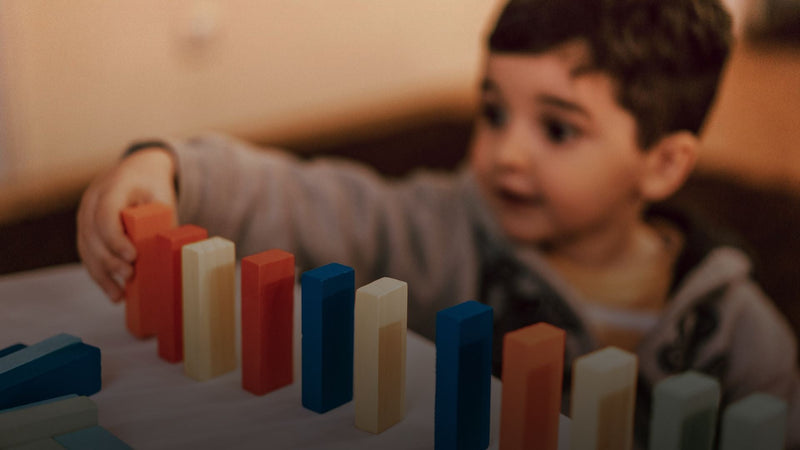
6. Build With Blocks
Instead of giving children instructions, offer a challenge: “Can you build something taller than this book?”
7. Make Sock Puppets
Old clean socks can become characters with paper eyes, yarn, or washable markers. Then let the characters have a conversation.
8. Create a Mini Museum
Ask your child to collect five interesting objects from around the house and arrange them into a museum. They can make labels and give you a tour.
9. Make a Homemade Puzzle
Draw a picture on cardboard, cut it into several large pieces, and mix them up.
10. Invent a New Toy
Ask: “If you could invent a toy nobody has ever seen before, what would it do?”
The idea matters more than the finished object.
2. Imagine: Turn Ordinary Spaces Into New Worlds
One of the most powerful things about children's play is that the environment doesn't have to stay what adults think it is.
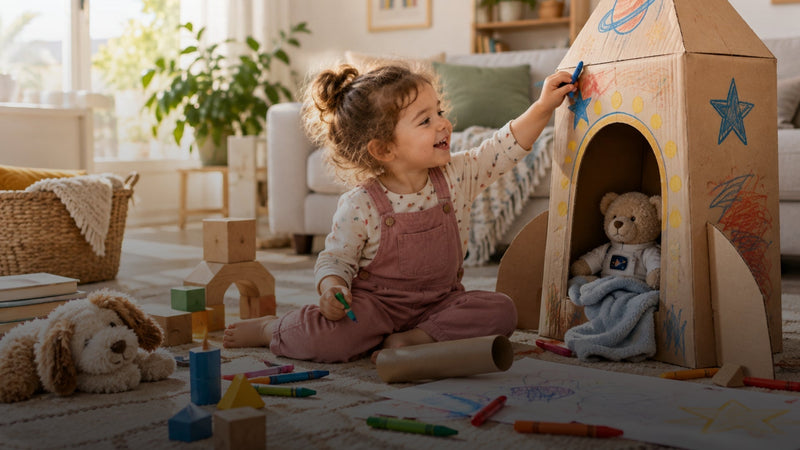
A blanket can become a cave. Cushions can become mountains. A cardboard box can become a spaceship.
Children don't simply consume their play environment. They reinterpret it.
11. Build a Blanket Fort
Use blankets, cushions, chairs, and sheets to create a hideaway. Add books or stuffed animals and let the fort become whatever your child imagines.
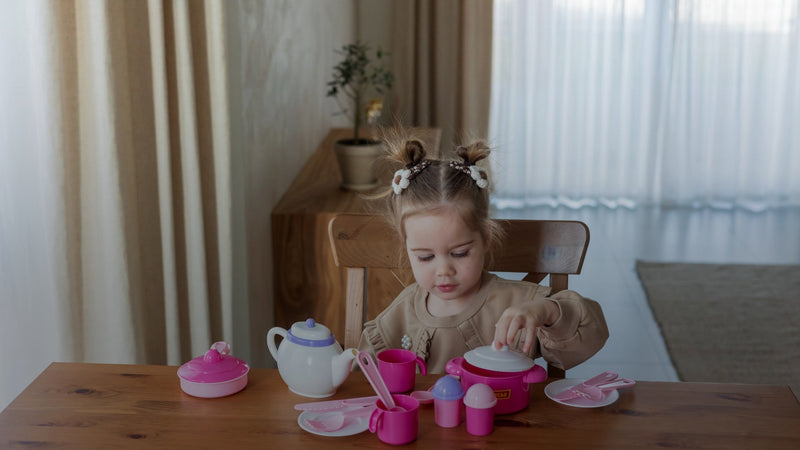
12. Pretend to Run a Restaurant
Your child can create a menu, take orders, prepare pretend food, and serve the family.
13. Open a Teddy Bear Hospital
Stuffed animals become patients. Your child becomes the doctor, nurse, receptionist, or veterinarian.
14. Go on a Space Mission
Turn a cardboard box or play area into a spaceship. Choose a destination and invent what happens when you arrive.
15. Create a Dinosaur Expedition
Hide toy dinosaurs around a room and give your child the job of finding and documenting them.
16. Have a Superhero Rescue Mission
Invent a simple problem that needs solving. Maybe a stuffed animal is trapped on “Mount Everest.”
17. Turn the Room Into a Jungle
Cushions become rocks, blankets become rivers, and stuffed animals become jungle creatures.
18. Put on a Puppet Show
Your child can make the characters, create a story, and perform it for the family.
19. Create a Magic Shop
Collect harmless household objects and pretend they are magical ingredients. Give each one an imaginary power.
20. Start a Story With Three Objects
Place three random objects together. Ask your child to invent a story that connects all three.
3. Move: Get Energy Out Without Leaving the House
Screen-free play doesn't have to mean sitting quietly at a table. Some children need movement before they can settle into quieter activities.
21. Make an Indoor Obstacle Course
Use cushions, painter's tape, tunnels, and safe furniture arrangements to create a simple course.
22. Have a Dance Party
Choose a few songs and let your child decide the movements.
23. Play Freeze Dance
Dance while the music plays. When it stops, freeze.
24. Walk Like an Animal
Can your child move like a penguin, bear, frog, crab, or elephant?
25. Create a Balance Path
Use tape on the floor to make lines, curves, and shapes children can carefully follow.
26. Balloon Volleyball
Keep a balloon in the air without letting it touch the floor. For younger children, simply batting it back and forth can be enough.
27. Indoor Scavenger Hunt
Give children clues such as “Find something soft” or “Find something that starts with B.”
28. Copy My Moves
Take turns being the leader. One person makes movements while everyone else copies.
29. Cushion Mountain
Create a safe collection of cushions to crawl around, over, and between.
30. Animal Race
Instead of running normally, race while moving like different animals.
4. Explore: Sensory and Discovery-Based Play
Sensory play doesn't have to involve elaborate bins or expensive materials. Children encounter sensory experiences constantly through touch, sound, movement, sight, and smell.
Choose materials appropriate for your child's age and supervise activities involving small objects, food, water, or anything that could be unsafe if swallowed.
31. Water Transfer Station
Give children cups, spoons, and containers and let them transfer water from one container to another. Use a tray to contain spills.
32. Texture Hunt
Find household objects that feel smooth, rough, soft, hard, fluffy, or cool.
33. Mystery Bag
Put familiar objects inside a bag. Let your child feel one without looking and guess what it is.
34. Sort a Collection
Sort buttons, blocks, toy animals, socks, or other safe objects by color, size, shape, or category.
35. Ice Rescue
Freeze a few waterproof toys in ice and let children explore ways to free them using age-appropriate tools and warm water.
36. Sound Detective
Close your eyes and identify sounds around the house. What can you hear from the kitchen? The window? Another room?
37. Make a Nature Tray
Collect safe leaves, pinecones, smooth stones, or other natural objects and examine them together.
38. Homemade Play Dough
Use child-safe play dough and invite children to create food, creatures, letters, or imaginary objects.
39. Smell-and-Guess
Using familiar, safe household foods, invite children to identify smells with their eyes closed.
40. Build a Discovery Table
Put a few interesting, age-appropriate objects together and let your child investigate them without a required outcome.
5. Connect: Activities That Bring Parents and Children Into the Same Story
Sometimes the best screen-free activity isn't another toy. It's an interaction.
41. Read a Book Somewhere Unusual
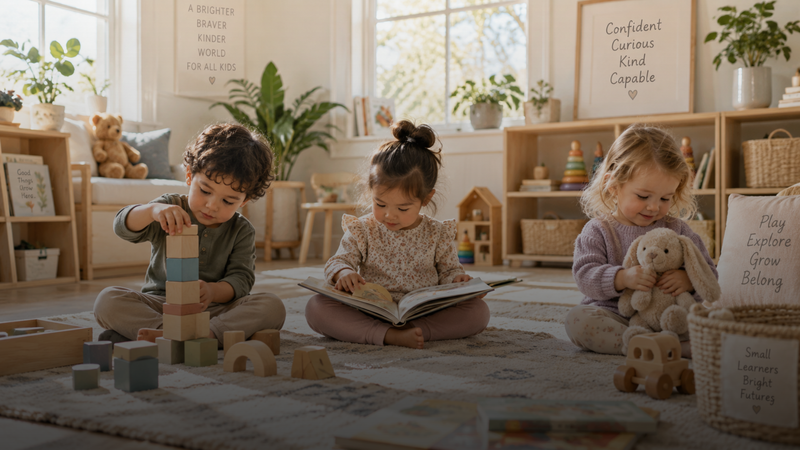
Read under a table, inside a fort, or in a cozy corner.
42. Make Up a Family Story
One person starts a story with a sentence. Each person adds the next part.
43. Play “Would You Rather?”
Keep questions playful: “Would you rather live in a castle or a spaceship?”
44. Have a Toy Interview
Choose a stuffed animal and ask it questions. Let your child answer in character.
45. Make a Family Restaurant
Work together to create a menu, prepare a simple snack, and pretend you're running a restaurant.
46. Play Hide-and-Seek
An old favorite can still work remarkably well.
47. Create a Family Quiz
Ask silly questions about family preferences, favorite foods, imaginary superpowers, or funny memories.
48. Look Through Family Photos
Ask your child what they remember or what they think happened before and after each picture.
49. Make a “When I Grow Up” Book
Draw pictures and write down your child's ideas about what they might like to do, build, explore, or learn.
50. Let Your Child Design the Day
Give them a few broad choices and let them decide the order: reading, building, drawing, fort time, or pretend play.
That final activity may be the most important one of all.
The ZeeZee CREATE Framework: A Simple Way to Choose an Activity
When you're staring at a child who says, “There's nothing to do,” you don't need to search for the perfect Pinterest activity.
Try CREATE:
C — Create something
Draw, build, craft, invent.
R — Role-play something
Become a chef, astronaut, doctor, explorer, or storyteller.
E — Explore something
Touch, sort, investigate, listen, compare.
A — Act and move
Dance, crawl, balance, race, stretch.
T — Tell a story
Make up characters, worlds, problems, and adventures.
E — Engage with someone
Read, talk, play a game, or create something together.
This is a ZeeZee educational framework, not a clinically validated developmental model. Its purpose is simply to give parents an easy mental menu when they need screen-free ideas.

How to Make Screen-Free Play Easier
You don't have to eliminate screens to make room for meaningful play.
Instead, consider making the alternative visible and easy to start.
Keep a small selection of creative materials accessible. Rotate toys instead of putting everything out at once. Create a comfortable place for books and quiet play. And resist the temptation to explain exactly how every activity should work.
Sometimes a child needs an invitation rather than an instruction.
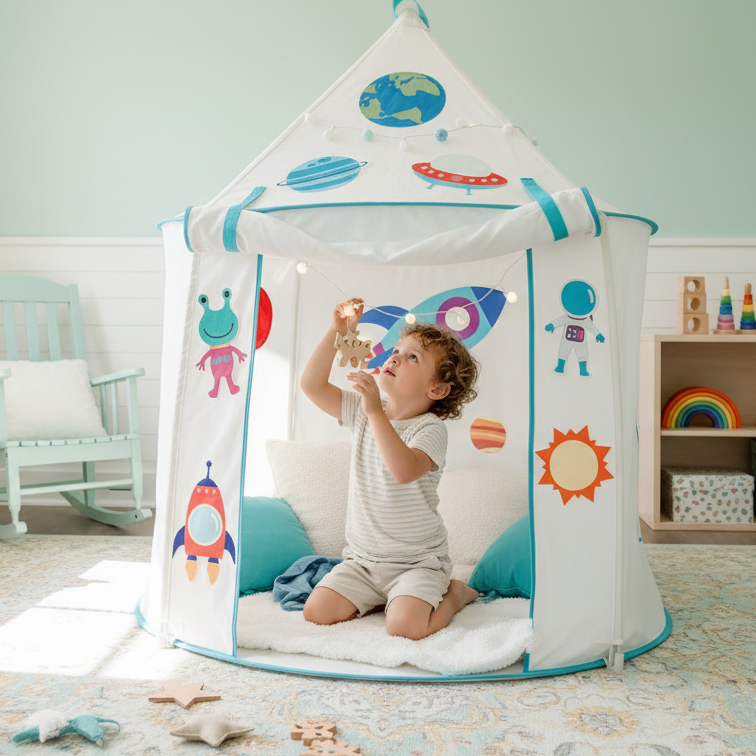
An adaptable play environment can help with that idea, too. The same physical space can become a reading nook one afternoon, a spaceship the next, and a pretend restaurant later in the week. ZeeZee Adventures takes this approach through a play environment with interchangeable StickeeZ themes, allowing children to change the setting as their interests and stories change.
The important part isn't the tent—or any particular toy. It's the possibility that the environment leaves room for the child to decide what happens next.
What If My Child Still Says, “I'm Bored”?
Let them.
Boredom isn't always a problem that needs immediate fixing. Sometimes it is the uncomfortable space between being entertained and figuring out what to do next.
You can offer a small prompt:
-
“What could you build?”
-
“Can you make up a game?”
-
“What could this box become?”
-
“Do you want to create, move, explore, or pretend?”
-
“I'll play with you for five minutes, then you can take it from there.”
And remember that children vary. One child may happily disappear into pretend play for an hour. Another may need an adult nearby before getting started. One may love messy sensory activities while another prefers books and quiet construction.
There is no single perfect screen-free routine.
The aim is simply to create more opportunities for children to choose, imagine, experiment, connect, and create.
That philosophy is central to ZeeZee Adventures, where the idea is to create an adaptable play environment that can evolve with a child's changing interests rather than locking play into one fixed story.
FAQ
What are some easy indoor activities for kids without screens?
Drawing, building forts, pretend restaurants, scavenger hunts, obstacle courses, storytelling, block building, puppet shows, sensory exploration, and reading are all easy options.
How do I keep my child entertained without a screen?
Instead of trying to constantly entertain your child, create accessible opportunities for them to create, imagine, move, explore, and connect. Open-ended materials often give children more freedom than activities with a single correct outcome.
What can I do when my child says they're bored?
Try offering a broad prompt rather than immediately suggesting a specific activity. Ask whether they want to create, move, explore, pretend, or tell a story. A little boredom can also give children space to generate their own ideas.
What are good indoor activities for toddlers?
Simple activities such as sorting safe objects, drawing, building with large blocks, dancing, reading, water transfer play with supervision, animal movement games, and pretend play can work well. Choose activities based on your child's age, interests, and safety needs.
How can I encourage independent play?
Start with something familiar and interesting, keep materials accessible, and avoid taking over the activity. Some children can play independently for longer periods than others, and many younger children need an adult nearby before gradually taking over the play themselves.
Are sensory activities good for all children?
Children have different sensory preferences. Some enjoy messy textures, water, and movement, while others prefer quieter or less tactile experiences. Offer choices rather than assuming every child will enjoy the same sensory activity.
Does screen-free play have to be educational?
No. Play doesn't need a learning objective to be worthwhile. Children can benefit from opportunities to imagine, experiment, move, connect, and create simply because they are playing.
How can I make screen-free play more interesting?
Try changing the environment rather than constantly buying new activities. A fort can become a spaceship, library, cave, shop, or theater. Changing the context can give familiar materials a completely different story.
Editorial note: The ZeeZee materials describe the brand around open-ended, screen-free, imaginative play and adaptable environments, including changeable themes and spaces for quiet play. I have kept those claims descriptive rather than presenting ZeeZee as a treatment or making guaranteed developmental claims.
Final Thought
The best screen-free activity isn't necessarily the one that keeps a child occupied the longest.
It may be the one that makes them forget they're being “occupied” at all.
A cardboard box becomes a rocket. A blanket becomes a cave. A cushion becomes a mountain. A quiet corner becomes a library.
And suddenly, there is no activity to complete.
There is a world to discover.
Explore more ideas for creating meaningful, imaginative play at home with ZeeZee Adventures.


Comment (0)