
Fun Toddler Activities That Encourage Creativity
Part 1: Simple Ways to Help Your Toddler's Imagination Grow
Creativity isn't about making perfect pictures or following instructions. For toddlers, it's about having the freedom to explore, experiment, and turn ordinary things into something completely their own.
What does creativity look like when you're two?
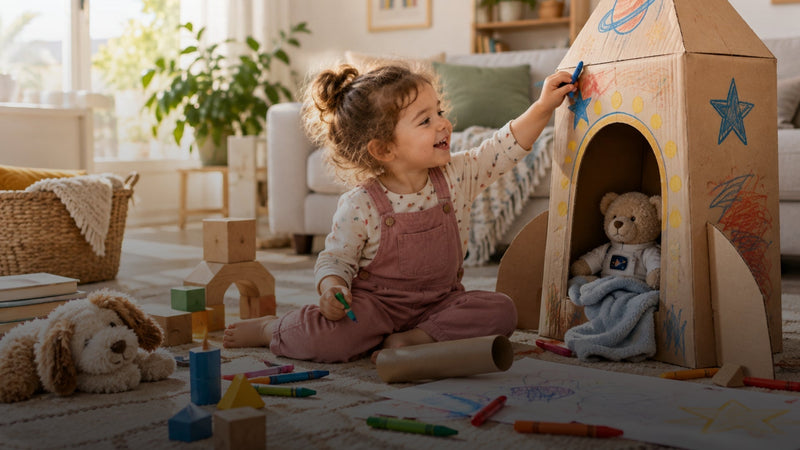
It might look like turning a cardboard box into a rocket.
It might sound like an invented song about a favourite teddy.
It might be a pile of cushions that suddenly becomes a mountain.
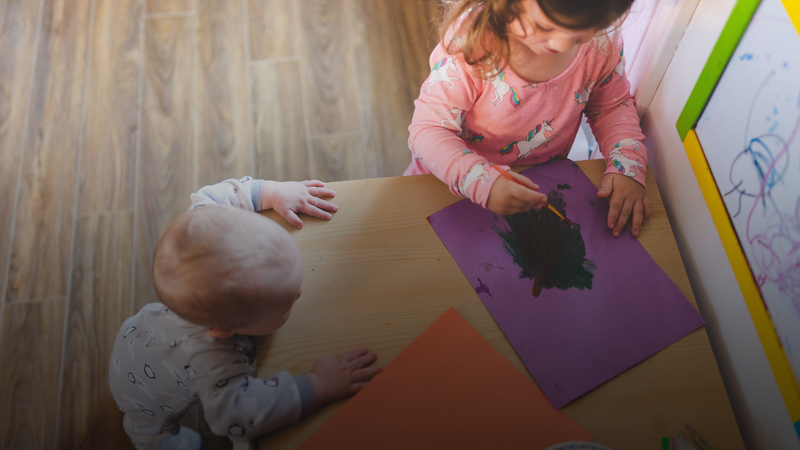
Or it might simply be a toddler covering a piece of paper with colourful marks and proudly announcing:
"Look what I made!"
For young children, creativity isn't about producing something that looks impressive.
It's about discovering possibilities.
And the good news for parents is that you don't need expensive craft kits, elaborate activities, or a dedicated art studio to encourage it.
You can start with what you already have.
What Does Creativity Mean for a Toddler?
When adults think about creativity, we often think about drawing, painting, music or crafts.
For toddlers, creativity is much broader.
It can involve:
-
Imagining something that isn't there.
-
Finding different ways to use an object.
-
Making up stories.
-
Experimenting with sounds.
-
Building and changing structures.
-
Choosing colours and materials.
-
Pretending to be someone else.
-
Creating games with their own rules.
-
Finding solutions to simple problems.
A toddler doesn't need to create something beautiful to be creative.
They simply need opportunities to make choices and explore possibilities.
Why Creativity Matters in Early Childhood
Creative play gives toddlers opportunities to practise more than artistic skills.
When a child decides how to build a tower, they are making decisions.
When they invent a pretend restaurant, they're using language and imagination.
When they experiment with paint, they're exploring cause and effect.
When they create a story for a soft toy, they're practising communication.
When they change their construction after it falls down, they're experimenting with problem-solving.
Creativity can therefore become part of many different kinds of learning.
The important thing is to allow children to participate actively rather than simply following instructions.
Creativity Isn't About Getting the "Right" Answer
Imagine giving your toddler some paper and asking them to draw a house.
You might expect:
A square.
A roof.
A door.
Maybe some windows.
Instead, your child draws a collection of circles and tells you it's a dinosaur family having breakfast.
What do you do?
Correct them?
Or listen?
The second option gives their imagination room.
Try asking:
"Tell me about your picture."
You might learn that the circles aren't circles at all.
They're planets.
Or pancakes.
Or dinosaur eggs.
The child has an idea.
Your job isn't always to replace it with yours.
Process Matters More Than the Finished Product
Toddlers don't need to produce something that can go on the fridge.
They need opportunities to explore.
A painting can be about mixing colours.
A tower can be about discovering balance.
A cardboard creation can be about experimenting with shapes.
A pretend game can be about creating a story.
The finished object may only exist for five minutes.
That's okay.
The learning happened during the process.
10 Fun Toddler Activities That Encourage Creativity
1. Turn a Cardboard Box Into Anything
Find a large, sturdy cardboard box.
Put it in a safe play area.
Then ask:
"What could this become?"
Don't offer the answer immediately.
Your toddler might turn it into a car.
A house.
A shop.
A boat.
A rocket.
Why it encourages creativity: The box has no fixed purpose, so your toddler has to decide what it could become.
2. Create a Homemade Storybook
Take a few sheets of paper and fold them into a simple book.
Let your toddler draw pictures on each page.
Ask them what is happening.
Write down their words.
Now you have a story created together.
Why it encourages creativity: Your toddler combines images, language and imagination to create something unique.
3. Make a Blanket Den
Use cushions and a blanket to create a simple den.
Then let your toddler decide what it is.
A house?
A cave?
A castle?
A secret base?
Why it encourages creativity: The same physical environment can become anything your toddler imagines.
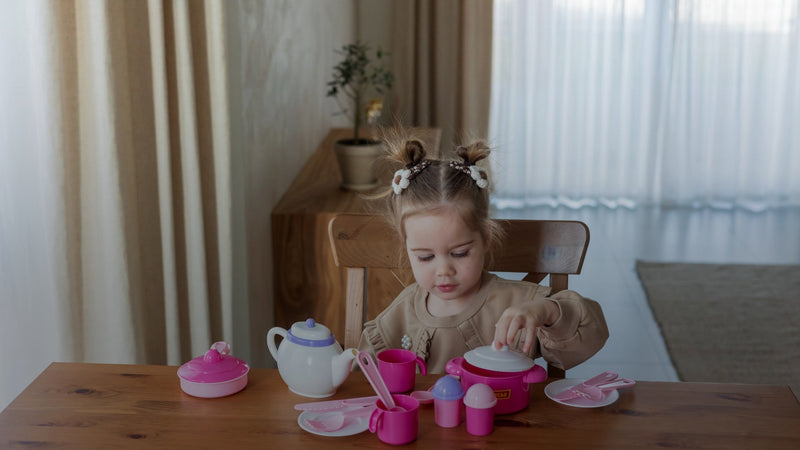
4. Invent a Pretend Restaurant
Use safe household objects as pretend plates, cups and cooking utensils.
Then ask:
"What's on the menu today?"
Let your toddler decide.
You might be served soup.
Cake.
Fruit.
Or something that doesn't exist anywhere except in their imagination.
Why it encourages creativity: Your child creates characters, scenarios and rules for the game.
5. Make Music With Safe Household Objects
A few suitable household objects can become a tiny orchestra.
Tap.
Shake.
Clap.
Create rhythms together.
Then let your toddler make their own sounds.
Why it encourages creativity: There isn't one correct rhythm or melody. Your child can experiment freely.
Always choose objects that are safe for your child's age and supervise the activity.
6. Colour Mixing
Give your toddler suitable washable paints in a few basic colours.
Let them explore what happens when colours meet.
Ask:
"I wonder what happens if we mix these?"
Rather than telling them what colour they should make, let them discover it.
Why it encourages creativity: Your child is experimenting, predicting and discovering through hands-on exploration.
7. Build Something With Blocks
Put out a small collection of age-appropriate building blocks.
Don't provide a picture to copy.
Simply invite your toddler to build.
A tower.
A bridge.
A house.
A strange creature.
Anything goes.
Why it encourages creativity: Open-ended construction allows children to make their own decisions and change their ideas as they go.
8. Make a Sock Puppet
A clean sock can become a character.
Give it a name.
Give it a voice.
Ask your toddler what the character likes.
Then let the story develop.
Why it encourages creativity: Pretend characters encourage storytelling, imagination and expressive language.
Avoid adding small decorations that could become choking hazards.
9. Create a Treasure Map
Draw a simple map together.
Add a few familiar landmarks.
A chair.
A table.
A basket.
Then hide a suitable object somewhere safe.
Let your toddler follow the map.
Why it encourages creativity: Your child combines drawing, imagination, movement and problem-solving.
10. The "What Could This Be?" Game
Choose an ordinary object.
A cardboard tube.
A wooden spoon.
A towel.
A box.
Ask:
"What else could this be?"
A cardboard tube could become a telescope.
A spoon could become a microphone.
A towel could become a superhero cape.
See how many possibilities your toddler can imagine.
Why it encourages creativity: The game encourages flexible thinking and helps children understand that one object can have many possibilities.
Let Your Toddler Make the Messy Choices
Creativity can sometimes be messy.
Paint gets on hands.
Paper gets torn.
Blocks fall over.
Blankets end up everywhere.
It can be tempting to keep activities tidy by controlling how your child uses the materials.
But creativity needs a little freedom.
That doesn't mean allowing unsafe behaviour or making your home impossible to manage.
It simply means deciding which boundaries actually matter.
If your toddler is drawing on paper rather than the wall, let them experiment.
If they're building something different from what you imagined, let them.
If they're mixing colours, don't worry about the "perfect" result.
Give them room to create.
Don't Demonstrate Too Much
Sometimes our helpfulness gets in the way.
We show our toddler exactly how to build the tower.
Exactly where to put the sticker.
Exactly how the picture should look.
Then we wonder why they aren't creating independently.
Try demonstrating only when necessary.
Instead of:
"Put this here."
try:
"What do you think we could do with this?"
Instead of:
"This is a house."
try:
"What is your box?"
Your child gets to provide the answer.
Ask Open-Ended Questions
The questions you ask can either close down creativity or open it up.
Questions with one obvious answer can limit the conversation.
Instead of:
"Is this a car?"
try:
"What is this?"
Instead of:
"Should the teddy go inside the box?"
try:
"Where should Teddy go?"
Instead of:
"What colour is the flower?"
try:
"Tell me about your flower."
These questions encourage your toddler to explain their thinking.
Creativity Doesn't Always Look Quiet
A creative toddler isn't necessarily sitting at a table with crayons.
They might be running around pretending to be a dinosaur.
They might be singing.
Dancing.
Building.
Talking to a soft toy.
Making strange noises.
Creating a game.
Moving cushions around.
All of these can involve creative thinking.
Creativity is not a personality type.
It's something children can express in many different ways.
Give Them Materials, Then Step Back
One of the most useful things a parent can provide is a combination of:
Materials + time + freedom.
Give your toddler some blocks.
Then step back.
Give them paper.
Then wait.
Give them a cardboard box.
Then see what happens.
You don't need to narrate every moment.
You don't need to constantly provide new ideas.
Sometimes children need a little space for their own ideas to appear.
Create a Simple Creativity Basket
You can make creative play easier by keeping a few materials together.
Your basket might include:
-
Paper
-
Cardboard
-
Large crayons
-
Washable drawing materials
-
Fabric pieces
-
Large cardboard tubes
-
Stickers suitable for your child's age
-
Safe household objects for pretend play
You don't need everything at once.
Keep the selection manageable.
Rotate materials when your toddler's interest changes.
Use Everyday Objects as Creative Prompts
You don't need specialist materials.
Look around your home.
A cardboard box can inspire construction.
A towel can inspire pretend play.
A wooden spoon can inspire music.
A basket can become a vehicle.
Paper can become a book.
Cushions can become an obstacle course or mountain.
Everyday objects are useful because they don't tell your toddler exactly what to do.
They leave room for interpretation.
Create a Space Where Creativity Can Grow
The environment matters.
Children are more likely to explore when materials are easy to access and the space feels comfortable.
You don't need a huge playroom.
A small corner can be enough.
A low shelf.
A basket of materials.
A few books.
A comfortable place to sit.
A small table for creative activities.
Or a dedicated play space.
The goal is to make creativity feel like something your child can return to whenever inspiration strikes.
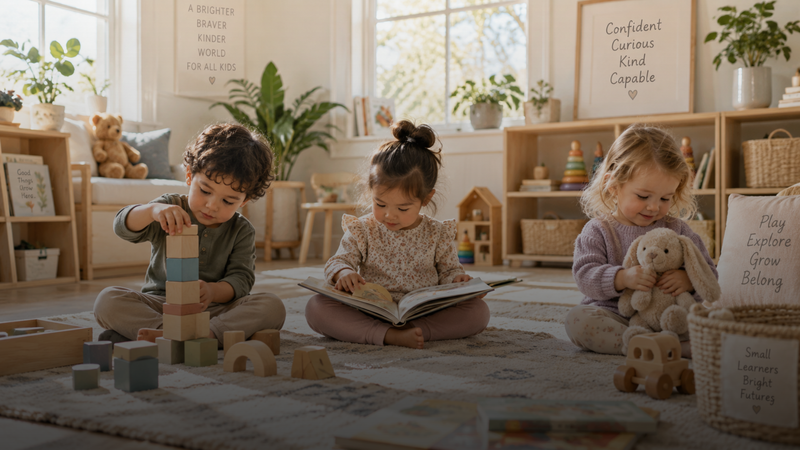
A Cosy Space for Imaginative Play
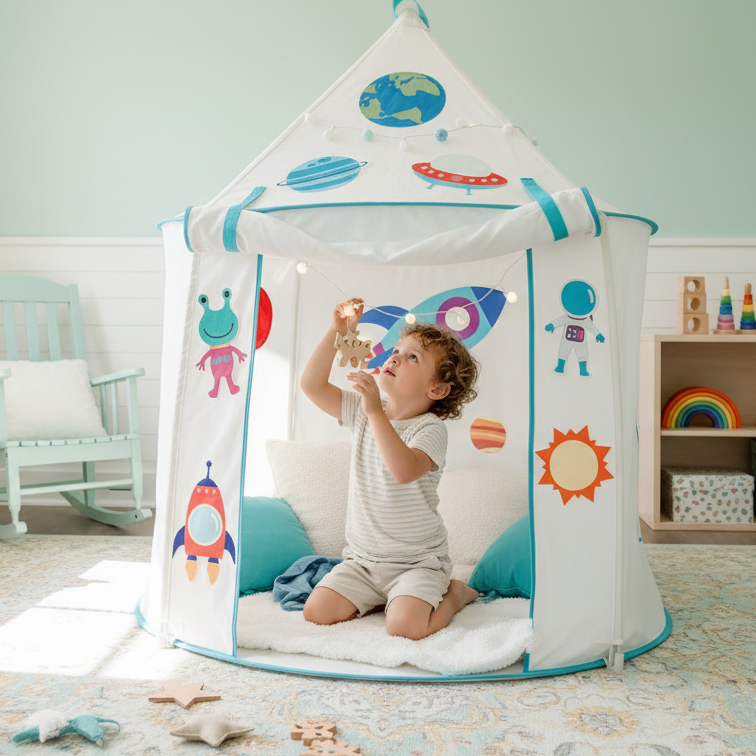
The ZeeZee Adventure Tent can become part of that environment.
It provides a cosy, sensory-friendly space where children can read, imagine and explore away from screens.
Bring in a few books.
Soft toys.
Blocks.
A creativity basket.
Homemade props.
Then allow your toddler to decide what happens.
With interchangeable StickeeZ themes, the familiar space can take on different imaginative identities.
A jungle.
A castle.
A space station.
A reading nook.
The environment provides a backdrop.
Your child's imagination provides the story.
A Final Reminder for Parents
You don't need to produce a creative genius.
You don't need to organise elaborate activities every day.
And you certainly don't need every piece of your child's artwork to look like something you could display in a gallery.
Creativity develops through ordinary moments.
A child asking:
"What if?"
A child trying something differently.
A child inventing a story.
A child turning a box into a spaceship.
A child deciding that a blue scribble is actually the ocean.
These moments matter.
So give your toddler materials.
Give them time.
Give them choices.
And most importantly, give them permission to make something that looks completely different from what you expected.
Because creativity isn't about getting the answer right.
It's about discovering that there can be more than one answer.
More Ways to Turn Everyday Play Into Creative Exploration
Creativity doesn't need a special occasion.
It doesn't require a perfectly organised craft table, expensive materials or an activity that takes an hour to prepare.
For toddlers, creativity often begins with something much simpler.
A question.
A sound.
A piece of cardboard.
A handful of crayons.
A blanket.
Or an ordinary object that suddenly becomes something completely different.
In Part 1, we explored what creativity means for toddlers and why giving children freedom to experiment is more valuable than focusing on the finished product.
Now let's go further with activities that encourage imagination, sensory exploration, storytelling, movement, and creative problem-solving.
Sensory Play Can Be Creative Too
Sensory play is often associated with touching and exploring different textures, but it can also become an opportunity for creative thinking.
Instead of telling your toddler exactly what to do with a material, give them something safe to explore and see where their curiosity takes them.
They might squeeze.
Pour.
Mix.
Arrange.
Move.
Or invent a completely new game.
The process is what matters.
11. Create a Texture Collage
Collect several larger, safe materials with different textures.
You might use pieces of suitable fabric, paper, or cardboard.
Let your toddler touch them and arrange them on a sheet of paper.
They can decide where each piece belongs.
Why it encourages creativity: Your toddler is making choices based on texture, appearance, and personal preference.
12. Make a Sound Collection
Choose a few safe household objects that produce different sounds.
Tap one.
Shake another.
Rub another.
Let your toddler experiment.
Ask:
"What sound does this make?"
Then let them create their own rhythm.
Why it encourages creativity: There is no single correct sound or rhythm. Your toddler can experiment freely.
Always supervise and avoid objects that could break or become choking hazards.
13. Water Painting
On a suitable outdoor surface, give your toddler a container with a small amount of water and a large, age-appropriate brush.
Let them "paint" the pavement, wall or another suitable surface.
The marks disappear as the water dries.
Then they can start again.
Why it encourages creativity: Your toddler gets to experiment without worrying about creating a permanent picture.
14. Ice Exploration
On a warm day, place a few pieces of ice in a suitable container.
Let your toddler explore what happens as the ice changes.
Talk about what they notice.
"It's cold."
"It's getting smaller."
"Where did the water come from?"
Why it encourages creativity: Sensory exploration can lead naturally to questions, predictions, and experimentation.
Supervise closely.
Storytelling Activities That Spark Imagination
You don't need to read a story from a book every time.
Sometimes, you can create one together.
15. Three-Object Story
Choose three familiar objects.
For example:
A soft toy.
A cardboard box.
A spoon.
Now create a story connecting them.
Perhaps the teddy needs to travel somewhere.
The box becomes a car.
The spoon becomes a microphone.
Ask your toddler:
"What happens next?"
Why it encourages creativity: Your child has to imagine connections between objects that don't naturally belong together.
16. Finish the Story
Start with a simple sentence:
"One morning, Teddy opened the door and saw..."
Then stop.
Let your toddler decide what Teddy saw.
A dinosaur?
A rainbow?
A spaceship?
Grandma?
There is no wrong answer.
Why it encourages creativity: Your child becomes part of the storytelling process rather than simply listening to a finished story.
17. Make a Story From a Drawing
Ask your toddler to draw anything they want.
Then ask:
"What's happening here?"
Let them explain.
You can write their words underneath the drawing.
Why it encourages creativity: It connects visual expression with language and storytelling.
18. Give a Toy a Voice
Choose a favourite soft toy.
Ask your toddler what it might say.
Then have a conversation.
You can speak as the toy.
Your toddler can answer.
Why it encourages creativity: Role-play encourages imagination, communication, and perspective-taking.
19. Storytelling With Household Objects
Put several safe objects in front of your toddler.
Don't explain how they should be used.
Ask them to choose one.
Then begin a story around it.
If they choose a cup:
"One day, a tiny explorer found a magical cup..."
See where they take it.
Why it encourages creativity: Your toddler is practising flexible thinking and imaginative storytelling.
Music and Movement
Creativity isn't always something children make with their hands.
Sometimes they create with their bodies.
20. Create a Dance
Put on music and let your toddler move however they want.
Then change the music.
Does the movement change?
Let them choose how.
Why it encourages creativity: There is no correct choreography. Your toddler gets to interpret the music.
21. Freeze Dance
Play music.
When it stops, freeze.
When it starts again, move.
Once your toddler understands the game, let them control when everyone freezes.
Why it encourages creativity: Your child gets to participate in creating the rules and directing the game.
22. Animal Dance
Choose an animal.
Move like it.
Then let your toddler choose the next animal.
A penguin.
An elephant.
A butterfly.
A dinosaur.
Why it encourages creativity: It combines movement, imagination, and imitation.
23. Make Your Own Rhythm
Use safe household objects as simple musical instruments.
Tap.
Clap.
Shake.
Pause.
Then let your toddler create a rhythm for you to copy.
Why it encourages creativity: Your toddler becomes the creator rather than simply following instructions.
Creative Outdoor Activities
You don't need a structured outdoor activity either.
Nature provides endless prompts for imagination.
24. Nature Colour Hunt
Choose a few colours.
Then explore outdoors and look for them.
Something green.
Something yellow.
Something brown.
Something red.
Why it encourages creativity: Your toddler is actively observing the environment and making connections between colours and objects.
25. Make a Nature Story
Find a few safe natural objects during a walk, where appropriate.
A fallen leaf.
A stick.
A stone.
Then invent a story about them.
Perhaps the leaf is a boat.
The stick is a bridge.
The stone is a sleeping giant.
Why it encourages creativity: Your toddler learns that familiar objects can have imaginary meanings.
Avoid picking plants or collecting anything that may be unsafe.
26. Cloud Imagination
Lie or sit somewhere safe and look at the clouds.
Ask:
"What do you see?"
One cloud might look like an animal.
Another might look like a castle.
There is no correct answer.
Why it encourages creativity: It encourages visual imagination and interpretation.
27. Make a Stick Trail
Using larger sticks found in a suitable outdoor environment, create a simple path or pattern together.
Your toddler can decide where the trail goes.
Why it encourages creativity: It combines movement, planning, and visual pattern-making.
Supervise closely and avoid sharp or unsafe objects.
Creative Problem-Solving
Creativity and problem-solving often overlap.
When children encounter a challenge, they can learn to think beyond the first solution.
28. Build a Bridge
Give your toddler suitable blocks or pieces of cardboard.
Place a toy animal on one side.
Ask:
"How can we help it get across?"
Let your toddler experiment.
Why it encourages creativity: There can be several possible solutions, so your child has to think flexibly.
29. Make a House for Teddy
Give your toddler a few cushions, a blanket and a cardboard box.
Ask:
"Can you make Teddy a home?"
Don't tell them how.
Let them decide.
Why it encourages creativity: Your toddler is combining materials and making independent design choices.
30. Fix the Pretend Problem
Create a simple imaginary problem.
"The teddy's car can't get across the river."
Ask:
"What could we use?"
Your toddler might suggest a bridge.
A boat.
A box.
Or something you never expected.
Why it encourages creativity: It encourages children to think about multiple possible solutions.
When Your Toddler Says "I Can't"
This is one of the moments when parents can make a big difference.
Your instinct might be to say:
"Of course you can!"
Or simply do it for them.
Instead, try breaking the problem down.
"Which part should we try first?"
Or:
"What could we change?"
Or:
"Would you like to try another way?"
This communicates something powerful:
There may be more than one way to solve a problem.
That mindset is closely connected to creativity.
Don't Take Over the Creative Process
You may know exactly how you would build the tower.
You may know which colours look good together.
You may know how the story should end.
But your toddler doesn't need to create things your way.
If they ask for help, help.
If they're experimenting safely, give them space.
Try not to turn their creation into your project.
A child's crooked tower is still their tower.
Their strange drawing is still their drawing.
Their unusual story is still their story.
Try "I Wonder" Instead of "Do This"
The language you use can change the feeling of an activity.
Instead of:
"Put the red one here."
Try:
"I wonder where the red one could go."
Instead of:
"Build a house."
Try:
"I wonder what you could build."
Instead of:
"That's a car."
Try:
"What do you think this could be?"
"I wonder" leaves the answer open.
And open questions give imagination somewhere to go.
Creativity Doesn't Need to Be Messy
Creative play doesn't always mean paint everywhere.
Quiet creativity can be just as valuable.
Reading.
Storytelling.
Building.
Drawing.
Making patterns.
Pretending.
Looking at clouds.
Inventing songs.
You can choose activities based on your family's space, routine and energy levels.
Creativity can happen in five minutes at the kitchen table or during an hour of imaginative play.
Make Creativity Part of Everyday Life
You don't need to announce:
"Now it's creativity time."
Instead, look for small opportunities.
While cooking:
"What could we pretend this spoon is?"
While walking:
"What shapes can you see?"
While tidying:
"Can you make a home for your teddy?"
While getting ready for bed:
"What should Teddy's bedtime story be about?"
Creativity can become part of ordinary family life.
Give Creativity a Dedicated Space
Children don't necessarily need a large room dedicated to creative activities.
A small, predictable space can be enough.
Keep a few materials accessible.
Paper.
Crayons.
Books.
Blocks.
Fabric.
Soft toys.
Cardboard.
The purpose is to make it easy for your child to begin.
A familiar environment can also help children understand that this is a place where they can slow down and explore.
A Cosy Space for Creative Adventures
The ZeeZee Adventure Tent can become part of that environment.
It offers a cosy, sensory-friendly space where children can read, imagine, create and play away from screens.
Bring a creativity basket inside.
Add some books.
A few soft toys.
Building materials.
Homemade props.
Then let your toddler decide what the space becomes.
With interchangeable StickeeZ themes, the same familiar environment can support different imaginative worlds.
A jungle.
A castle.
A space station.
A quiet reading nook.
The theme can change.
The child's imagination remains in charge.

Let the Play Continue
One of the best things you can do after setting up a creative activity is simply wait.
Your toddler might not immediately start.
They may look.
Touch the materials.
Walk away.
Come back.
Then suddenly start creating.
Try not to fill every quiet moment with instructions.
Sometimes creativity needs a little breathing room.
A Simple Creativity Routine
If you want to make creative play part of your week, keep it simple.
Monday
Drawing.
Tuesday
Building.
Wednesday
Storytelling.
Thursday
Music and movement.
Friday
Pretend play.
Weekend
Outdoor exploration.
You don't need to follow this exact schedule.
The point is simply to create regular opportunities for creative thinking.
The Most Important Rule
If there is one thing to remember from this article, it's this:
Don't focus too much on what your toddler creates. Focus on how they create it.
Did they make a choice?
Did they try something new?
Did they change their idea?
Did they solve a problem?
Did they imagine something?
Did they enjoy the process?
Those moments matter far more than whether the final creation looks recognisable.
Final Thought
Your toddler doesn't need to be taught how to be creative.
They are already curious.
Already imaginative.
Already experimenting.
Your role is to protect that curiosity and give it somewhere to go.
Give them simple materials.
Give them time.
Ask open-ended questions.
Follow their ideas.
And don't be afraid when their idea is completely different from yours.
Because creativity grows when children discover that they are allowed to think:
"What if I tried it another way?"
And that is a skill worth carrying with them long after the cardboard box has disappeared.
Building a Home Where Creativity Can Flourish
Creativity doesn't end when the activity does.
It continues when your toddler looks at a familiar object and sees something new.
It happens when a simple cardboard box becomes a rocket, when a spoon becomes a microphone, or when a blanket becomes the roof of an imaginary house.
The goal isn't to keep finding new activities forever.
It's to create an environment where your toddler feels comfortable coming up with their own ideas.
In Part 1, we explored what creativity means during toddlerhood and why the process matters more than the finished product.
In Part 2, we explored sensory play, storytelling, music, movement, outdoor exploration and creative problem-solving.
Now, let's look at how you can make creativity part of everyday family life.
Creativity Begins With Permission
One of the most powerful things you can give a toddler is permission to experiment.
Permission to make a different choice.
Permission to try again.
Permission to make something unusual.
Permission to change their mind.
Permission to create something that doesn't look like the example.
A child who knows they are allowed to experiment is more likely to keep exploring when something doesn't work.
Instead of:
"That's not how you do it."
try:
"What else could we try?"
That simple change keeps the focus on possibility.
10 More Creative Toddler Activities
Sometimes you just need a few easy ideas to get started.
Here are ten more activities that require little preparation.
1. Create a Pretend Shop
Use a small table, basket or box.
Add safe household objects or pretend food.
Let your toddler decide what the shop sells.
Then let them become the shopkeeper.
Encourages: imaginative play, language, social skills, and decision-making.
2. Make a Toy Animal World
Place toy animals together with blocks, cardboard or fabric.
Ask:
"Where do the animals live?"
Your toddler can create the answer.
A cardboard box might become a cave.
Blocks could become a fence.
A towel might become a river.
Encourages: storytelling, construction, imagination, and problem-solving.
3. Invent a New Animal
Ask your toddler to imagine an animal that doesn't exist.
What does it look like?
Where does it live?
What does it eat?
What sound does it make?
You can draw it together.
Encourages: imaginative thinking, language and visual creativity.
4. Make a Sound Story
Create a simple story and add sounds.
Rain might be tapping fingers.
A train might be a rhythmic sound.
A dinosaur might have a loud roar.
Let your toddler decide what sound comes next.
Encourages: auditory creativity, storytelling, and memory.
5. Build a Blanket Castle
Use blankets and cushions to create a cosy structure.
Your toddler can decide what happens inside.
Maybe it is a castle.
Maybe a pirate ship.
Maybe a secret hideaway.
Encourages: imagination, spatial awareness, and child-led play.
6. Make a Pattern
Use large, safe objects such as cups or blocks.
Create a simple pattern.
Then let your toddler continue it.
Once they're comfortable, invite them to make their own.
Encourages: observation, sequencing, and creative thinking.
7. Create a Puppet Show
Use soft toys or simple homemade puppets.
Choose a story together.
Then let your toddler decide what the characters say.
Encourages: language, imagination, confidence, and storytelling.
8. Draw a Dream House
Ask your toddler:
"If you could build any house, what would it have?"
A slide?
A swimming pool?
A dinosaur room?
A treehouse?
Draw the ideas together.
Encourages: imagination, communication, and creative planning.
9. Make Your Own Game
Put several familiar objects in front of your toddler.
Then ask:
"Can you make up a game?"
Let them decide the rules.
There may not be any rules at first.
That's okay.
Encourages: creativity, decision-making, and flexible thinking.
10. The Five-Object Challenge
Choose five safe household objects.
For example:
A cup.
A towel.
A box.
A soft toy.
A cardboard tube.
Ask your toddler:
"What could we make with these?"
Then follow their idea.
Encourages: flexible thinking, imagination, and problem-solving.
What If Your Toddler Says, "I Can't"?
This happens.
Your toddler looks at the blank paper.
The blocks.
The cardboard.
And says:
"I can't make anything."
Don't immediately create it for them.
Instead, make the starting point smaller.
Try:
"What colour should we use first?"
Or:
"Should we start with the box or the paper?"
Or:
"What could Teddy use?"
A small choice can be enough to get the imagination moving.
Avoid Comparing Their Creativity
Every child creates differently.
One toddler might love drawing.
Another might prefer building.
Another might spend an afternoon inventing elaborate pretend games.
Another might be fascinated by music and movement.
None of these is more creative than the others.
Creativity doesn't have one appearance.
Try not to compare your child's drawings, stories or creations with those of other children.
Their ideas belong to them.
Let Children See You Being Creative
You don't have to be an artist.
Let your toddler see you experiment.
Draw something silly.
Make up a song.
Build a tower.
Invent a story.
Try something and get it wrong.
Then say:
"That didn't work. I'll try another way."
You're showing them that creativity isn't about getting everything right.
It's about trying.
Creativity Can Happen During Everyday Routines
Some of the best opportunities don't look like activities.
While getting dressed:
"What colour combination should we wear today?"
While cooking:
"What should we call our pretend restaurant?"
While walking:
"What do you think that cloud looks like?"
At bedtime:
"What should Teddy's story be about tonight?"
During tidy-up:
"Can we make a home for all the animals?"
These small moments show children that imagination doesn't need a special timetable.
It can be part of everyday life.
Give Children Choices Without Giving Them Too Many
Creativity requires choice.
But too many choices can become overwhelming.
Instead of:
"What do you want to do?"
when the entire playroom is available, try:
"Would you like to build or draw?"
Once they choose, offer more freedom within that activity.
For example:
"Would you like the cardboard or the blocks?"
This gives your toddler control without making the decision feel impossible.
Guided Play vs Child-Led Play
There is room for both.
Sometimes you might introduce an idea.
You might show your toddler how to use a new material.
You might start a story.
You might demonstrate how something works.
Then step back.
Let your child change it.
The important thing is not to control every part of the experience.
Think of yourself as the person who opens the door.
Your toddler decides where to go.
Don't Turn Creativity Into a Performance
It's easy to praise children for everything they create.
"That's beautiful!"
"You're so clever!"
"That's perfect!"
Positive encouragement can feel good, but try adding specific observations too.
Instead of:
"That's a beautiful picture."
try:
"I noticed you used lots of different shapes."
Instead of:
"That's a great tower."
try:
"You kept rebuilding it when it fell."
This focuses attention on the process.
Your toddler learns that experimenting and persisting are valuable.
Let Creativity Be Imperfect
A toddler's drawing may not look like anything.
Their tower may collapse.
Their story may make no sense.
Their pretend restaurant may serve invisible food.
That's okay.
Creativity doesn't require perfection.
In fact, perfection can sometimes get in the way.
If children believe everything they make needs to look "right", they may become less willing to experiment.
Give them room to make something strange.
Encourage Creative Independence
Creativity and independent play can work beautifully together.
Set out a small selection of materials.
Give your toddler an accessible space.
Then allow them to choose.
For example:
Creative Basket
-
Paper
-
Crayons
-
Cardboard
-
Fabric
-
Large stickers
-
Suitable household objects
Your child can choose what to use.
You don't need to supervise every decision.
Stay nearby when needed, particularly for younger children or activities requiring supervision.
A Creativity-Friendly Home Doesn't Need to Be Perfect
You don't need an Instagram-worthy playroom.
A creativity-friendly environment can be very simple.
A low shelf.
A basket.
A few books.
Some paper.
A few building materials.
A comfortable floor space.
A place to display your child's creations.
What matters is accessibility.
When children can see and reach suitable materials, they can begin exploring without waiting for an adult to organise everything.
Create a "Yes Space" for Creativity
Parents naturally say "no" throughout the day.
Don't touch that.
Don't climb there.
Don't make a mess.
Don't take that.
Some boundaries are necessary.
But it can also help to create a small area where the answer is more often:
"Yes, you can explore."
A safe, child-friendly play area can become that space.
Your toddler can build.
Draw.
Pretend.
Read.
Experiment.
Make a mess that can be cleaned.
And try again.
Creativity and Screen-Free Play
Screens can provide entertainment and information, but toddlers also need opportunities to actively create.
Screen-free creative activities encourage children to use their hands, bodies and imagination.
Drawing.
Building.
Pretending.
Storytelling.
Dancing.
Making music.
Outdoor exploration.
These activities don't need to compete with technology.
They simply provide a different kind of experience.
One where the child isn't waiting for the next thing to happen.
They are deciding what happens next.
Create a Creative Play Corner With ZeeZee Adventures
A dedicated space can make creative play easier to return to.
The ZeeZee Adventure Tent is designed as a cosy, sensory-friendly environment for reading, imaginative play and screen-free exploration.
It can become a small creative world within your home.
Bring in:
-
A creativity basket
-
Books
-
Blocks
-
Soft toys
-
Cardboard creations
-
Homemade puppets
-
Pretend-play props
Then let your toddler decide what happens.
With interchangeable StickeeZ themes, the same familiar environment can support different imaginative adventures.
A jungle.
A castle.
A space station.
A cosy reading retreat.
The theme provides inspiration.
But the child remains the creator.
Make a Creativity Rotation
You don't need to offer every material every day.
Try rotating creative invitations.
Monday: Drawing
Paper and washable crayons.
Tuesday: Building
Blocks and cardboard.
Wednesday: Storytelling
Books and soft toys.
Thursday: Music
Safe household instruments and movement.
Friday: Pretend Play
Fabric and simple props.
Weekend: Outdoor Creativity
Nature observation, movement and storytelling.
Keep it flexible.
If your toddler becomes deeply interested in something, let them stay with it.
A Simple Creativity Checklist
Before setting up an activity, ask:
Can my toddler make choices?
If yes, creativity has room to grow.
Is there more than one possible outcome?
Open-ended activities provide more possibilities.
Can they change the activity?
Flexibility encourages imagination.
Can they experiment safely?
Mistakes are part of creative learning.
Am I allowing them to lead?
Try not to solve every problem.
Does the activity need to look a certain way?
If the answer is no, you're creating valuable creative freedom.
Frequently Asked Questions
What activities encourage creativity in toddlers?
Open-ended activities such as drawing, building, pretend play, storytelling, music, movement, cardboard play and sensory exploration can all provide opportunities for toddlers to express their ideas.
How can I encourage creativity without making a mess?
Choose contained activities such as drawing, building, storytelling, music or pretend play. You can also create a designated creative area where manageable mess is acceptable.
Should I show my toddler how to do an activity?
You can demonstrate when your child needs help understanding a material, but avoid showing them exactly what the finished result should look like. Leaving room for interpretation encourages independent thinking.
What if my toddler isn't interested in arts and crafts?
Creativity isn't limited to art. Building, pretend play, storytelling, dancing, music, outdoor exploration and problem-solving can all be creative experiences.
How can I make creative play screen-free?
Offer accessible materials such as books, blocks, paper, cardboard, fabric, soft toys, and pretend-play props. The goal is to provide hands-on alternatives where your child actively creates rather than simply consumes content.
Do toddlers need expensive creative toys?
No. Everyday materials can provide plenty of creative possibilities. Cardboard boxes, paper, fabric, cups, and safe household objects can become building materials, props, and storytelling tools.
How can I encourage my toddler to play creatively independently?
Start with familiar materials, keep choices manageable, and make creative resources accessible. Give your child time to explore without constantly directing the activity.
The Bigger Picture
Creativity isn't something you switch on during craft time.
It's a way of thinking.
It's the ability to wonder:
"What if?"
What if this box were a rocket?
What if Teddy lived here?
What if we made a different sound?
What if the tower could be taller?
What if the story ended differently?
Those questions are valuable.
And you don't need complicated activities to encourage them.
You simply need to leave enough space for them to appear.
Final Thought
Your toddler doesn't need to create something perfect.
They don't need to become an artist.
They don't need to follow a craft tutorial.
They need opportunities to wonder, experiment, make choices and try again.
So the next time your toddler picks up an ordinary object and uses it in a completely unexpected way, pause before correcting them.
You might be looking at creativity in its simplest form.
A child seeing possibilities where an adult sees an ordinary object.
And perhaps the best thing we can do is give that imagination enough space to grow.



Comment (0)