
Indoor Sensory Play Ideas That Aren't Messy
Sensory play has a reputation for being messy.
Mention it to many parents and the first images that come to mind are bins overflowing with rice, finger paint on the furniture, slime stuck to clothing, or mysterious craft materials appearing under the sofa for the next three months.
But sensory play does not have to look like that.
Children can explore texture, movement, sound, light, pressure, space, and their own bodies without turning the living room into a cleanup project. A blanket fort, a basket of fabrics, a flashlight, play dough used on a tray, music, large felt pieces, cardboard construction, or even rearranging cushions can all create meaningful hands-on experiences indoors.
That matters because sensory exploration is not really about the mess. It is about active interaction with the physical world.
The goal is not to create the most elaborate activity possible. It is to give children something interesting to notice, manipulate, move, build, compare, or imagine with—and enough freedom to decide where the experience goes next.
Quick Answer: What Are Some Indoor Sensory Activities That Aren't Messy?
Low-mess indoor sensory play can include play dough on a tray, fabric exploration, large felt pieces, cushion building, flashlight and shadow play, music and movement, cardboard construction, texture hunts, sorting household objects, drawing to audio stories, indoor obstacle paths, reusable window clings, building blocks, and creating a cozy imaginative-play space.
The best activities are usually simple enough for children to explore independently without requiring adults to continually explain what to do.
Key Takeaways
-
Sensory play does not have to involve rice bins, foam, slime, paint, or loose fillers.
-
Movement, sound, texture, light, pressure, building, and imaginative play can all create sensory-rich experiences.
-
Open-ended activities often allow children to repeat, experiment, and invent their own uses for materials.
-
A simpler environment may make it easier for some children to stay with an activity instead of constantly moving toward something new.
-
Children's sensory preferences differ, so activities should be offered rather than forced.
-
Everyday sensory play at home should not be confused with occupational therapy or individualized sensory intervention.
Why Sensory Play Doesn't Need to Be Messy
The phrase “sensory play” is often used online to describe activities built around tactile materials. That is one form of sensory exploration, but it is only one.
Children experience the world through sight, sound, touch, movement, smell, taste, balance, and information about their bodies in space. That means an activity can be richly sensory even when nothing needs to be poured onto a table.
A child who crawls underneath a blanket fort is noticing space, touch, movement, and light. A child carrying cushions across a room is receiving feedback from their body while solving the practical problem of where the cushions should go. A child arranging felt shapes is exploring texture and visual relationships. A child listening to a story and drawing the world they imagine is combining auditory information with movement, visual imagination, and creative decision-making.
Play itself provides important opportunities for children to practice cognitive, language, social-emotional, and self-regulatory skills, according to the American Academy of Pediatrics. The value does not come from creating a particular “sensory activity”; it comes from children's active engagement, experimentation, relationships, and opportunities to direct play.
For parents who want the broader developmental explanation first, ZeeZee Adventures' guide to what sensory play is and why it matters is the most natural companion resource to this article.
1. Create a Fabric Exploration Basket
A small basket of large fabric pieces can become an unexpectedly versatile sensory activity.
Choose fabrics that feel noticeably different—perhaps fleece, cotton, muslin, felt, or a textured towel. Younger children may simply enjoy touching, folding, squeezing, or comparing them. Preschoolers may quickly turn the same materials into blankets for stuffed animals, superhero capes, rivers, picnic blankets, or costumes.
That transition from sensory exploration to symbolic play is part of what makes open-ended materials so useful. Instead of telling the child what the fabric is for, the material leaves a question open:
What could this become?
For young children, avoid pieces with detachable decorations, loose threads, buttons, beads, or other small parts that could create a choking or ingestion hazard. U.S. product-safety rules specifically restrict small parts in products intended for children under three because of choking, aspiration, and ingestion risks.
2. Use Play Dough—But Contain the Experience
Play dough is sensory without needing to become chaotic.
Place a small amount on a tray, placemat, or wipeable table and offer a few simple tools. Children can press, roll, squeeze, pinch, flatten, cut with age-appropriate tools, or build whatever comes to mind.
The important part is resisting the urge to turn every play-dough session into a finished craft.
A preschooler who repeatedly rolls a snake, crushes it, and starts again may look as though they are accomplishing very little. In reality, they are exploring how the material behaves while repeatedly using their hands and fingers. CDC developmental guidance also includes activities involving play dough and other hands-on materials among ways adults can support young children's play and development.
A washable mat underneath the activity can make cleanup take seconds rather than becoming the reason you avoid the activity altogether.
3. Build With Cushions and Pillows
Sometimes the best sensory materials are already on your sofa.
Large cushions allow children to push, pull, carry, stack, crawl over, hide behind, and rearrange their environment. A few cushions can become an obstacle path for a toddler or an elaborate fortress for an older preschooler.
This is also a useful reminder that sensory play does not have to happen with the hands alone.
Children learn through movement. CDC parenting guidance encourages toddlers to explore and try new things and recognizes movement, pretend play, and active exploration as ordinary parts of childhood development.
Keep the setup low to the ground and away from sharp furniture edges or other hazards, and let the child decide whether the cushions are obstacles, mountains, walls, beds, or something else entirely.
4. Go on an Indoor Texture Hunt
You can create a sensory activity without setting up anything.
Ask your child to walk around one room and find something that feels smooth. Then something soft. Something bumpy. Something cool. Something hard.
Young children may simply collect examples. Older children might compare them or invent their own categories.
The activity can become richer when parents avoid turning it into a test.
Instead of repeatedly asking, “What texture is this?” try describing what you notice:
“This feels much smoother than the rug.”
“That pillow changes shape when you squeeze it.”
Language develops naturally when words are attached to real experiences rather than presented only as vocabulary to memorize.
5. Try Flashlight and Shadow Play
A flashlight can transform an ordinary room without adding a single messy material.
Dim the room slightly and explore what happens when the flashlight moves closer to or farther from an object. Children can make hand shadows, shine light through translucent objects, trace shadows with their fingers, or invent characters that live on the wall.
Preschoolers often move quickly from investigating light into storytelling.
The rabbit-shaped shadow becomes a character.
Then it needs a home.
Then something is chasing it.
And suddenly a five-minute experiment has become an imaginary world.
This is one reason sensory and imaginative play frequently overlap: once children notice what a material or experience can do, they begin asking what it could mean.
6. Make a Sound-Matching Game
Sound is sometimes forgotten when parents think about sensory play.
Choose several safe household objects that create distinct sounds—a box being tapped, paper crinkling, wooden blocks knocking together, keys jingling in an adult's hand, or a gentle bell.
Let your child listen without seeing the object and guess what produced the sound.
For younger children, the goal does not have to be guessing correctly. Ask what they notice instead.
Was it loud or quiet?
Long or short?
Did it sound like something tapping, shaking, or scraping?
Sensory play becomes particularly meaningful when children are given time to notice before adults provide the answer.
7. Create a No-Mess Indoor Obstacle Path
An obstacle course does not need climbing equipment or a giant playroom.
Use cushions, folded blankets, painter-safe floor markers where appropriate, or existing furniture arranged safely to create simple movement challenges.
A child might step over a cushion, crawl underneath a table, walk slowly along a pretend line, push a pillow toward a destination, then finish by curling up inside a blanket.
The activity offers movement and body-awareness experiences while also requiring planning.
For younger children, keep the course simple. Older children can help design it themselves, which shifts the experience from “activity provided by an adult” to “environment created by the child.”
That ownership often changes how play feels.
8. Sort Objects by Feel Instead of Color
Sorting activities usually focus on color, shape, or size.
Try texture instead.
Provide a small number of large, age-appropriate household or play objects and ask children whether they can create groups based on how the objects feel.
They may invent categories such as:
Soft things. Smooth things. Squishy things. Hard things. Things that bend.
There does not need to be one correct classification.
In fact, asking a child why they grouped two objects together can reveal more interesting thinking than correcting their categories.
9. Build With Cardboard
A clean cardboard box may be one of the most useful low-mess sensory materials in the house.
Children can fold, press, stack, draw on, build with, or move cardboard. Large boxes add whole-body interaction because children can crawl inside them, turn them over, build walls, or combine several boxes.
Then imagination arrives.
The box becomes a car.
A bakery.
A rocket.
A dragon cave.
A parcel-delivery office with an alarmingly complex business model.
The sensory experience provides the material, but imagination determines what the material becomes.
10. Use Large Felt Pieces for Tactile Storytelling
Felt provides tactile feedback without liquid, sand, or loose filler.
Young children can simply move, attach, peel, rearrange, group, and compare large felt pieces. As imaginative play develops, those pieces begin turning into characters, objects, scenery, and story prompts.
An adult does not need to continually narrate.
Try starting with one question:
“What's happening here?”
Then listen.
Sometimes the best way to encourage rich play is to stop filling every silence with another suggestion.
11. Create a Building Challenge
Blocks, magnetic construction pieces appropriate for the child's age, larger interlocking bricks, and other reusable building materials can provide rich tactile and spatial experiences without creating a conventional “sensory setup.”
Instead of handing the child instructions, introduce a problem.
“Can you build something tall enough for this animal to walk underneath?”
“Could you create a home for this character?”
“How could we make the bridge stronger?”
The developmental value is not in completing the challenge. The interesting part is what children do when their first idea does not work.
They adjust.
Try another arrangement.
Knock something down.
Rebuild.
That cycle is one of the reasons open-ended play remains engaging.
12. Make the Play Environment Part of the Activity
Sometimes parents keep searching for new activities when changing the environment would be more effective.
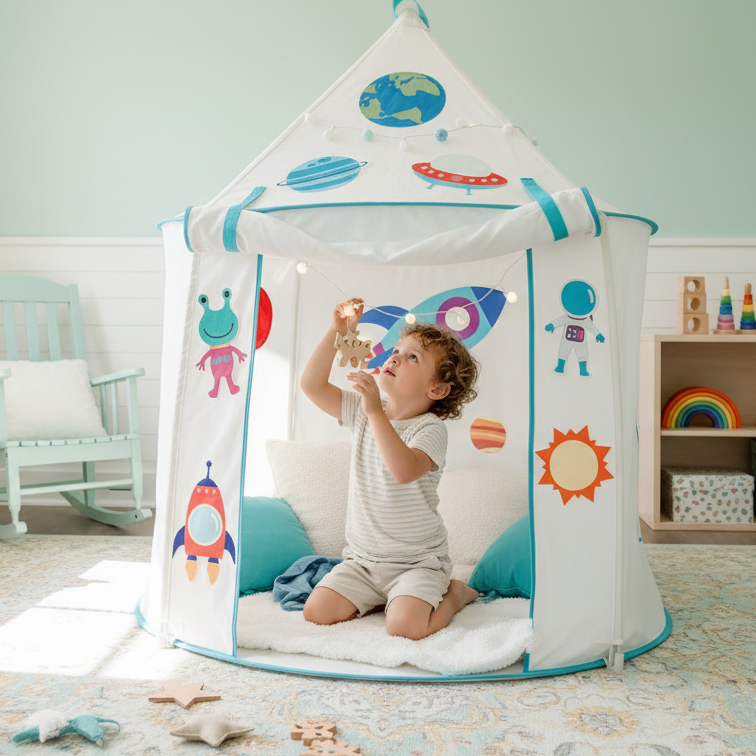
A defined indoor play space can make ordinary materials feel different. A blanket over a table creates an enclosed world. A reading corner with cushions changes the feeling of listening to a story. A few building materials placed inside a small imaginative space can become more compelling than the same materials scattered across an entire room.
The point is not that enclosed spaces automatically produce a particular emotional or developmental effect. Children have different preferences, and some will enjoy cozy spaces more than others.
Instead, the useful principle is environmental flexibility: children can become more active participants when they are allowed to shape and reinterpret the place where they play.
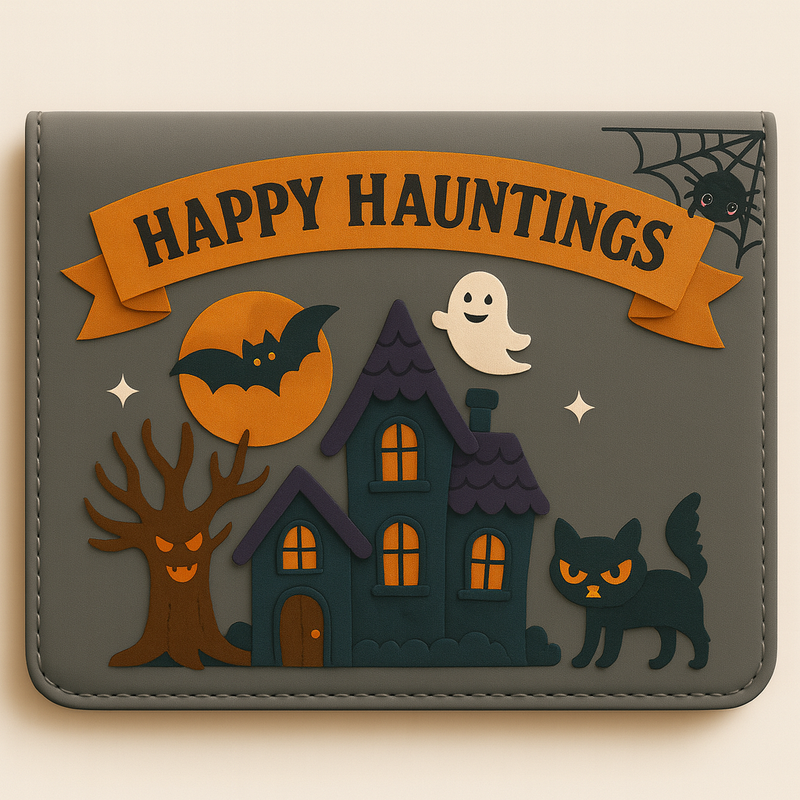
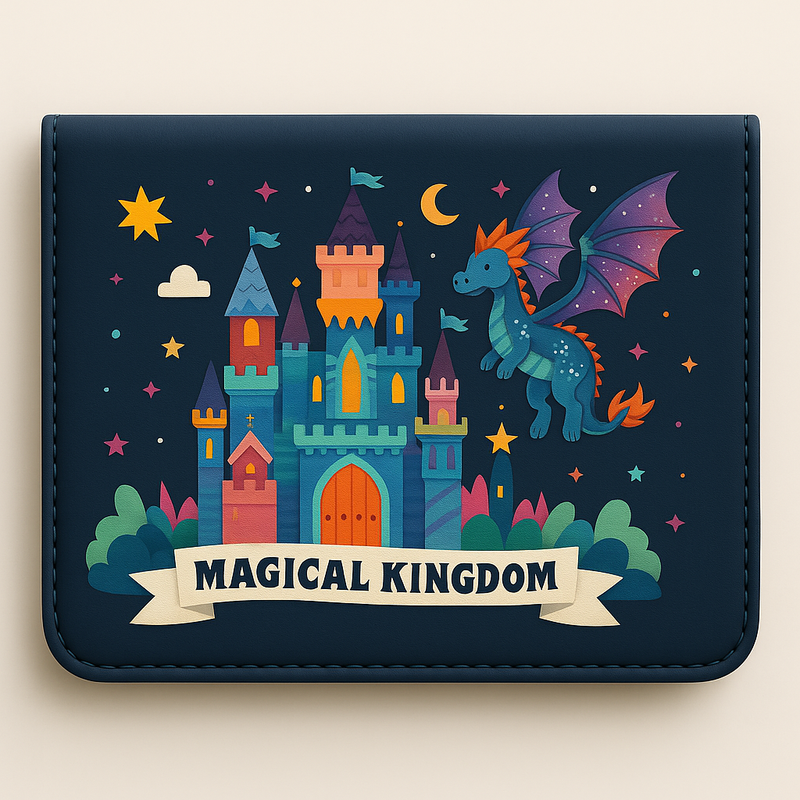
This philosophy also influences ZeeZee Adventures. The ZeeZee Adventures Tent uses interchangeable StickeeZ felt scenes so children can change the same familiar environment as their stories and interests change. The product page currently describes the system around swappable themes, imaginative play, and screen-free use rather than a single fixed story. The separate StickeeZ collection includes themes such as dinosaurs, space, ocean, magical kingdoms, mermaids, and other changeable scenes.
The broader takeaway applies whether you're using a dedicated play tent, the space beneath the dining table, or two chairs and a blanket:
Give children somewhere they are allowed to transform.
13. Pair Audio With Drawing
Listening is sensory exploration too.
Play a child-appropriate audio story and give your child paper, crayons, or another low-mess drawing material. Instead of asking them to reproduce the story, invite them to draw what they imagined.
Two children can hear the same story and picture entirely different worlds.
That is what makes audio particularly interesting for imaginative play. Unlike video, it does not necessarily supply every visual detail. The child still has to build much of the world internally.
You might ask afterward:
“What did the place look like in your imagination?”
“Was there anything in your version that wasn't mentioned?”
“What happened after the story ended?”
ZeeZee Adventures' guided audio stories and listening experiences can be one next-step resource for families who want to combine screen-free listening with drawing or imaginative play.
14. Make a Reusable Sticker or Felt Scene
Reusable materials can offer the satisfaction of placing, removing, arranging, and rearranging without glue, paint, or disposable craft supplies.
The key is to keep the activity open.
Instead of asking children to reproduce a model exactly, let them make scenes that change.
A tree does not always have to be upright.
A fish might fly.
A dinosaur might become the mayor.
Sensory play and creative play become more interesting when children occasionally get permission to ignore how adults think things are supposed to work.
15. Let Children Design a Cozy Creative Corner
For older preschoolers and school-age children, the activity itself can be designing the space.
Ask:
“If you wanted somewhere to draw, build, read, listen, or make up stories, what would you want there?”
They might choose cushions, a lamp, drawing supplies, books, soft fabric, figurines, headphones, building materials, or simply fewer distractions.
The purpose is not to create a clinical “sensory room.”
It is to give children some age-appropriate voice in their everyday environment.
That distinction matters. Occupational therapy sensory interventions are individualized clinical services built around assessment and participation needs; ordinary sensory-rich play at home should not be presented as a substitute for professional intervention.
Messy Sensory Play vs Low-Mess Sensory Play
Parents do not have to choose one forever. Messy play can be enjoyable, but low-mess options make sensory exploration easier to incorporate into ordinary family routines.
|
Instead of… |
Try… |
Children can still explore… |
|
Loose rice bins |
Large fabric or felt pieces |
texture, sorting, arranging |
|
Finger paint |
Crayons, chalkboard surfaces, reusable drawing boards |
movement, pressure, visual creativity |
|
Slime |
Play dough contained on a tray |
squeezing, rolling, shaping |
|
Water-filled tables indoors |
Flashlight or shadow play |
cause and effect, visual exploration |
|
Loose sensory fillers |
Blocks or cardboard |
touch, space, building, problem-solving |
|
Complex sensory stations |
Cushion or blanket forts |
movement, space, imagination |
The goal is not to declare one form of play superior.
It is to show parents that cleanup does not have to be the admission price for sensory exploration.
Common Mistakes With Indoor Sensory Play
One common mistake is overpreparing. Parents sometimes create so many stations, materials, and instructions that the child's role becomes simply following the adult's plan.
Try putting out less.
Another mistake is introducing novelty before the child has finished exploring something familiar. Repetition can look boring from an adult perspective while remaining deeply interesting to the child.
Parents can also unintentionally assume that certain activities are universally “calming.” Children's responses vary. One child may enjoy enclosed spaces, soft textures, or slow drawing, while another may prefer vigorous movement.
Finally, do not force a child to interact with a material they clearly dislike simply because it has been described online as beneficial sensory play. Sensory preferences differ. When sensory responses are causing significant distress or consistently interfering with participation in daily activities, professional guidance is more appropriate than trying to solve the issue with increasingly elaborate home activities.
What About Water Beads?
Water beads frequently appear in online sensory-play content, but they are intentionally not recommended here.
The U.S. Consumer Product Safety Commission warns that water beads can pose serious ingestion, aspiration, insertion, and internal-injury risks to young children. A new federal safety standard for water-bead toys took effect in 2026, adding expansion limits and stronger warning requirements, but CPSC continues to treat exposure as a serious child-safety issue.
There are plenty of sensory alternatives that do not require them.
Parent Action Checklist: Make Sensory Play Easier, Not Bigger
Before creating another elaborate activity, try this simpler approach:
-
Choose one or two materials rather than ten.
-
Check the activity for choking, ingestion, sharp-object, fall, or other age-related hazards.
-
Ask whether the child can change or reinterpret the activity.
-
Let them explore before demonstrating the “correct” use.
-
Notice what they repeat rather than immediately introducing something new.
-
Respect textures, sounds, movements, or environments they clearly dislike.
-
Stop judging sensory play by how impressive it looks.
Frequently Asked Questions
What are the best no-mess sensory activities for toddlers?
Good low-mess toddler options include large fabric pieces, play dough used on a contained tray, cushion pushing and building, texture walks around the home, music and movement, large felt pieces, and age-appropriate blocks. Keep activities simple and avoid small parts that may create choking or ingestion hazards.
Can sensory play happen without touching messy materials?
Yes. Sensory-rich play can involve sound, movement, balance, visual exploration, pressure, spatial awareness, texture, and body movement without using messy fillers.
Does sensory play have to involve a sensory bin?
No. A sensory bin is simply one format. Fort building, dancing, drawing, music, shadows, cardboard construction, felt play, blocks, fabrics, and pretend play can all provide sensory experiences.
What can I use instead of rice for sensory play?
For lower-mess indoor play, try large felt pieces, fabrics, play dough contained on a tray, blocks, cardboard, cushions, reusable drawing materials, or age-appropriate construction toys.
What sensory activities work in a small apartment?
Flashlight play, drawing to audio stories, play dough on a tray, fabric exploration, sound games, felt storytelling, texture hunts, blocks, and small cushion forts can work without requiring a dedicated playroom.
Is sensory play the same as sensory therapy?
No. Sensory play is ordinary hands-on childhood play. Occupational therapy interventions involving sensory processing are individualized professional services and should not be equated with general activities at home.
You Don't Need More Mess. You May Just Need More Possibility.
The most useful sensory activity in your home may not be the one with the longest supply list.
It may be the blanket your child keeps dragging over two chairs.
The play dough they reshape twenty times.
The flashlight that turns a bedroom wall into a theater.
The cardboard box nobody has been allowed to recycle.
The felt pieces that start as shapes and gradually become characters.
Sensory play becomes meaningful not because adults make it elaborate, but because children are able to interact with the world rather than simply consume what has already been created for them.
So if mess has been stopping you from trying sensory play, remove the mess.
Keep the exploration.
Offer something simple.
And leave enough of the experience unfinished for your child to discover what happens next.
Author Bio
The ZeeZee Play Experts share research-informed ideas about imaginative play, independent play, sensory exploration, screen-free childhood, and child-led environments. ZeeZee Adventures creates educational resources designed to help parents understand the developmental ideas behind everyday play while finding practical ways to make more room for imagination at home.




Comment (0)