
How Drawing, Building, and Storytelling Give Children a Voice
A child draws a house with an enormous door. Another builds a tower, knocks it down, and starts again. Somewhere across the room, a child is telling a story about a tiny dragon who doesn't want to leave home.
An adult might see a picture, a pile of blocks, and an imaginative story. But for the child, each activity is an opportunity to express an idea, explore a possibility, and decide what happens next.
Children don't always communicate their thoughts and feelings through direct conversation. They may not yet have the vocabulary to explain an experience, or they may simply prefer to express themselves in other ways. Drawing, building, and storytelling offer different ways to make their ideas visible.
These activities don't need to reveal a hidden meaning to be valuable. A picture doesn't automatically tell us how a child feels, and an imaginary character isn't necessarily a reflection of a real-life experience. What matters is giving children opportunities to create, choose, experiment, and share what they want to share.
When adults make room for that process, creative activities can become more than finished projects. They can become everyday opportunities for communication, independence, and connection.
1. Children Need More Than Words to Express Themselves
Adults often rely on conversation to understand what another person is thinking. With children, that approach has limitations.
A young child may know exactly what they want to communicate but struggle to find the right words. Another may be able to explain an idea verbally but prefer to demonstrate it through movement, pictures, or pretend play.
Creative activities offer different starting points.
A child can show you how a bridge should look rather than explain its design. They can invent a character who faces a difficult challenge without discussing their own experiences directly. They can choose colours, arrange materials, or change the rules of a game to communicate what interests them.
These are not substitutes for conversation. They're additional ways for children to participate in it.
If your child brings you a drawing, you might ask, “Would you like to tell me about it?” If they don't want to explain, you can simply appreciate what they've made.
The distinction matters: expression should be an invitation, not an obligation.
Children deserve opportunities to communicate in different ways without feeling that every creative activity must produce an explanation for adults.

2. Drawing Gives Children a Way to Make Ideas Visible
Drawing allows children to represent people, places, objects, and imaginary worlds in their own way. It also gives them choices: what to include, what to leave out, which colours to use, and when a picture feels finished.
The finished result doesn't have to resemble anything an adult would recognize.
A person might have enormous hands. A house might float above the ground. A family portrait might include a dinosaur because dinosaurs are currently fascinating. These details may reflect the child's interests, imagination, or developing ability to represent the world on paper.
Instead of correcting the drawing or guessing what it means, begin with curiosity.
Try asking:
-
“Tell me about what you're making.”
-
“What part would you like me to notice?”
-
“What made you choose those colours?”
-
“Would you like to add anything else?”
You might discover that the enormous hands belong to a superhero, the floating house is on another planet, or the dinosaur is simply a favourite character.
Sometimes, your child may not have a particular explanation. They may have enjoyed experimenting with shapes and colours, and that's enough.
Keep drawing materials accessible when practical, and offer a range of paper, crayons, markers, and other age-appropriate supplies. Avoid making every activity a model to copy or a product to display.
When children have permission to make their own choices, drawing becomes an opportunity to develop and communicate ideas rather than simply reproduce someone else's.
3. Building Helps Children Think With Their Hands
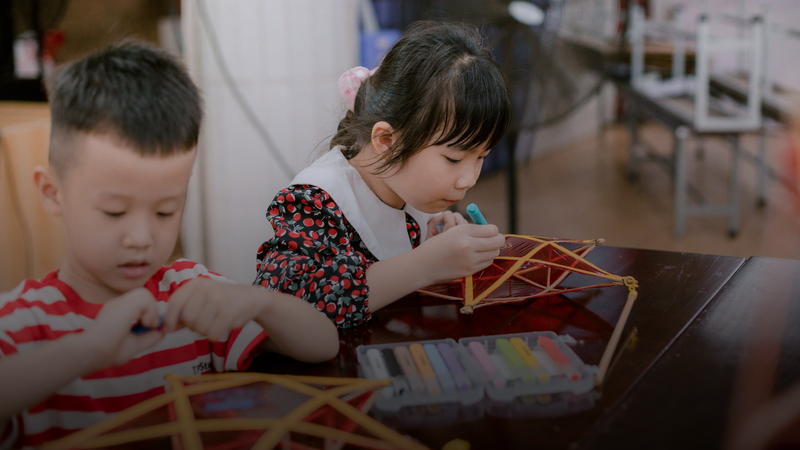
Blocks, cardboard boxes, cushions, recycled materials, and other construction materials give children opportunities to turn ideas into something they can explore physically.
A child might want to build the tallest tower possible. Another might create a shelter for toy animals or design a bridge that connects two chairs. The project may change several times as they discover what works.
Building gives children a way to communicate their ideas through action. They choose the materials, test possibilities, notice what happens, and decide what to try next.
When a structure collapses, they have information they can use. Perhaps the base needs to be wider, the blocks need to be arranged differently, or the original plan needs to change.
Adults can support this process without immediately supplying the solution.
Instead of saying, “Put the bigger block underneath,” try asking, “What do you notice about the way it's balancing?”
If your child is becoming frustrated, offer help in a way that keeps them involved. You might demonstrate one possibility, hold a piece steady, or ask whether they'd like to try a different approach.
Building also creates opportunities for children to communicate with one another. When two children construct something together, they need to share ideas, negotiate space, and decide how their contributions fit into the project.
Their plans may conflict. One wants a castle; the other wants a garage. Rather than deciding whose idea wins, help them explore whether both ideas can become part of the same structure.
The finished building matters less than the process of imagining, testing, adapting, and deciding together.
4. Storytelling Gives Children Room to Explore Possibilities
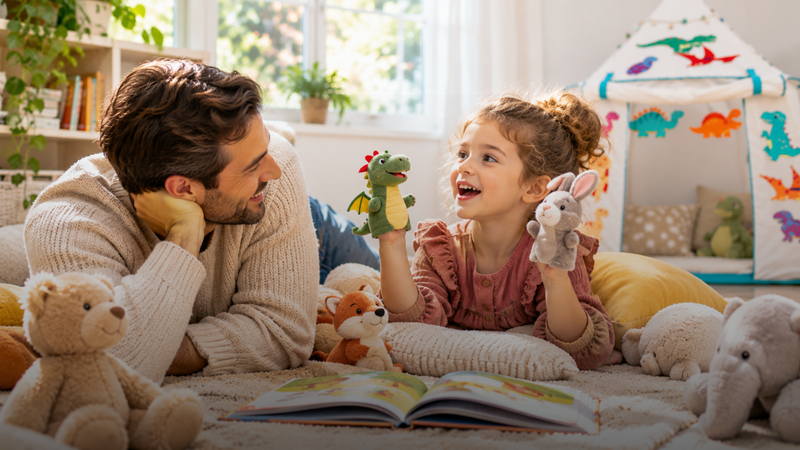
Stories allow children to create characters, invent settings, and imagine what might happen next.
A story might begin with a rabbit who gets lost in the woods. It could become an adventure about finding a new home, meeting an unusual friend, or discovering a hidden garden. The child can decide whether the rabbit feels frightened, excited, curious, or something else entirely.
These choices make storytelling a flexible form of expression.
Children can explore different perspectives by imagining what a character wants, what stands in the way, and how the character might respond. They can also change the ending, introduce unexpected events, or begin again when a story no longer interests them.
You don't need to turn this into a formal lesson.
Try offering an open-ended prompt:
-
“What do you think happens next?”
-
“Who might the character meet?”
-
“What could the character try?”
-
“Would you like the ending to be different?”
Then follow your child's lead.
If the story takes an unexpected turn, resist the urge to bring it back to the version you imagined. An unusual ending might be exactly what makes the story interesting to your child.
Storytelling can also happen without books. Children may narrate what their toys are doing, invent dialogue while building, or create elaborate adventures using ordinary objects.
Give them time to develop these ideas. Sometimes the most meaningful part of a story is not what the adult hears, but the child's experience of deciding how it unfolds.

5. Follow the Child's Lead Instead of Taking Over
Creative activities can quickly become adult-directed, even when the intention is to help.
We show children how to draw a particular shape, suggest a better way to build, or explain how a story should end. Sometimes that guidance is useful. Children often enjoy learning techniques and following instructions.
But they also need opportunities to lead.
Consider the difference between offering a craft with one expected result and providing materials that can become many different things. In the first activity, the child practises following a plan. In the second, they have more room to create one.
Both experiences can have value. The important thing is to make space for the second kind, too.
Try these small adjustments:
Ask before helping. “Would you like me to show you something, or do you want to try it yourself?”
Allow unfinished ideas. A child doesn't need to complete every project or explain every detail.
Avoid correcting harmless differences. A purple elephant or a lopsided tower may be exactly what the child intended.
Let interests change. A child can abandon one story for another without needing to justify the change.
Notice the process. You might say, “You found another way to make it stand,” rather than focusing only on whether the final structure looks impressive.
Following a child's lead doesn't mean withdrawing all support. It means recognizing when your help is useful and when your involvement may be limiting the child's opportunity to explore.
6. Listen Without Assuming You Know What a Creation Means
When a child makes something, adults naturally look for meaning. A drawing might seem sad. A story might include conflict. A structure might repeatedly be knocked down.
It's tempting to connect these details to the child's emotional state. But creative work can have many explanations, including simple experimentation, imitation, humour, or a passing interest.
A single drawing or story cannot reliably tell you what a child is feeling or experiencing.
Instead of saying, “You drew a dark picture because you're upset,” try a neutral invitation: “Would you like to tell me about your picture?”
If your child shares something difficult, listen calmly and take their words seriously. Avoid leading questions that suggest an answer or pressing them to explain more than they want to share.
You can also acknowledge feelings when a child expresses them directly: “That sounds frustrating,” or “You seem excited about what you built.”
The goal is to remain available and curious without turning creative expression into an assessment.
If a child communicates a serious concern or you notice persistent changes in their behaviour or wellbeing, respond to those concerns directly and seek appropriate professional guidance when needed. Don't rely on interpreting artwork or imaginary stories to determine whether a problem exists.
7. Create Spaces Where Ideas Can Change
Children often express themselves more freely when they can revisit an activity, change its direction, and return to an idea later.
A drawing can become part of a larger story. A cardboard box can change from a house into a train. A structure can be dismantled and rebuilt into something completely different.
A flexible play environment supports this kind of exploration because the setting doesn't dictate one permanent outcome.
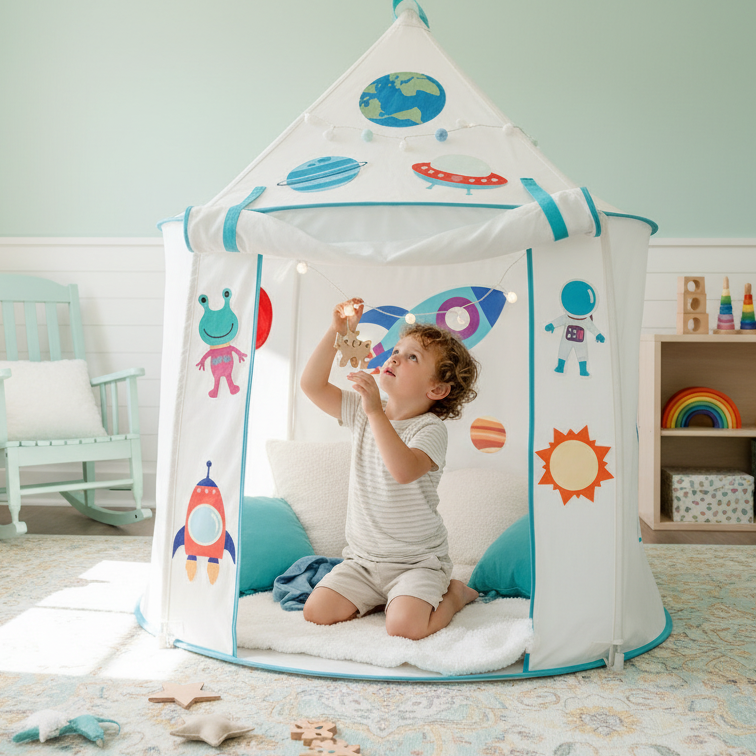
ZeeZee Adventures offers a customizable play tent with changeable StickeeZ themes, allowing children to transform a familiar space into different imaginative settings. A tent might become a forest hideaway, a spaceship, a castle, or the setting for a story they invent themselves.
The value lies in the opportunities for child-led exploration, not in any guaranteed developmental outcome. Children can decide which world to create, which characters belong in it, and how the story unfolds.
You can encourage this at home without purchasing anything new. A blanket, a few cushions, paper, blocks, and familiar toys can provide plenty of material for changing ideas.
Keep a small collection of creative supplies within reach when appropriate, and allow children to return to projects when time and space permit.
A creative environment doesn't need to be elaborate. It needs to leave room for the child to contribute.
8. Respond in Ways That Build Connection
Children are more likely to keep sharing their ideas when their contributions are met with attention rather than immediate judgment.
That doesn't mean praising everything enthusiastically or pretending every project is extraordinary. Genuine interest is enough.
Put your phone aside for a moment when your child wants to show you something. Look at the details they've chosen. Ask a question if they're interested in talking. Give them time to explain—or allow the activity to speak for itself.
You might say:
“I noticed you changed the bridge after it fell.”
“Your story took a surprising turn.”
“You decided to make a whole new character.”
These comments acknowledge the child's thinking without evaluating whether the result is good, bad, beautiful, or clever.
When children create with others, help them make room for different ideas. One child may want to add another character to a story; another may prefer to continue the original version. They can practise listening, proposing alternatives, and deciding what works for their shared activity.
Not every moment needs adult commentary. Sometimes the most supportive response is simply to be nearby while a child draws, builds, or tells a story in their own way.

Give Children Room to Show You Who They Are
Drawing, building, and storytelling offer children different ways to communicate ideas, explore possibilities, and make decisions. They can be especially useful when a child is still developing the words to describe what they imagine or when they simply prefer expressing themselves through action.
You don't need to interpret every creation, turn every activity into a learning exercise, or ensure every project has a polished result.
Offer materials. Make time. Ask open questions when your child welcomes them. Let them change their minds and experiment with their own ideas.
At home, ZeeZee Adventures is one example of an adaptable play environment that can become the setting for different stories and imaginative worlds. Yet the essential ingredient is not a particular product or activity. It is the freedom children have to shape what they create and the attention adults give when they choose to share it.
Sometimes a child will explain a whole story in words. Sometimes they will hand you a drawing and say nothing at all. Sometimes they will build something that only makes sense to them.
You don't have to understand every detail to value the experience.
By making room for children's ideas—and allowing them to decide how much they want to share—we communicate something important: their voices matter, even when those voices don't sound like ours.
FAQs
1. How does drawing help children express themselves?
Drawing gives children opportunities to represent ideas, interests, and imagined worlds visually. It allows them to make creative choices and share what they wish, without requiring them to explain every detail.
2. What do children learn from building activities?
Building activities can give children opportunities to experiment with materials, test ideas, solve practical problems, and adjust their plans when something doesn't work as expected.
3. Why is storytelling important for children?
Storytelling lets children invent characters, explore different possibilities, develop narratives, and practise communicating ideas. Stories can be spoken, acted out, or created through pretend play.
4. How can parents encourage creative expression without taking over?
Offer accessible materials, ask open-ended questions, allow children to make their own choices, and avoid correcting harmless differences between a child's creation and an adult's expectations.
5. Can children's drawings reveal their emotions?
A child may choose to communicate feelings through artwork, but a drawing alone cannot reliably establish what a child is feeling. Ask open questions and listen to what the child chooses to share.
6. What are some simple creative activities for children at home?
Try drawing imaginary places, building structures with blocks or boxes, inventing stories with toys, making up characters, or turning a blanket fort into a setting for pretend adventures.
7. How can open-ended play encourage self-expression?
Open-ended play allows children to choose materials, change plans, invent stories, and decide what happens next. It creates opportunities for them to express individual ideas without a single required outcome.



Comment (0)