

Helping Children Express Anger in Safe and Constructive Ways
A tower of blocks collapses just before it's finished. A sibling takes a favourite toy. An adult announces that playtime is over, and a child who was happily playing moments earlier suddenly starts shouting, throwing things, or insisting that nobody understands.
For parents, these moments can be difficult to navigate. You want your child to feel heard, but you also need to set boundaries around behaviour that hurts others or damages things.
Anger is a normal emotion. Children can feel angry when they're disappointed, frustrated, tired, overwhelmed, or unable to communicate what they need. What they may not yet know is how to express that feeling safely.
The goal isn't to make children stop feeling angry. It's to help them recognize their feelings, communicate what is wrong, and gradually develop safer ways to respond when frustration becomes intense.
That learning takes time. Children need clear boundaries, patient guidance, and opportunities to practise new responses when they're calm—not just instructions delivered in the middle of an outburst.
1. Help Children Understand That Anger Is a Feeling, Not a Failure
Children sometimes hear messages that make anger seem like a bad emotion: “Don't be angry,” “Stop being difficult,” or “There's nothing to get upset about.”
These comments may be intended to settle a situation, but they can leave a child feeling misunderstood. They may also miss an important distinction: feeling angry is different from acting aggressively.
A child can be angry about losing a game, and the feeling deserves acknowledgment. Hitting another player, however, is not an acceptable way to express it.
Try language that makes room for both the emotion and the boundary.
-
“You're angry because your tower fell.”
-
“You really wanted another turn, and it's hard to stop.”
-
“It's okay to feel angry. I won't let you hit your brother.”
-
“You can tell me what happened without throwing things.”
This approach doesn't excuse harmful behaviour. It tells the child that the emotion can be discussed while the behaviour still has limits.
According to the American Academy of Pediatrics, helping children name and understand emotions is an important part of learning to manage them. Its guidance on emotional development recommends acknowledging feelings, naming them, validating the experience, and setting appropriate boundaries. Read the AAP's guidance on helping children manage big feelings.
2. Notice What Happens Before Anger Takes Over
Anger can seem to appear out of nowhere, especially in younger children. But looking at what happened immediately beforehand can sometimes reveal a pattern.
Perhaps your child struggles when an activity ends unexpectedly. Maybe arguments are more common when they're hungry, tired, or sharing a favourite toy. Perhaps a difficult task leaves them feeling frustrated before they can explain why.
You don't need to prevent every source of frustration. Instead, notice recurring situations and consider whether a small adjustment might help.
If transitions are difficult, offer a warning before playtime ends. If sharing a particular toy frequently causes conflict, establish turn-taking rules before the next game. If your child becomes frustrated by challenging tasks, break the activity into smaller steps.
You can also help children notice early signs of anger, such as clenched fists, a tense jaw, a louder voice, or the feeling that they want to push something away.
For younger children, simple language can help: “Your hands are getting tight. Are you starting to feel frustrated?”
Children won't always recognize these signs in time, and that's normal. The purpose is to build awareness gradually, not to expect perfect self-control.
3. Stay Calm Enough to Help Them Feel Heard
When a child shouts, refuses instructions, or lashes out, a parent's own frustration can rise quickly. You might feel the urge to shout louder, demand an apology, or explain why the behaviour is unacceptable.
Clear limits matter, but escalating the emotional intensity can make it harder for a child to listen and respond.
Try using a calm, firm voice and short sentences. You don't need to solve the entire problem immediately.
For example:
“I can see you're furious. I'm here to help.”
“I won't let you hit me. I'm moving back to keep us safe.”
“We'll talk about what happened when we're both ready.”
If your child is too upset to talk, give them time and space while maintaining appropriate supervision. Some children want a trusted adult nearby; others need a little distance before they can reconnect. Follow your child's needs while keeping safety in mind.
This kind of adult support is sometimes described as co-regulation: children gradually learn to manage difficult feelings with help from a calmer, supportive person. Over time, they can begin to use those strategies more independently.
The Child Mind Institute discusses the importance of calm, consistent adult responses when children struggle with intense anger. Read its guide to managing explosive behaviour.
4. Give Children Safe Ways to Express Their Anger
Telling a child to “calm down” doesn't explain what to do with the energy or frustration they are experiencing.
It helps to practise several possible responses during peaceful moments, then remind your child of them when needed.
Depending on the child's age and preferences, these might include:
-
Using words: “I'm angry because I wanted a turn.”
-
Taking a pause: Moving to a quieter place with adult support if needed.
-
Moving the body: Walking, dancing, jumping, or doing another safe physical activity.
-
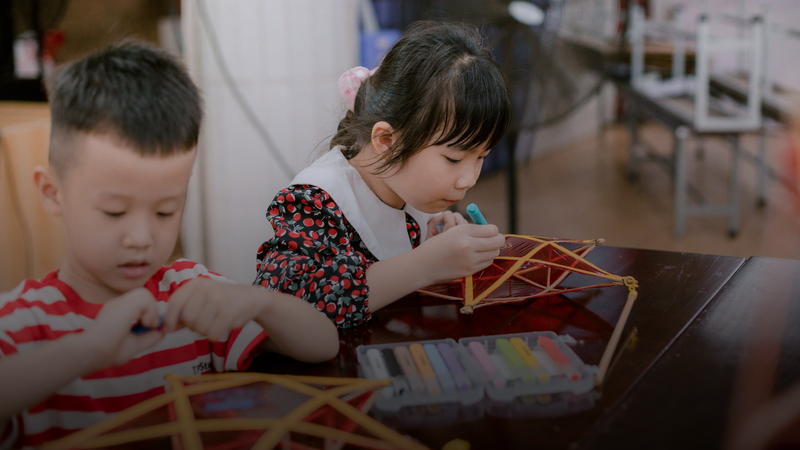
Creating something: Drawing an angry character, building with blocks, or inventing a story about a frustrating situation.
-
Using a calming routine: Taking a few comfortable, slow breaths, listening to music, or sitting with a trusted adult.
Not every strategy works for every child. One child may prefer quiet time, while another may find gentle movement more helpful. Let your child try different options and notice what feels useful to them.
Avoid treating creative activities as a punishment or insisting that a child must draw their feelings before they can move on. The activity should be an available option, not another demand.
Also, distinguish safe physical expression from aggression. Throwing heavy objects, punching another person, or breaking belongings can cause harm. Offer safer alternatives and intervene when necessary.
The AAP's play ideas for helping children manage emotions include movement, familiar activities, and opportunities to explore emotions through stories.
5. Use Play to Practise Difficult Feelings
Children often find it easier to explore an emotional situation through a character or pretend scenario than through a direct conversation.
Imagine two toy animals who both want the same ball. One becomes angry when the other takes it. What could happen next?
Your child might suggest asking for a turn, finding another ball, taking a break, or inventing a new game. You can explore those ideas together without implying that the character—or the child—is bad for feeling angry.
Drawing can work similarly. Invite your child to draw a character who feels frustrated, then ask what the character might need. Building activities can also provide opportunities to practise dealing with setbacks: a structure falls, the child feels disappointed, and they decide whether to rebuild, change the design, or pause.
Keep these activities playful. Don't assume that a character's anger reveals something specific about your child's emotional life. Let them decide whether to connect the story to a real experience.
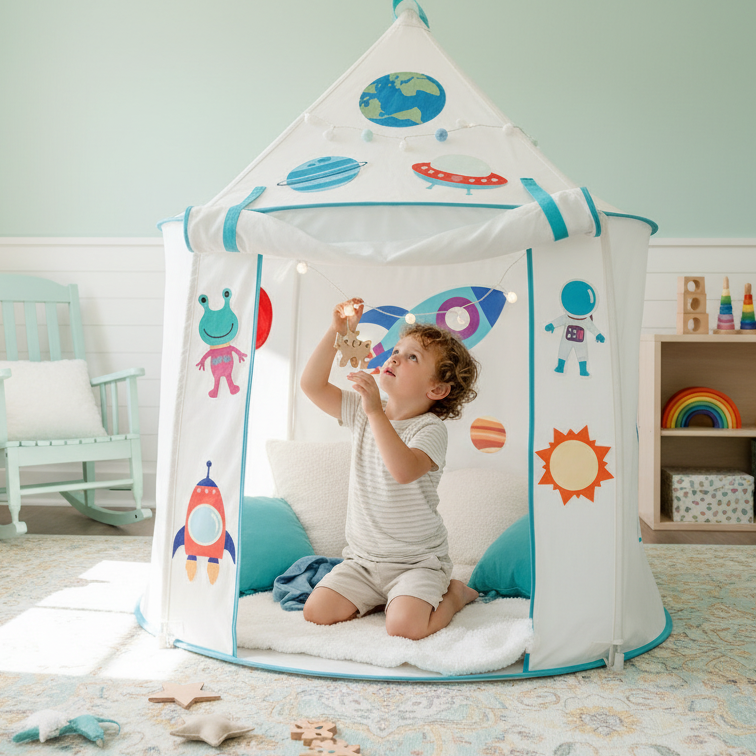
A flexible play environment can provide another familiar setting for imaginative exploration. ZeeZee Adventures offers a customizable play tent with changeable StickeeZ themes, giving children opportunities to invent characters, create stories, and explore different scenarios through pretend play.
The value isn't that a particular play space will resolve anger. Rather, child-led play can provide opportunities to explore ideas and practise different responses without the pressure of a real-life disagreement.

6. Teach Children What to Say When They're Angry
Children need alternatives to shouting, insulting, or hitting. These alternatives are easier to use when they have been practised in ordinary moments.
Start with simple phrases that fit your child's age and language skills:
-
“I'm angry. I need help.”
-
“I don't like that.”
-
“Please stop.”
-
“I was still using that.”
-
“I need a break.”
-
“Can we try again?”
You can model these phrases during everyday disagreements. If you're frustrated because something has gone wrong, you might say, “I'm annoyed that I spilled this. I'm going to clean it up and start again.”
This shows that adults experience anger, too, and can choose what to do with it.
When a child manages to use words instead of lashing out, acknowledge the effort: “You told me you were angry instead of hitting. I could understand what you needed.”
If they still struggle, avoid expecting a perfect sentence in the heat of the moment. A few words, a gesture, or asking for help can be a meaningful beginning.
7. Talk About the Problem After Everyone Has Settled
The middle of an intense outburst is rarely the best time for a long explanation about kindness, consequences, or emotional control.
Wait until your child is calmer, then return to the situation briefly and without shaming them.
You might ask:
“What made you so frustrated?”
“What happened just before you threw the toy?”
“What could help next time?”
Listen to their account, while remembering that young children may have difficulty explaining the sequence of events accurately.
If someone was hurt, focus on repair as well as reflection. Your child might check whether the other person is okay, help put something back together, or work with you to make the situation safer next time.
An apology can be part of repairing harm, but forcing the words “I'm sorry” before a child understands what happened may not teach much. Help them recognize the impact of their behaviour and take an age-appropriate step to make things right.
You can also reinforce the boundary: “You were angry, and you threw the toy. Next time, we'll put the toy down and ask for help.”
The aim is accountability without humiliation.
8. Know When Additional Support May Help
Occasional anger and frustration are part of childhood. Children vary in how intensely they react and how much support they need to manage difficult feelings.
However, if outbursts are frequent, severe, involve repeated aggression, or interfere with school, friendships, family life, or everyday activities, consider speaking with your child's pediatrician or a qualified child mental-health professional.
Seek help sooner if anyone's safety is at risk or your child is repeatedly hurting themselves or others. A professional can help you understand possible contributing factors and identify appropriate strategies for your family.
Avoid assuming that persistent anger is simply bad behaviour, deliberate defiance, or evidence of a particular condition. There can be many reasons a child struggles with frustration, and the right support depends on the individual child.
Helping Children Move From Anger Toward Understanding
Children don't learn to handle anger by never experiencing it. They learn through repeated opportunities to recognize feelings, practise safer responses, receive consistent boundaries, and repair situations when things go wrong.
You can support that learning by naming emotions without judgment, noticing patterns, staying calm where possible, and offering practical alternatives to aggression.
Creative play and storytelling can add another opportunity to explore frustration and imagine different outcomes. ZeeZee Adventures is one example of an adaptable play setting where children can invent stories and shape imaginary situations around their own ideas.
But no activity needs to work every time. Some moments will still be messy. Your child may remember the strategy one day and forget it the next.
Progress can look like asking for help a little sooner, using words instead of hitting, or returning to a problem after taking a break.
The message children need to hear is simple: anger is something they can talk about, harmful behaviour has clear limits, and they don't have to figure out what to do with big feelings all by themselves.
FAQs
1. Is anger normal in children?
Yes. Anger is a normal emotion. Children may need adult support to understand the feeling and choose safe ways to express it.
2. How can I teach my child to express anger without hitting?
Set a clear boundary against hitting, name the emotion, and teach alternatives such as using words, asking for help, moving to a safe space, or taking a break.
3. Should I let my child express anger freely?
Children should be allowed to have feelings and express them in appropriate ways. Adults still need to prevent behaviour that harms people, damages property, or creates danger.
4. What activities can help children manage anger?
Depending on the child, drawing, storytelling, building, safe movement, music, and quiet time with a trusted adult may offer useful ways to explore or express frustration.
5. Should I talk to my child during an angry outburst?
Use brief, calm language and prioritize safety. Save longer conversations and problem-solving for when your child is calmer and more able to participate.
6. How can parents model healthy anger expression?
Describe your feelings without blaming others, take a break when needed, use respectful language, and demonstrate how to return to a problem and repair harm.
7. When should I seek professional help for my child's anger?
Consider professional guidance when anger is severe, persistent, involves repeated aggression, or significantly affects everyday life or safety.




Comment (0)