
How to Design a Sensory-Friendly Play Space That Supports Calm, Creativity, and Independent Play
When Playrooms Feel Overwhelming Instead of Fun
Many modern playrooms are designed with good intentions.
Bright colors.
Talking toys.
Busy shelves.
Endless stimulation.
But for some children, these environments can feel overwhelming rather than inviting.
Parents may notice signs like:
- short attention spans
- difficulty settling into play
- frequent emotional outbursts
- jumping quickly from one activity to another
Child development research increasingly highlights the importance of sensory balance in play environments — spaces that help children regulate their emotions while still encouraging imagination.
Creating a sensory-friendly play space doesn’t require a full home makeover.
Often, small intentional changes can make a meaningful difference.

What Is a Sensory-Friendly Play Space?
A sensory-friendly play space is an environment designed to support how children process sensory information.
It focuses on:
- reducing overstimulation
- creating predictable comfort
- encouraging focused engagement
- supporting emotional regulation
Research in environmental psychology suggests that thoughtfully designed spaces can influence mood, behavior, and attention in children.
Rather than eliminating stimulation completely, the goal is to create balanced sensory experiences.
Why Lighting Matters for Emotional Regulation
Lighting plays a powerful role in how children feel during play.
Harsh overhead lighting can make environments feel intense and distracting.
Soft, warm or diffused lighting can help children feel secure and relaxed.
Ideas parents can try:
- string lights or cotton ball lights
- natural daylight near play areas
- dimmable lamps instead of bright ceiling lights
- shaded reading nooks
Calm lighting encourages longer attention spans and helps create a space where imagination can unfold naturally.
Using Texture to Support Sensory Comfort
Children explore the world through touch.
Soft textures can create a sense of grounding and safety during play.
Sensory-friendly playrooms often include:
- plush floor mats
- cozy cushions
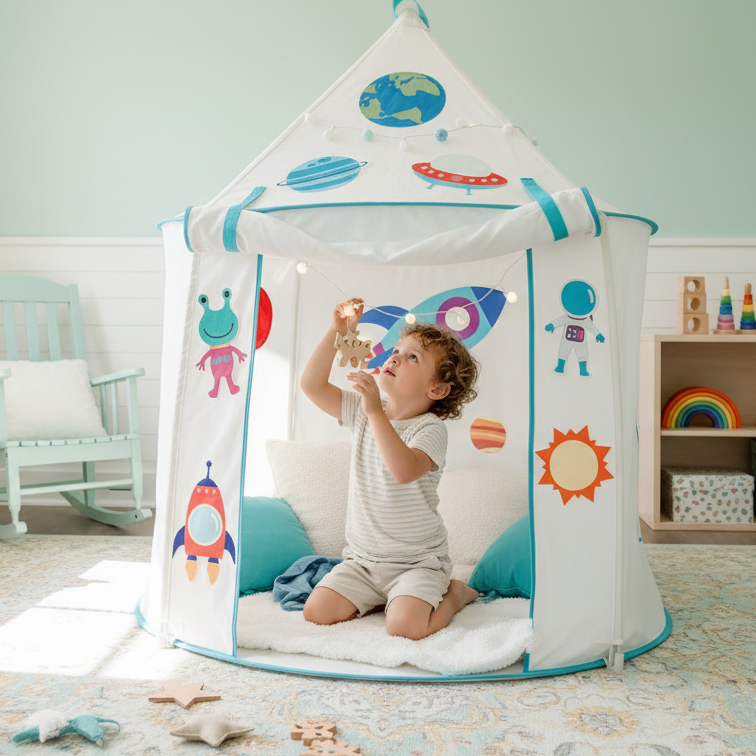
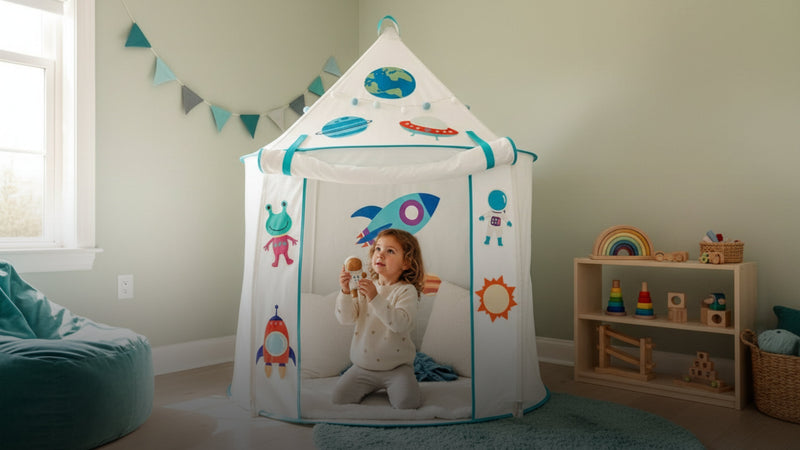
- soft fabric tents or canopies
- felt or tactile play materials
These elements provide comfort while encouraging exploration.
Customizable tactile features — such as attachable felt characters or theme elements — can also support imaginative storytelling and sensory engagement.
Why Cozy Retreat Spaces Help Independent Play
One of the most powerful sensory-friendly design ideas is creating a small retreat space.
Children naturally seek enclosed environments where they feel:
- protected
- focused
- in control
These spaces may include:
- play tents
- reading corners
- quiet forts
- canopy beds
Psychologically, having a defined “little world” can encourage independent play and emotional self-regulation.
Flexible environments that children can personalize help maintain engagement over time because the space evolves with their imagination.

Decluttering: The Simplest Sensory-Friendly Strategy
Parents are often surprised to learn that fewer toys can lead to deeper play.
When playrooms are overcrowded, children may struggle to choose an activity or stay engaged.
Simple decluttering strategies include:
- rotating toys weekly
- keeping only a few items visible
- storing overstimulating toys
- creating defined play zones
This approach supports focus and encourages creativity without overwhelming the senses.
Designing a Play Space That Grows With Your Child
Sensory-friendly environments are not just for toddlers.
As children grow, these spaces can evolve into:
- reading retreats
- creative art zones
- imaginative storytelling worlds
Customizable play environments allow families to adapt the same space across developmental stages — supporting longevity and meaningful engagement.
Creating Calm Without Limiting Creativity
A sensory-friendly playroom doesn’t mean removing fun.
It means designing play intentionally.
Balanced environments — combining calm tones, tactile comfort, and open-ended possibilities — allow children to explore at their own pace.
In many homes, these thoughtful spaces become the heart of childhood memories.
Not because they are loud or flashy —
but because they feel safe, inspired, and endlessly imaginative.
Frequently Asked Questions
What makes a play space sensory-friendly?
A sensory-friendly play space reduces overstimulation and supports comfort through soft lighting, calming colors, cozy textures, and flexible play materials.
Why are calm play environments important for children?
Calm environments help children regulate emotions, focus on activities longer, and engage in deeper imaginative play.
How can parents create a sensory-friendly playroom on a budget?
Parents can declutter toys, use natural lighting, add soft textiles, and create small retreat spaces like reading nooks or simple play tents.
Do sensory-friendly spaces help independent play?
Yes. Children often play more independently in environments where they feel secure, comfortable, and able to control their surroundings.






Comment (0)