
Low-Stimulation Play Spaces Are Making a Comeback — And Parents Are Re-Thinking How Kids Play
The Return of Calm Childhood
For years, children’s play environments have become louder, brighter, and faster.
Flashing lights.
Talking toys.
Screens everywhere.
Playrooms began to resemble mini entertainment centers — filled with stimulation designed to capture attention instantly.
But today, many parents are noticing something unexpected.
More stimulation doesn’t always lead to better play.
Instead, a growing number of families are intentionally designing low-stimulation play spaces — calmer environments that support imagination, focus, and emotional balance.
This shift is quietly reshaping how modern childhood looks.
Why Parents Are Moving Away From Overstimulating Playrooms
The Attention Economy Reached the Playroom
Children today grow up surrounded by:
- digital devices
- fast-paced content
- multi-sensory toys
- visually busy environments
While these tools can entertain, child development specialists increasingly warn that constant stimulation can make it harder for children to:
- sustain focus
- regulate emotions
- engage in deep imaginative play
Parents are beginning to notice that when everything competes for attention, children may struggle to stay engaged with any single activity for long.
The Rise of Low-Stimulation Play Environments
Instead of removing play, parents are redesigning it.
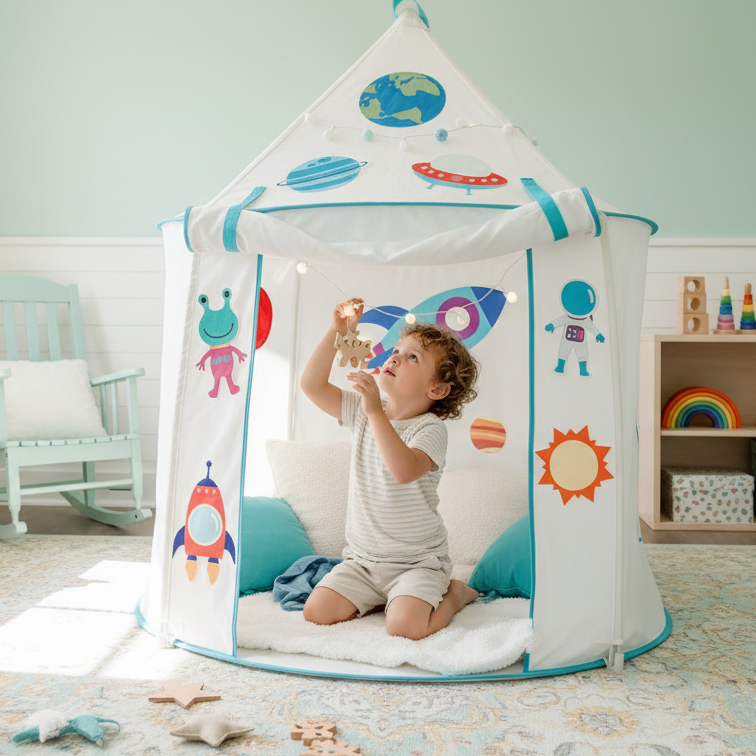
Low-stimulation play spaces often feature:
- neutral or cool-toned bases
- fewer toys on display
- soft lighting
- flexible play setups
- cozy retreat-like corners
These environments don’t eliminate creativity — they actually make space for it.
Research in environmental psychology suggests that balanced sensory environments help children remain engaged longer and experience less distraction during play.
Rather than overwhelming the senses, intentional play spaces support exploration at a child’s natural pace.

Why Calm Spaces Encourage Deeper Imagination
One surprising insight from child development research is that creativity often thrives in simplicity.
When children are given fewer predefined instructions or overstimulating cues, they begin to:
- invent stories
- explore roles
- build imaginary worlds
Open-ended play environments act as a blank canvas, allowing imagination to lead.
This is why many educators and therapists now recommend flexible play setups rather than highly scripted toys.
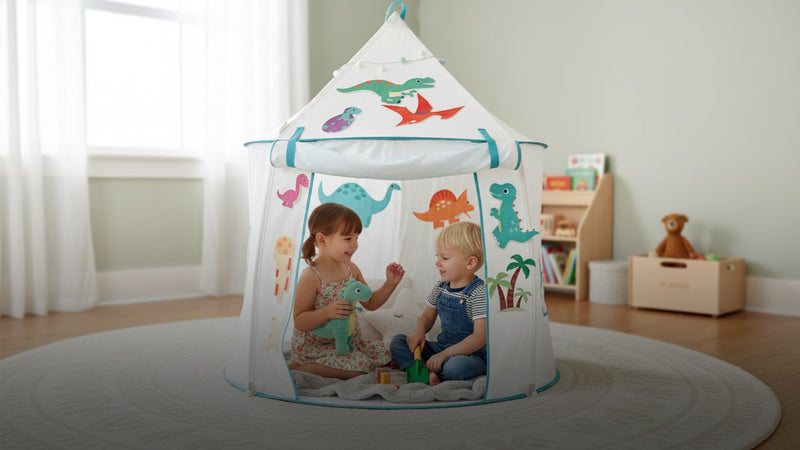
Customizable environments — like modular play tents or adaptable play corners — allow children to revisit the same space while creating entirely new experiences.
The Emotional Benefits of Low-Stimulation Play
Calm play spaces are not just about creativity.
They also support emotional wellbeing.
In quieter environments, children can:
- process feelings
- self-regulate
- transition between active and restful play
Many families now describe these areas as:
- calm corners
- imagination zones
- creative retreats
Spaces where children can both dream and decompress.
Thoughtfully designed play environments — especially those that combine sensory comfort with open-ended storytelling opportunities — can become meaningful anchors in a busy home.
The ZeeZee Adventure Tent was created with this balance in mind: offering a customizable, imaginative space that supports both energetic play and quiet moments.

A Cultural Shift Toward Intentional Childhood
The movement toward low-stimulation environments reflects a broader parenting philosophy.
- Families today are asking deeper questions:
- How much stimulation is healthy?
- How can we reduce toy clutter?
- How do we support imagination without constant entertainment?
The answer for many lies in designing homes that encourage:
- independence
- creativity
- emotional balance
Instead of constantly adding more toys or screens, parents are discovering the power of creating better spaces.
Because sometimes, the most meaningful play happens not in the loudest room —
but in the quietest corner.
Frequently Asked Questions
What is a low-stimulation play space?
A low-stimulation play space is an environment designed with fewer visual distractions, softer lighting, and flexible play materials to support focus, creativity, and emotional balance.
Do children need calm play environments?
Yes. Calm environments help children regulate emotions, sustain attention, and engage more deeply in imaginative activities.
How can parents create a low-stimulation playroom?
Parents can start by reducing toy clutter, using neutral or cool-toned color palettes, incorporating soft lighting, and including open-ended play elements.
Are open-ended play environments better than traditional toys?
Open-ended environments often provide longer engagement because children can create new stories and uses over time rather than following fixed play patterns.





Comment (0)