
How to Keep Kids Entertained Without Screens (Even When They Say They're Bored)
Introduction
Every parent knows the moment.
Your child wanders into the room, lets out a dramatic sigh, and says, "I'm bored."
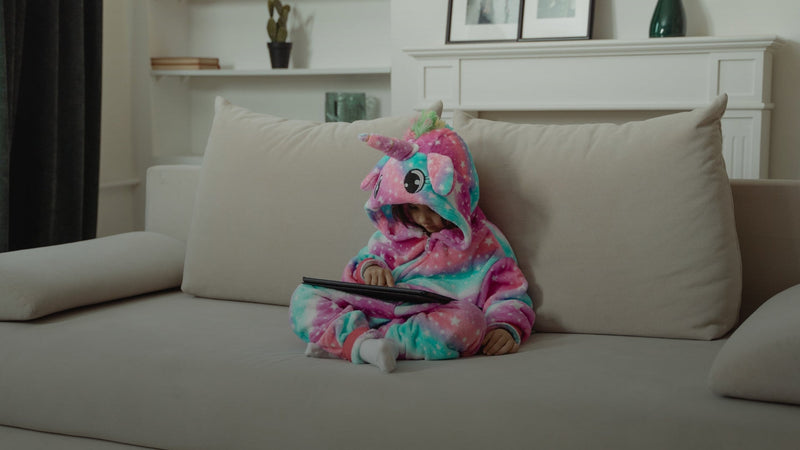
Within seconds, you're searching for ideas. You suggest colouring, building blocks or reading a book. None of them seem appealing. Eventually, handing over a tablet or switching on the television feels like the easiest solution.
If this sounds familiar, you're certainly not alone.
Many parents worry that reducing screen time means taking away the one thing that reliably keeps their child occupied. The reality is often quite different. Children do not simply need less screen time. They need experiences that capture their curiosity, challenge their imagination and give them the freedom to direct their own play.
The good news is that entertaining children without screens does not require elaborate activities, expensive toys or a perfectly organised playroom. What it does require is understanding what truly keeps children engaged. Once you understand how children's minds work during play, keeping them entertained becomes far less stressful and far more rewarding.
This guide explores why children become bored so quickly, what genuinely holds their attention, and practical ways to encourage longer periods of imaginative, independent play.
Quick Answer
Keeping children entertained without screens starts by offering open-ended activities that encourage imagination rather than passive entertainment. Children remain engaged for longer when they can create, build, pretend, explore, and make their own decisions. By combining a calm play environment with meaningful activities, parents can naturally encourage creativity, confidence and independent play without relying on digital devices.
Key Takeaways
-
Boredom is often the beginning of creativity rather than a problem to solve.
-
Children stay engaged for longer when activities allow them to use their imagination.
-
Open-ended play supports creativity, problem-solving, and emotional development.
-
A thoughtfully designed play environment encourages independent play.
-
Parents do not need to provide constant entertainment. They need to provide opportunities for children to explore.
Definition
What Does It Mean to Entertain Children Without Screens?
Keeping children entertained without screens means providing opportunities for play, creativity, movement and exploration that do not rely on televisions, tablets, smartphones or gaming devices. Rather than consuming ready-made entertainment, children actively create their own experiences through imagination, problem-solving and interaction with the world around them.
Why Do Children Say They're Bored?
When a child says they're bored, it rarely means there is nothing to do.
More often, it means they have not yet found something that feels meaningful enough to hold their attention. Modern children are surrounded by entertainment that provides instant rewards. Television programmes change scenes every few seconds. Games offer immediate feedback. Videos begin with exciting moments designed to capture attention almost instantly.
Real-life play works differently.
Building a blanket fort takes effort before the adventure begins. Creating a puppet show requires imagination before the characters come to life. Painting a picture involves experimentation before the masterpiece appears. These experiences ask children to contribute their own ideas, and that takes a little patience.
Many parents understandably step in as soon as boredom appears because they want to help. Yet child development experts generally agree that allowing children a little time to work through boredom encourages creative thinking and independent problem-solving. The first few minutes may be uncomfortable, but they often lead to some of the richest forms of play.
The next time your child announces they are bored, consider treating it as the beginning of an opportunity rather than the end of one.
Why Screens Feel More Entertaining
Screens are designed to capture attention.
Bright colours, movement, music, rewards and endless novelty all work together to keep children engaged with very little effort on their part. There is nothing inherently wrong with this. Educational programmes and carefully chosen digital content certainly have their place.
The challenge arises when passive entertainment becomes easier than active play.
Imaginative play asks children to become storytellers.
Creative play asks them to become inventors.
Building asks them to become engineers.
Pretend play invites them to solve problems, negotiate rules, and invent new worlds.
These experiences take more effort initially, but they often become far more satisfying because children remain in control of the adventure.
Occupational therapists frequently observe that children develop confidence through experiences where they direct their own learning rather than simply responding to external stimulation. This sense of ownership helps explain why children often spend an hour creating an imaginary world once they become fully immersed in it.
Expert Insight
Children rarely need constant entertainment.
Child development specialists often encourage parents to distinguish between entertainment and engagement. Entertainment is usually provided for children. Engagement happens when children become active participants in their own play. The second experience supports creativity, resilience, language development and independent thinking in ways passive entertainment cannot.
What Actually Keeps Children Entertained?
Many parents assume the answer is buying new toys.
In reality, novelty fades surprisingly quickly. Children become excited about something new because it is unfamiliar, but once they have explored everything it can do, their interest naturally begins to decline.
The activities that continue to capture children's attention usually share four important characteristics.
First, they are open-ended. There is no single correct outcome or fixed storyline.
Second, children remain in control. They make decisions rather than following constant instructions.
Third, the activity evolves over time. Today's castle can become tomorrow's spaceship or next week's secret laboratory.
Finally, the activity encourages imagination. Children become creators rather than consumers.
These four principles can transform even the simplest household materials into hours of meaningful play.
10 Practical Ways to Keep Kids Entertained Without Screens
Instead of constantly searching for new ideas, focus on activities that encourage children to build their own adventures. These suggestions provide a starting point while leaving plenty of room for imagination.
1. Build a Blanket Fort
A few blankets, cushions and chairs can become a castle, a pirate ship, a cave or a secret headquarters.
2. Create an Adventure Box
Fill a box with recycled materials, fabric, cardboard tubes and craft supplies, then invite your child to invent something completely new.
3. Open a Pretend Café
Allow children to design menus, prepare imaginary meals and welcome family members as guests.
4. Design a Treasure Hunt
Hide clues throughout the house that encourage problem-solving and exploration.
5. Start a Nature Collection
Collect leaves, feathers, pinecones and interesting stones before creating artwork or displays together.
6. Create a Puppet Theatre
Simple paper puppets often become the beginning of elaborate stories and performances.
7. Build a Mini City
Wooden blocks, cardboard boxes and toy figures can become towns filled with imaginative characters.
8. Invent a New Board Game
Encourage children to create their own rules, challenges, and game pieces.
9. Keep an Imagination Journal
Invite children to draw the places they visited in their pretend adventures and write short stories about them.
10. Create a Reading Adventure
Instead of simply reading a book, encourage children to act out scenes, invent alternative endings, or imagine what happens after the story finishes.
Why Independent Play Is the Secret
One of the greatest misconceptions about entertaining children is that adults must always be involved.
In reality, independent play is one of the most valuable experiences childhood offers.
When children play independently, they learn to make decisions, overcome small challenges, and remain engaged without relying on constant adult direction. They discover that they are capable of creating their own fun, and that confidence gradually extends into other areas of life.
Independent play does not happen overnight. Like any skill, it develops with practice. Some children may begin with just ten minutes before seeking help, while others naturally play for much longer. The important thing is to create regular opportunities where they can explore without interruption.
Parents are often surprised by how imaginative children become once they realise no one is going to direct every moment of their play.
Creating a Home Where Screen-Free Play Happens Naturally
Many parents assume that keeping children entertained depends on having an endless supply of activities. In reality, the environment often has a greater influence than the activity itself. A child who walks into a calm, inviting space with accessible books, creative materials, and opportunities for imaginative play is far more likely to become absorbed than a child surrounded by constant visual clutter and overwhelming choices.
This does not mean every home needs a dedicated playroom or expensive storage solutions. Some of the most engaging play spaces are surprisingly simple. A cosy reading corner beneath a window, a basket of building blocks, a small table for drawing or a quiet hideaway made from cushions can become places children naturally return to day after day.
Children thrive when they know their environment belongs to them. When they can reach materials independently, decide what to play with and adapt their surroundings to match their ideas, they begin taking ownership of their play. That sense of independence often leads to longer periods of concentration and far richer imaginative experiences.
Parents sometimes feel pressure to organise every minute of play. Yet one of the greatest gifts we can offer children is uninterrupted time in an environment that encourages exploration. Once they realise they are trusted to lead their own adventures, many children surprise us with their creativity.
Expert Insight
The environment often shapes the quality of play.
Occupational therapists frequently explain that children become more deeply engaged when they feel calm, safe and in control of their surroundings. A thoughtfully prepared environment does not entertain children directly. Instead, it removes unnecessary distractions so imagination has room to flourish.
Practical Strategies That Really Work
Reducing reliance on screens is rarely about one dramatic change. It is usually the result of many small habits that gradually become part of everyday family life. These strategies are realistic, flexible, and easy to introduce without turning screen time into a daily battle.
Create Predictable Screen-Free Times
Children respond well to routines. Consider introducing regular periods when screens are simply not part of the day, such as after breakfast, during family meals or the hour before bedtime. Predictable routines reduce negotiation because expectations remain consistent.
Rotate Toys Instead of Buying More
When every toy is available all the time, children often move quickly from one to another without becoming deeply engaged. Rotating toys every few weeks makes familiar items feel fresh again while reducing visual clutter.
Keep Creative Materials Within Reach
Paper, crayons, coloured pencils, tape, cardboard, fabric scraps and building materials encourage spontaneous creativity. Children are far more likely to begin drawing or building when these resources are easy to access without asking an adult.
Encourage Open-Ended Questions
Instead of telling children exactly what to make, ask questions that stimulate imagination.
"What do you think this could become?"
"Who lives inside your castle?"
"What happens next in your story?"
These questions encourage children to expand their ideas rather than simply completing a task.
Avoid Solving Every Problem
If a tower falls over or a game does not go as planned, resist the temptation to step in immediately. Giving children time to think through small challenges helps develop resilience, confidence, and problem-solving skills.
Screen-Free Ideas for Different Age Groups
Children's interests naturally change as they grow, but the principles of imaginative and independent play remain the same. Adjusting activities to suit developmental stages helps children remain engaged without becoming frustrated.
Toddlers (2 to 3 Years)
Young children enjoy simple activities that encourage exploration through movement and the senses.
-
Stacking blocks
-
Water play
-
Bubble games
-
Large crayons and drawing
-
Pretend cooking
-
Dancing to music
-
Looking through picture books
At this age, repetition is part of learning. Children often enjoy doing the same activity many times because each experience helps strengthen new skills.
Preschoolers (3 to 5 Years)
Preschool children begin creating richer stories and pretending to become different characters.
-
Blanket forts
-
Puppet shows
-
Treasure hunts
-
Dressing up
-
Play shops and cafés
-
Building cardboard houses
-
Nature walks
-
Storytelling games
This stage is ideal for encouraging independent play because children naturally enjoy inventing their own adventures.
School-Aged Children (6 to 10 Years)
Older children often enjoy projects that involve planning, creating and solving problems.
-
Building marble runs
-
Designing board games
-
Creating comic books
-
Science experiments
-
Gardening
-
Journalling
-
Learning simple cooking skills
-
Photography walks
-
Inventing escape rooms
Providing opportunities for ownership becomes increasingly important. Allow children to choose projects based on their own interests whenever possible.
Common Mistakes Parents Make
Reducing screen time is rarely straightforward. Many parents encounter the same challenges, not because they are doing anything wrong, but because changing habits takes time. Understanding these common mistakes can make the process much less stressful.
|
Mistake |
A Better Approach |
|
Removing screens without offering alternatives |
Introduce engaging activities before limiting screen time. |
|
Expecting children to play independently immediately |
Build independent play gradually through regular practice. |
|
Buying new toys whenever boredom appears |
Focus on open-ended materials that can be used in many different ways. |
|
Interrupting imaginative play too often |
Allow children uninterrupted time to become deeply engaged. |
|
Feeling responsible for constant entertainment |
Create opportunities, then step back and let children lead. |
The Role of Purposeful Play
Children are naturally curious. They do not need every moment to be planned, but they do benefit from environments that encourage curiosity and exploration.
Purposeful play differs from passive entertainment because it invites children to make decisions, solve problems and express themselves creatively. Whether they are constructing a city from blocks, inventing a new species of dinosaur or transforming cushions into mountain ranges, they are actively developing cognitive, social and emotional skills.
Play also gives children a sense of control. They decide the rules, create the storyline and determine what happens next. This freedom builds confidence because success comes from their own ideas rather than following someone else's instructions.
When children experience this kind of play regularly, entertainment gradually shifts from something they receive to something they create.
How ZeeZee Adventures Supports Independent Play
One challenge many parents face is finding toys that continue to inspire children long after the excitement of opening the box has faded. Fixed-theme toys often lose their novelty because they offer limited ways to play.
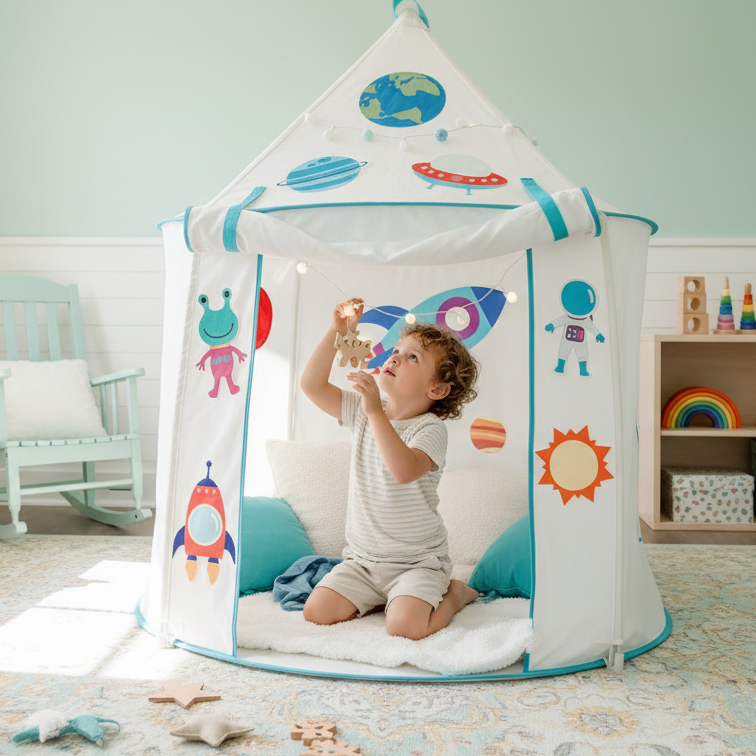
ZeeZee Adventures was created around a different philosophy. Inspired by two young sisters who wondered why their play tent could not change with their imagination, the ZeeZee Adventure Tent was designed to become a flexible play environment rather than a single-purpose toy. With interchangeable StickeeZ themes, children can transform the same space into a magical kingdom, an underwater adventure, a dinosaur world, outer space, or whatever story they wish to tell next. The brand also focuses on creating calming, sensory-friendly spaces that support creativity, independent play and meaningful childhood experiences.
Instead of constantly introducing new toys, families can refresh the experience by changing the environment itself. This approach encourages children to revisit familiar spaces while discovering entirely new adventures, making independent play feel exciting again. The complete play system includes the tent, lighting, and themed accessories that are designed to support longer periods of purposeful, screen-free play.

Conclusion
Keeping children entertained without screens is not about filling every minute with carefully planned activities. It is about creating the conditions where curiosity, creativity and independent thinking can flourish naturally. When children are given the freedom to explore, imagine and make their own decisions, they often discover that the most memorable adventures are the ones they create themselves.
There will still be moments when your child says, "I'm bored." That is perfectly normal. Boredom is not a sign that you have failed as a parent or that your child needs another toy. More often, it is the space between one idea and the next. If we resist the urge to solve that moment immediately, we give children the opportunity to develop one of the most valuable skills they can learn: the ability to create their own fun.
Whether they are building a blanket fort, inventing a treasure hunt, painting a masterpiece or creating an imaginary world inside a cosy play space, children are doing far more than passing the time. They are strengthening creativity, building resilience, practising problem-solving and learning to trust their own ideas.
The goal is not to eliminate screens completely. Technology has its place in modern family life. The goal is to ensure that children experience a healthy balance where imaginative play, exploration and meaningful human connection remain at the heart of childhood.
As parents, we do not need to become our children's full-time entertainers. We simply need to provide the time, encouragement and environment where imagination can take the lead. When we do, children often remind us that the greatest adventures require very little equipment, only the freedom to begin.
Action Checklist
Use this checklist to help your family encourage more meaningful, screen-free play.
☐ Create one consistent screen-free period every day.
☐ Set up a calm, inviting play space with minimal distractions.
☐ Rotate toys every few weeks instead of buying new ones.
☐ Keep creative materials within easy reach.
☐ Encourage imaginative play with open-ended questions.
☐ Allow your child time to work through boredom without immediately offering a screen.
☐ Spend time outdoors exploring nature whenever possible.
☐ Read together every day and encourage storytelling.
☐ Celebrate creativity rather than focusing on perfect results.
☐ Join in occasionally, then step back and let your child lead the adventure.
Frequently Asked Questions
1. How can I keep my child entertained without screens every day?
Focus on providing a variety of open-ended activities rather than constantly introducing new toys. Reading, imaginative play, arts and crafts, building projects, sensory play, and outdoor exploration all encourage children to entertain themselves while developing important life skills.
2. What should I do when my child says they're bored?
Avoid rushing to solve the problem immediately. Give your child time to think, explore and generate their own ideas. Boredom often becomes the starting point for creativity and independent play.
3. Do children really need less screen time?
The goal is not necessarily less screen time, but better balance. Children benefit most when screens complement rather than replace imaginative play, physical activity, social interaction, and creative exploration.
4. Why do children lose interest in toys so quickly?
Many toys have a fixed purpose, so children eventually explore everything they can do. Open-ended materials remain engaging because children continually invent new ways to use them.
5. How can I encourage independent play?
Create a calm play environment, provide open-ended materials, avoid interrupting play unnecessarily, and allow children opportunities to solve small challenges on their own. Independent play develops gradually through regular practice.
6. What are the best screen-free activities for rainy days?
Indoor treasure hunts, blanket forts, puppet theatres, building challenges, drawing, storytelling, baking, board games and sensory play are all excellent options that encourage creativity without relying on screens.
7. How can I make screen-free play more exciting?
Rather than introducing more toys, focus on creating an environment that inspires imagination. Spaces that children can personalise and transform into different worlds often remain engaging for much longer than fixed-theme toys.
Internal Linking Suggestions
Help readers continue exploring related topics with these articles:
-
50 Screen-Free Activities Kids Will Actually Love
-
How Pretend Play Builds Real-Life Skills
-
Why Some Kids Can Play for Hours While Others Can't
-
How to Create a Screen-Smart Home Without Going Extreme
-
Why Every Child Needs a Space of Their Own
-
The Benefits of Open-Ended Play for Child Development
-
Creating Calm Through Sensory-Friendly Play
Author Bio
The ZeeZee Play Experts
The ZeeZee Play Experts are passionate about helping families rediscover the value of imaginative, child-led play. Drawing on insights from child development, occupational therapy, and real family experiences, they create evidence-informed resources that support creativity, confidence, and independent exploration. Their mission is to help parents build calmer homes where children can learn, grow, and believe in the power of their own imagination.





Comment (0)