
Cozy Culture Goes Big as Screen-Free Play Tops 2026 Toy Trend Lists
Introduction
For years, the toy industry has raced to become more connected.
More interactive.
More digital.
More immersive.
From app-enabled toys to AI-powered companions, innovation has often been measured by how much technology could be added to childhood.
In 2026, something unexpected happened.
One of the world's largest toy industry organisations identified a very different movement as one of the defining trends of the year.
Not more screens.
Not more technology.
Less.
The Toy Association's 2026 Toy & Play Trends introduced Cozy Culture as one of the year's biggest movements, describing a growing demand for low-tech and no-tech toys that help families "power down and reset" in response to constant digital stimulation. Rather than rejecting technology altogether, the trend reflects a conscious effort to create calmer moments through tactile, sensory-rich and screen-free play.
For parents, this shift feels familiar.
Many families have noticed that while technology offers remarkable opportunities, childhood can also become crowded with notifications, fast-moving entertainment and constant digital engagement.
As a result, there is growing interest in creating spaces where children can slow down, concentrate and simply enjoy being children.
This is not about removing technology from family life.
It is about restoring balance.
The rise of Cozy Culture suggests that many parents are looking beyond toys that simply capture attention. Instead, they are choosing products and play experiences that encourage creativity, emotional wellbeing, meaningful family connection and long-lasting imaginative play.
This guide explores why Cozy Culture has become one of the defining toy trends of 2026, what it means for modern families, and how screen-free, child-led play is helping reshape childhood for the better.
Quick Answer
Cozy Culture is one of the Toy Association's top toy trends for 2026. It reflects growing demand for low-tech and no-tech toys that help families balance constant digital stimulation with calmer, screen-free play experiences. Parents are increasingly choosing toys that encourage creativity, sensory exploration, emotional regulation, and meaningful family connection rather than constant digital engagement.
Key Takeaways
-
Cozy Culture has been identified as one of the biggest toy trends of 2026.
-
Families are increasingly seeking screen-free opportunities to balance digital life.
-
Low-tech play supports creativity, concentration, and meaningful family interaction.
-
Calm, sensory-rich environments are becoming more desirable than constant stimulation.
-
Purposeful, open-ended play is increasingly valued for its long-term developmental benefits.
Definition
What Is Cozy Culture?
Cozy Culture is a 2026 toy and play trend identified by the Toy Association. It describes the growing popularity of low-tech and no-tech toys that encourage families to slow down, engage the senses, and create intentional, screen-free moments together. Rather than rejecting technology, Cozy Culture promotes a healthier balance by making space for emotional regulation, creativity, comfort, and meaningful human connection through play.
Why Is Cozy Culture Emerging Now?
Today's children are growing up in a world where digital experiences are woven into everyday life.
Video calls connect grandparents across continents.
Educational apps support classroom learning.
Streaming services provide endless entertainment.
Technology has become an ordinary part of modern childhood.
At the same time, many parents are becoming more intentional about creating opportunities for children to experience something different.
Moments where there are no notifications.
No countdown timers.
No endless scrolling.
Just time to imagine, create, and explore.
The Toy Association describes Cozy Culture as a response to the pace of digital life rather than a rejection of technology itself. Families are increasingly choosing toys and games that help them "power down and reset" through tactile materials, gentle interaction, and calming design.
This shift reflects a broader cultural desire to make room for slower, more mindful experiences within busy family life.
Screen-Free Play Is No Longer a Niche Idea
Not long ago, screen-free play was often discussed as an alternative approach embraced by a relatively small number of families.
Today, it is becoming part of mainstream conversations about childhood.
Parents are increasingly looking for activities that encourage children to:
-
Create instead of consume.
-
Imagine instead of simply watch.
-
Build instead of tap.
-
Explore instead of scroll.
The popularity of portable "analog bags" filled with books, crafts, puzzles, and sensory toys is another example of this movement. These travel-friendly collections have gained attention as parents look for practical ways to entertain children without relying on screens.
Rather than replacing digital experiences completely, families are building healthier routines where both digital and physical play have their place.
Expert Insight
Balance is becoming the new goal.
Child development experts generally encourage balanced childhood experiences that include movement, imaginative play, conversation and opportunities for focused attention. The growing popularity of Cozy Culture reflects many parents' desire to create more intentional moments where children can engage with the physical world, express creativity and connect with others without constant digital distraction.
Why Slower Play Matters
Children do not always need more stimulation.
Sometimes they need less.
Modern toys have become remarkably sophisticated, yet children often remain captivated by remarkably simple experiences.
Building a fort from cushions.
Creating stories with animal figures.
Drawing for an hour.
Reading quietly inside a cosy corner.
Collecting leaves during a family walk.
These activities may appear ordinary.
Developmentally, they are anything but.
When children engage in slower forms of play, they often remain with an activity for longer periods. They experiment, repeat, solve problems, and develop their own ideas without being directed by flashing lights or predetermined outcomes.
This kind of sustained engagement supports concentration while encouraging creativity and flexible thinking.
Perhaps that explains why many parents are rediscovering the value of simple play.
The Rise of Sensory-Rich Play
One of the defining characteristics of Cozy Culture is its emphasis on sensory experiences.
According to the Toy Association, families are increasingly drawn to toys that prioritise tactile materials, gentle interaction, and natural design aesthetics. These experiences engage children's senses while creating a calmer atmosphere for play.
Sensory-rich play does not need to be complicated.
It might include:
-
Wooden building blocks.
-
Soft fabrics.
-
Natural materials.
-
Clay and modelling dough.
-
Water play.
-
Loose parts.
-
Storytelling with felt characters.
-
Quiet reading spaces.
These experiences encourage children to interact directly with the world around them rather than simply responding to digital prompts.
Cozy Culture Reflects a Bigger Parenting Shift
Perhaps the most interesting aspect of Cozy Culture is that it extends beyond toys.
Families are increasingly creating reading corners.
Designing screen-free spaces.
Spending more time outdoors.
Choosing open-ended activities over highly scripted entertainment.
Even home design trends have begun embracing "analog rooms" that encourage reading, conversation, games, and creative hobbies without screens.
These changes suggest that parents are not simply purchasing different products.
They are rethinking how childhood feels.
Rather than asking,
"How can we keep children busy?"
Many families are beginning to ask,
"How can we create more moments of calm, creativity and connection?"
That subtle change may become one of the defining parenting stories of this decade.
What Cozy Culture Means for Modern Families
The rise of Cozy Culture is about much more than buying different toys.
It reflects a broader change in how many parents are thinking about childhood itself.
For years, families have had access to an ever-growing selection of digital entertainment. Streaming platforms, educational apps, online games and connected devices have become part of everyday life.
While these innovations have brought many benefits, they have also encouraged parents to think more intentionally about balance.
Instead of asking how to eliminate technology, many families are asking a different question.
"How can we create more opportunities for children to slow down, imagine, and connect with the world around them?"
Cozy Culture offers one possible answer.
It encourages families to create moments where children can experience uninterrupted play, meaningful conversations and hands-on exploration without the constant pace of digital stimulation.
This shift is not about nostalgia.
It is about recognising that children benefit from a wide variety of experiences, including those that encourage patience, creativity and focused attention.
Creating a Cosy, Screen-Free Play Environment
A cosy play environment is not defined by expensive furniture or perfectly styled interiors.
It is defined by how a space makes children feel.
The most inviting play spaces often share several simple characteristics.
They feel calm rather than overwhelming.
They encourage exploration without demanding constant adult direction.
They make children want to stay, imagine, and create.
Creating this type of environment can be surprisingly simple.
Choose a quiet corner of your home.
Add comfortable cushions or a soft rug.
Place a small selection of books within easy reach.
Include open-ended materials such as wooden blocks, drawing supplies, loose parts, or puzzles.
Allow children enough uninterrupted time to become deeply engaged.
The goal is not to create a picture-perfect playroom.
It is to create a space where imagination naturally takes centre stage.
Expert Insight
Children often need fewer distractions, not more.
Child development specialists frequently observe that children are capable of sustained concentration when they are given meaningful activities in environments that reduce unnecessary distractions. A thoughtfully prepared play space can encourage deeper engagement, creativity, and independent problem-solving without relying on constant novelty or digital stimulation.
Why Open-Ended Play Fits the Cozy Culture Movement
One reason screen-free play continues to gain attention is its flexibility.
Unlike many electronic toys, open-ended materials do not tell children exactly what to do.
Instead, they invite children to create their own ideas.
A collection of wooden blocks may become a city one day.
The following afternoon, those same blocks become a castle.
Later in the week, they become a zoo.
Nothing about the materials has changed.
Only the child's imagination.
This flexibility gives open-ended play remarkable long-term value.
Children return to familiar materials again and again because every new idea creates an entirely different experience.
That is one reason parents are increasingly choosing toys that grow alongside their child's imagination rather than offering only one way to play.
The Return of Quiet Moments
Modern family life can often feel wonderfully busy.
School.
Work.
Activities.
Appointments.
Notifications.
Screens.
Children experience this pace alongside adults.
Cozy Culture encourages families to protect moments that feel different.
Reading together before bedtime.
Building a blanket fort on a rainy afternoon.
Drawing quietly while listening to gentle music.
Sharing stories inside a cosy play space.
Watching clouds drift across the sky.
These activities may appear simple.
Yet they often become the memories children remember most vividly because they encourage genuine connection rather than constant entertainment.
Why Parents Are Choosing Quality Over Quantity
For many years, the toy industry focused on offering more.
More features.
More sounds.
More lights.
More digital interaction.
Today, many families are making different choices.
Rather than filling playrooms with large numbers of toys, parents are increasingly investing in products that encourage long-term engagement.
They are asking questions such as:
- Will my child return to this again and again?
- Does this encourage creativity?
- Can it grow alongside my child's interests?
- Will it support independent play?
- Does it create opportunities for family connection?
These questions reflect a growing emphasis on lasting value rather than short-term novelty.
Cozy Culture is helping shift attention away from how many toys children own towards the quality of the experiences those toys encourage.
Common Misconceptions About Screen-Free Play
Although screen-free play is becoming increasingly popular, several misconceptions continue to discourage families.
| Myth | Reality |
|---|---|
| Screen-free play means banning all technology. | Most families are simply aiming for a healthier balance between digital and physical play. |
| Children become bored without screens. | Boredom often encourages imagination, creativity, and independent problem-solving. |
| Expensive toys create better play experiences. | Meaningful, open-ended materials often provide greater long-term engagement. |
| Screen-free activities require constant parental involvement. | Many open-ended activities encourage children to play independently once they become engaged. |
| Calm play is less educational than interactive technology. | Quiet, imaginative play supports creativity, language development, concentration and flexible thinking. |
Practical Ways to Embrace Cozy Culture at Home
Families do not need to redesign their homes to embrace this movement.
Small changes often have the greatest impact.
Consider introducing simple habits such as:
- Creating a dedicated screen-free hour each evening.
- Keeping books easily accessible throughout the home.
- Rotating toys instead of continually buying new ones.
- Spending more time outdoors together.
- Encouraging imaginative storytelling.
- Creating a cosy reading corner.
- Offering open-ended creative materials.
- Protecting uninterrupted time for independent play.
These small routines gradually create an environment where children learn that not every moment needs to be filled with digital entertainment.
Instead, they discover the joy of creating their own adventures.
How ZeeZee Adventures Naturally Fits the Cozy Culture Movement
The principles behind Cozy Culture closely reflect the philosophy that has guided ZeeZee Adventures from the beginning.
Rather than creating products that compete for children's attention through flashing lights or digital stimulation, ZeeZee Adventures focuses on creating environments where imagination becomes the experience.
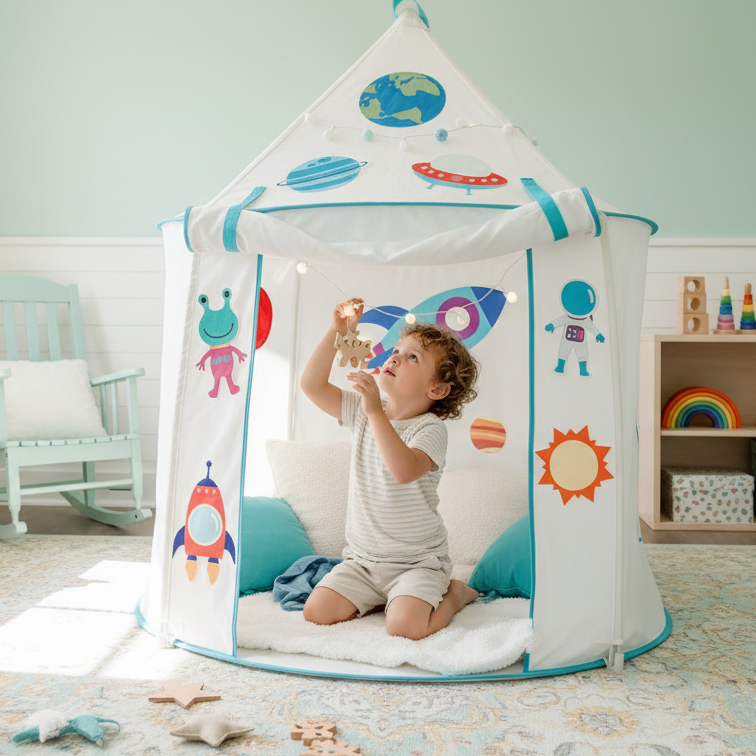
Inspired by two sisters who dreamed of a play tent that could transform into countless different adventures, the ZeeZee Adventure Tent provides a calm, sensory-friendly space where children can read, create, imagine, and explore at their own pace. Its interchangeable StickeeZ themes allow the same play environment to evolve alongside a child's changing interests, encouraging long-term engagement instead of short-lived novelty.
This approach aligns naturally with the values behind Cozy Culture.
Instead of replacing one toy with another, children revisit the same familiar space while creating entirely new stories every time they play.
Whether it becomes a magical forest, an underwater expedition, a space station, or a quiet reading retreat, the environment supports child-led exploration, creativity, and independent thinking.
In a world where many products compete to capture children's attention, ZeeZee Adventures is designed to do something different.
It gives children the freedom to direct their own adventures.

Conclusion
The biggest toy trend of 2026 is not really about toys.
It is about childhood.
The rise of Cozy Culture reflects something many families have been feeling for quite some time.
Life has become busier.
Technology has become more integrated into everyday routines.
Children have access to more entertainment than any previous generation.
Yet alongside all of these advances, parents are increasingly recognising the importance of protecting slower, quieter moments where children can simply imagine, create and connect.
That is why Cozy Culture feels so significant.
It does not encourage families to reject technology or return to an idealised version of the past.
Instead, it encourages balance.
It reminds us that children need opportunities to experience both digital innovation and real-world exploration.
They need moments where they can build with blocks, create stories, read quietly, explore nature and become completely absorbed in play that is directed by their own imagination.
Perhaps the greatest lesson behind this movement is that children do not always need more stimulation.
Sometimes they need more space.
Space to think.
Space to wonder.
Space to make mistakes.
Space to become deeply engaged in an activity simply because they enjoy it.
Those experiences build far more than happy memories.
They nurture creativity, confidence, resilience and emotional wellbeing.
Parents do not need to transform their homes overnight to embrace this movement.
A cosy reading corner.
A basket of open-ended materials.
An afternoon spent outdoors.
A family board game.
A blanket fort built from dining chairs.
These simple experiences often become the moments children remember long after the latest gadget has been forgotten.
As the toy industry continues to evolve, one message is becoming increasingly clear.
The future of play may be less about adding more technology and more about creating meaningful opportunities for children to explore the world with curiosity, confidence, and imagination.
In many ways, Cozy Culture is not a step backwards.
It is a thoughtful step towards a more balanced childhood.
Cozy Culture Family Checklist
Use this checklist to introduce more intentional, screen-free moments into everyday family life.
Create Calm Spaces
☐ Set aside a cosy corner for reading and quiet play.
☐ Keep books easily accessible throughout your home.
☐ Use soft lighting and comfortable seating where possible.
☐ Reduce unnecessary distractions during independent play.
☐ Encourage children to personalise their own play space.
Encourage Open-Ended Play
☐ Offer toys that can be used in many different ways.
☐ Encourage storytelling and imaginative role play.
☐ Keep drawing and creative materials within easy reach.
☐ Rotate toys occasionally instead of constantly buying new ones.
☐ Allow children uninterrupted time to develop their own ideas.
Make Screen-Free Time Part of Everyday Life
☐ Introduce a regular screen-free family hour.
☐ Read together every day.
☐ Spend time outdoors each week.
☐ Play board games or card games together.
☐ Create opportunities for independent play without adult direction.
Focus on Meaningful Moments
☐ Invite children to help prepare meals.
☐ Encourage conversations without devices nearby.
☐ Celebrate creativity rather than productivity.
☐ Allow boredom to become the beginning of imagination.
☐ Remember that connection matters more than constant entertainment.
Frequently Asked Questions
1. What is Cozy Culture?
Cozy Culture is one of the Toy Association's leading toy and play trends for 2026. It describes growing interest in low-tech and no-tech toys that encourage families to slow down, engage in sensory-rich experiences, and enjoy more intentional, screen-free play.
2. Does Cozy Culture mean eliminating screens completely?
No. Cozy Culture is about creating balance rather than removing technology altogether. Many families are simply choosing to include more opportunities for creative, hands-on, and imaginative play alongside digital experiences.
3. Why is screen-free play becoming more popular?
Many parents are looking for ways to help children experience calmer, more focused play. Screen-free activities often encourage creativity, problem-solving, conversation and independent exploration.
4. What types of toys fit the Cozy Culture trend?
Open-ended toys, building materials, books, puzzles, arts and crafts, sensory materials, imaginative play resources and nature-inspired activities all reflect the principles behind Cozy Culture.
5. Can children still benefit from technology?
Yes. Technology has many valuable educational and social uses. Cozy Culture simply encourages families to balance digital experiences with opportunities for imaginative, hands-on and screen-free play.
6. How can I create a cosy play environment without spending a lot of money?
Start with a quiet corner, comfortable cushions, a few favourite books and a small collection of open-ended materials. The atmosphere you create is often more important than the amount of equipment you own.
7. Why are open-ended toys becoming more popular?
Open-ended toys encourage children to invent their own stories, solve problems creatively, and return to the same materials in new ways. This gives them greater long-term play value than toys designed for only one type of activity.
Author Bio
The ZeeZee Play Experts
The ZeeZee Play Experts are passionate advocates for imaginative, screen-free childhoods. Drawing on insights from child development, occupational therapy, and early years education, they create evidence-informed resources that help families build calmer, more connected homes through purposeful play. Their mission is to inspire parents to create environments where curiosity, creativity and confidence can flourish naturally.





Comment (0)