
How to Turn Any Corner of Your Home into a Waldorf Play Space
Creating a nurturing environment for children does not always require a large playroom or expensive toys. In many homes, a small and thoughtfully designed corner can become a powerful space for imagination, creativity, and emotional growth. Inspired by Waldorf education, a Waldorf play space encourages children to explore, create stories, and develop independence through open-ended play.
Parents today often search for ways to reduce screen time and support healthy development. A Waldorf-inspired play space offers a calm and inviting area where children can slow down and engage deeply with their surroundings. The good news is that almost any corner of your home can be transformed into a magical play environment with a few thoughtful choices.
Understanding the Waldorf Approach to Play
The Waldorf philosophy emphasizes creativity, imagination, and emotional development. Instead of focusing on structured activities or highly stimulating toys, Waldorf play encourages children to use their imagination and interact with natural materials.
In a Waldorf inspired environment, play is not directed by instructions or flashing lights. Children create their own stories, build imaginary worlds, and discover new ideas through exploration. This type of play supports confidence, empathy, and independent thinking.
A simple play corner can become a reading nook, a secret hideout, or a place for storytelling adventures. What matters most is the atmosphere of calm and creativity.
Start with a Quiet and Comfortable Space
The first step in creating a Waldorf play space is choosing the right location. Look for a quiet corner where your child can feel safe and relaxed. This could be in a living room, bedroom, or even a small area near a window.
Children are naturally drawn to cozy environments. Soft lighting, gentle colors, and comfortable textures help create a space where they want to spend time. A soft rug, a few cushions, and a small blanket can quickly transform a plain corner into a welcoming play area.
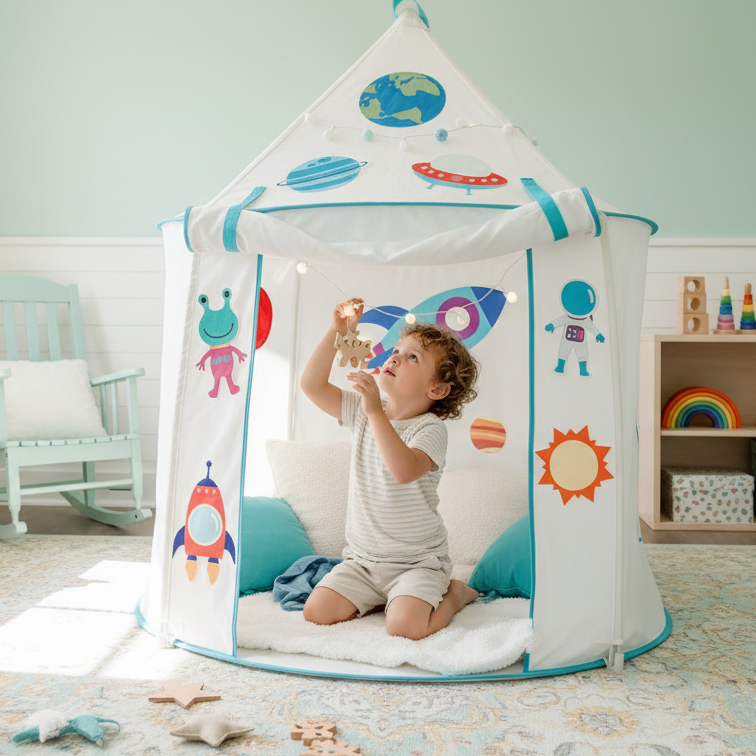
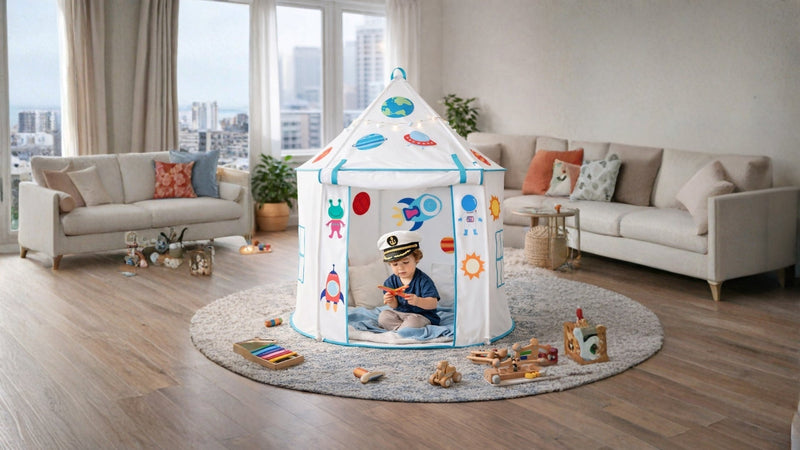
Many families also like to include a small tent or canopy to create a sense of privacy and imagination. A cozy tent space can become a reading fort, a pretend castle, or a peaceful retreat where children can play independently.
Use Natural and Open Ended Materials
One of the key principles of Waldorf inspired play spaces is the use of simple and natural materials. Wooden toys, soft fabrics, baskets, and handmade objects invite creativity because they do not limit how a child can use them.
Instead of toys that perform a specific function, open ended toys allow children to invent their own stories. Wooden blocks can become houses, bridges, or entire cities. A piece of fabric can turn into a cape, a river, or a magic carpet.
Natural materials also help create a calm atmosphere. Wood, cotton, wool, and other natural textures bring warmth to the play area and encourage sensory exploration.
Create a Space for Imagination
Imagination sits at the heart of Waldorf play. A play space should inspire curiosity and storytelling.
You can encourage imaginative play by including simple props such as dolls, animals, wooden figures, or play silks. These items help children create characters and adventures during playtime.
A cozy play tent can also become an important part of this environment. For many children, a tent feels like a special world of their own. Inside that small space they can read books, act out stories, or simply relax and daydream.
When children feel ownership of a space, they naturally spend more time playing independently and creatively.
Keep the Environment Calm and Organized
A Waldorf inspired play space is intentionally simple. Too many toys can overwhelm children and make it harder for them to focus.
Instead of filling the area with many items, choose a small collection of meaningful toys and rotate them occasionally. This keeps the environment fresh while maintaining a sense of calm.
Storage baskets or wooden shelves help keep the space organized. When toys have a clear place to return to, children learn responsibility and independence.
A clean and peaceful environment also encourages longer periods of focused play.
Encourage Independent Play
One of the greatest benefits of a Waldorf play space is the opportunity for independent play. When children have a comfortable and inspiring environment, they naturally begin to explore and create on their own.
Independent play supports important developmental skills such as problem solving, creativity, and emotional confidence. Children learn to entertain themselves, build stories, and explore ideas without constant direction.
Parents can support this process by giving children time and space to play freely while remaining nearby for guidance when needed.
Small Spaces Can Create Big Adventures
You do not need a large playroom to support your child's imagination. Even a small corner can become a world of adventure when it is designed with intention.
By focusing on comfort, natural materials, and creative freedom, parents can create a Waldorf inspired play space that encourages curiosity and joy. A cozy play tent, a few meaningful toys, and a calm atmosphere can open the door to endless stories and discoveries.
In the end, the most important element of a Waldorf play space is not the size of the area but the sense of wonder it creates. When children feel safe, inspired, and free to imagine, even the smallest corner of a home can become a place where creativity grows.






Comment (0)