
Why Calm, Cool-Toned Play Spaces Help Children Think, Imagine, and Focus
Walk into most toy stores or playrooms, and you’ll notice something immediately.
Bright reds.
Neon greens.
Walls filled with colors competing for attention.
The common assumption is simple:
Kids love color, so more color must be better.
But research in child development and environmental psychology tells a more nuanced story.
Children do benefit from color—but the way color is used matters far more than how much of it there is.
In fact, studies increasingly show that calmer, balanced environments often support focus, imagination, and emotional regulation better than chaotic visual spaces.
This insight is quietly reshaping how educators, designers, and parents think about children’s environments.
The Science of Color in Children’s Environments
Color isn’t just decoration. It influences how children think, feel, and interact with their surroundings.
Research shows color can affect:
-
attention
-
mood
-
memory
-
learning performance
Color is considered a powerful environmental factor that shapes children’s emotional and cognitive development.
In learning environments, designers intentionally use color to support different types of activities — energizing areas for play and calming areas for focus.
In other words, color becomes part of the architecture of learning.
When Too Much Color Becomes Overstimulation
Here’s the surprising part.
Research suggests that environments filled with excessive color and visual stimulation can actually make it harder for children to focus.
One study examining preschool play spaces found that highly colorful surfaces interfered with structured play, increasing behaviors that indicated distraction and disruption.
Similarly, studies on classroom environments show that children in heavily decorated rooms:
-
became more distracted
-
spent more time off task
-
showed smaller learning gains.
Why?
Because young brains are still developing the ability to filter sensory input.
When everything is visually loud, nothing stands out.
Why Cool Colors Help Children Feel Calm
Cool color palettes — especially blue, green, and soft neutrals — are widely used in schools and therapeutic environments.
Research consistently shows these tones help:
-
reduce stress
-
support concentration
-
encourage emotional balance
Cool tones are associated with natural elements like water and sky, which help children relax and improve their creative thinking and problem-solving ability.
Studies also show that cooler hues can improve performance in attention and memory tasks.
Blue environments in particular are known to:
-
calm racing thoughts
-
lower stress
-
encourage deeper thinking.
This is why many classrooms, libraries, and sensory rooms rely on calm palettes rather than high-intensity color schemes.
Why Simpler Spaces Spark Bigger Imagination
Children don’t need environments that tell them what to imagine.
They need environments that leave room for imagination to grow.
When a space is visually calm:
-
Children focus longer
-
Stories unfold naturally
-
play becomes more exploratory
Psychologists often describe this as reducing cognitive load — the amount of information the brain must process.
When the environment is quieter, the mind becomes louder.
That’s when creativity shows up.
A pillow becomes a mountain.
A blanket becomes a cave.
A small play space becomes an entire world.
The Best Children’s Spaces Use Color With Intention
Modern child-development design increasingly follows a simple principle:
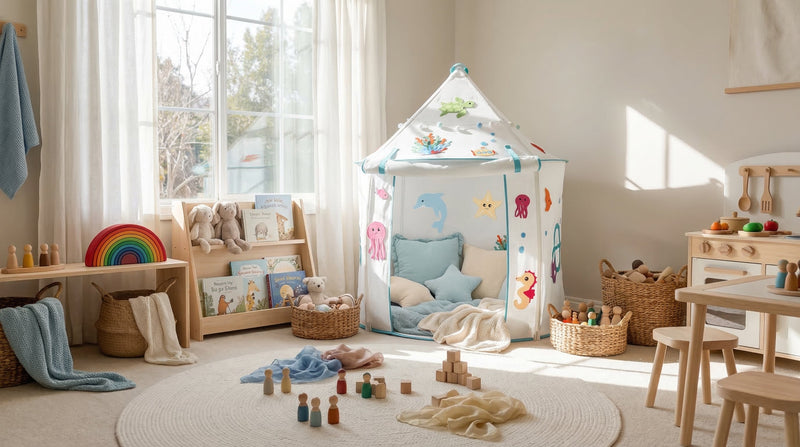
Neutral base. Playful accents.
Instead of overwhelming children with constant stimulation, the most effective spaces provide:
-
calm backgrounds
-
soft textures
-
flexible play elements
-
small bursts of color
Research suggests that softer and less saturated colors help prevent overstimulation while still maintaining visual interest for children.
This balance helps children stay emotionally regulated while still encouraging curiosity and exploration.
A Different Way to Think About Play Spaces
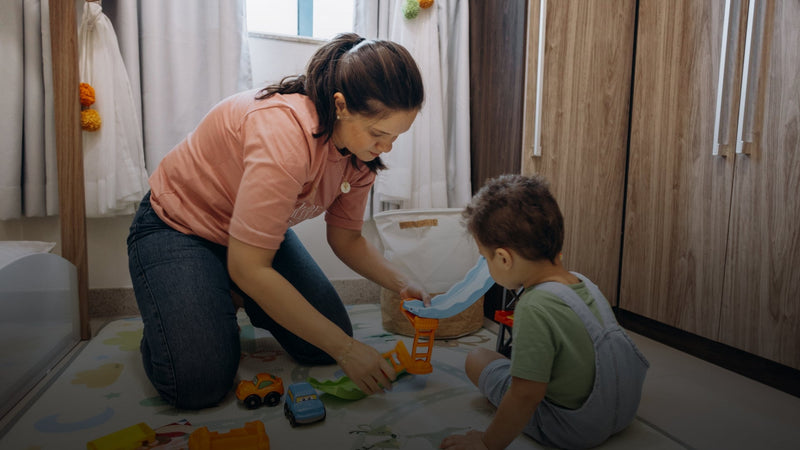
When parents design play areas at home, the instinct is often to fill them with as much color and stimulation as possible.
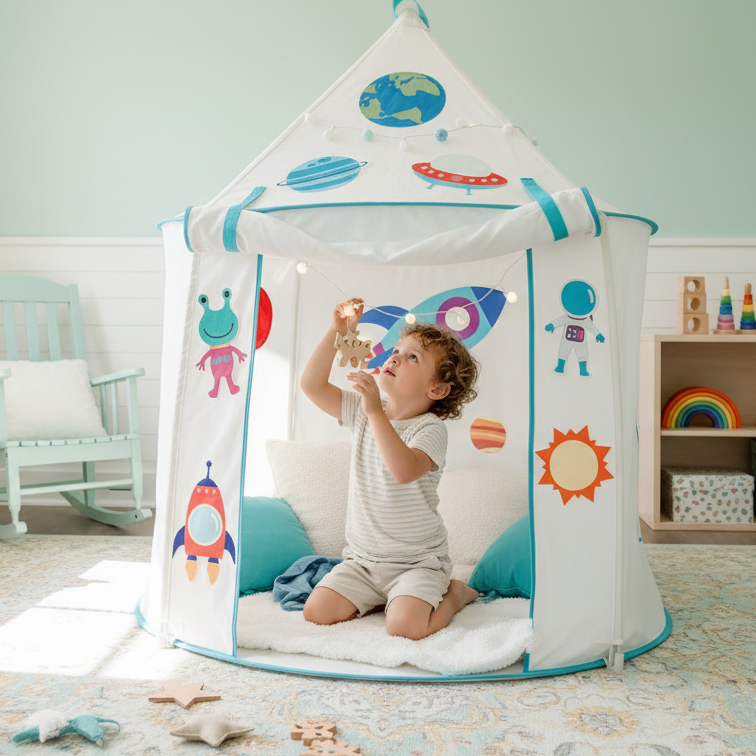
But the most powerful play environments often look surprisingly simple.
They might include:
-
calm tones
-
cozy lighting
-
open-ended toys
-
Flexible spaces, children can transform with imagination
Instead of overwhelming children with visual noise, these environments give them something much more valuable:
space to think, create, and explore.
A Space Where Imagination Leads
When children have a space that feels calm and welcoming, something powerful happens.
They slow down.
They focus.
They create.
That’s why many families are beginning to design play spaces that feel less like a toy aisle and more like a small sanctuary for imagination.
Spaces where stories unfold naturally, curiosity grows, and children feel free to explore their ideas.
Because sometimes the most magical play environments aren’t the loudest or brightest.
They’re the ones that simply give imagination room to breathe.
Frequently Asked Questions
Do children need bright colors in their playrooms?
Children benefit from color, but too much bright color can cause overstimulation. Research suggests balanced environments with calmer base tones and limited accent colors support focus and emotional regulation.
Why are cool colors often used in learning spaces?
Cool tones such as blue and green are linked to relaxation, focus, and cognitive performance. These colors help create environments where children can concentrate and think more clearly.
Can too many decorations affect a child’s learning?
Yes. Studies show that overly decorated environments can distract children and reduce attention during tasks.
What colors are best for a child’s play space?
A balanced palette works best:
-
soft blues or greens
-
neutral backgrounds
-
small bursts of brighter accent colors
This combination supports both creativity and emotional comfort.
Research References
Research and insights referenced in this article include studies on:
-
color psychology in learning environments
-
visual stimulation and cognitive performance
-
environmental design for early childhood education
Key sources include research published through journals and educational studies examining classroom color design, cognitive performance, and environmental psychology.




Comment (0)