

The First 10 Minutes of Play: Why They Matter More Than You Think
Introduction: The Moment Play Truly Begins
In many homes, playtime appears to begin the moment a child picks up a toy.
A new game is opened, a structure is built, or an activity is introduced. From the outside, it may seem as though engagement starts instantly.
But child development research suggests something more nuanced.
Play does not begin at the first interaction.
It begins in the first ten minutes of exploration — a critical window where the brain decides whether an activity is worth continuing, deepening, or abandoning.
These early minutes shape not only how long a child will remain engaged, but also the quality of the play experience that follows.
Understanding what happens during this short but powerful period can fundamentally change how parents, educators, and designers think about play.
What Happens in the First 10 Minutes?
When a child encounters a new play experience, the brain enters a state of rapid evaluation.
Within moments, several cognitive processes begin simultaneously:
-
sensory scanning of the environment
-
assessment of novelty and interest
-
prediction of possible outcomes
-
emotional response to the experience
This process is often unconscious, yet highly influential.
If the experience feels overwhelming, confusing, or overly prescriptive, the brain may disengage early.
If it feels inviting, open, and manageable, the brain leans into exploration.
In other words, the first ten minutes are not passive.
They are in a decision-making phase, where curiosity is either activated or quietly diminished.
Cognitive Load and Early Engagement
One of the most important factors influencing these early moments is cognitive load — the amount of information the brain must process at once.
Young children have a limited capacity to filter stimuli.
When they are presented with too many instructions, colours, sounds, or functions simultaneously, their cognitive system becomes overloaded.
This can lead to:
-
hesitation
-
fragmented attention
-
quick disengagement
In contrast, when the environment or activity is simple and clear, children are able to:
-
focus more easily
-
explore with confidence
-
remain engaged for longer periods
This is why the structure of the first ten minutes matters so deeply.
It determines whether the experience feels accessible or overwhelming.
The Role of Autonomy in Early Play
Another critical factor in early engagement is autonomy.
Children are far more likely to remain engaged in play when they feel a sense of control over the experience.
During the first ten minutes, children are subtly asking:
-
What can I do here?
-
Do I have the freedom to explore?
-
Is there a right or wrong way to play?
When play feels overly guided or restricted, engagement often drops quickly.
But when play invites open-ended exploration, something different happens.
Children begin to experiment.
They test possibilities.
They create their own rules.
This early sense of ownership is often what transforms short interactions into extended periods of meaningful play.
Why Some Toys Lose Attention Quickly
Many modern toys are designed with immediate stimulation in mind.
They are bright, interactive, and often highly structured.
While this can capture attention in the first few moments, it does not always sustain it.
During the first ten minutes, children may quickly discover:
-
the limits of the toy’s functionality
-
the repetition of its actions
-
the lack of variability in outcomes
Once this happens, curiosity declines.
The experience feels “complete,” and the child moves on.
This pattern explains why many toys generate short bursts of engagement but fail to hold attention over time.
Open-Ended Play and the Expansion of Possibility
In contrast, open-ended play experiences behave very differently during the first ten minutes.
Instead of presenting a fixed function, they present a field of possibilities.
The child is not told what the object is.
They decide.
This creates a fundamentally different cognitive response.
Rather than evaluating a predefined experience, the child begins constructing one.
In these early minutes, imagination becomes active.
Possibilities multiply rather than narrow.
And as a result, engagement deepens rather than fades.
Environmental Design and Its Influence
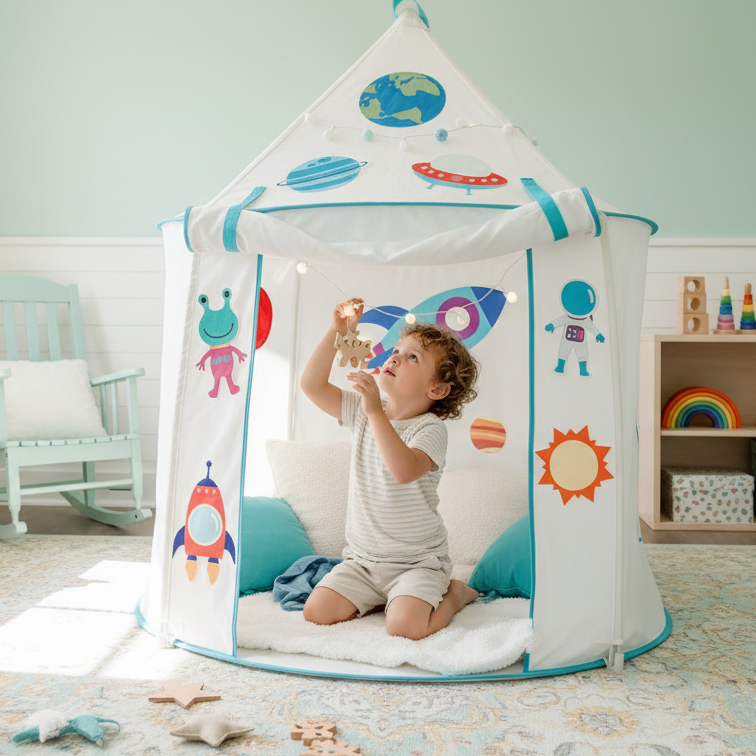
The physical environment in which play occurs also plays a significant role.
A cluttered, overstimulating space can interrupt early engagement by competing for attention.
In contrast, a calm and thoughtfully arranged environment allows the child to focus more fully on the activity at hand.
Key environmental factors that influence the first ten minutes include:
-
visual simplicity
-
accessible layout
-
absence of unnecessary distractions
-
sense of comfort and safety
Spaces that support these elements tend to encourage longer and more meaningful play sessions.
This is one reason why many families are moving towards more intentional play environments, including those explored through platforms such as ZeeZee Adventures, where the emphasis is placed on creating spaces that invite exploration rather than dictate it.
Emotional Safety and Play Initiation
Play is not purely cognitive.
It is also emotional.
In the first ten minutes, children are assessing not only the activity but also how it makes them feel.
If the experience feels:
-
safe
-
familiar
-
inviting
They are more likely to continue.
If it feels:
-
overwhelming
-
uncertain
-
overly demanding
They may withdraw.
This emotional dimension is often overlooked, yet it is central to sustained engagement.
The Transition From Exploration to Immersion
If the first ten minutes are successful, a transition begins.
Exploration turns into immersion.
Attention deepens.
Time perception shifts.
This is often referred to as a state of deep play — where the child becomes fully absorbed in the experience.
Reaching this state is not guaranteed.
It depends heavily on how those first few minutes unfold.
Practical Implications for Parents
Understanding the importance of the first ten minutes can lead to meaningful changes in how play is supported at home.
Rather than focusing solely on the quantity of toys, parents can focus on:
-
creating calm starting environments
-
allowing children time to explore without interruption
-
avoiding over-instruction
-
observing rather than directing early play
These small shifts can significantly increase both the duration and quality of play.
Rethinking Play as a Process
Play is often viewed as a simple activity.
But in reality, it is a complex developmental process.
The first ten minutes are not a trivial beginning.
They are the foundation.
They determine whether play becomes:
-
brief and surface-level
or -
deep and imaginative
Conclusion: The Power of a Quiet Beginning
In a world that often emphasises speed, stimulation, and constant activity, it is easy to overlook the importance of slow beginnings.
But for children, those first ten minutes matter more than they appear.
They are where curiosity is either nurtured or lost.
Where imagination either opens or closes.
Where play either begins to grow — or quietly fades away.
And sometimes, all it takes is a calm space, a simple starting point, and the freedom to explore.






Comment (0)