
The First 10 Minutes of Play: Why They Matter More Than You Think
In many homes, the beginning of play is almost invisible.
A child sits down with a toy or enters a play space. They pause, observe, touch, and explore tentatively. There is no immediate burst of imagination, no elaborate storytelling, no clear engagement. Instead, there is a quiet moment of evaluation.
To an adult, this moment may seem insignificant. It may even appear as hesitation or lack of interest. However, research in child development and cognitive psychology suggests that this brief period—often no more than ten minutes—plays a decisive role in determining whether meaningful play will unfold or quietly dissolve.
These initial moments act as a gateway. They shape the depth, duration, and quality of the entire play experience. Understanding what happens during this phase offers a powerful insight into how children engage with their environment and, ultimately, how their creativity and cognitive abilities develop over time.
The Entry Phase of Play
Before children become immersed in play, they pass through what can be described as an entry phase. During this phase, the child is not yet fully engaged but is actively assessing the situation.
This assessment is not conscious in the adult sense. Rather, it is a rapid and intuitive process through which the brain evaluates the potential of the environment or object in front of it. The child is effectively asking a series of unspoken questions: is this interesting, can I interact with it meaningfully, and does it offer something new or unknown?
The answers to these questions are shaped by sensory cues and prior experience. Texture, colour, structure, flexibility, and even the surrounding space all influence how the child interprets what is in front of them.
If the environment signals possibility, attention deepens. If it appears predictable or limited, engagement fades. This makes the beginning of play one of the most cognitively active stages of the entire experience.
First Impressions and Cognitive Load
One of the most influential factors in these early moments is cognitive load—the amount of mental effort required to process information.
Young children are still developing the ability to filter sensory input effectively. When they encounter environments that are visually crowded, overly complex, or filled with competing stimuli, their cognitive resources are quickly stretched.
In such situations, the brain struggles to identify a clear starting point. Without direction, attention becomes fragmented, and the child may move rapidly from one object to another without settling into sustained engagement.
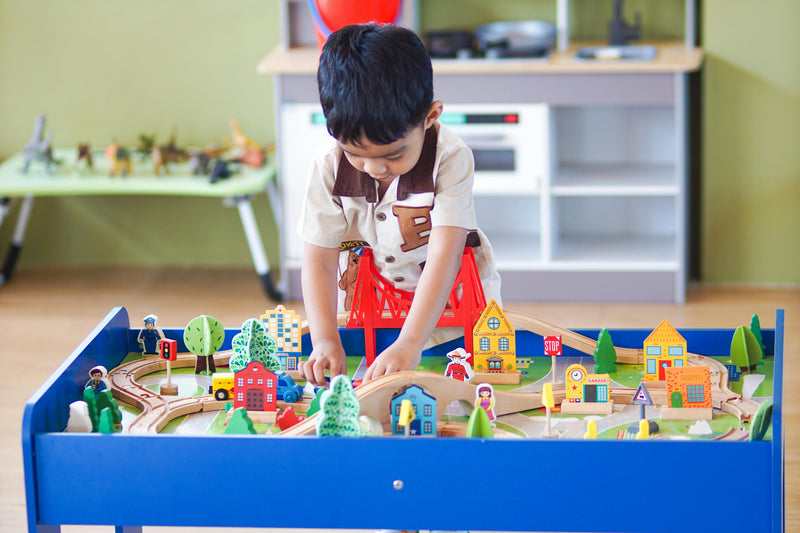
In contrast, environments that are thoughtfully composed—structured yet flexible—provide a clearer entry into play. They allow the child to focus, explore, and gradually build complexity through imagination.
This means that the first impression of a play space is not simply aesthetic; it directly affects whether play can begin at all.
When Play Ends Too Soon
Many contemporary toys are designed to capture attention immediately.
They rely on sound, light, movement, and clear functionality to create instant engagement. While this can generate short-term excitement, it often leads to a rapid decline in interest.
When a toy reveals all its possibilities within the first few minutes, the experience becomes finite. The child quickly understands how it works, and once that understanding is complete, there is little left to explore.
This pattern reflects what psychologists refer to as novelty decay—the natural reduction in interest as familiarity increases. In the context of play, novelty can disappear almost as quickly as it arrives if the experience does not offer depth.
As a result, the first ten minutes do not act as a bridge to deeper engagement. Instead, they become the entirety of the interaction.
Curiosity and the Need for Possibility
Curiosity is central to how children learn and engage with the world. However, curiosity depends on the presence of possibility.
During the first ten minutes of play, children are not simply looking for stimulation. They are looking for something that can grow, change, or be transformed through their actions.
This sense of openness—of something not yet fully defined—creates the conditions for exploration. It invites experimentation and encourages children to test ideas.
When an experience feels complete from the outset, curiosity has no role to play. Without uncertainty or potential, engagement tends to diminish quickly.
The most effective play experiences, therefore, are not those that present answers immediately, but those that invite questions.
The Role of Open-Ended Play
Open-ended play materials are particularly effective during the early stages of engagement because they resist immediate definition.
They do not dictate a single function or outcome. Instead, they offer a framework within which multiple interpretations can emerge.
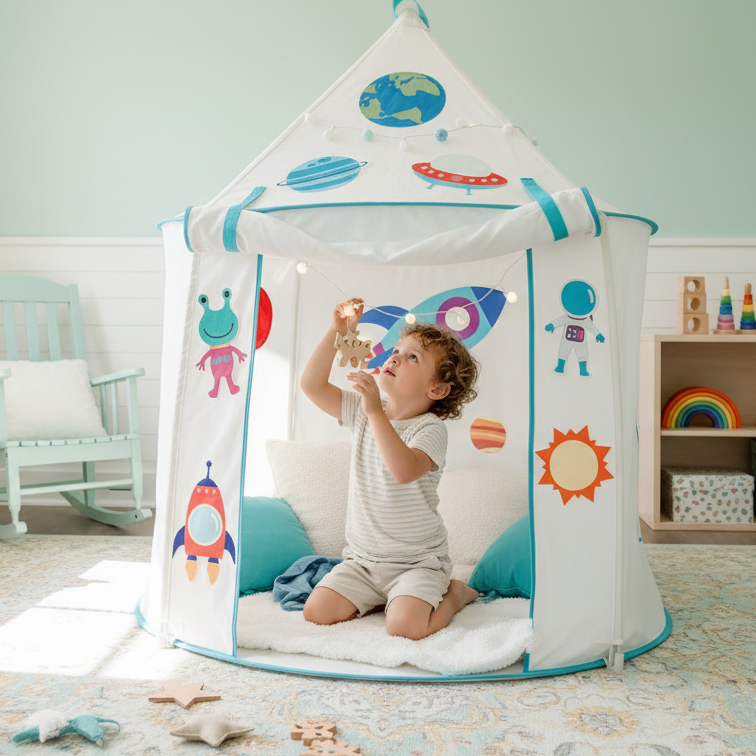
A simple play structure, for example, can take on many forms depending on the child’s imagination. It might become a shelter, a vehicle, a stage, or a quiet retreat. The absence of a fixed identity allows the child to assign meaning.
This process of interpretation is essential for imaginative development. It transforms play from a passive activity into an active, creative experience.
In environments such as those explored through ZeeZee Adventures, this principle is often reflected in how children interact with flexible play spaces, using them not as finished products but as evolving worlds shaped by their own ideas.
The Influence of the Environment
While toys play a role, the broader environment in which play takes place is equally important.
The first moments of engagement are highly sensitive to external conditions. Noise levels, lighting, spatial organisation, and visual clarity all contribute to how a child enters play.
Calm, coherent environments tend to support longer engagement. They reduce distractions and create a sense of psychological comfort, allowing children to focus more easily.
Spaces that feel slightly enclosed or defined often encourage immersion, as they provide a boundary within which imagination can unfold.
In contrast, environments that are overly stimulating or chaotic can interrupt the entry phase altogether. When attention is constantly pulled in multiple directions, it becomes difficult for the child to settle into any one experience.
From Exploration to Immersion
When a child remains engaged beyond the first ten minutes, a transition often occurs.
Exploration evolves into immersion. The child begins to develop narratives, assign roles, and build more complex scenarios. Time becomes less noticeable as attention deepens.
This stage of play is where significant developmental benefits emerge. Creative thinking becomes more fluid, problem-solving becomes more dynamic, and emotional expression becomes more nuanced.
However, this level of engagement depends entirely on a successful beginning. Without a strong entry into play, immersion is unlikely to take place.
Rethinking How Play Begins
Understanding the importance of the first ten minutes invites a shift in how play is approached.
Rather than focusing solely on duration—how long a child plays—it becomes more meaningful to consider the quality of the beginning. The initial interaction often determines everything that follows.
This perspective challenges the idea that more stimulation leads to better engagement. In many cases, simplicity and flexibility create more effective conditions for sustained play.
Observing how a child begins play can offer valuable insights. Do they engage quickly, or do they hesitate? Do they explore deeply, or move on rapidly? These patterns can reveal how the environment is being experienced.
Designing for Engagement
Creating effective play experiences involves designing for those first few minutes.
This means offering enough structure to provide direction, while leaving sufficient openness to encourage exploration. It involves balancing familiarity with novelty, and stimulation with calm.
The goal is not to deliver instant mastery, but to sustain curiosity. When children feel that there is more to discover, they are more likely to remain engaged.
Thoughtfully designed environments and materials can transform the first ten minutes from a moment of uncertainty into an invitation to explore.
A Small Window with Lasting Impact
The beginning of play may be brief, but its influence is profound.
It determines whether attention will deepen or dissipate. It shapes whether imagination will emerge or remain dormant. It influences whether play becomes meaningful or fleeting.
Recognising the importance of this initial phase allows parents, educators, and designers to support richer forms of engagement.
Ultimately, the most powerful play experiences are not those that demand attention, but those that invite it—quietly, gradually, and with the promise of something more.
Frequently Asked Questions
Why are the first 10 minutes of play important for children?
The first 10 minutes of play are crucial because they determine whether a child will become deeply engaged or lose interest quickly. During this initial phase, children assess whether a toy or environment offers enough possibilities for exploration. If the experience feels limited or predictable, engagement often fades before meaningful play begins.
What happens during the “entry phase” of play?
The entry phase is the short period at the beginning of play when a child evaluates what is in front of them. They are not consciously analysing, but their brain is assessing whether the experience is interesting, manageable, and open to exploration. This phase decides whether play develops into something immersive or ends prematurely.
Why do children lose interest in toys so quickly?
Children often lose interest in toys when those toys have limited ways to interact with them. Once a child understands everything the toy can do, there is little left to explore. This leads to a rapid decline in engagement, commonly referred to as novelty decay.
What type of toys keep children engaged for longer?
Toys that support open-ended play tend to hold children’s attention for longer. These are toys that can be used in multiple ways and do not have a fixed outcome or storyline. They allow children to create their own narratives, which keeps the experience fresh and evolving over time.
How does the environment affect a child’s ability to play?
The play environment has a significant impact on how children engage. Calm, organised, and visually balanced spaces help children focus and settle into play more easily. In contrast, environments that are noisy or overly stimulating can make it difficult for children to concentrate, reducing the likelihood of sustained engagement.
What is cognitive load in play, and why does it matter?
Cognitive load refers to the amount of mental effort required to process information. When children are exposed to too many stimuli at once, their cognitive load increases, making it harder to focus on a single activity. Lower cognitive load environments help children engage more deeply and transition into immersive play.
How can parents support better play experiences at home?
Parents can support better play by creating environments that are calm, uncluttered, and flexible. Offering fewer but more versatile toys, allowing space for imagination, and observing how children begin their play can all help encourage deeper engagement.
Why do simple play spaces often work better than complex ones?
Simple play spaces provide clarity and reduce distraction, making it easier for children to begin playing. They also leave room for imagination to develop. Complex environments can overwhelm attention, whereas simpler spaces allow children to build their own ideas and stories.
What is the difference between engagement and immersion in play?
Engagement refers to the initial interest a child shows when they begin interacting with something. Immersion occurs when that interest deepens into focused, sustained play, often involving storytelling, role-playing, and creative thinking. Immersion typically happens after a successful entry phase.
Can reducing toys improve a child’s play quality?
Yes, research suggests that having fewer toys can improve play quality. With fewer options, children tend to explore each item more deeply, leading to more creative and sustained play experiences.





Comment (0)