
What Is Montessori Play? Everything Parents Should Know
An evidence-informed guide to understanding Montessori play, how it supports child development and simple ways to bring Montessori-inspired learning into your home.
Introduction
Walk into any toy shop or browse parenting websites, and you'll quickly notice one word appearing everywhere.
Montessori.
Montessori toys.
Montessori shelves.
Montessori bedrooms.
Montessori activities.
Montessori parenting.
For many parents, the word has become almost impossible to avoid. Yet despite its popularity, there's still a great deal of confusion about what Montessori actually means.
Some people believe it requires expensive wooden toys.
Others assume children must attend a Montessori school to benefit from the approach.
Some even think Montessori means children are left to play entirely on their own.
In reality, none of these ideas fully captures what Montessori is about.
At its heart, Montessori is not a collection of toys or a style of home décor. It is a philosophy of learning that respects children's natural curiosity, encourages independence and creates environments where they can explore at their own pace.
Many of its principles remain just as relevant today as when Dr Maria Montessori first introduced them over a century ago.
Whether or not your family follows Montessori education, understanding these ideas can help you create richer opportunities for learning, creativity and confidence at home.
This guide explains what Montessori play really is, why it supports healthy child development and how parents can apply its principles in simple, practical ways without feeling pressured to create the perfect Montessori home.
Quick Answer
Montessori play is a child-led approach to learning that encourages independence, curiosity and hands-on exploration. Rather than directing every activity, adults prepare an environment where children can choose meaningful tasks, solve problems independently and learn through real experiences. Montessori play focuses on purposeful, open-ended activities that help children build confidence, concentration, practical skills and a lifelong love of learning.
Key Takeaways
-
Montessori play encourages children to learn through hands-on exploration.
-
Independence is one of the central principles of the Montessori approach.
-
Parents guide rather than constantly direct children's activities.
-
Carefully prepared environments help children concentrate for longer.
-
Montessori principles can be introduced at home without buying expensive equipment.
Definition
What Is Montessori Play?
Montessori play is a child-led approach to learning based on the educational philosophy developed by Dr Maria Montessori. It encourages children to explore carefully prepared environments through purposeful, hands-on activities that match their stage of development. Rather than relying on constant adult instruction, children are encouraged to make choices, solve problems independently and develop confidence through meaningful experiences.
Who Was Dr Maria Montessori?
Dr Maria Montessori was an Italian physician and educator whose observations of young children transformed the way many people think about education.
While working with children in the early twentieth century, she noticed something remarkable.
When children were given thoughtfully prepared environments, appropriate learning materials and the freedom to explore at their own pace, they became deeply engaged in their work.
They did not need constant rewards or entertainment.
Instead, they displayed qualities that many adults rarely expected from young children.
Concentration.
Patience.
Persistence.
Curiosity.
Independence.
These observations became the foundation of the Montessori method, which continues to influence schools and families around the world today.
Although education has evolved significantly since then, many of Dr Montessori's core ideas remain highly relevant because they are rooted in careful observation of how children naturally learn.
Why Montessori Play Matters Today
Modern childhood looks very different from the world Dr Montessori knew.
Children now grow up surrounded by digital technology, busy schedules and endless entertainment options. Parents often feel pressure to keep children constantly occupied, moving from one organised activity to another.
Montessori offers a different perspective.
Rather than asking how adults can entertain children, it asks how we can create environments where children become active participants in their own learning.
This subtle shift changes everything.
Instead of constantly providing answers, adults begin asking thoughtful questions.
Instead of solving every problem, they allow children to experiment.
Instead of filling every quiet moment, they recognise that curiosity often grows in moments of calm.
These ideas align remarkably well with what many families are seeking today: slower childhoods, greater independence and more meaningful opportunities for creativity.
Expert Insight
Independence is built through trust.
Montessori educators often explain that children become more capable when adults gradually step back and allow them to attempt age-appropriate challenges independently. Rather than doing everything for children, adults prepare supportive environments where children can practise everyday skills with confidence.
The Five Core Principles of Montessori Play
Although Montessori education includes many detailed practices, several core principles shape almost every Montessori-inspired activity.
1. Children Learn Best by Doing
Young children understand the world through direct experience.
Pouring water.
Building towers.
Sorting objects.
Preparing simple food.
Exploring nature.
These hands-on experiences allow children to learn through action rather than observation alone.
2. Independence Builds Confidence
Montessori encourages children to complete as much as they reasonably can by themselves.
Whether fastening a coat, tidying toys or choosing an activity, every successful experience strengthens self-confidence.
Children gradually discover,
"I can do this."
That belief becomes one of the most valuable outcomes of Montessori learning.
3. The Environment Is the Teacher
One of Montessori's most influential ideas is that the learning environment matters just as much as the activity itself.
A calm, organised space with accessible materials encourages children to make independent choices.
When everything has a place, children naturally begin taking greater responsibility for their surroundings.
The environment quietly supports learning without constant adult intervention.
4. Follow the Child
Rather than expecting every child to learn the same thing at the same time, Montessori encourages adults to observe children's interests carefully.
If a child becomes fascinated by insects, that curiosity becomes an opportunity for learning.
If another child loves building, construction activities become a pathway towards mathematics, engineering and problem-solving.
Children often learn most effectively when education connects with their own interests.
5. Respect the Child
Perhaps the most important Montessori principle is respect.
Children are viewed as capable individuals with their own thoughts, preferences and pace of learning.
Adults guide, encourage and support rather than control every experience.
This respectful relationship helps children develop confidence while strengthening trust between parents and children.
Montessori Play Is About More Than Toys
One of the biggest misconceptions about Montessori is that success depends on buying specific products.
In reality, Montessori is not built around purchasing particular toys.
It is built around experiences.
A child helping prepare fruit for lunch.
Sorting socks after laundry.
Watering plants.
Observing insects in the garden.
Pouring water into a glass.
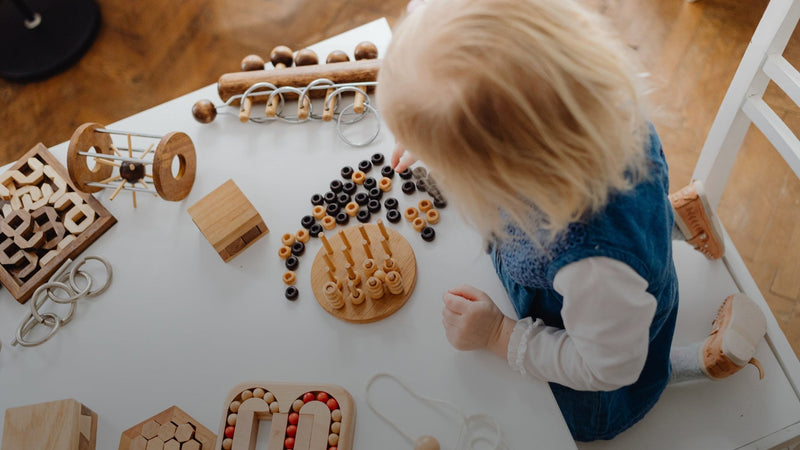
Building with simple wooden blocks.
These activities encourage concentration, coordination and independence because they involve real participation in everyday life.
Parents often discover that some of the richest Montessori experiences require very little equipment at all.
What matters most is not how much something costs.
It is how meaningfully children can engage with it.
Common Misconceptions About Montessori Play
Because Montessori has become increasingly popular, many myths have developed around the philosophy. Understanding these misconceptions helps parents approach Montessori with greater confidence.
|
Myth |
Reality |
|
Montessori requires expensive wooden toys. |
Montessori focuses on purposeful learning experiences, not luxury products. |
|
Children must attend a Montessori school. |
Families can successfully apply Montessori principles at home. |
|
Montessori means children do whatever they want. |
Children enjoy freedom within carefully prepared boundaries. |
|
Montessori discourages creativity. |
Creativity develops through exploration, problem-solving and meaningful experiences. |
|
Parents need a perfect Montessori home. |
Small, thoughtful changes can introduce Montessori principles into almost any family environment. |
Why Montessori Supports Focus and Confidence
One reason Montessori has remained influential for more than a century is that it respects children's natural ability to concentrate.
When children choose activities that genuinely interest them, they often remain engaged far longer than adults expect.
They repeat tasks willingly.
They refine their skills.
They solve problems independently.
This sustained engagement helps develop attention, patience and confidence.
Rather than rushing children from one activity to the next, Montessori encourages depth over speed.
Children are given time to master one experience before moving naturally to another.
For many families, this slower pace feels refreshingly different from the constant stimulation of modern life.
How to Create a Montessori-Inspired Home
One of the biggest misconceptions about Montessori is that parents need to completely redesign their home or invest in expensive furniture and educational materials.
The reality is far simpler.
A Montessori-inspired home is not about achieving a particular aesthetic. It is about creating an environment that encourages children to explore, make choices and become increasingly independent.
The goal is to ask a simple question whenever you organise a space.
"Can my child do this independently?"
If the answer is yes, the environment is supporting learning.
If the answer is no, perhaps a small adjustment could make the activity more accessible.
For example, placing books on a low shelf allows children to choose what they would like to read. Keeping art materials within easy reach encourages spontaneous creativity. Providing a small stool in the kitchen helps children participate in everyday routines instead of simply watching adults.
These changes may appear small, but they communicate an important message.
"You are capable."
That message lies at the heart of Montessori education.
Expert Insight
The prepared environment encourages independent learning.
Montessori educators often describe the environment as a silent teacher. When children can easily access materials, understand where things belong and move freely within safe boundaries, they naturally develop greater responsibility, confidence and independence.
Montessori Activities for Different Ages
Children's interests and abilities develop rapidly during the early years. Rather than expecting every child to complete identical activities, Montessori encourages parents to offer experiences that match their stage of development.
Toddlers (2 to 3 Years)
Young children are eager to imitate everyday life.
Simple practical activities often become their favourite forms of play.
Examples include:
-
Pouring water between small jugs.
-
Matching socks after washing.
-
Watering plants.
-
Stacking blocks.
-
Posting objects through simple openings.
-
Carrying lightweight household items.
-
Looking through picture books independently.
These activities strengthen coordination while helping children feel like valued members of the family.
Preschoolers (3 to 5 Years)
During the preschool years, children's curiosity expands dramatically.
This is an ideal time to introduce activities that encourage observation, concentration and creativity.
Ideas include:
-
Preparing simple snacks.
-
Nature walks and collecting leaves.
-
Sorting objects by colour, size or shape.
-
Caring for indoor plants.
-
Building with wooden blocks.
-
Completing simple puzzles.
-
Washing fruit before meals.
-
Drawing from real-life observation.
Many preschoolers also begin showing deep interest in letters, numbers and practical life skills when introduced naturally through everyday experiences.
School-Aged Children (6 to 10 Years)
As children grow older, Montessori principles continue encouraging independence while introducing more complex responsibilities.
Children might enjoy:
-
Cooking simple family meals.
-
Planning small gardening projects.
-
Organising their own study space.
-
Keeping a nature journal.
-
Building increasingly complex construction projects.
-
Researching topics that genuinely interest them.
-
Managing simple responsibilities around the home.
At this stage, independence becomes less about individual activities and more about developing confidence in everyday decision-making.
Montessori Play vs Traditional Play
Parents often wonder how Montessori differs from more traditional approaches to childhood play.
Although both approaches can support healthy development, they often emphasise different aspects of learning.
|
Montessori Play |
Traditional Play |
|
Child chooses activities independently. |
Adults often guide or organise activities. |
|
Focus on purposeful, hands-on experiences. |
Greater emphasis on entertainment and variety. |
|
Calm, organised environment. |
Wider variety of toys and play styles. |
|
Encourages practical life skills. |
Often separates learning from everyday routines. |
|
Children work at their own pace. |
Activities may follow adult schedules or instructions. |
Neither approach is inherently right or wrong.
Many families naturally combine elements of both while creating routines that suit their own values and lifestyle.
Montessori Play and Open-Ended Play
One question parents frequently ask is whether Montessori play and open-ended play are the same.
They are closely related, but they are not identical.
Montessori activities often have a clear purpose.
A child pours water to develop coordination.
They polish a table to learn practical life skills.
They arrange objects to understand patterns and order.
Open-ended play places greater emphasis on imagination.
A blanket becomes a castle.
A cardboard box becomes a rocket.
Wooden blocks become an entire city.
The child decides what the object represents.
These two approaches work beautifully together.
Montessori builds independence, concentration and practical confidence.
Open-ended play expands creativity, storytelling and flexible thinking.
Together, they provide children with a wonderfully balanced childhood.
Why Real-Life Experiences Matter
One of Montessori's most distinctive ideas is that everyday life itself provides endless learning opportunities.
Children rarely need constant entertainment when they are invited to participate in meaningful family routines.
Preparing breakfast.
Folding washing.
Sweeping the floor.
Watering flowers.
Packing a picnic.
Organising books.
Adults sometimes see these as chores.
Children often see them as opportunities.
They enjoy feeling trusted.
They enjoy contributing.
Most importantly, they begin developing practical confidence through real experiences rather than simulated ones.
Montessori reminds us that learning does not only happen during formal lessons.
It happens throughout ordinary family life.
Common Mistakes Parents Make
Many families become interested in Montessori after seeing beautifully organised playrooms on social media.
Unfortunately, this can create unrealistic expectations.
The philosophy is much simpler than the photographs often suggest.
|
Common Mistake |
A Better Approach |
|
Buying expensive Montessori products immediately. |
Begin by changing routines rather than purchasing equipment. |
|
Expecting complete independence overnight. |
Allow independence to develop gradually through practice. |
|
Creating a picture-perfect Montessori home. |
Focus on function rather than appearance. |
|
Correcting children too quickly. |
Allow time for experimentation and problem-solving. |
|
Filling every activity with teaching. |
Follow the child's interests and natural curiosity. |
Simple Ways to Introduce Montessori at Home
Parents often ask where they should begin.
Fortunately, meaningful change does not require dramatic transformation.
Start with one small habit.
Perhaps create a low bookshelf where children choose their own stories.
Invite your child to help prepare lunch.
Encourage them to water the plants each morning.
Replace one battery-operated toy with open-ended building materials.
Allow extra time for dressing independently rather than rushing to help.
These everyday experiences gradually build confidence because children begin seeing themselves as capable contributors rather than passive observers.
Small changes repeated consistently often have a greater long-term impact than ambitious plans that become difficult to maintain.
How ZeeZee Adventures Complements Montessori Principles
Although ZeeZee Adventures is not designed as a traditional Montessori product, many of its core values complement Montessori-inspired learning remarkably well.
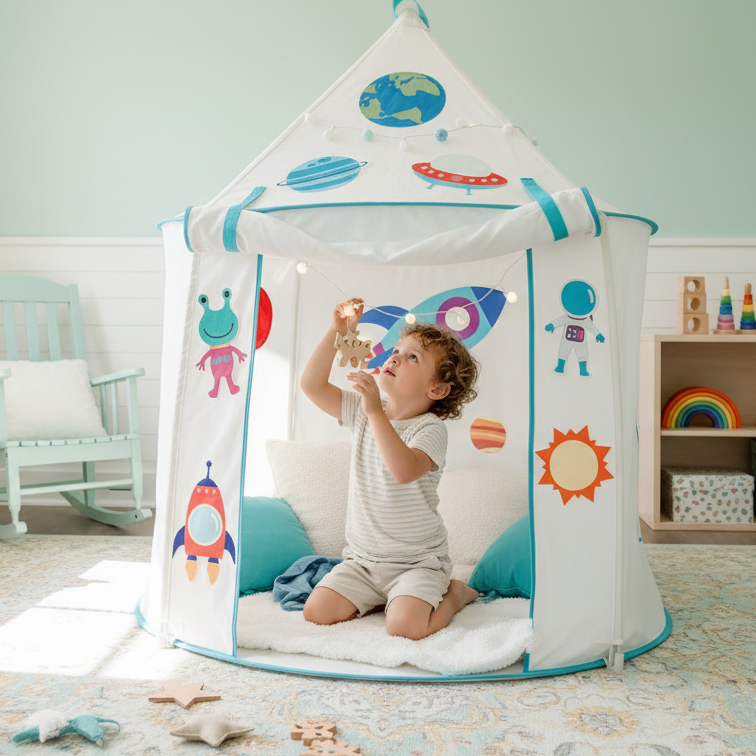
Montessori encourages carefully prepared environments where children feel trusted to explore independently. ZeeZee Adventures follows a similar philosophy by creating a calm, sensory-friendly play space that children can return to again and again. Rather than directing play, the ZeeZee Adventure Tent allows children to choose their own stories, develop their own ideas and explore at their own pace. Inspired by two sisters who imagined a tent that could become countless different worlds, its interchangeable StickeeZ themes support child-led exploration while encouraging long periods of imaginative, independent play.
Where Montessori introduces practical life skills and purposeful exploration, ZeeZee Adventures extends those experiences into open-ended storytelling, creativity and pretend play. The sensory-friendly environment, adaptable themes and thoughtful design encourage children to remain deeply engaged while giving their imagination complete freedom to grow.
Rather than competing with Montessori principles, ZeeZee Adventures naturally complements them by giving children a beautiful environment where independence, curiosity and imagination can flourish together.
 Conclusion
Montessori play is often misunderstood as a trend centred on wooden toys, minimalist playrooms or expensive educational resources.
In reality, it is something much more meaningful.
It is a philosophy that encourages parents to see children as capable, curious and naturally motivated to learn.
Rather than asking how adults can entertain children, Montessori asks a different question.
"How can we create an environment where children want to learn for themselves?"
That simple shift changes the way we think about childhood.
Children are no longer passive recipients of knowledge. They become active explorers, problem-solvers and creators.
Whether they are pouring water into a small jug, helping prepare lunch, building with blocks or carefully observing a ladybird in the garden, they are developing far more than practical skills. They are building concentration, confidence, independence and a genuine love of learning.
At the same time, Montessori does not need to become an all-or-nothing lifestyle.
You do not need a perfectly organised playroom.
You do not need to replace every toy in your home.
You do not need to follow every Montessori principle exactly.
Instead, you can begin with small, thoughtful changes.
Trust your child a little more.
Allow them to solve problems before stepping in.
Invite them to participate in everyday family life.
Create spaces where they can choose, explore and imagine independently.
These simple changes often have a far greater impact than purchasing another educational resource.
For many families, Montessori becomes less about following a specific method and more about adopting a different mindset.
One that believes children are capable.
One that values curiosity over constant instruction.
One that understands learning happens not only during lessons, but throughout ordinary life.
Ultimately, the goal is not to raise children who simply complete activities correctly.
It is to raise children who remain curious, confident and excited to discover the world for themselves.
That is a gift that lasts far beyond childhood.
Montessori-Inspired Action Checklist
Use this checklist to begin introducing Montessori principles into everyday family life.
Create an Environment for Independence
☐ Place books on low shelves so your child can choose independently.
☐ Keep toys organised and easy to access.
☐ Reduce unnecessary clutter in play areas.
☐ Create a calm space for reading, creativity and quiet play.
Encourage Practical Life Skills
☐ Invite your child to help prepare simple meals.
☐ Encourage them to water plants or care for a small garden.
☐ Let them help tidy their own play space.
☐ Give them opportunities to dress themselves.
☐ Include them in age-appropriate household routines.
Support Child-Led Learning
☐ Observe your child's interests before suggesting activities.
☐ Allow uninterrupted time for independent play.
☐ Resist solving every problem immediately.
☐ Encourage exploration rather than perfection.
☐ Celebrate effort, curiosity and persistence.
Frequently Asked Questions
1. What is Montessori play?
Montessori play is a child-led approach to learning that encourages independence, hands-on exploration and purposeful activities. Children learn by actively engaging with their environment rather than relying on constant adult instruction.
2. Do I need expensive Montessori toys?
No. Montessori is centred on meaningful experiences rather than specific products. Everyday household activities, practical life skills and simple open-ended materials often provide rich learning opportunities.
3. Can I use Montessori principles without sending my child to a Montessori school?
Absolutely. Many families successfully introduce Montessori-inspired routines at home by encouraging independence, preparing accessible environments and involving children in everyday tasks.
4. Does Montessori discourage pretend play?
Traditional Montessori classrooms often place greater emphasis on real-life experiences during the early years. However, many modern educators and families successfully combine Montessori principles with imaginative, open-ended play, recognising that both approaches support healthy child development in different ways.
5. At what age can Montessori play begin?
Montessori principles can be introduced from infancy through simple opportunities for movement, exploration and independence. As children grow, activities naturally become more complex and closely matched to their developmental stage.
6. What are the benefits of Montessori play?
Montessori play helps children develop concentration, confidence, independence, coordination, problem-solving abilities, practical life skills and a lifelong love of learning.
7. Can Montessori and open-ended play work together?
Yes. They complement one another beautifully. Montessori encourages purposeful exploration and independence, while open-ended play expands imagination, storytelling and creative thinking. Together, they create a balanced approach to child development.
Internal Linking Suggestions
Continue exploring purposeful play with these related ZeeZee Adventures articles:
-
The Ultimate Guide to Raising Screen-Smart Kids
-
Why Screen-Free Play Improves Focus and Creativity
-
How Pretend Play Builds Real-Life Skills
-
50 Screen-Free Activities Kids Will Actually Love
-
How to Keep Kids Entertained Without Screens
-
Screen-Free Summer Ideas for Families
-
The Benefits of Open-Ended Play for Child Development
-
Why Some Kids Can Play for Hours While Others Can't
-
How to Create a Screen-Smart Home Without Going Extreme
-
Independent Play by Age: A Parent's Complete Guide
Author Bio
The ZeeZee Play Experts
The ZeeZee Play Experts are passionate about helping families nurture creativity, confidence and independence through purposeful play. Drawing on insights from child development, occupational therapy and early childhood education, they create practical, evidence-informed resources that empower parents to build calmer, more imaginative homes. Their mission is to help every child discover the joy of learning through curiosity, exploration and meaningful play.






Comment (0)