
Montessori Play Ideas You Can Try at Home Today
Introduction
Many parents are drawn to Montessori because they want to help their children become more independent, curious and confident. Then they search online for ideas and are immediately met with beautifully designed playrooms, expensive learning materials and long lists of specialist equipment.
It is easy to feel as though Montessori is something that requires a complete lifestyle change.
Fortunately, the opposite is true.
One of the most beautiful aspects of Montessori is its simplicity.
Children do not need shelves filled with costly educational toys to learn well. They need opportunities to participate in everyday life, explore their surroundings, and solve age-appropriate challenges independently.
A spoon can become a fine motor activity.
A jug of water can teach coordination.
A basket of socks can become a matching game.
Preparing fruit together can introduce practical life skills, concentration and confidence, all within a single activity.
The materials themselves are rarely the most important part.
What matters is how children interact with them.
Montessori encourages parents to slow down, observe their children and create opportunities where learning happens naturally through doing rather than simply watching.
This guide shares practical Montessori-inspired activities that you can begin today using ordinary household items. Whether your child is a curious toddler, an imaginative preschooler, or an increasingly independent school-aged learner, these ideas will help you create meaningful learning experiences without turning your home into a classroom.
Quick Answer
Montessori play at home focuses on simple, hands-on activities that encourage children to explore, solve problems, and develop independence. Everyday experiences such as pouring water, preparing snacks, watering plants, matching objects, and building with open-ended materials help children strengthen concentration, confidence, and practical life skills. The goal is not to entertain children constantly but to create opportunities where they can learn by doing.
Key Takeaways
-
Montessori activities work best when they are simple and purposeful.
-
Everyday household objects often make excellent Montessori materials.
-
Practical life experiences are just as valuable as traditional learning activities.
-
Independence grows through regular opportunities to make choices and solve problems.
-
Small changes in daily routines can have a lasting impact on your child's confidence.
Definition
What Makes an Activity Montessori?
A Montessori activity is designed to encourage children to learn through hands-on exploration rather than passive instruction. It is usually child-led, developmentally appropriate and purposeful, allowing children to practise real skills while building concentration, independence and confidence. Instead of focusing on entertainment alone, Montessori activities invite children to become active participants in their own learning.
You Don't Need a Montessori Classroom
One of the biggest misunderstandings about Montessori is that parents need to recreate a Montessori school at home.
That was never the intention.
Montessori is not defined by special furniture or perfectly organised shelves.
It is defined by the opportunities children are given every day.
Can they choose a book independently?
Can they pour their own drink?
Can they help prepare lunch?
Can they tidy their own toys?
Can they explore materials without waiting for constant instructions?
These everyday moments often teach far more than complicated educational activities.
Children develop confidence through participation.
The more opportunities they have to contribute meaningfully, the more capable they begin to feel.
This is why Montessori activities often look surprisingly ordinary.
Their value lies not in complexity but in purpose.
Expert Insight
Practical experiences build lasting confidence.
Montessori educators often explain that children develop independence when they are trusted with meaningful responsibilities. Simple everyday activities such as preparing food, caring for plants or organising their belongings help children develop concentration, coordination and a growing belief in their own abilities.
Preparing Your Home for Montessori Play
Before introducing new activities, it helps to think about the environment in which children will explore.
Montessori places great importance on creating spaces that encourage independence.
This does not require expensive storage systems or beautifully styled interiors.
Instead, focus on accessibility.
Can your child reach their books?
Are creative materials organised neatly?
Do toys have a clear place where they belong?
Is there enough space for uninterrupted play?
Children are naturally more likely to explore independently when they do not need adult assistance for every small task.
A calm, organised environment also reduces unnecessary distractions, allowing children to focus more deeply on the activity in front of them.
Small changes often produce surprisingly meaningful results.
Practical Life Activities
Practical life is one of the foundations of Montessori learning.
These activities involve real tasks that help children become active members of family life while strengthening fine motor skills, coordination and independence.
Unlike pretend versions of adult activities, practical life encourages genuine participation.
Children quickly realise that their contribution matters.
This sense of responsibility often becomes one of the most rewarding parts of the Montessori approach.
Here are a few simple ideas you can begin today.
1. Pouring Water
Provide two small jugs and allow your child to pour water from one to the other.
This activity develops:
-
Hand-eye coordination.
-
Fine motor control.
-
Concentration.
-
Confidence.
Begin with small amounts of water and allow spills to become part of the learning process rather than something to avoid.
2. Washing Fruit
Invite your child to wash apples, strawberries or grapes before snack time.
Children enjoy participating in real family routines, and this simple activity strengthens coordination while encouraging healthy habits.
3. Watering Indoor Plants
Give your child a small watering can and allow them to care for houseplants each morning.
Caring for living things encourages responsibility while helping children develop gentle movements and observation skills.
4. Folding Tea Towels
Provide freshly washed tea towels or small cloths for folding.
Although the task appears simple, it encourages children to notice patterns, develop coordination and practise persistence.
5. Cleaning a Table
Offer a small spray bottle filled with water and a soft cloth.
Many children genuinely enjoy helping clean tables after meals.
The activity encourages purposeful movement while reinforcing the idea that everyone contributes to family life.
Sensorial Montessori Activities
Montessori places great value on helping children refine their senses through direct experience.
Rather than overwhelming children with bright lights and electronic sounds, sensorial activities encourage careful observation and comparison.
Children learn to notice differences in texture, weight, temperature, colour and sound.
These experiences help develop attention while encouraging children to explore the world more thoughtfully.
6. Mystery Bag
Place familiar household objects inside a cloth bag.
Without looking, encourage your child to identify each object using only their sense of touch.
This activity strengthens tactile discrimination, language development and concentration.
7. Colour Sorting
Collect everyday objects in different colours and invite your child to group them together.
Buttons, bottle tops, fabric pieces or coloured blocks all work well.
8. Nature Texture Collection
Take a walk together and collect leaves, bark, feathers and smooth stones.
Back at home, compare how each object feels and discuss the differences.
Nature provides some of the richest sensorial experiences available.
Why Simplicity Often Works Best
Parents sometimes feel pressure to provide increasingly exciting activities.
Montessori suggests a different approach.
Children rarely need constant novelty.
They need opportunities to explore familiar experiences more deeply.
Pouring water every day is not repetitive from a child's perspective.
Each attempt develops greater coordination.
Each success builds confidence.
Each mistake teaches something new.
Progress happens through repetition rather than constant change.
This slower pace allows children to experience the quiet satisfaction of mastering a skill through practice.
It is one of the reasons Montessori activities continue to feel meaningful long after the first attempt.
Montessori Play Ideas for Every Age
One of the greatest strengths of the Montessori approach is that it grows alongside the child.
Rather than expecting every child to complete the same activities, Montessori encourages parents to observe their child's interests, abilities and stage of development before introducing new experiences.
This means the best Montessori activity is not necessarily the most complicated one.
It is the one that offers just enough challenge to encourage learning without becoming frustrating.
As children grow, their activities naturally become more complex, but the underlying principles remain the same.
Hands-on learning.
Independence.
Purpose.
Curiosity.
Respect for the child's pace.
Below are Montessori-inspired activities organised by age, helping you introduce meaningful experiences that support confidence, concentration and joyful learning.
Montessori Activities for Toddlers (2 to 3 Years)
Toddlers are naturally eager to copy the adults around them.
They love carrying, pouring, wiping, sorting and exploring because these activities help them understand how the world works.
The goal is not to entertain them constantly but to invite them into everyday life.
9. Transfer Objects with a Spoon
Fill one small bowl with large pom-poms, wooden balls or cotton balls and provide an empty bowl alongside it.
Encourage your child to transfer each object using a spoon.
This activity develops:
-
Fine motor skills.
-
Hand-eye coordination.
-
Patience.
-
Concentration.
10. Matching Everyday Objects
Gather pairs of familiar household items such as socks, spoons, lids or wooden blocks.
Invite your child to find each matching pair.
Matching activities strengthen observation skills while encouraging careful attention to detail.
11. Posting Activities
Cut a slot into the lid of a container and encourage your child to post large craft sticks, cards or oversized tokens through the opening.
Posting activities support coordination while introducing early problem-solving.
12. Washing Toys
Provide warm water, a sponge and a few washable toys.
Children often enjoy caring for their belongings while developing coordination and responsibility.
13. Simple Food Preparation
Invite your child to peel a banana, spread soft butter with a child-safe knife or arrange fruit on a plate.
Real participation helps children feel trusted while strengthening practical life skills.
Montessori Activities for Preschoolers (3 to 5 Years)
During the preschool years, children become increasingly interested in exploring ideas independently.
Their imagination grows rapidly, while their desire to complete meaningful tasks becomes even stronger.
This is an ideal time to introduce activities that combine practical learning with creativity.
14. Nature Observation Journal
Take regular walks together and encourage your child to draw leaves, flowers, insects or birds they discover.
Rather than focusing on artistic perfection, encourage careful observation.
This activity strengthens:
-
Concentration.
-
Curiosity.
-
Scientific thinking.
-
Language development.
15. Create a Flower Arrangement
Provide child-safe scissors, a small vase, and a few garden flowers.
Allow your child to trim stems and arrange the flowers independently.
This activity develops fine motor control while encouraging an appreciation for beauty and care.
16. Sorting Kitchen Items
Invite children to organise measuring spoons, wooden utensils or baking tools by size or purpose.
Real household objects often feel far more meaningful than plastic educational toys.
17. Button and Zip Practice
Create a simple dressing frame using an old shirt or jacket.
Children enjoy practising everyday skills without the pressure of getting dressed quickly.
18. Baking Together
Measuring flour, stirring ingredients, and pouring mixtures into baking tins encourage mathematical thinking while developing coordination and independence.
Montessori Activities for School-Aged Children (6 to 10 Years)
As children grow, Montessori encourages greater responsibility rather than simply introducing more advanced educational materials.
Children become increasingly capable of managing projects that require planning, organisation and sustained attention.
19. Plan and Prepare a Simple Lunch
Allow your child to choose ingredients, prepare sandwiches and organise the table.
This encourages planning, sequencing and independence.
20. Care for a Small Garden
Whether growing herbs on a windowsill or vegetables outdoors, gardening teaches patience, observation and responsibility.
Children experience the satisfaction of caring for something over time.
21. Create a Nature Collection
Invite children to collect interesting leaves, stones or seed pods before researching what they have discovered.
Learning becomes meaningful because curiosity leads the experience.
22. Build a Bird Feeder
Using recycled materials, children can design and create a simple bird feeder before observing which birds visit.
The activity combines creativity, science and environmental awareness.
23. Organise a Reading Corner
Allow children to design their own quiet reading space using cushions, blankets and favourite books.
Ownership encourages children to spend more time reading independently.
Nature-Based Montessori Activities
Dr Maria Montessori believed that nature offers children some of the richest learning experiences available.
Natural environments invite observation, movement and curiosity without overwhelming children's senses.
Unlike many digital experiences, nature encourages children to slow down and notice details they might otherwise miss.
These simple activities help children build a deeper connection with the natural world.
24. Leaf Matching
Collect different leaves during a walk and encourage children to sort them according to shape, size, or colour.
25. Cloud Watching
Lie on a blanket outdoors and encourage children to describe what they can see in the clouds.
This quiet activity develops observation while gently encouraging imagination.
26. Rock Washing Station
Gather stones from the garden or local park and allow children to wash, dry and arrange them.
Simple activities like this encourage careful movement and concentration.
27. Bird Observation
Provide binoculars or simply sit quietly together watching birds in the garden.
Invite children to notice colours, behaviours and sounds.
28. Seasonal Nature Table
Create a small display using pinecones, leaves, shells or flowers collected during family walks.
Update it throughout the year as the seasons change.
Montessori Activities That Encourage Independent Play
Although Montessori is often associated with practical life, it also creates wonderful opportunities for children to enjoy independent exploration.
The key is choosing activities that children can continue without requiring constant adult direction.
Some excellent examples include:
-
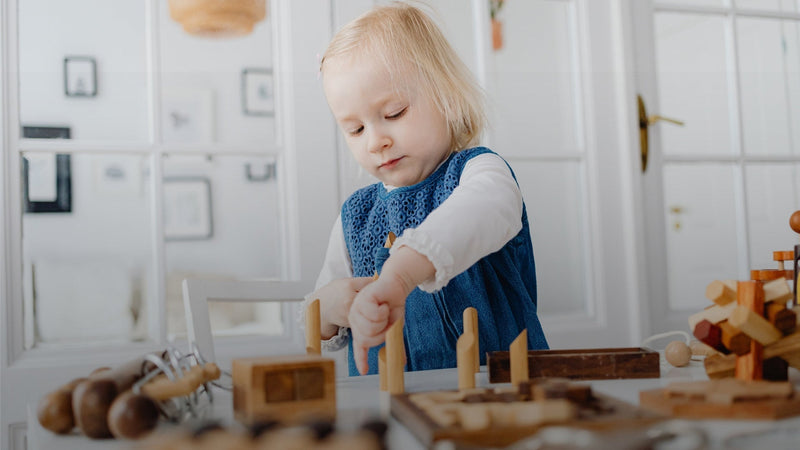
Building with wooden blocks.
-
Creating simple art using natural materials.
-
Threading large beads.
-
Completing age-appropriate puzzles.
-
Reading independently.
-
Arranging flowers.
-
Caring for indoor plants.
-
Organising collections of natural objects.
The goal is not to keep children busy.
It is to help them discover the satisfaction of directing their own learning.
Common Mistakes Parents Make
Introducing Montessori activities at home should feel enjoyable rather than overwhelming.
Many parents unintentionally make the process more complicated than necessary.
|
Common Mistake |
A Better Approach |
|
Introducing too many activities at once. |
Offer one or two activities and allow children time to explore them fully. |
|
Correcting every mistake immediately. |
Allow children to experiment, notice errors and develop their own solutions. |
|
Rotating activities every day. |
Repetition helps children master new skills and build confidence. |
|
Expecting children to complete activities perfectly. |
Celebrate effort, persistence, and curiosity rather than flawless results. |
|
Purchasing expensive materials before getting started. |
Begin with everyday household objects that already encourage purposeful learning. |
How ZeeZee Adventures Complements Montessori-Inspired Play
Montessori encourages children to become independent learners by preparing environments that invite exploration rather than constant instruction.
ZeeZee Adventures shares this child-first philosophy while extending it through imaginative, open-ended storytelling.
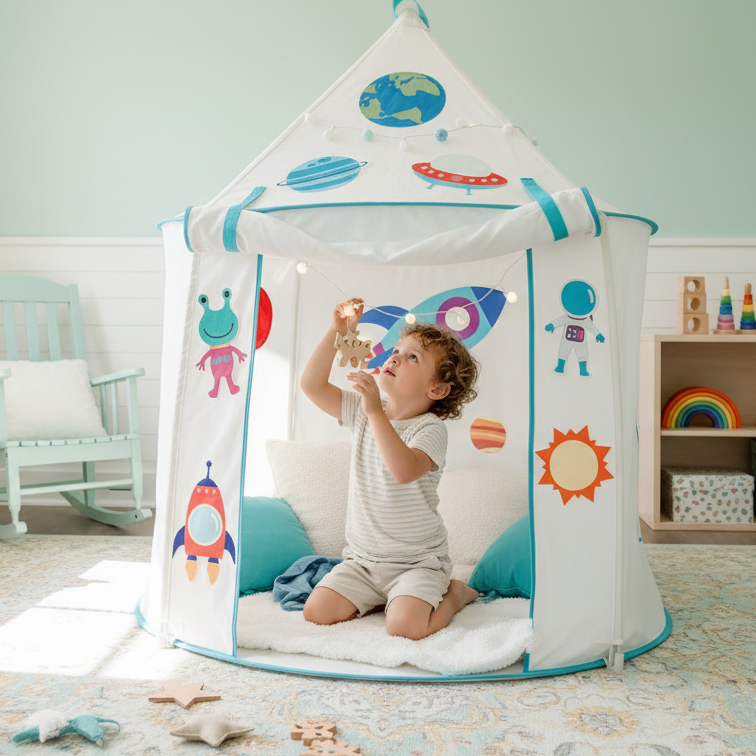
Inspired by two sisters who wished their play tent could evolve with every new adventure, the ZeeZee Adventure Tent provides a calm, sensory-friendly environment where children can create their own worlds using interchangeable StickeeZ themes. Instead of directing children's play, the environment supports independent exploration, allowing them to move naturally from reading and quiet reflection to storytelling, role play and creative discovery.
This makes the play tent an excellent complement to a Montessori-inspired home. Practical life activities build competence and independence, while imaginative play inside the tent expands creativity, communication and flexible thinking. The thoughtfully designed environment encourages children to remain engaged for longer, returning to familiar spaces while creating entirely new adventures each day.
Conclusion
Montessori play is not about creating the perfect playroom or following a strict set of rules.
It is about seeing everyday life through a different lens.
Instead of asking how we can keep children occupied, Montessori encourages us to ask how we can help them become capable, curious, and confident participants in the world around them.
The activities in this guide may appear wonderfully simple.
Pouring water.
Preparing fruit.
Watering plants.
Matching objects.
Collecting leaves.
Building with blocks.
Reading quietly.
Yet these ordinary experiences help children develop extraordinary skills.
Every time children complete a task independently, they strengthen their confidence.
Every time they solve a problem, they develop resilience.
Every time they explore with curiosity, they deepen their understanding of the world.
Perhaps the greatest lesson Montessori offers parents is that meaningful learning rarely requires elaborate materials or carefully planned lessons.
It often happens in the everyday moments we might otherwise overlook.
Helping prepare breakfast.
Tidying a shelf.
Watching a ladybird crawl across a leaf.
Building a tower that collapses before finally standing tall.
These moments remind children that learning is not something reserved for classrooms.
It is woven into everyday life.
Remember, you do not need to transform your home overnight.
Start with one activity.
Observe your child.
Notice what captures their attention.
Follow their curiosity.
Trust them with small responsibilities.
Celebrate progress rather than perfection.
Over time, these simple choices create a home where children feel capable, respected and excited to discover new things for themselves.
That is the true spirit of Montessori.
Montessori-at-Home Action Checklist
Use this checklist to introduce Montessori-inspired learning one small step at a time.
Prepare the Environment
☐ Keep books on low shelves within your child's reach.
☐ Organise toys and learning materials neatly.
☐ Reduce unnecessary clutter in play spaces.
☐ Create a calm corner for reading, creativity and quiet exploration.
☐ Make everyday items accessible where it is safe to do so.
Encourage Practical Life Skills
☐ Invite your child to prepare simple snacks.
☐ Encourage them to water plants regularly.
☐ Allow them to help tidy shared spaces.
☐ Give them opportunities to dress independently.
☐ Involve them in simple cooking and baking tasks.
Support Independent Learning
☐ Observe your child's interests before suggesting activities.
☐ Allow uninterrupted periods of independent play.
☐ Resist solving problems too quickly.
☐ Encourage exploration and experimentation.
☐ Celebrate effort, persistence and curiosity.
Connect with Nature
☐ Go on regular nature walks.
☐ Collect leaves, stones or flowers together.
☐ Observe birds and insects.
☐ Create a seasonal nature table.
☐ Spend time outdoors every week.
Frequently Asked Questions
1. Can I practise Montessori at home without expensive materials?
Yes. Montessori focuses on purposeful experiences rather than specialist products. Everyday household items such as jugs, bowls, cloths, spoons, plants and books provide excellent opportunities for learning.
2. What is the best age to begin Montessori activities?
Montessori principles can be introduced from infancy and adapted throughout childhood. Activities should always match your child's stage of development and interests.
3. How long should Montessori activities last?
There is no fixed time limit. Some children may explore an activity for five minutes, while others remain engaged for much longer. Follow your child's natural concentration rather than the clock.
4. Should I correct my child if they make mistakes?
Whenever possible, allow children to notice and solve small mistakes independently. Gentle guidance is often more beneficial than immediate correction because it encourages problem-solving and confidence.
5. Can Montessori and imaginative play work together?
Absolutely. Practical Montessori activities help children develop independence and real-life skills, while imaginative play strengthens creativity, storytelling, and flexible thinking. Together, they provide a rich and balanced play experience.
6. Do Montessori activities replace traditional toys?
Not at all. Montessori activities complement many forms of play. Families often enjoy combining practical life experiences, open-ended materials, books, outdoor exploration, and imaginative play.
7. How can I tell if a Montessori activity is working?
Children who are deeply engaged often become calm, focused, and willing to repeat an activity several times. These moments of concentration are a strong sign that the activity matches their developmental needs.
Author Bio
The ZeeZee Play Experts
The ZeeZee Play Experts are passionate advocates for child-led learning, imaginative play, and healthy childhood development. Drawing on insights from occupational therapy, early childhood education, and developmental psychology, they create practical, evidence-informed resources that help families raise curious, confident, and independent children. Their mission is to inspire parents to create calm, purposeful environments where imagination and learning naturally flourish.






Comment (0)