
11 Activities to Improve Your Toddler’s Development
The Hidden Power of Everyday Play
Many parents worry about whether they’re doing enough to support their toddler’s development.
Should they buy more toys?
Enroll in more classes?
Download more learning apps?
The truth is simpler—and more reassuring.
The most powerful learning in early childhood happens through play, exploration, and imaginative environments. Everyday activities can build essential developmental skills such as language, emotional regulation, creativity, and problem-solving.
Research in early childhood development consistently shows that play-based learning supports brain development, social skills, and cognitive growth during the toddler years.
The key is not simply giving children more things to play with—but creating spaces and experiences that invite exploration, imagination, and calm focus.
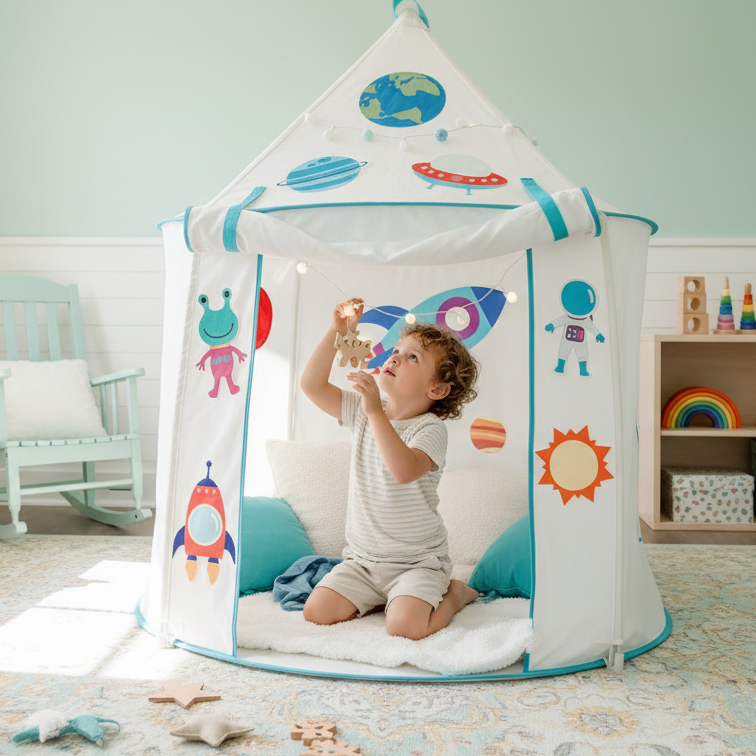
1. Build an Imagination Corner
Toddlers thrive when they have a space that feels like their own.
A simple play environment can become:
-
a pirate ship
-
a secret cave
-
a reading retreat
-
a magical castle
Imaginative spaces encourage symbolic play, which helps toddlers develop storytelling ability, emotional understanding, and creativity.
These spaces do not need to be complex. Often the most engaging environments are simple ones that allow children to invent their own narratives.
2. Read Together Every Day
Reading remains one of the most powerful tools for early childhood development.
Even if toddlers cannot read yet, listening to stories helps them:
-
expand vocabulary
-
recognize sounds and patterns
-
build attention span
-
develop emotional understanding
Shared reading also strengthens the parent-child bond, which plays a key role in healthy emotional development.
3. Encourage Open-Ended Play
Open-ended play means toys or environments do not dictate exactly how children must play.
Examples include:
-
building blocks
-
drawing materials
-
pretend play spaces
-
dress-up clothes
These tools allow toddlers to explore ideas freely, helping them develop creativity and flexible thinking.
Children often remain engaged longer when play experiences allow multiple possibilities rather than a single scripted activity.
4. Introduce Simple Building Activities
Stacking blocks or building simple structures helps toddlers develop:
-
spatial awareness
-
problem-solving skills
-
hand-eye coordination
Construction play also encourages persistence as children experiment with different designs.
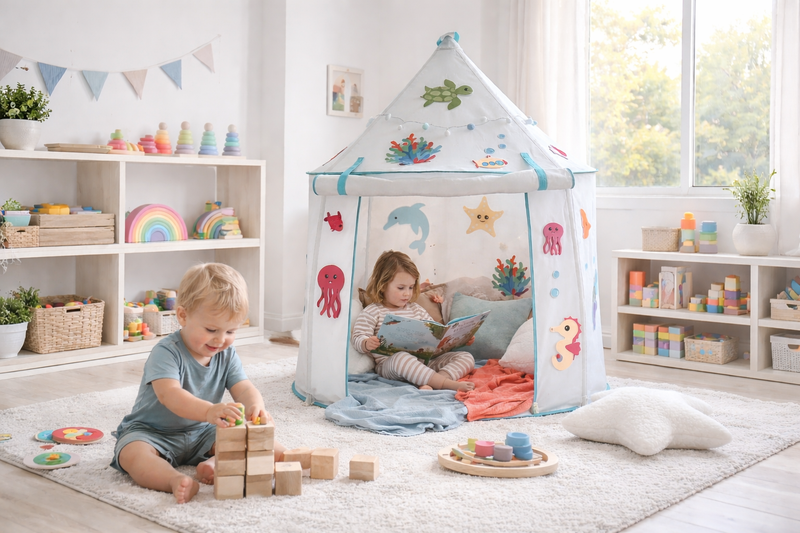
5. Create a Calm Reading or Quiet Space
Toddlers benefit from moments of calm as much as active play.
Quiet play areas help children:
-
regulate emotions
-
recharge after stimulation
-
develop independent focus
Soft lighting, comfortable cushions, and calming colors can transform a corner of the home into a peaceful retreat for toddlers.
6. Practice Simple Art Activities
Drawing, painting, and coloring help toddlers express emotions and ideas.
Creative art activities support:
-
fine motor development
-
creativity
-
sensory exploration
The goal is not producing perfect art but allowing children to explore materials and experiment.
7. Play Pretend Together
Pretend play helps toddlers make sense of the world.
They might:
-
cook imaginary meals
-
run a pretend shop
-
explore a jungle adventure
Through role-playing, children practice social interaction and emotional expression.
8. Explore Nature
Outdoor play introduces toddlers to new sensory experiences.
Activities like:
-
collecting leaves
-
watching insects
-
digging in sand
encourage curiosity and observational skills.
Nature also supports physical development through movement and exploration.
9. Encourage Independent Play
Independent play helps toddlers build confidence.
When children explore activities on their own, they learn to:
-
solve problems independently
-
develop persistence
-
build creativity
A thoughtfully designed play environment can encourage children to engage in independent exploration.
10. Introduce Simple Music Activities
Music supports multiple aspects of development.
Singing songs, clapping rhythms, or playing simple instruments helps toddlers improve:
-
memory
-
listening skills
-
coordination
Music also supports emotional expression.
11. Create Spaces That Grow With Your Child
One of the most overlooked elements of toddler development is the environment itself.
Children learn best in spaces that support different types of play:
-
imaginative exploration
-
active storytelling
-
quiet reflection
Flexible play environments can evolve as children grow, allowing new adventures and creative stories to emerge over time.
Instead of constantly introducing new toys, many families are focusing on designing intentional play spaces where imagination can flourish.
Research References
-
Early childhood research highlights that play-based learning strengthens cognitive, emotional, and social development during the toddler years.
-
Symbolic and imaginative play supports language development and problem-solving skills in early childhood.
-
Calm play environments can help toddlers regulate emotions and sustain attention during play.
Frequently Asked Questions
What activities help toddler brain development the most?
Activities that involve imaginative play, storytelling, building, reading, and sensory exploration are especially beneficial because they stimulate multiple areas of brain development.
How much playtime does a toddler need each day?
Experts recommend that toddlers have several hours of active and imaginative play throughout the day, including both independent play and interaction with caregivers.
Why is imaginative play important for toddlers?
Imaginative play helps children develop creativity, language skills, emotional understanding, and problem-solving abilities.
Do toddlers need many toys to learn?
No. Research suggests that fewer, more open-ended play experiences often encourage deeper engagement and creativity compared to having too many toys.





Comment (0)