
Why Kids Need Spaces for Both Play and Calm
The Science of Sensory Balance in Childhood
When Play Becomes Too Much
Modern homes are often filled with bright colors, loud toys, flashing screens, and constant stimulation.
While play is essential for childhood development, too much stimulation can actually make it harder for children to focus, imagine, and regulate their emotions.
Many parents notice this pattern:
A child jumps quickly from toy to toy.
Attention spans become shorter.
Bedtime becomes harder.
Quiet moments feel rare.
This isn’t simply a discipline issue—it often relates to sensory balance.
Child development experts increasingly emphasize the importance of environments that allow children to experience both energetic play and calm moments throughout the day.
Creating spaces that support both types of play helps children regulate emotions, develop creativity, and stay engaged longer.
Understanding Sensory Balance in Child Development
Why Children Need Both Stimulation and Calm
Children learn through stimulation—but their brains also need periods of calm to process experiences.
This balance is known as sensory regulation.
During early childhood, the brain is rapidly forming neural connections. When environments provide both stimulating and calming experiences, children can better:
-
focus attention
-
regulate emotions
-
develop creativity
-
sustain longer play sessions
Too much stimulation, however, can overwhelm developing sensory systems.
That’s why many educators and therapists now recommend designing play environments that combine active imagination with calming spaces.
The Role of Calm Environments in Emotional Regulation
Why Quiet Spaces Help Children Reset
Just like adults, children sometimes need a place to slow down.
Calm environments can help children:
-
regulate strong emotions
-
recover after exciting play
-
focus on creative activities
-
develop independent thinking
Psychologists often describe these areas as safe retreats where children feel secure enough to explore their imagination or relax.
These quiet moments are not a break from learning—they are an essential part of it.
When children move between active play and calm exploration, their brains process experiences more effectively.
Why Environment Design Matters for Play
The Psychology of Play Spaces
Children respond strongly to their environment.
A chaotic playroom filled with too many toys can make it difficult for children to focus.
In contrast, thoughtfully designed play spaces often encourage:
-
deeper imaginative play
-
longer attention spans
-
more meaningful engagement
Many modern parenting approaches—including Montessori and Waldorf education—focus on creating environments that feel balanced rather than overwhelming.
These spaces often include:
-
neutral or calming base colors
-
open-ended play materials
-
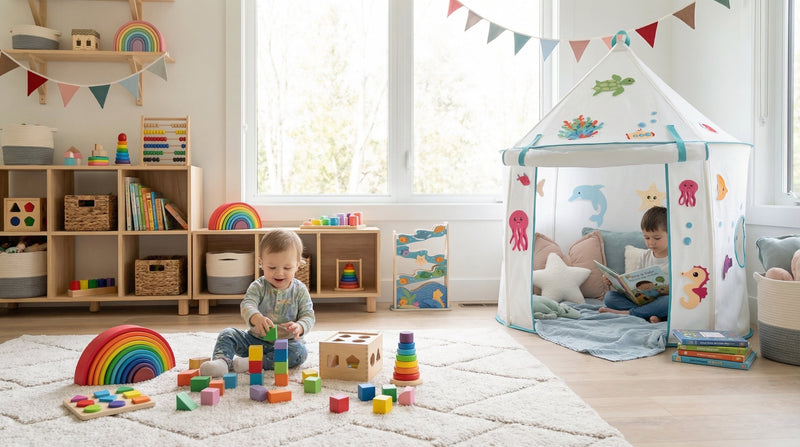
flexible areas for both active play and quiet reflection
Designing a Play Space That Supports Both Play and Calm
Parents don’t need large homes or complicated setups to support sensory balance.
A few thoughtful design choices can make a big difference.
Create Zones for Different Types of Play
For example:
Active play area
-
imaginative storytelling
-
building activities
-
creative exploration
Calm play area
-
reading
-
quiet drawing
-
independent reflection
This allows children to move naturally between different types of experiences.
Keep the Environment Flexible
Children’s interests evolve quickly.
Spaces that allow themes or play styles to change can keep children engaged longer.
Flexible play environments support:
-
imaginative storytelling
-
independent exploration
-
evolving interests
Rather than relying on fixed toys, some parents prefer adaptable play environments that allow children to create new adventures over time.
Why Balanced Play Spaces Encourage Imagination
When children feel comfortable and regulated, their imagination flourishes.
Calm environments help children stay focused long enough to create detailed stories and explore ideas.
Instead of quickly switching between toys, children may:
-
invent complex adventures
-
role-play different characters
-
build imaginative worlds
These types of experiences strengthen cognitive flexibility, storytelling ability, and emotional development.
The most engaging play spaces are often the ones that allow children to move naturally between excitement and calm.
Rethinking Childhood Play Environments
Parents today are becoming more intentional about the environments they create for their children.
Rather than filling playrooms with more toys, many families are focusing on something different:
Spaces that support imagination.
Spaces that feel calm and inviting.
Spaces that grow with the child.
When children have access to environments that support both energetic exploration and quiet reflection, play becomes richer, deeper, and more meaningful.
Research References
Research in early childhood development and environmental psychology suggests:
-
Balanced sensory environments help children regulate attention and emotions.
-
Imaginative play supports cognitive flexibility, language development, and social understanding.
-
Calm environments can reduce overstimulation and support longer engagement in creative activities.
These findings have influenced educational approaches such as Montessori and Waldorf learning environments, which emphasize calm, thoughtfully designed play spaces.
Frequently Asked Questions
Why do kids need calm spaces for play?
Calm spaces help children regulate emotions, focus their attention, and recover from overstimulation. These environments support deeper imaginative play and emotional development.
What is sensory balance in childhood?
Sensory balance refers to providing children with both stimulating activities and calming environments. This balance helps children process experiences and maintain emotional regulation.
How can parents create a calm play space at home?
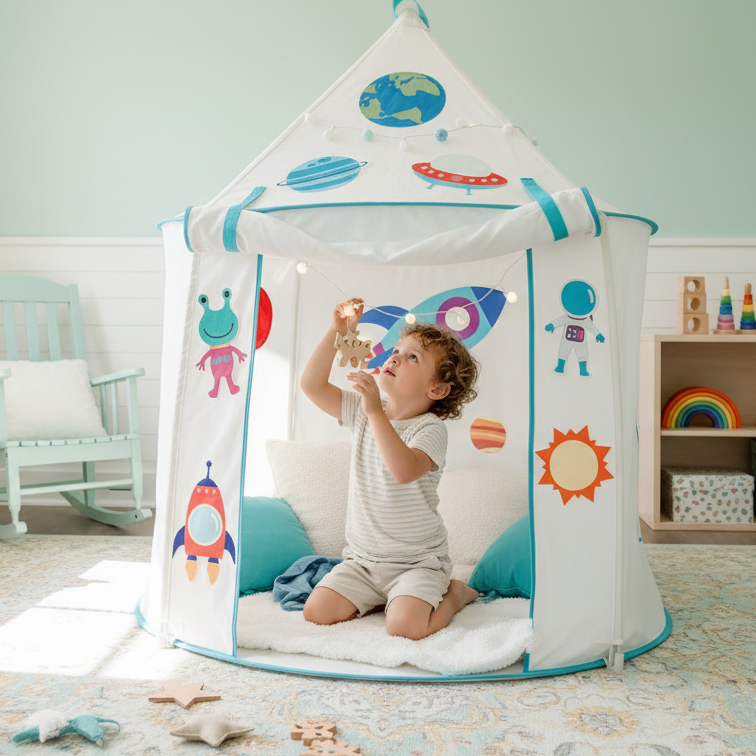
Parents can create calm play areas by using soft lighting, comfortable seating, fewer toys, and neutral colors. Simple reading corners or cozy play tents can work well.
Do children need separate spaces for active play and quiet play?
Not necessarily separate rooms, but having different zones for energetic play and calm activities helps children naturally shift between stimulation and relaxation.






Comment (0)