

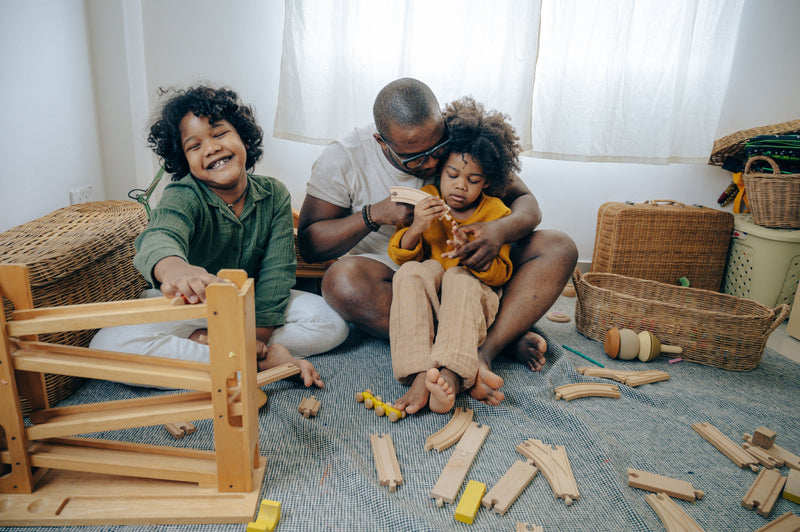
Parents Are Replacing This One Thing With Screens. Here's What Kids Are Missing.
Introduction
Most conversations about children and screens begin with one question:
"How much screen time is too much?"
It's an important question.
But it may not be the most important one.
Perhaps the better question is:
"What experiences are screens replacing?"
Because the greatest cost of screen time isn't always the time spent looking at a screen.
It's the moments that never happen because the screen was there instead.
The conversation that ended before it began.
The imaginary game that was never invented.
The quiet afternoon that could have become an adventure.
The boredom that might have sparked creativity.
The bedtime story replaced by another episode.
The family walk traded for scrolling.
Technology itself isn't the villain.
Screens help children learn, connect with distant family members, discover new interests, and enjoy age-appropriate entertainment.
The challenge isn't their existence.
It's what gradually disappears when screens become the default solution for boredom, waiting, frustration, or free time.
Childhood has always been filled with small moments that seem ordinary at the time.
Building a fort from cushions.
Listening to a grandparent tell stories.
Watching ants carry leaves across the garden.
Making pancakes together on Sunday mornings.
Pretending the living room is a pirate ship.
These moments rarely appear on a schedule.
They aren't measured by grades or achievements.
Yet they quietly shape children's creativity, emotional resilience, confidence, and relationships.
When these experiences happen less often, children don't simply lose activities.
They lose opportunities to develop important life skills.
The encouraging news is that families don't need to eliminate technology to protect those experiences.
Often, the biggest changes come from becoming more intentional about what screens replace and what they never should.
In this guide, we'll explore the hidden trade many families unknowingly make, why certain childhood experiences remain impossible to replicate digitally, and practical ways to create more opportunities for connection, imagination, and meaningful play.
Key Takeaways
Before we explore the topic in depth, here are the most important ideas to remember:
-
The biggest question isn't how much screen time children have, but what experiences screens are replacing.
-
Screens can educate and entertain, but they cannot fully replace shared human experiences.
-
Imaginative play, conversation, boredom, and family rituals support healthy child development.
-
Emotional regulation, creativity, language, and confidence grow through everyday interactions.
-
Technology works best when it complements childhood rather than becoming its primary experience.
-
Small daily habits often have a greater long-term impact than dramatic changes.
-
Parents don't need to eliminate screens. They can simply become more intentional about balance.
-
Meaningful childhood memories are usually created through shared experiences, not passive entertainment.
It Isn't Really About Screens
The Conversation Has Become Too Simple
Discussions about children's screen use often become polarized.
One side argues that technology is ruining childhood.
The other suggests concerns are exaggerated because digital tools are now part of everyday life.
The truth lies somewhere in the middle.
Screens are tools.
Like books, bicycles, or musical instruments, their impact depends on how, when, and why they're used.
A child video-calling grandparents experiences something very different from endlessly watching short videos without interaction.
A teenager creating digital artwork is engaging differently from someone passively consuming entertainment for hours.
Rather than labeling screens as entirely good or bad, it's more helpful to ask a different question.
What experiences become less common when screens become the default activity?
That question shifts the conversation from fear to awareness.
Childhood Has Limited Time
Children don't have unlimited hours for development.
Each day includes only so much time for:
-
conversation
-
movement
-
reading
-
creativity
-
family connection
-
imaginative play
-
rest
-
exploration
When one activity occupies more time, something else naturally occupies less.
This doesn't mean every minute spent with technology is harmful.
It simply reminds us that every choice has an opportunity cost.
Understanding that trade helps families make intentional decisions rather than automatic ones.
What Screens Are Quietly Replacing
The greatest concern about excessive screen use isn't the screen itself.
It's what quietly disappears alongside it.
Let's explore some of those experiences.
Conversation
One of childhood's most powerful learning tools doesn't require expensive toys or educational apps.
It requires another person.
Conversation builds far more than vocabulary.
Through everyday discussions, children learn to:
-
express emotions
-
organize thoughts
-
solve problems
-
understand different perspectives
-
ask thoughtful questions
-
build relationships
Think about the conversations that naturally happen during ordinary moments.
Driving to school.
Preparing dinner.
Walking the dog.
Folding laundry together.
These discussions often seem small.
Yet they become the foundation for communication, emotional intelligence, and confidence.
When everyone automatically reaches for a device during quiet moments, many of these conversations never begin.
Shared Attention Builds Relationships
Developmental psychologists often describe the importance of shared attention.
This occurs when two people focus on the same experience together.
Reading a picture book.
Watching birds outside the window.
Building with blocks.
Exploring a museum.
These shared moments strengthen learning because children experience them alongside a trusted adult.
Technology can certainly support shared experiences when families watch, create, or learn together.
The concern arises when screens consistently replace opportunities for genuine interaction.
Boredom
Parents often feel pressure to eliminate boredom as quickly as possible.
A child says,
"I'm bored."
Within moments, a solution appears.
A video.
A game.
Another activity.
Yet boredom has always played an important role in childhood.
Not because boredom itself is enjoyable.
Because it creates space for imagination.
Without immediate entertainment, children's brains begin searching for possibilities.
The cardboard box suddenly looks interesting.
The sofa becomes a mountain.
The backyard becomes another planet.
These ideas don't appear despite boredom.
They often appear because of it.
Why Boredom Leads to Discovery
When children aren't immediately entertained, they begin asking themselves questions.
"What could I build?"
"What story could happen?"
"What game should I invent?"
These questions activate creativity, problem-solving, and independent thinking.
Children gradually learn they don't always need someone else to provide entertainment.
They can create it themselves.
That realization becomes an important step toward independence.
Imaginative Play
Few childhood experiences contribute as much to development as pretend play.
A blanket becomes a castle.
A spoon becomes a microphone.
Stuffed animals attend school.
A cardboard box becomes a spaceship.
Although these games look simple, children are practicing remarkably complex skills.
They negotiate.
Plan.
Solve problems.
Experiment.
Tell stories.
Manage emotions.
Cooperate.
Adapt.
Pretend play allows children to become active creators instead of passive observers.
It's difficult to replicate this experience through entertainment that already provides every character, setting, and storyline.
Independent Exploration
Children once spent long stretches of time simply exploring.
Looking under rocks.
Collecting leaves.
Watching insects.
Building with sticks.
Drawing imaginary maps.
These quiet discoveries taught children how to observe patiently and solve problems independently.
Modern childhood still includes opportunities for exploration.
The difference is that children often need intentional space for those experiences rather than stumbling into them naturally.
Parents don't need elaborate plans.
Sometimes simply leaving an afternoon unscheduled is enough.
The Experiences We Remember
Ask most adults about their favorite childhood memories.
Very few begin with:
"I remember the afternoon I watched television."
Instead, they often describe:
Building forts.
Camping in the backyard.
Reading with a parent.
Helping bake cookies.
Exploring the woods.
Creating imaginary worlds with siblings.
These memories remain vivid because they involved participation rather than observation.
Children weren't simply consuming experiences.
They were helping create them.
That difference shapes how those moments are remembered.
The Real Question
Perhaps the conversation shouldn't begin with,
"How many hours did my child spend on a screen today?"
Perhaps it should begin with,
"What meaningful experiences filled the rest of the day?"
When screens exist alongside conversation, creativity, outdoor exploration, family traditions, and imaginative play, they become one part of a rich childhood rather than the center of it.
Why These Missing Experiences Matter More Than We Think
When conversations about screen time focus only on hours and limits, it's easy to overlook a much bigger question.
What happens when important childhood experiences become less frequent?
Children don't simply lose activities.
They lose opportunities to practice the skills that those activities naturally develop.
A bedtime story isn't just about reading.
A family walk isn't only exercise.
A pretend tea party isn't merely entertainment.
Each experience quietly strengthens emotional, cognitive, and social development in ways that are difficult to replicate elsewhere.
Let's look at why these seemingly ordinary moments matter so much.
Conversation Builds More Than Language
Talking with children is one of the most powerful developmental tools available.
And it doesn't require any special equipment.
Simple conversations throughout the day help children develop far more than vocabulary.
They learn how to:
-
organize thoughts
-
explain ideas
-
ask questions
-
understand emotions
-
solve problems
-
listen carefully
-
build relationships
Every conversation becomes an opportunity to practice communication.
Everyday Moments Are Powerful Classrooms
Some of the richest conversations don't happen during formal learning.
They happen while:
-
cooking dinner together
-
driving to school
-
watering plants
-
walking the dog
-
folding laundry
-
shopping for groceries
Children ask unexpected questions.
Parents share stories.
Ideas bounce back and forth naturally.
These everyday exchanges help children understand how conversations work.
They also teach children that their thoughts matter.
When these moments are consistently replaced by individual screen use, opportunities for meaningful dialogue naturally become less frequent.
Imaginative Play Builds Skills That Last a Lifetime
Pretend play often looks wonderfully simple.
Children become chefs.
Astronauts.
Teachers.
Doctors.
Explorers.
Pirates.
Artists.
But behind every imaginary adventure, the brain is working remarkably hard.
Children are planning.
Remembering.
Negotiating.
Adapting.
Creating.
Predicting.
Problem-solving.
Few activities combine so many developmental benefits at once.
Stories Help Children Understand Themselves
Children don't only invent fictional adventures.
They often use pretend play to process real experiences.
A child nervous about visiting the dentist might spend an afternoon pretending to examine stuffed animals.
A new sibling may inspire games about caring for baby dolls.
A child adjusting to school might recreate classroom experiences with toys.
Play becomes a safe place to understand emotions that are still difficult to explain with words.
This emotional rehearsal supports resilience long before children fully understand what's happening.
Boredom Encourages Independent Thinking
Boredom has developed an unfair reputation.
Parents often feel pressure to solve it immediately.
Yet boredom isn't the problem.
It's the beginning of possibility.
When children aren't immediately entertained, something interesting happens.
Their brains begin searching for ideas.
At first, they wander.
Then they wonder.
Finally, they create.
Creativity Begins With Empty Space
Many creative discoveries begin in moments that seem uneventful.
A stick becomes a fishing rod.
A cardboard box becomes a castle.
A blanket becomes a dragon's cave.
Without time to wonder, these ideas often never appear.
Children gradually discover something incredibly valuable.
They don't always need someone else to entertain them.
They can create their own adventures.
That realization builds confidence as much as creativity.
Family Rituals Create Emotional Security
Some of childhood's strongest memories come from routines rather than special occasions.
Friday movie nights.
Saturday morning pancakes.
Bedtime stories.
Family walks after dinner.
Holiday baking.
Camping in the backyard.
These traditions provide something children deeply value.
Predictability.
In a rapidly changing world, familiar rituals help children feel emotionally secure.
They create a sense of belonging that supports confidence and resilience.
Shared Experiences Strengthen Relationships
Children rarely remember every toy they received.
They often remember experiences.
Laughing together while building a fort.
Reading the same favorite story every night.
Making homemade pizzas.
Exploring a beach.
Collecting leaves during autumn walks.
These moments strengthen family relationships because everyone participates together.
Unlike passive entertainment, shared experiences encourage interaction.
Everyone contributes.
Everyone belongs.
Human Connection Cannot Be Streamed
Technology has made communication easier than ever.
Children can video chat with grandparents living thousands of miles away.
Families can learn together through educational videos.
Creative tools allow children to make music, tell stories, and explore new interests.
These are wonderful opportunities.
Yet technology still cannot fully replace face-to-face human connection.
Children Learn Through Responsive Relationships
Healthy development depends on something researchers often call serve and return interactions.
A child points at a butterfly.
A parent responds.
The child asks a question.
The conversation continues.
These back-and-forth interactions strengthen language, emotional security, and learning.
The value doesn't come from information alone.
It comes from responsive relationships.
Children feel heard.
Seen.
Understood.
That emotional connection supports development in ways passive media cannot fully replicate.
Resilience Grows Through Real Experiences
Life doesn't always go according to plan.
Blocks fall over.
Games don't work.
Friends disagree.
Rain interrupts outdoor adventures.
These moments may feel frustrating.
There are also opportunities to practice resilience.
Children learn how to:
-
recover from disappointment
-
adjust their plans
-
solve unexpected problems
-
Keep trying after mistakes
Many digital experiences remove these natural challenges through immediate rewards or quick resets.
Real-world play asks children to persist.
That persistence becomes one of childhood's most valuable lessons.
Why Screens Feel So Appealing
If these experiences are so beneficial, why do screens become the default so easily?
The answer isn't complicated.
They're convenient.
After a long workday, parents are tired.
Children are tired.
Screens provide instant entertainment.
They reduce conflict.
They occupy attention quickly.
There's nothing wrong with using technology thoughtfully.
The difficulty arises when convenience gradually becomes habit.
Over time, screens may begin replacing activities families never intended to lose.
Balance Is More Powerful Than Perfection
Parents don't need to feel guilty every time a child watches a program or plays a game.
A healthy childhood isn't about eliminating technology.
It's about preserving the experiences that technology cannot replace.
Those experiences include:
-
meaningful conversations
-
imaginative play
-
shared laughter
-
quiet reading
-
outdoor exploration
-
family traditions
-
creative problem-solving
When these remain central to childhood, screens become one tool among many instead of the main event.
Small Moments Shape Big Outcomes
Development rarely happens during dramatic moments.
It grows through ordinary days.
A story before bed.
A walk after dinner.
An afternoon building with blocks.
A rainy day spent inventing imaginary worlds.
Many families intentionally create inviting play spaces because they encourage these kinds of shared experiences. Rather than becoming another source of entertainment, adaptable environments inspire children to create their own stories. This philosophy is reflected in ZeeZee Adventures, where interchangeable StickeeZ themes allow one familiar play tent to become countless imaginative worlds. Instead of replacing creativity with ready-made entertainment, the space encourages conversation, storytelling, problem-solving, and independent exploration, all experiences that help children develop skills lasting far beyond childhood.

How to Replace Screens With Experiences Children Actually Want
When parents decide to reduce screen time, they often encounter the same challenge.
Removing the screen is easy.
Replacing it is much harder.
If children are simply told to "go play," many will return within minutes saying they're bored.
Not because they lack imagination.
But because creating an activity requires more mental effort than joining one that's already waiting on a screen.
The solution isn't to constantly entertain children.
It's to create an environment where meaningful play becomes the easiest choice.
Fortunately, this doesn't require expensive toys or carefully planned activities.
It starts with making real-life experiences more inviting.
Focus on What You're Adding, Not What You're Taking Away
Families often approach screen habits from a place of restriction.
Less television.
Less gaming.
Less scrolling.
While limits certainly have their place, children respond much more positively when parents focus on what they're gaining instead.
More stories.
More adventures.
More conversations.
More creativity.
More opportunities to explore.
Instead of framing the change as losing entertainment, frame it as discovering new experiences.
Children are naturally curious.
When something genuinely captures their interest, they often need surprisingly little encouragement.
Make Imaginative Play Easy to Start
One reason screens become the default is convenience.
Children know exactly what to do.
Press a button.
The entertainment begins.
Open-ended play should feel just as accessible.
Keep a few simple materials where children can easily reach them.
For example:
-
building blocks
-
art supplies
-
dress-up clothes
-
cardboard boxes
-
blankets
-
toy animals
-
books
-
loose parts from nature
When materials are visible and organized, children are far more likely to begin creating without waiting for instructions.
Leave Room for Possibility
Not every toy needs a specific purpose.
Some of the most engaging play materials are wonderfully flexible.
A scarf becomes:
-
a superhero cape
-
butterfly wings
-
a magic carpet
-
a royal flag
A cardboard box becomes:
-
a spaceship
-
a bakery
-
a castle
-
a race car
-
a submarine
The fewer assumptions an object makes, the more imagination children contribute.
Create Family Rituals That Children Look Forward To
Children don't simply remember special occasions.
They remember repeated moments that become part of family life.
These traditions create emotional security while naturally reducing dependence on screens.
Simple rituals might include:
-
bedtime stories every evening
-
Saturday morning pancakes
-
Friday family game night
-
after-dinner walks
-
Sunday art afternoons
-
weekend fort-building challenges
Children begin anticipating these experiences because they represent connection rather than entertainment.
Make Reading an Adventure
Reading doesn't always have to happen in the same chair.
Try changing the setting.
Read inside a blanket fort.
Take books into the backyard.
Create a pretend campsite indoors.
Use different voices for characters.
Pause to ask what might happen next.
These small changes make reading feel like an experience rather than a task.
Protect Time for Unstructured Play
Modern family life often leaves little room for doing nothing.
Ironically, that "nothing" is where creativity frequently begins.
Resist the urge to schedule every afternoon.
Allow children to experience moments when they decide:
-
What to play
-
How long to continue
-
How to solve problems
-
When to change direction
These decisions strengthen independence alongside creativity.
Let Boredom Do Its Job
When children first say,
"I'm bored,"
Pause before offering a solution.
Instead, try asking:
-
"What could you invent?"
-
"What haven't you built in a while?"
-
"What story could happen today?"
Giving children ownership over the solution helps them discover their own creativity.
The first few minutes may feel uncomfortable.
Soon after, imagination often takes over.
Design Spaces That Invite Exploration
Children naturally gravitate toward environments that feel interesting.
Fortunately, "interesting" doesn't necessarily mean expensive.
Often it means flexible.
Create small zones throughout your home.
A reading corner.
A building area.
An art table.
A basket filled with nature treasures.
A cozy space beneath a window.
When spaces suggest possibility, children are more likely to begin exploring independently.
Cozy Spaces Encourage Longer Play
Many children instinctively build blanket forts, hide beneath tables, or crawl into cardboard boxes.
These small spaces provide something valuable.
A sense of comfort.
Privacy.
Ownership.
Inside these environments, children often remain engaged much longer because distractions feel farther away.
The environment itself encourages focus.
Choose Activities That Grow With Your Child
One challenge with many forms of entertainment is that children eventually outgrow them.
Open-ended experiences continue evolving.
Building blocks become increasingly complex.
Stories become richer.
Art becomes more detailed.
Nature reveals new discoveries every season.
The same materials remain interesting because children's imagination keeps changing.
This creates lasting value without constantly needing something new.
Model the Habits You Want to See
Children pay close attention to adult behavior.
If parents instinctively reach for a phone during every quiet moment, children notice.
That doesn't mean adults should never use technology.
It simply means demonstrating balance.
Consider moments when the whole family chooses presence instead.
Read together.
Cook together.
Garden together.
Talk without devices nearby.
Children learn that connection isn't something scheduled once a week.
It's something woven into everyday life.
Replace Passive Entertainment With Shared Experiences
Many of childhood's happiest memories come from doing something alongside someone else.
Baking cookies.
Flying a kite.
Building a birdhouse.
Watching clouds.
Creating shadow puppets.
Painting rocks.
Planting flowers.
These experiences don't require perfect planning.
They simply require participation.
Unlike passive entertainment, shared activities strengthen relationships while creating memories children carry into adulthood.
Make Screen-Free Time Feel Inviting
Sometimes reducing screen use fails because the alternative feels less appealing.
Instead of focusing only on rules, focus on atmosphere.
Soft lighting.
Comfortable cushions.
Favorite books.
Art materials within reach.
Gentle background music during creative activities.
Fresh air through an open window.
Children are naturally drawn toward spaces that feel warm and welcoming.
Many families intentionally create dedicated imaginative play spaces because they invite children to slow down and explore. ZeeZee Adventures embraces this idea by offering adaptable play tents that become cozy environments for storytelling, reading, building, and pretend play. With interchangeable StickeeZ themes, the same familiar space can transform into a jungle, a castle, an underwater world, or a peaceful reading nook, encouraging children to create adventures rather than simply consume them.
Small Changes Often Create the Biggest Difference
Parents sometimes imagine reducing screen dependence requires dramatic lifestyle changes.
Usually, it doesn't.
One extra bedtime story.
One family walks each week.
One afternoon left unscheduled.
One cozy reading corner.
One invitation to build instead of watch.
These small changes gradually shift the rhythm of family life.
Children begin discovering something screens can never fully provide.
The satisfaction of creating, exploring, and sharing experiences that belong entirely to them.
Building a Childhood Filled With Connection, Creativity, and Lasting Memories
If there's one idea to take away from this guide, it's this:
The goal isn't to raise children without screens. It's to raise children with lives so rich in connection, curiosity, and creativity that screens become just one small part of their world.
Technology isn't the enemy.
It has transformed education, communication, and entertainment in remarkable ways.
The real challenge is making sure it doesn't quietly replace the experiences that help children become emotionally resilient, creative, and confident adults.
Fortunately, families don't need perfection.
They simply need intention.
Frequently Asked Questions
Should parents eliminate screen time completely?
For most families, the answer is no.
Technology is now part of everyday life.
Children use screens to:
-
learn new skills
-
communicate with relatives
-
create digital art
-
research school projects
-
enjoy age-appropriate entertainment
The goal isn't elimination.
It's balance.
A healthy childhood includes both digital experiences and real-world opportunities for conversation, movement, creativity, and imaginative play.
How much screen time is appropriate?
There isn't a single number that works for every family.
Instead of focusing only on the clock, consider the bigger picture.
Ask questions such as:
-
Is my child sleeping well?
-
Do they still enjoy imaginative play?
-
Are they physically active?
-
Do they spend time outdoors?
-
Are we connecting as a family?
-
Do they have opportunities to read, create, and explore?
If these experiences remain an important part of daily life, technology is more likely to stay in its proper place.
Why does my child always choose a screen?
Because screens are designed to be easy.
They're immediately rewarding.
The entertainment begins with almost no effort.
Imaginative play requires children to create the story themselves.
That takes more energy at first.
The encouraging news is that children often rediscover creative play when inviting alternatives are consistently available.
Interest grows with practice.
Will my child be upset if we reduce screen time?
Possibly.
Any change in routine can feel uncomfortable.
The key is introducing meaningful alternatives rather than simply removing something enjoyable.
Children usually adjust more successfully when families add experiences instead of focusing only on restrictions.
For example:
-
reading together
-
cooking as a family
-
nature walks
-
building forts
-
creating art
-
board games
-
imaginative storytelling
These activities satisfy children's need for engagement while strengthening family relationships.
What if I rely on screens sometimes?
Every parent does what they need to do at times.
Busy workdays.
Long journeys.
Illness.
Household responsibilities.
Screens can be valuable tools during these moments.
Healthy parenting isn't about never using technology.
It's about making sure technology doesn't become the only answer to every quiet moment, every meal, or every instance of boredom.
Consistency matters far more than perfection.
Practical Ways to Create Better Balance
Supporting healthy screen habits doesn't require dramatic changes.
Small, repeatable actions often make the biggest difference.
Protect Family Conversation
Choose one part of the day when devices remain out of sight.
Perhaps during:
-
dinner
-
breakfast
-
bedtime
-
family walks
These uninterrupted conversations become opportunities for children to share ideas, ask questions, and strengthen relationships.
Keep Books Within Reach
Children are far more likely to pick up books when they are easy to access.
Place books:
-
beside the sofa
-
in bedrooms
-
near cozy reading spaces
-
in the car
-
inside play areas
Making books visible encourages spontaneous reading throughout the day.
Leave Time for Nothing
Not every afternoon needs an activity planned by adults.
Protect occasional periods where children simply have time.
Time to notice.
Time to wonder.
Time to invent.
These quiet spaces often become the birthplace of creativity.
Go Outside More Often
Nature offers something screens cannot.
Unpredictability.
Children discover:
-
insects
-
changing weather
-
birds
-
puddles
-
flowers
-
clouds
-
interesting rocks
Every outdoor experience encourages observation and curiosity without requiring constant stimulation.
Build Family Traditions
Children rarely remember ordinary Tuesdays.
They remember traditions.
Friday movie nights.
Saturday pancake breakfasts.
Camping in the backyard.
Reading together before bed.
Annual trips to the beach.
Simple rituals create emotional security and lasting memories because they happen again and again.
What Children Will Remember
Years from now, children probably won't remember exactly how many hours they spent watching videos.
But they may remember:
The fort they built with their siblings.
The stories their grandparents told.
Helping bake birthday cakes.
Searching for seashells at the beach.
Camping in the living room during a thunderstorm.
Laughing during family game night.
These moments stay with us because we weren't simply observing them.
We were part of them.
Why Imagination Still Matters
Imagination is sometimes dismissed as "just play."
In reality, it prepares children for real life.
When children invent stories, they practice:
-
creative thinking
-
empathy
-
communication
-
persistence
-
flexibility
-
emotional regulation
-
problem-solving
These are the same skills they'll rely on throughout adulthood.
Protecting imaginative play isn't about preserving nostalgia.
It's about supporting healthy development.
Creating Spaces That Invite Connection
One of the simplest ways to encourage less screen dependence is to create environments children genuinely want to spend time in.
Comfortable reading corners.
Art tables.
Building stations.
Blanket forts.
Outdoor exploration areas.
Spaces that encourage imagination naturally compete with passive entertainment because they invite participation.
Many families intentionally create these kinds of environments to make creative play feel effortless. ZeeZee Adventures was designed with this philosophy in mind. Its adaptable play tents provide children with a familiar space that feels safe, cozy, and inspiring, while interchangeable StickeeZ themes allow each adventure to evolve with a child's interests. One day the tent may become a magical forest, the next an ocean expedition, and another a quiet reading retreat. Rather than replacing imagination with ready-made entertainment, it gives children a place where their own ideas become the main attraction.
Final Thoughts
The conversation about screen time often focuses on what children should do less.
Less television.
Less scrolling.
Less gaming.
Perhaps a more hopeful conversation asks what children need more.
More conversations.
More stories.
More curiosity.
More family traditions.
More opportunities to create instead of consume.
More afternoons where imagination has room to grow.
Technology will continue evolving.
New devices will appear.
Entertainment will become even more immersive.
That makes the timeless experiences of childhood even more valuable.
A bedtime story shared with someone they love.
A rainy afternoon spent building a fort.
A walk where every stick becomes a sword and every puddle becomes an ocean.
A quiet hour creating a world that exists nowhere else except inside a child's imagination.
Those experiences cannot be downloaded.
They cannot be streamed.
They cannot be replaced.
And they may become some of the most important gifts we ever give our children.






Comment (0)