
5 Little Ways to Teach Kids to Think for Themselves Starting as a Baby
Many parents hope to raise children who are confident, curious, and capable of thinking for themselves. But independence does not suddenly appear during the teenage years. It begins much earlier—often in the small, everyday moments of infancy and early childhood.
From the way babies explore objects to how toddlers solve small problems during play, early experiences shape the foundations of independent thinking. Research in child development suggests that children learn best when they are allowed to explore, experiment, and discover solutions on their own.
Teaching children to think independently does not require complicated strategies. In fact, some of the most powerful lessons come from small daily habits that encourage curiosity, patience, and exploration.
Here are five simple ways parents can start nurturing independent thinking from the earliest years.
1. Give Children Time to Explore
Babies and toddlers are natural explorers. They touch, observe, and experiment with the world around them.
One of the most important things parents can do is allow children time to investigate their environment without constant interruption. When a baby studies a toy, tries to reach an object, or experiments with stacking blocks, they are already practicing problem-solving.
Instead of rushing to help, giving children a moment to figure things out on their own builds confidence and persistence.
Exploration teaches children that challenges are opportunities to learn.
2. Let Them Solve Small Problems
When a toddler struggles to fit a block into the right shape or figure out how a toy works, it can be tempting to step in immediately.
But small struggles are where real learning happens.
When children attempt to solve problems on their own, they practice critical thinking and develop patience. Even if they do not succeed at first, the process teaches them that effort leads to discovery.
Parents can support this by offering encouragement rather than quick solutions.
A simple “What do you think will happen if you try this?” can be more powerful than solving the problem for them.
3. Encourage Open-Ended Play
Open-ended play allows children to use objects in many different ways rather than following a fixed set of instructions.
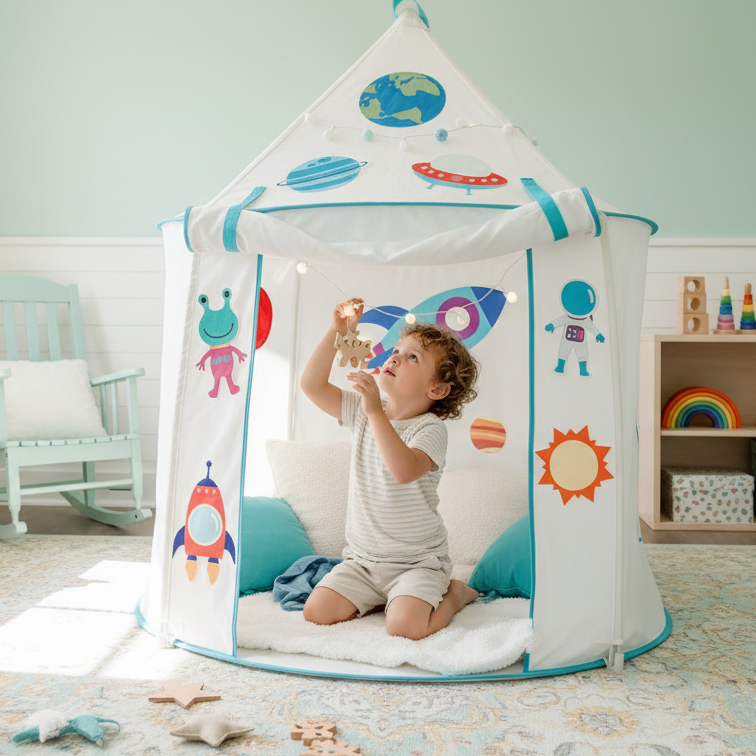
A blanket might become a fort. Blocks might turn into a city. A small play corner might transform into a spaceship or a reading retreat.
These experiences encourage creativity and flexible thinking.
Unlike highly structured toys, open-ended environments invite children to invent their own stories and experiment with new ideas. This kind of play strengthens imagination and helps children practice decision-making.
4. Ask Questions Instead of Giving Answers
Young children are constantly asking questions, but parents can encourage deeper thinking by asking questions in return.
Instead of immediately explaining how something works, try asking:
-
“What do you think it does?”
-
“Why do you think that happened?”
-
“What should we try next?”
These simple conversations help children develop reasoning skills. They begin to understand that ideas can be tested and explored rather than simply memorized.
Over time, this habit nurtures curiosity and critical thinking.
5. Create Spaces That Invite Independence
The environment children grow up in plays a significant role in how they learn.
Spaces designed for exploration and calm play encourage children to experiment with ideas, build confidence, and engage more deeply with their surroundings.
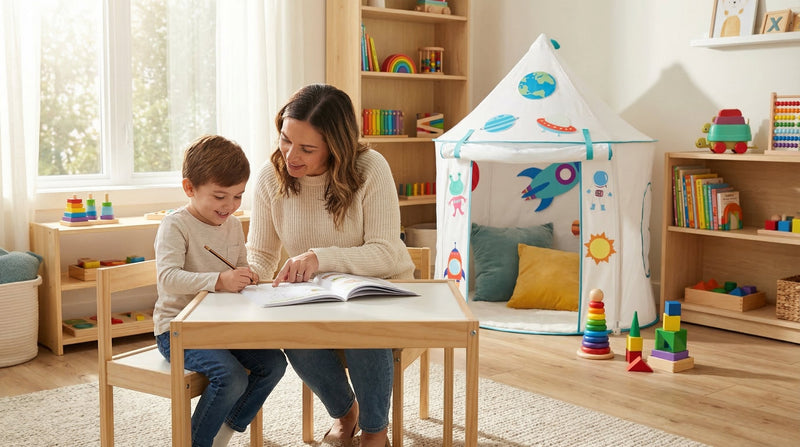
A simple play corner with books, open-ended toys, or imaginative play materials can become a place where children explore their interests independently.
When children feel ownership over their environment, they are more likely to take initiative and develop problem-solving skills.
The Power of Small Moments
Teaching children to think for themselves does not happen through lectures or strict rules. It develops gradually through everyday experiences.
When parents allow children to explore, solve problems, and express their ideas, they create the foundation for independent thinking.
Over time, these small moments add up.
A baby experimenting with a toy becomes a toddler inventing stories. That toddler eventually grows into a child who approaches the world with curiosity, creativity, and confidence.
And it all begins with giving children the space to discover things for themselves.
Frequently Asked Questions
At what age can children start learning to think independently?
Independent thinking begins much earlier than many parents realize. Even babies explore their surroundings by observing, touching, and experimenting with objects. These early interactions help build the foundation for curiosity and problem-solving. As children grow into toddlers, they begin testing ideas, making choices during play, and exploring simple solutions to small challenges.
How can parents encourage independent thinking without overwhelming their child?
The key is balance. Children benefit from guidance, but they also need space to explore on their own. Parents can encourage independence by asking open-ended questions, allowing children to try solving small problems, and creating environments that invite exploration. Offering support without immediately giving answers helps children develop confidence in their own thinking.
Why is open-ended play important for developing thinking skills?
Open-ended play allows children to use their imagination freely. Instead of following fixed instructions, they invent their own stories, experiment with ideas, and create different possibilities during play. This type of play encourages creativity, problem-solving, and flexible thinking.
What types of environments help children develop independence?
Children thrive in environments that feel calm, safe, and inviting. Simple play spaces with books, open-ended toys, and areas for imaginative play can encourage exploration and independent discovery. When children feel comfortable in their surroundings, they are more likely to experiment, make decisions, and develop confidence in their abilities.
Do children need many toys to develop independent thinking?
Not necessarily. In fact, research suggests that fewer toys often encourage deeper engagement. When children have too many options, they may jump quickly from one activity to another. A smaller selection of open-ended toys or play materials can help children focus longer and use their imagination more creatively.





Comment (0)