
Why Screen-Free Play Improves Focus and Creativity (According to Child Development Experts)
Introduction
If you've ever watched your child become completely absorbed in building a blanket fort, creating an imaginary café or inventing stories with their favourite toys, you've probably noticed something remarkable.
Time seems to disappear.
Minutes turn into hours.
They remain focused without reminders, rewards or constant encouragement.
Now compare that with many digital experiences. Children often move quickly between videos, games, or apps, searching for the next exciting moment. While technology can certainly educate and entertain, many parents wonder whether constant digital stimulation affects a child's ability to concentrate on slower, more imaginative activities.
It is a question that child development experts, educators and occupational therapists have explored for many years.
The encouraging news is that screen-free play offers something uniquely valuable. It encourages children to slow down, think independently and remain engaged with experiences that require their own imagination rather than relying on ready-made entertainment.
This article explores why screen-free play helps improve focus and creativity, what child development experts have observed, and how parents can create everyday opportunities for deeper, more meaningful play.
Quick Answer
Screen-free play improves focus and creativity because it encourages children to direct their own attention, solve problems independently, and invent their own stories. Unlike passive entertainment, imaginative play requires sustained concentration, flexible thinking and creative decision-making. Child development experts generally agree that regular opportunities for open-ended, screen-free play support cognitive development, emotional regulation and independent learning while helping children build longer attention spans naturally.
Key Takeaways
-
Screen-free play encourages children to practise sustained attention.
-
Open-ended play strengthens creativity by allowing children to generate their own ideas.
-
Imaginative play supports problem-solving, language and emotional development.
-
Calm, thoughtfully designed play environments help children remain engaged for longer.
-
Parents do not need to eliminate technology completely. Creating balance is what matters most.
Definition
What Is Screen-Free Play?
Screen-free play refers to activities that encourage children to learn, explore, and imagine without relying on televisions, tablets, smartphones, computers or gaming devices. It includes imaginative play, building, storytelling, creative arts, outdoor exploration, sensory experiences and child-led activities that invite children to become active participants rather than passive observers.
Why Focus Has Become a Growing Concern for Parents
Many parents notice a similar pattern.
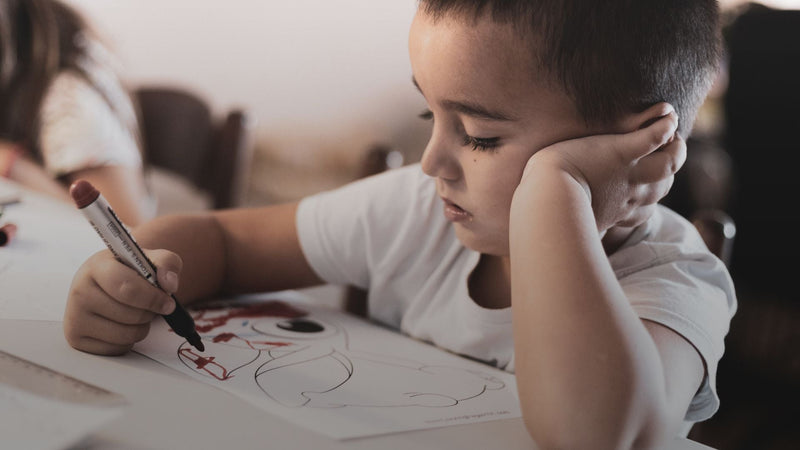
Their child can spend an hour watching videos or playing a favourite game, yet struggles to stay engaged with reading, drawing or building for more than a few minutes.
This naturally raises an important question.
Has my child's attention span become shorter?
The answer is often more complex than it first appears.
Children are capable of concentrating for long periods when they are deeply interested in something. The challenge is that different activities ask the brain to focus in different ways.
Fast-paced digital content delivers frequent rewards. Bright visuals, changing scenes, music, and instant feedback constantly encourage children to keep watching or tapping.
Screen-free play works differently.
Instead of receiving entertainment, children must create it.
They decide what happens next.
They solve problems.
They invent stories.
They adapt their ideas when something does not work.
This kind of active engagement exercises attention in a way that passive entertainment simply cannot.
Occupational therapists frequently observe that when children become immersed in imaginative play, they often demonstrate remarkable levels of sustained concentration because the experience is driven by their own curiosity rather than external stimulation.
Why Creativity Begins with Imagination
Creativity is often misunderstood.
Many people associate creativity exclusively with painting, drawing, or making crafts.
In reality, creativity is the ability to imagine possibilities, solve problems and think beyond obvious solutions.
Every time a child transforms a cardboard box into a spaceship or pretends the living room floor is an ocean filled with sharks, they are practising creative thinking.
Nothing about those experiences has been pre-programmed.
The child becomes the author, designer and storyteller.
This freedom is one of the reasons open-ended play is so powerful.
There is no correct answer.
No instructions to follow.
No final level to complete.
The story continues for as long as the child wants it to.
Child development specialists often explain that this kind of flexible thinking helps children develop cognitive skills they later apply in school, relationships, and everyday problem-solving.
Creativity grows through opportunities to create rather than simply consume.
Expert Insight
Creativity develops when children generate ideas rather than receive them.
Occupational therapists and early childhood educators frequently encourage open-ended play because it requires children to imagine possibilities, experiment with solutions and adapt their thinking. These experiences strengthen flexible thinking, confidence and resilience while allowing children to learn through exploration.
How Screen-Free Play Builds Focus
Focus is not something children either have or do not have.
Like reading, riding a bicycle or learning to swim, attention develops through practice.
Screen-free play provides that practice naturally.
When children build with blocks, complete a puzzle, or create imaginary worlds, they remain engaged because the experience belongs to them.
Every decision matters.
Every challenge invites another solution.
Unlike many structured activities, open-ended play has no timer and no pressure to finish quickly.
Children are free to continue experimenting for as long as their curiosity lasts.
This sustained engagement helps strengthen executive functioning skills, including planning, working memory, self-regulation and flexible thinking.
Parents often notice that children become calmer once they are deeply absorbed in imaginative play.
This is not because someone instructed them to concentrate.
It is because they discovered something worth concentrating on.
Why Open-Ended Play Is Different
Many toys are designed around one specific purpose.
A button produces a sound.
A character performs a particular action.
A game follows fixed rules.
These experiences can certainly be enjoyable.
However, once every feature has been explored, there is often little left for children to contribute.
Open-ended play removes those limits.
A single object can become almost anything.
Today's castle becomes tomorrow's spaceship.
A blanket transforms into a secret cave.
Wooden blocks become an entire city.
The possibilities continue expanding because imagination continues expanding.
This is why children often remain engaged with surprisingly simple materials for much longer than highly structured toys.
They are not repeating someone else's story.
They are writing their own.
10 Screen-Free Activities That Naturally Improve Focus and Creativity
Children develop concentration most effectively when they are genuinely interested in what they are doing. These activities encourage sustained attention while allowing imagination to lead the experience.
1. Build a Blanket Fort
Creating a fort encourages planning, problem-solving, and imaginative storytelling.
2. Design an Imaginary World
Invite children to create a kingdom, jungle or space station using everyday household materials.
3. Build with Wooden Blocks
Challenge children to design bridges, castles or entire cities without instructions.
4. Create a Puppet Show
Writing stories and performing characters strengthens language, creativity and confidence.
5. Draw Story Maps
Encourage children to draw maps of imaginary lands complete with rivers, forests and hidden treasure.
6. Nature Journalling
Observe plants, insects and birds before recording discoveries through drawings and simple notes.
7. Invent a Board Game
Allow children to create their own rules, challenges and game pieces.
8. Read and Continue the Story
After finishing a book, encourage children to imagine what happens next.
9. Build from Recycled Materials
Cardboard boxes, tubes and containers can become almost anything children imagine.
10. Create a Quiet Reading Retreat
A calm reading space encourages longer periods of sustained attention and imaginative thinking.
Why Parents Matter Less Than They Think
Many parents worry they need to entertain their children constantly.
The opposite is often true.
Children usually develop stronger focus when adults provide opportunities rather than continuous direction.
This does not mean stepping away completely.
It means creating an environment where children feel safe to explore independently.
Sometimes the greatest support a parent can offer is resisting the temptation to interrupt.
The longer children remain inside their own imaginative worlds, the more opportunities they have to strengthen attention, creativity, and confidence.
The Environment Shapes Attention More Than We Realise
When parents think about improving their child's focus, they often begin by looking for better activities, educational toys, or concentration exercises. While these can certainly be helpful, child development experts frequently point to something even more influential.
The environment.
Children naturally respond to the spaces around them. A room overflowing with flashing lights, noisy electronic toys and endless choices can make it difficult to settle into one activity for very long. By contrast, a calm, organised space with carefully chosen materials quietly invites children to slow down, explore and become absorbed in their own ideas.
This does not mean every home needs a dedicated playroom or a picture-perfect Montessori setup. The most effective environments are often surprisingly simple. A comfortable reading corner, a basket of building blocks, a small art table or a cosy hideaway where children can retreat with a favourite book all encourage sustained engagement.
When distractions are reduced, and imagination is given room to grow, children often discover that they are capable of concentrating for much longer than parents expect.
Expert Insight
Focus grows in environments that encourage curiosity.
Occupational therapists frequently observe that children remain engaged for longer when they feel calm, comfortable and free to direct their own play. Rather than constantly switching between activities, they become immersed in one idea, allowing attention and creativity to develop naturally.
Why Independent Play Strengthens the Brain
Independent play is sometimes misunderstood as simply keeping children occupied.
In reality, it is one of the richest learning experiences childhood offers.
When children play independently, every decision belongs to them. They choose the storyline, solve unexpected problems, and adapt their ideas whenever something changes. There is no adult providing the next instruction or correcting every mistake. Instead, children learn to think through challenges using their own judgement.
This process strengthens what psychologists often describe as executive functioning skills. These include planning, organising, remembering information, managing emotions and shifting attention between tasks when necessary. These skills are fundamental not only for school but also for everyday life.
Perhaps even more importantly, independent play teaches children to trust their own thinking. Every successful idea reinforces the belief that they are capable of solving problems without relying on constant guidance.
This confidence often extends beyond playtime into learning, friendships and future challenges.
Why Boredom Can Be a Powerful Teacher
Few words make parents react as quickly as,
"I'm bored."
Our natural instinct is to fix the problem.
We suggest another activity.
Offer another toy.
Recommend watching something.
Yet boredom often deserves a little more patience.
Child development experts generally agree that boredom creates an important pause between stimulation and creativity. At first, children may feel uncertain because no one is directing their attention. Gradually, however, their minds begin searching for possibilities.
A blanket becomes a mountain.
The garden becomes a safari.
A handful of sticks become magical wands.
None of these ideas are provided by an adult.
They emerge because children have been given enough time to create them.
Parents are often surprised that the most imaginative play begins only after children have spent several minutes insisting they have nothing to do.
Common Myths About Focus and Creativity
Many beliefs about children's attention are based on assumptions rather than how children naturally learn. Understanding these misconceptions can help parents support focus in more meaningful ways.
|
Myth |
Reality |
|
Children need constant stimulation to stay engaged. |
Children often develop deeper concentration when they have uninterrupted time to explore one activity. |
|
Educational apps are the best way to improve focus. |
Focus develops through many experiences, including reading, imaginative play, building, and creative projects. |
|
More toys encourage greater creativity. |
Too many choices can overwhelm children and reduce the quality of play. |
|
Boredom should always be avoided. |
Boredom often becomes the starting point for imagination and independent problem-solving. |
|
Creativity is only about art. |
Creativity also includes storytelling, building, problem-solving, pretend play, and flexible thinking. |
Practical Ways to Encourage Better Focus Every Day
Improving focus does not require complicated routines. Small changes in everyday family life can make a significant difference over time.
Create Regular Screen-Free Time
Rather than treating screen-free play as an occasional event, establish predictable periods each day when children know they can explore without digital distractions.
Rotate Toys
Instead of displaying every toy at once, rotate selections every few weeks. Familiar toys often become exciting again when they reappear after a short break.
Choose Open-Ended Materials
Blocks, art supplies, recycled materials, fabric, loose parts, and natural objects encourage children to invent rather than simply follow instructions.
Allow Longer Play Sessions
Avoid interrupting children too quickly when they appear deeply engaged. Sustained attention develops through uninterrupted practice.
Read Together Every Day
Reading encourages children to create mental images, imagine characters, and remain focused on one narrative over an extended period.
Celebrate Effort Rather Than Results
Praise persistence, curiosity and creative thinking rather than simply the finished product. This encourages children to enjoy the process of learning.
The Role of Purposeful Play
Children rarely separate learning from play.
When they are pretending to run a café, they are practising communication and mathematics.
When they build a bridge from blocks, they are experimenting with engineering and problem-solving.
When they invent imaginary worlds, they are strengthening language, creativity and emotional understanding.
Purposeful play allows children to develop multiple skills simultaneously because every challenge feels meaningful within the story they are creating.
Unlike passive entertainment, there is no audience.
The child is both the creator and the participant.
This active involvement is one reason screen-free play remains such a valuable part of healthy childhood development.
How ZeeZee Adventures Supports Focus and Creativity
Many toys capture a child's attention for a short time before being forgotten. Often, this is because the experience has a clear beginning and end. Once every feature has been explored, there is little left for the child to contribute.
ZeeZee Adventures was created around a different philosophy.
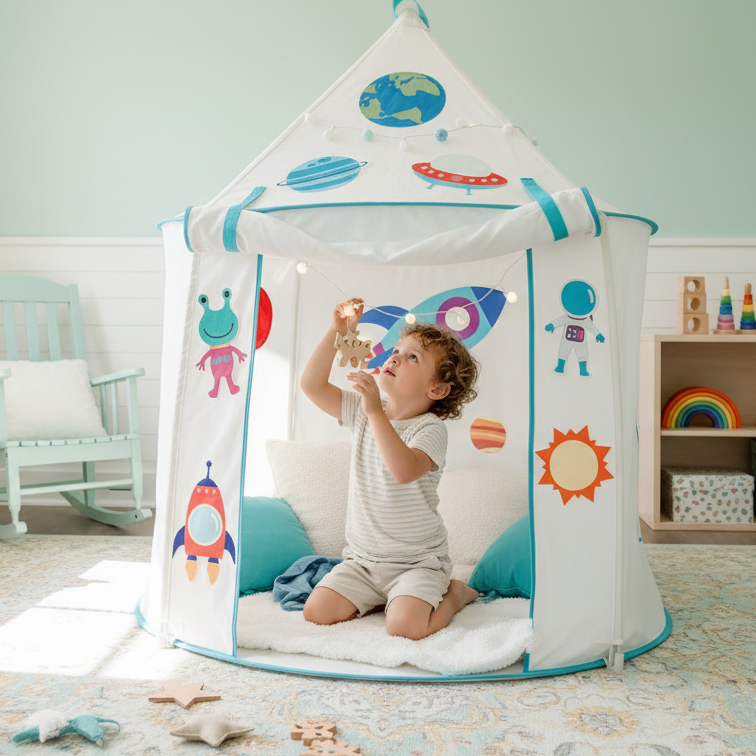
Inspired by two sisters who wished their play tent could change with their imagination, the ZeeZee Adventure Tent was designed as a flexible play environment rather than a fixed-theme toy. Through interchangeable StickeeZ themes, children can transform the same space into a magical kingdom, an underwater world, outer space, a dinosaur adventure or any story they wish to create. The company's mission centres on encouraging imagination, creativity, confidence and child-led exploration through purposeful play.
The tent also provides a calm, sensory-friendly environment where children can read, build, imagine or simply enjoy quiet independent play. Combined with child-safe materials, integrated lighting and changeable themes, it encourages children to remain engaged for longer because the environment continues evolving alongside their imagination rather than limiting it.
Rather than replacing imagination, ZeeZee Adventures gives it a place to grow.

Conclusion
Helping children develop better focus and stronger creativity does not require complicated programmes, expensive educational resources or the complete removal of technology from family life. More often, it begins with something much simpler: giving children regular opportunities to play without constant digital stimulation.
Screen-free play allows children to experience something that modern life rarely offers in abundance. It gives them time to think, imagine, experiment and become completely absorbed in their own ideas. Instead of consuming stories created by someone else, they become the storytellers. Instead of following instructions, they invent solutions. Instead of waiting for the next source of entertainment, they learn to create it themselves.
These moments of deep, imaginative play do far more than fill an afternoon. They help children develop concentration, resilience, flexible thinking and confidence that extends into every aspect of life. The blanket fort becomes more than a blanket fort. The cardboard box becomes more than a box. They become opportunities to practise the very skills children will rely on throughout school and adulthood.
Technology will continue to be part of childhood, and it can certainly be used in positive and meaningful ways. The goal is not to create a screen-free world. The goal is to create a childhood where screens complement life rather than replace the experiences that nurture curiosity, creativity and genuine connection.
As parents, we do not need to provide constant entertainment or search endlessly for new activities. We simply need to offer children the time, encouragement and environment where their own imagination can take the lead.
When we do, we often discover that the greatest learning happens not through another lesson or another app, but through play that begins with a simple question.
"What shall I imagine today?"
Action Checklist
Use these simple steps to encourage deeper focus and more creative play at home.
☐ Create a daily screen-free play period without interruptions.
☐ Reduce visual clutter in your child's play area.
☐ Rotate toys instead of displaying everything at once.
☐ Choose open-ended materials that encourage imagination.
☐ Read together every day and discuss the story afterwards.
☐ Give children time to work through boredom before offering suggestions.
☐ Encourage outdoor exploration whenever possible.
☐ Celebrate creativity, curiosity and persistence rather than perfect outcomes.
☐ Allow uninterrupted periods of independent play.
☐ Create a calm, inviting environment where children feel free to imagine and explore.
Frequently Asked Questions
1. Does screen-free play really improve children's focus?
Yes. Screen-free play encourages children to sustain their attention, solve problems independently, and remain engaged with activities that require active thinking rather than passive entertainment. Over time, these experiences help strengthen concentration and self-regulation.
2. Why does imaginative play encourage creativity?
Imaginative play requires children to invent characters, stories, solutions, and new possibilities. Rather than following predetermined instructions, they generate their own ideas, helping develop flexible thinking and creative problem-solving.
3. How much screen-free play should children have each day?
There is no single amount that suits every family. What matters most is creating regular opportunities for uninterrupted imaginative play alongside a balanced approach to technology.
4. What are the best activities for improving focus?
Building with blocks, reading, drawing, storytelling, puzzles, pretend play, nature exploration and creative construction projects all encourage sustained attention because children remain actively involved in the experience.
5. My child says they're bored without screens. What should I do?
Resist solving the problem immediately. Give your child time to think, explore and develop their own ideas. Boredom often becomes the starting point for imaginative play and independent problem-solving.
6. Can open-ended toys improve creativity?
Yes. Open-ended materials such as blocks, art supplies, fabric, recycled materials and imaginative play spaces allow children to invent their own stories and adapt their play in countless ways, keeping them engaged for longer.
7. How can I encourage my child to play independently?
Create a calm environment, provide open-ended resources, avoid interrupting play unnecessarily, and gradually increase opportunities for independent exploration. Confidence develops through regular practice.
Author Bio
The ZeeZee Play Experts
The ZeeZee Play Experts are passionate advocates for imaginative, child-led play and healthy childhood development. Drawing on insights from occupational therapy, early childhood education, and family experiences, they create evidence-informed resources that help parents nurture creativity, confidence, and independent exploration. Their mission is to help families create calm, inspiring spaces where children can learn through the power of purposeful play.





Comment (0)