
7 Simple Ways to Help Kids Stay Engaged Longe
Parents often find themselves asking the same question: "Why can't my child stick with anything for more than a few minutes?"
A child starts building with blocks, then quickly abandons them. A puzzle is left unfinished. A book loses its appeal after a few pages. Even activities that initially spark excitement can seem forgotten moments later. In a world filled with endless entertainment options, many parents worry that children are losing the ability to focus and engage deeply.
However, short attention spans are not always the result of a child's personality or capability. More often, they reflect the environment children are growing up in. Modern childhood is increasingly shaped by rapid stimulation, instant rewards, and constant novelty. From short-form videos to electronic toys and busy schedules, children are surrounded by experiences that encourage quick attention shifts rather than sustained engagement.
The good news is that engagement is a skill that can be nurtured.
Children are not born knowing how to concentrate for long periods. They develop this ability through repeated opportunities to explore, create, solve problems, and immerse themselves in meaningful experiences. Small changes in how activities are presented, how environments are organised, and how parents respond to boredom can make a significant difference.
Helping children stay engaged longer is not about forcing them to sit still or removing all forms of entertainment. It is about creating conditions that allow focus, curiosity, and deep play to emerge naturally.
Why Engagement Matters More Than Entertainment
Modern childhood offers more entertainment than any previous generation has experienced. Children can access videos, games, apps, and digital content almost instantly. While these tools can certainly have value, they often provide stimulation rather than engagement.
There is an important difference between being entertained and being engaged.
Entertainment is often passive. The experience is created for the child.
Engagement is active. The child participates, thinks, imagines, creates, and solves problems.
When children become deeply engaged in an activity, they strengthen skills that support learning and development throughout life. They build attention span, creativity, emotional regulation, resilience, and problem-solving abilities.
The goal is not to eliminate entertainment entirely. Rather, it is to ensure children have enough opportunities to experience activities that require active participation and deeper thinking.
1. Reduce Environmental Distractions
One of the simplest ways to help children stay engaged longer is to examine their environment.
Many homes are filled with distractions that compete for a child's attention. Background television, notifications, excessive noise, cluttered play areas, and too many available toys can make concentration difficult.
Children's brains are still developing the ability to filter distractions. When the environment is overloaded with competing stimuli, maintaining focus requires much more effort.
A calmer environment often supports deeper engagement.
This does not mean creating a perfectly organised home. Small adjustments can make a noticeable difference. Turning off background television, reducing unnecessary noise, and organising toys into smaller, accessible groups can help children settle into activities more easily.
When there is less competition for attention, children often remain engaged for longer periods.
2. Choose Open-Ended Activities
Not all activities encourage the same level of engagement.
Open-ended activities allow children to decide how they want to play, create, or explore. There is no single correct outcome, which means the activity can evolve as the child's imagination develops.
Building blocks, magnetic tiles, art materials, dolls, figurines, cardboard boxes, and pretend-play materials are all examples of open-ended resources.
These activities encourage children to become active participants rather than passive observers.
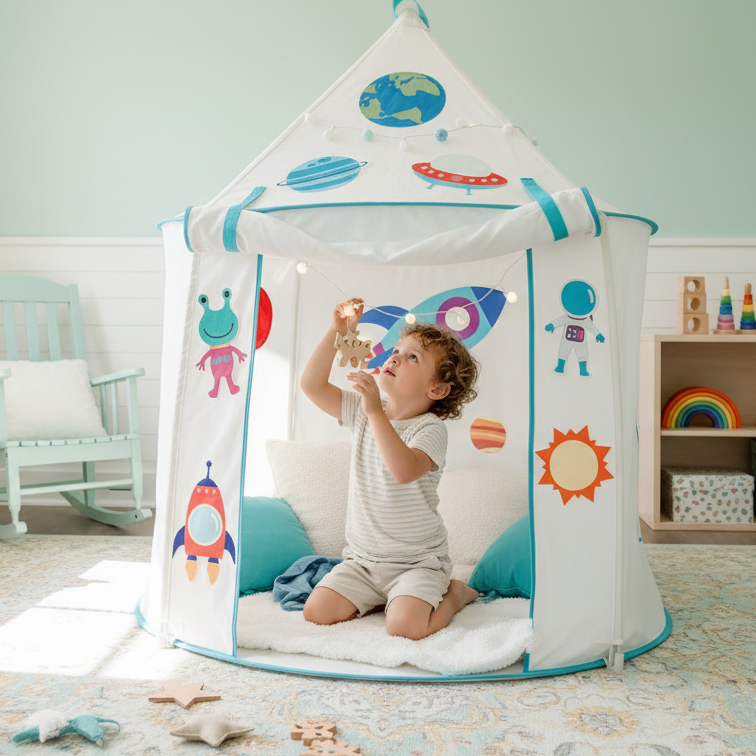
A cardboard box can become a spaceship.
A blanket can become a castle.
A collection of blocks can become an entire city.
Because open-ended activities offer endless possibilities, children often remain engaged much longer than they would with toys that have only one intended purpose.
3. Allow Boredom Before Offering Solutions
One of the biggest obstacles to deep engagement is the tendency to solve boredom immediately.
When children say, "I'm bored," many adults feel pressure to provide entertainment straight away. A screen appears, a new activity is suggested, or a distraction is offered.
However, boredom itself is not a problem.
In many cases, boredom is the starting point for creativity.
When children move through boredom rather than escaping it immediately, their brains begin searching for ways to create engagement. This often leads to imaginative play, storytelling, problem-solving, and independent exploration.
The next time a child complains of boredom, it can be helpful to pause before offering solutions.
Often, the most creative moments emerge shortly afterwards.
4. Create Longer Periods of Uninterrupted Play
Children often need time before deep engagement begins.
Many parents unintentionally interrupt play just as concentration is developing. Frequent transitions, constant instructions, and moving quickly from one activity to another can make it difficult for children to become fully immersed.
Deep play takes time.
Children may spend several minutes exploring an activity before they become genuinely engaged. Once that engagement develops, creativity and concentration often increase dramatically.
Whenever possible, try to protect periods of uninterrupted play.
Allow children enough time to explore without rushing them to the next task.
These uninterrupted moments help children strengthen focus naturally.
5. Balance Movement and Quiet Activities
Many children struggle to focus because they have not had enough opportunities to move.
Physical activity plays an important role in attention and emotional regulation. Movement helps children release energy, regulate emotions, and prepare their brains for learning.
After periods of movement, many children find it easier to settle into quieter activities.
This is why alternating active and calm experiences can be so effective.
Outdoor play, dancing, obstacle courses, climbing, running, and active games all support concentration by helping children meet their physical needs first.
A child who has had opportunities to move is often much more capable of engaging deeply in reading, creative projects, or independent play afterwards.
6. Follow Your Child's Interests
Engagement increases when children feel genuinely interested in what they are doing.
Adults sometimes choose activities based on what they believe children should enjoy rather than what children are naturally curious about.
When children are allowed to explore their own interests, motivation often increases dramatically.
A child fascinated by dinosaurs may spend hours reading books, building habitats, drawing pictures, or creating stories about them.
A child interested in vehicles may become deeply engaged in construction projects, roleplay, and creative building activities.
Interest creates investment.
The more ownership children feel over an activity, the longer they are likely to remain engaged.
7. Create Predictable Daily Rhythms
Children thrive on predictability.
When daily life feels chaotic or constantly changing, children often spend more mental energy adjusting to transitions than focusing on activities.
Predictable routines create a sense of security and stability.
Children know what to expect, which allows them to settle more easily into play, learning, and exploration.
This does not require rigid schedules.
Simple rhythms often work best.
Regular meal times, consistent bedtimes, outdoor play periods, reading routines, and opportunities for independent play all help create an environment where concentration can develop naturally.
Why Screens Often Compete with Engagement
Screens are not inherently harmful, but they can influence how children experience focus.
Many forms of digital content are designed to provide rapid rewards, constant novelty, and immediate stimulation. These experiences can make slower activities feel less exciting by comparison.
Reading a book requires patience.
Building a structure takes effort.
Creative play unfolds gradually.
Children who become accustomed to constant digital stimulation may initially struggle with these slower experiences.
This does not mean screens must disappear entirely.
The goal is balance.
Children benefit most when screen time exists alongside opportunities for movement, imagination, creativity, reading, and independent play.

Creating Opportunities for Deep Play
Deep play occurs when children become fully immersed in an activity.
Time seems to disappear.
Focus strengthens.
Creativity expands.
Problem-solving increases.
These experiences are incredibly valuable because they strengthen many of the same skills children use throughout life.
At ZeeZee Adventures, many families create imaginative environments that encourage storytelling, role-play, and independent exploration. These types of spaces support deep engagement because they invite children to participate actively in creating their own experiences.
The more opportunities children have for deep play, the more naturally attention span develops.
Final Thoughts
Helping children stay engaged longer is not about forcing concentration or constantly providing entertainment.
It is about creating conditions that support curiosity, creativity, and sustained attention.
Reducing distractions, embracing boredom, protecting uninterrupted play, encouraging movement, following children's interests, and creating predictable routines can all make a meaningful difference.
Most importantly, parents should remember that attention develops gradually.
Children do not need perfect focus.
They need opportunities to practise it.
And often, the simplest changes create the most powerful results.
Because children do not always need more stimulation.
Sometimes they simply need more space to become deeply engaged with the world around them.
Frequently Asked Questions
Why does my child lose interest so quickly?
Many children are growing up in highly stimulating environments. Rapid digital content, constant distractions, and busy schedules can make sustained engagement more challenging.
Is boredom good for children?
Yes. Boredom often encourages creativity, independent thinking, and problem-solving. Many imaginative activities begin after children move through boredom.
What activities help children focus longer?
Open-ended activities such as building, drawing, storytelling, puzzles, reading, and imaginative play often encourage longer periods of engagement.
Does screen time affect attention span?
Excessive exposure to highly stimulating digital content can make slower activities feel less rewarding. Balance is important.
How can I encourage independent play?
Create opportunities for open-ended play, reduce distractions, allow boredom occasionally, and avoid interrupting play unnecessarily.
What is deep play?
Deep play occurs when children become fully immersed in an activity, strengthening concentration, creativity, and problem-solving skills.
Should I entertain my child when they are bored?
Not always. Giving children time to work through boredom often encourages creativity and independent thinking.
How long should children be able to focus?
Attention spans vary by age and individual development. Rather than focusing on exact numbers, it is often more helpful to create environments that support deeper engagement naturally.






Comment (0)