
Minimalist Playroom Setup: Less Mess, More Play
Walk into many modern playrooms, and you will often find shelves packed with toys, overflowing storage bins, flashing gadgets, educational games, character-themed products, and enough play materials to fill an entire toy shop. Parents naturally want to provide opportunities for learning, creativity, and fun, so adding one more toy rarely feels like a problem.
Over time, however, those toys begin to accumulate.
The shelves become crowded.
The floor becomes cluttered.
Children move quickly from one activity to another.
And despite having more toys than ever, many children still complain that they are bored.
This has led many families to ask an important question.
What if more toys are not actually creating better play?
What if children need less in order to engage more?
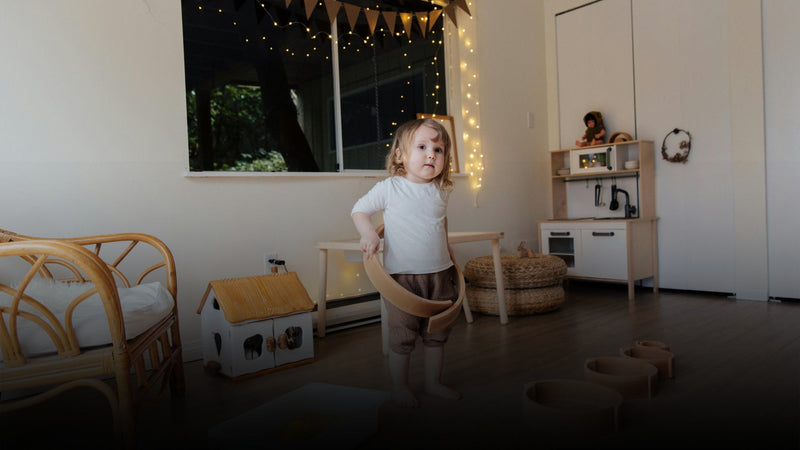
The idea may seem surprising at first, but a growing number of parents are discovering that simplifying a playroom often leads to richer, more creative, and more meaningful play experiences. Rather than limiting children, a thoughtfully organised environment can actually give them greater freedom to focus, imagine, and explore.
A minimalist playroom is not about creating an empty space or following a design trend. It is about removing unnecessary distractions so children can engage more deeply with the materials that truly support their development.
Sometimes, less really does create more.
Why More Toys Does Not Always Mean Better Play
Most parents assume that more toys provide more opportunities for learning and creativity. While the intention is positive, research and real-life experience often tell a different story.
When children are surrounded by too many choices, their attention becomes divided. Instead of exploring one activity deeply, they move rapidly from one toy to another. The brain continuously processes options, making it harder to commit to a single experience.
This is sometimes referred to as choice overload.
Imagine walking into a room filled with hundreds of options and being asked to choose just one. For children, this can feel overwhelming rather than exciting.
Many parents notice a surprising shift when they reduce the number of toys available. Children often begin playing for longer periods, creating more imaginative scenarios, and exploring toys in new ways.
The issue is not that children need more entertainment.
The issue is that too many options can make meaningful engagement more difficult.
The Hidden Link Between Clutter and Focus
Clutter is often viewed as a household organisation problem, but it can also affect children's ability to concentrate.
Children are constantly processing information from their environment. Every toy, colour, object, and visual distraction competes for attention. When a playroom is crowded, the brain must work harder to decide what deserves focus.
This creates sensory overload.
The environment becomes mentally busy before play has even begun.
Many child development experts believe that calmer environments support deeper engagement because children are not constantly distracted by competing stimuli.
This does not mean children need perfectly tidy spaces.
It simply means that organisation matters.
When toys are displayed intentionally rather than piled together, children often find it easier to focus and engage.
The environment itself begins supporting concentration rather than competing against it.
Why Children Often Play Longer With Fewer Toys
One of the most common concerns parents have is that reducing toys will create boredom.
In reality, the opposite often happens.
When children have fewer toys available, they spend more time exploring the possibilities within each one.
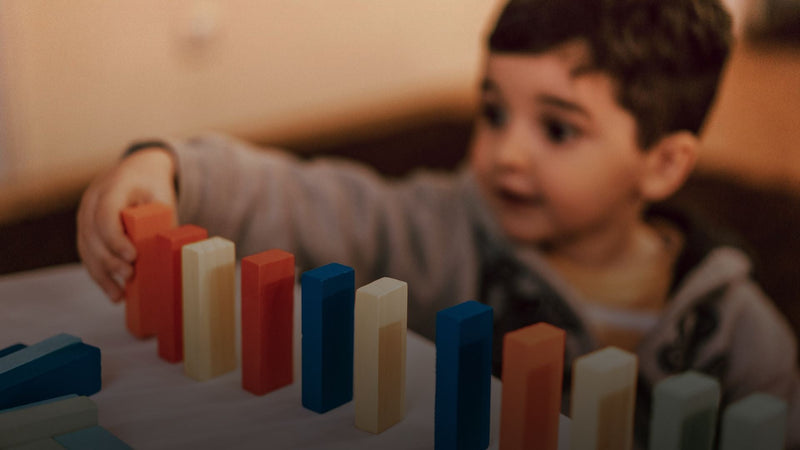
A simple set of blocks may become a castle in the morning, a city in the afternoon, and a zoo before bedtime.
The same materials support endless possibilities because children are encouraged to use their imagination rather than constantly moving to something new.
This is especially true with open-ended toys.
Open-ended play materials do not tell children how to play. Instead, they allow creativity to lead the experience.
Building blocks.
Magnetic tiles.
Art supplies.
Dolls.
Animal figures.
Pretend-play materials.
These resources encourage storytelling, problem-solving, and experimentation.
Children become active creators rather than passive consumers.
As a result, play often lasts much longer.
What Makes a Playroom Truly Minimalist?
One of the biggest misconceptions about minimalist playrooms is that they are empty, sterile, or designed purely for aesthetics.
A true minimalist playroom is not about having fewer toys simply for the sake of having fewer toys.
It is about intentionality.
Every item in the space should have a purpose.
Children should be able to access materials independently.
The room should invite exploration rather than overwhelm the senses.
A minimalist playroom still contains creativity, imagination, learning opportunities, and even occasional mess.
The difference is that the environment has been designed to support play rather than distract from it.
When children can clearly see and access what is available, they often become more engaged because the environment feels manageable and inviting.
The Importance of Toy Rotation
One of the simplest ways to create a minimalist playroom without removing beloved toys is through toy rotation.
Instead of displaying everything at once, parents store some toys away and rotate them periodically.
This approach offers several benefits.
First, it reduces visual clutter.
Second, it prevents children from becoming overwhelmed by too many choices.
Third, it creates a sense of novelty without requiring constant purchases.
A toy that has been stored away for a few weeks often feels new and exciting when it returns.
Many parents discover that toy rotation actually increases engagement because children spend more time exploring the toys currently available rather than skimming through dozens of options.
Creating Play Zones That Encourage Focus
Another valuable strategy is creating simple play zones within the room.
Children often engage more deeply when different types of activities have dedicated spaces.
A reading corner encourages quiet exploration.
An art station supports creativity.
A building area invites construction and problem-solving.
A pretend-play space encourages storytelling and imagination.
These zones do not need to be large or expensive.
Even small spaces can help children understand how to engage with different activities.
Many families find that creating intentional play areas reduces chaos and encourages longer periods of independent play.

Why Calm Environments Support Better Play
Modern childhood is increasingly filled with stimulation.
Screens.
Notifications.
Electronic toys.
Background television.
Busy schedules.
While stimulation can be exciting, too much of it often makes deep play more difficult.
Children benefit from environments that allow them to slow down.
A calm playroom gives the brain room to think.
It supports creativity, emotional regulation, and concentration.
Many families who embrace minimalist play spaces notice that children become less restless and more absorbed in their activities over time.
Interestingly, organisations focused on imaginative and child-led play, such as ZeeZee Adventures, often emphasise the importance of creating environments that encourage exploration rather than overwhelm it. Whether children are building stories, roleplaying adventures, or creating their own worlds, purposeful play spaces help support the kind of deep engagement that modern childhood increasingly needs.
The goal is not removing fun.
The goal is creating space for imagination to thrive.
Common Mistakes Parents Make
When creating a minimalist playroom, some parents make the mistake of removing too much too quickly.
Sudden changes can feel disruptive, especially if children are attached to certain toys.
A better approach is gradual simplification.
Observe which toys children genuinely use.
Notice which materials support creativity and sustained engagement.
Store rather than immediately discard items.
Another common mistake is organising the room for adults rather than children.
Beautiful storage solutions are not helpful if children cannot access materials independently.
A successful playroom should work for the child first.
How To Start Your Own Minimalist Playroom
The easiest way to begin is by observing.
Watch how your child actually plays.
Which toys are used regularly?
Which ones sit untouched?
Which materials inspire imagination and creativity?
Start by removing obvious clutter and storing rarely used items.
Organise remaining toys into simple categories.
Make materials visible and accessible.
Create small areas dedicated to different types of play.
Most importantly, remember that minimalism is not about perfection.
It is about creating an environment that supports deeper engagement and meaningful experiences.
Final Thoughts
A minimalist playroom is not about having fewer toys simply for the sake of simplicity.
It is about creating a space where children can focus, imagine, explore, and play more deeply.
When children are surrounded by fewer distractions, they often become more creative, more independent, and more engaged.
The goal is not a picture-perfect room.
The goal is purposeful play.
Because sometimes the best gift we can give children is not more toys.
It is more space to use their imagination.



Comment (0)