
How Environment Shapes a Child’s Ability to Focus
Parents often worry when a child struggles to concentrate. A child may abandon activities after only a few minutes, become distracted during homework, or seem unable to stay engaged with books, puzzles, or conversations. In today's world, attention span has become one of the biggest concerns for families, teachers, and child development experts alike.
When focus becomes a challenge, many parents immediately assume the problem lies within the child. Perhaps they believe their child is naturally inattentive, easily distracted, or simply not interested in certain activities. However, modern research and child development experts increasingly suggest a different perspective.
A child's ability to focus is not determined solely by personality or temperament.
Environment plays a powerful role.
The spaces children spend time in, the level of stimulation surrounding them, the routines they experience, the sounds they hear, and even the way toys and materials are organised can all influence how well they are able to concentrate.
In many cases, children are not struggling because they are incapable of focusing. They are struggling because their environments make sustained attention more difficult.
This matters because focus is not simply an academic skill. Attention affects learning, emotional regulation, communication, creativity, problem-solving, and confidence. Children who can focus deeply often find it easier to engage with challenges, complete tasks, develop hobbies, and build meaningful relationships.
The good news is that parents have more influence than they may realise. Small changes to a child's environment can often create significant improvements in concentration and emotional regulation.
Why Focus Is Built, Not Born
One of the biggest misconceptions about attention is the belief that children are either naturally focused or naturally distracted.
In reality, focus develops gradually over time.
Just as children learn language through conversation and movement through physical activity, they develop concentration through repeated opportunities to practise sustained attention.
Young children are not expected to focus for long periods. Their brains are still developing. However, as they grow, they strengthen their attention span through experiences that require patience, engagement, and persistence.
Reading stories.
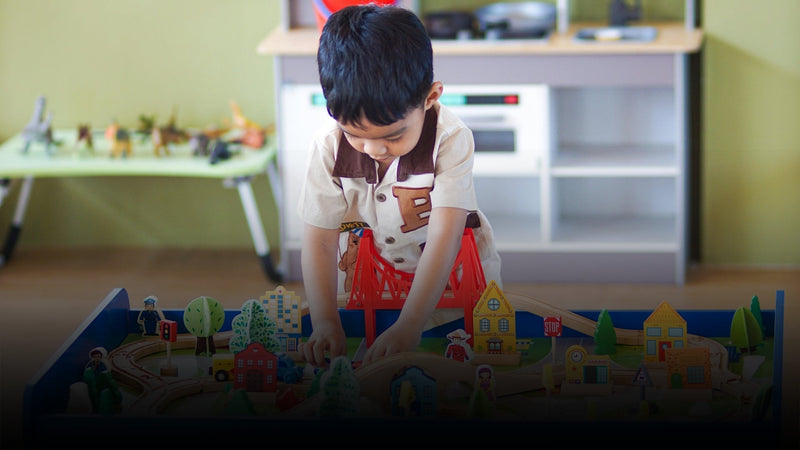
Building structures.
Drawing pictures.
Listening to conversations.
Completing puzzles.
Exploring nature.
Imaginative play.
These experiences act like exercise for the brain.
Each time a child remains engaged with an activity, they strengthen the neural pathways responsible for attention and self-regulation.
The challenge is that modern environments often compete against this developmental process.
Rather than encouraging sustained engagement, many environments are filled with interruptions, distractions, and rapid stimulation that make focus increasingly difficult.
The Hidden Cost of Overstimulation
Children today are growing up in one of the most stimulating environments in human history.
Notifications.
Background television.
Streaming platforms.
Short-form videos.
Electronic toys.
Busy schedules.
Constant noise.
Rapid entertainment.
While each of these may seem harmless individually, together they create an environment where the brain becomes accustomed to constant novelty.
The problem is that attention develops through sustained engagement, not constant switching.
When children move rapidly from one source of stimulation to another, their brains rarely have the opportunity to settle into deeper concentration.
Many parents notice this at home.
A child watches a fast-paced programme, then struggles to sit with a book.
A child scrolls through short videos, then becomes bored with drawing.
A child moves between screens, games, and notifications, then finds it difficult to complete homework.
This does not mean screens are inherently harmful. Rather, it highlights how environmental stimulation shapes the way children experience focus.
The more the brain becomes accustomed to rapid rewards, the harder slower activities may initially feel.
How Clutter Affects a Child's Brain
Most parents think of clutter as a housekeeping issue.
However, clutter can also influence attention.
Children process enormous amounts of sensory information every day. When an environment is visually crowded, the brain must constantly decide what deserves attention and what should be ignored.
A room overflowing with toys, colours, materials, and distractions can make concentration more difficult because the brain is continuously processing competing information.
This does not mean children need minimalist homes.
It simply means thoughtful organisation matters.
Many child development specialists recommend rotating toys rather than displaying everything at once. When fewer materials are visible, children often engage more deeply with what is available.
Instead of jumping constantly between options, they spend longer periods exploring and creating.
Interestingly, many parents discover that children play more creatively when fewer toys are accessible.
The environment becomes less overwhelming, and focus naturally improves.
Why Noise Matters More Than Parents Realise
Many homes are rarely quiet.
Television plays in the background.
Music streams continuously.
Conversations overlap.
Devices make sounds.
Notifications interrupt.
Adults often become accustomed to this level of noise, but children experience it differently.
Children's brains are still developing the ability to filter distractions.
Background noise requires mental energy, even when children appear to ignore it.
Research suggests that excessive background noise can affect concentration, memory, language development, and learning.
A child attempting to read while a television plays nearby must work significantly harder to focus than a child reading in a quieter environment.
Similarly, children engaging in imaginative play often create more complex and sustained play experiences when unnecessary background noise is reduced.
Silence is not always necessary.
However, calmness often supports concentration.
Sometimes the simplest way to improve focus is not by adding more activities, but by removing distractions.

The Connection Between Play Spaces and Attention Span
Play is often viewed as entertainment.
In reality, play is one of the primary ways children develop attention.
Deep play occurs when children become fully immersed in an activity.
Time seems to disappear.
Focus strengthens.
Creativity expands.
Problem-solving increases.
This type of engagement rarely happens in chaotic environments.
Children focus best when they have access to spaces that encourage exploration without overwhelming stimulation.
A cosy reading corner.
A building area.
A creative art station.
A pretend play environment.
These spaces signal to children that they can settle, explore, and engage deeply.
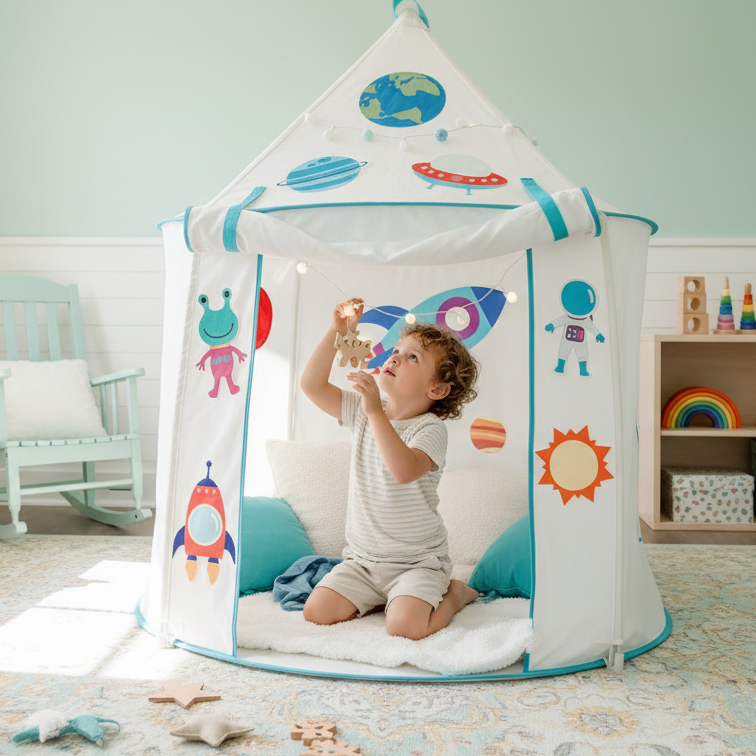
At ZeeZee Adventures, many families intentionally create imaginative environments that encourage children to become immersed in storytelling, roleplay, and creative exploration. These kinds of spaces support sustained engagement because they invite participation rather than passive entertainment.
When children become absorbed in imaginative play, they are strengthening concentration naturally.
Importantly, this process often looks effortless because children enjoy it.
Yet beneath the surface, important developmental skills are being built.






Comment (0)