
Why Open-Ended Play Helps Children Build Lifelong Skills
Quick Answer
Open-ended play helps children develop lifelong skills by encouraging them to think independently, solve problems creatively, communicate effectively, regulate emotions, and adapt to new challenges. Unlike activities with fixed instructions or predetermined outcomes, child-led play strengthens executive functioning, confidence, resilience, and creativity—skills that support learning, relationships, and wellbeing throughout life.
Introduction
Imagine walking into your living room and finding the sofa cushions scattered across the floor.
Your first instinct might be to tidy them up.
But then you notice something.
Your child isn't making a mess.
They're leading a mountain rescue mission.
The cushions have become towering cliffs.
The coffee table is a dangerous bridge.
Stuffed animals are stranded hikers waiting to be rescued.
For the next hour, your child carefully plans routes, overcomes obstacles, invents dialogue, changes strategies, and celebrates every successful rescue.
To an adult, it might look like ordinary play.
In reality, something extraordinary is happening.
Without realizing it, your child is practicing planning, creative thinking, communication, emotional regulation, flexible problem-solving, and perseverance—all within a single imaginative adventure.
This is why play is far more than a way to pass the time.
It's one of the most powerful ways children learn.
While worksheets, lessons, and structured activities certainly have their place, many of the abilities children rely on throughout adulthood are developed long before they ever sit behind a school desk. They emerge naturally through exploration, curiosity, experimentation, and imagination.
This is where open-ended play becomes so valuable.
Unlike activities that ask children to follow instructions or arrive at one correct answer, open-ended play invites them to create their own ideas, solve their own problems, and discover their own solutions.
There isn't a script.
There isn't a right way.
There isn't even a finish line.
And that's precisely why it builds skills that last a lifetime.
In this guide, we'll explore the science behind open-ended play, the lifelong abilities it helps children develop, and practical ways parents can encourage these skills through everyday moments of child-led exploration.
Open-Ended Play Builds More Than Creativity
When most people think about open-ended play, the first word that comes to mind is creativity.
And they're right.
Creativity is certainly one of its greatest benefits.
But it's only one piece of a much bigger picture.
Every time children invent a game, build a fort, create a pretend restaurant, or transform a cardboard box into a rocket ship, they're exercising multiple parts of the brain simultaneously.
They're making decisions.
Planning ahead.
Remembering information.
Managing frustration.
Testing ideas.
Communicating with others.
Adapting when things don't go as expected.
These skills don't develop in isolation.
They work together, strengthening one another through repeated experiences.
This is one reason occupational therapists and early childhood educators often describe play as the "work" of childhood. During play, children aren't simply entertaining themselves—they're practicing the same thinking processes they'll use throughout school, work, relationships, and everyday life.
What's especially remarkable is that children rarely recognize they're learning.
Unlike formal lessons, open-ended play is driven by curiosity rather than obligation. Children continue exploring because they want to know what happens next, not because someone asks them to complete a task.
That intrinsic motivation creates deeper, more meaningful learning.
The skills they develop become connected to positive emotions such as curiosity, confidence, excitement, and discovery.
Those emotional connections make learning far more memorable.
Over time, countless small moments of imaginative play combine to build qualities that are difficult to teach through direct instruction alone.
Let's look at the first—and perhaps most recognizable—of those lifelong skills.
Expert Insight
Pediatric occupational therapists often encourage child-led play because it allows children to practice cognitive, physical, emotional, sensory, and social skills together in meaningful, motivating experiences. Rather than learning these abilities separately, children naturally integrate them through imaginative exploration.
1. Open-Ended Play Develops Creative Thinking
Creativity isn't reserved for artists, musicians, or inventors.
It's a fundamental life skill.
Creative thinking allows people to approach challenges from different perspectives, imagine new possibilities, and adapt when circumstances change. Whether solving a problem at work, preparing a meal with limited ingredients, or finding a new way to comfort a friend, creativity influences countless aspects of everyday life.
Children begin building this ability long before they enter adulthood.
Open-ended play creates the perfect environment because there is never just one correct answer.
A cardboard box can become a spaceship today and a bakery tomorrow.
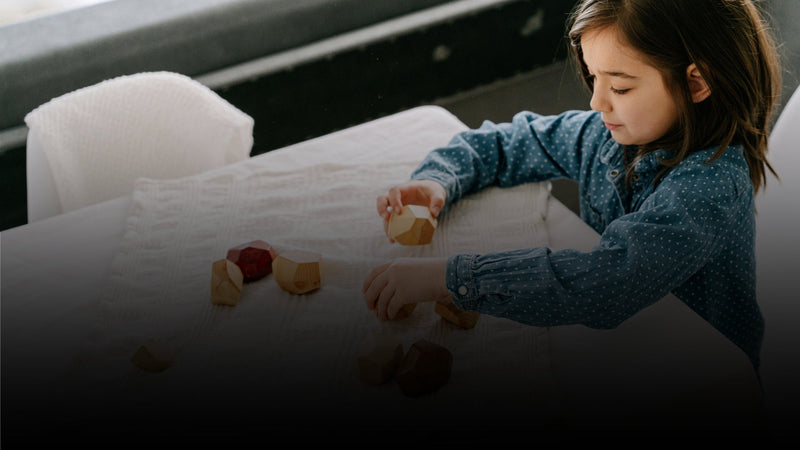
A handful of blocks can become a bridge, a zoo, or an entire city.
A wooden spoon might serve as a magic wand, microphone, telescope, or pirate's sword—all within the same afternoon.
Each time children imagine a new possibility, they practice divergent thinking—the ability to generate multiple ideas instead of searching for a single "correct" solution.
Divergent thinking is one of the foundations of creativity.
Rather than asking,
"What's the right answer?"
Children begin asking,
"What else could this be?"
That small shift changes how they approach challenges throughout life.
Instead of becoming discouraged when one solution doesn't work, creative thinkers naturally explore alternatives.
They experiment.
Adapt.
Revise.
Try again.
These habits extend far beyond play.
Research consistently shows that creativity supports innovation, resilience, and flexible thinking—qualities increasingly valued in education and modern workplaces. In a rapidly changing world, the ability to generate original ideas and approach problems from different angles is becoming just as important as remembering information.
Parents don't need elaborate art projects or expensive creativity kits to nurture this skill.
In fact, simpler materials often encourage richer thinking because they leave more room for imagination.
When children have the freedom to decide what something becomes, they aren't merely playing with an object.
They're learning to think beyond its obvious purpose.
And that mindset becomes one of the greatest lifelong gifts open-ended play can offer.
Everyday Example
Imagine two children holding the same cardboard tube.
One follows instructions to build a predetermined craft.
The other turns it into a telescope, then a pirate's spyglass, then a dragon trainer's flute, and finally a magical key that unlocks an invisible castle.
Both children are learning.
But the second child is repeatedly practicing flexible thinking, storytelling, and original idea generation—skills that will continue serving them long after the cardboard tube has been recycled.
Why This Skill Matters for Life
Creative thinking helps children become adults who can:
-
Generate multiple solutions to a problem.
-
Adapt when plans change unexpectedly.
-
Think independently instead of relying on instructions.
-
Approach challenges with curiosity rather than fear.
-
Innovate, collaborate, and contribute fresh ideas in school, work, and everyday life.
Open-ended play doesn't teach children what to think.
It teaches them how to think creatively.
And that's a skill they will carry with them for the rest of their lives.
2. Open-Ended Play Strengthens Problem-Solving Skills
Life rarely presents children with problems that have neat, step-by-step solutions.
A tower collapses.
A friend wants to play differently.
The puzzle piece doesn't fit.
The recipe doesn't work.
Success in these moments depends on something much more valuable than memorizing answers.
It depends on learning how to think through challenges.
Open-ended play provides children with countless opportunities to practice this skill in a safe, enjoyable environment.
Unlike structured activities, there isn't an instruction manual telling children exactly what to do next.
Instead, they're constantly asking themselves questions:
"How can I make this stronger?"
"What could I try instead?"
"Why didn't that work?"
"What happens if I change my plan?"
These small moments of experimentation become powerful lessons in problem-solving.
A child building a bridge with blocks quickly discovers that certain designs are more stable than others.
A blanket fort that keeps collapsing encourages them to test different supports.
A pretend restaurant that suddenly runs out of "food" inspires them to invent a creative solution.
Each obstacle becomes an invitation to think rather than an indication of failure.
Children begin to understand that mistakes aren't something to avoid—they're simply part of learning.
That mindset stays with them long after playtime ends.
The Difference Between Giving Answers and Encouraging Thinking
As parents, it's natural to want to help.
When we see our child struggling, our instinct is often to step in with the solution.
But every time we immediately solve the problem, we unintentionally remove an opportunity for learning.
Imagine a child whose block tower keeps falling.
One response might be:
"Here, let me show you how to do it."
The tower gets built.
The problem disappears.
But so does the opportunity to experiment.
Instead, consider asking:
"What do you notice?"
"What could you change?"
"Would you like to try a different idea?"
These simple questions encourage children to observe, analyze, and adapt—three essential parts of effective problem-solving.
The goal isn't to leave children frustrated.
It's to support their thinking without taking ownership of the challenge.
Expert Insight
Problem-solving isn't about always finding the right answer immediately. It's about developing the confidence to explore possibilities, test ideas, and learn from mistakes. Open-ended play provides repeated opportunities to practice this process in ways that feel motivating rather than stressful.
Why This Skill Matters for Life
Children who regularly engage in open-ended play gradually learn that problems are not roadblocks.
They're puzzles waiting to be explored.
This mindset helps them become adults who can:
-
Think critically before reacting.
-
Adapt when plans change.
-
Approach unfamiliar situations with curiosity.
-
Learn from mistakes instead of fearing them.
-
Persist through challenges without giving up easily.
Open-ended play doesn't remove obstacles.
It teaches children they are capable of overcoming them.
3. Open-Ended Play Builds Confidence
Confidence isn't built through constant praise.
Nor does it come from always succeeding.
True confidence develops when children experience something much more meaningful:
"I figured it out myself."
Open-ended play creates countless opportunities for children to experience this feeling.
Because there isn't one correct outcome, children aren't comparing their work to an answer sheet or trying to meet someone else's expectations.
Instead, they're making decisions, testing ideas, adjusting their approach, and discovering that their own thinking has value.
That process nurtures a deep sense of competence.
When a child invents a game, creates a story, or designs a structure entirely from their own imagination, they begin to trust themselves.
They realize:
"My ideas matter."
"I can solve problems."
"I don't always need someone to tell me what to do."
These internal beliefs form the foundation of healthy self-confidence.
Confidence Grows Through Ownership
One reason open-ended play is so effective is that children own the experience from beginning to end.
They choose the materials.
They decide the story.
They change the rules.
They solve the challenges.
When children have ownership over their play, success feels personal.
Not because an adult approved it.
But because they created it.
Even when the activity doesn't go as planned, children learn something equally valuable:
"I can try again."
This resilience often becomes more important than the original success.
The Power of Intrinsic Motivation
Many children's activities rely on external rewards.
Gold stars.
Stickers.
Points.
Prizes.
Open-ended play is different.
Children continue because they're genuinely interested.
The reward comes from curiosity itself.
Psychologists refer to this as intrinsic motivation—the desire to do something because it is personally meaningful or enjoyable.
Research suggests that intrinsic motivation encourages deeper learning, greater persistence, and more creative thinking than relying solely on external rewards.
When children discover that solving a problem or finishing a project feels satisfying on its own, they're developing motivation that lasts far beyond childhood.
Everyday Example
A child spends forty minutes building a city with blocks.
Eventually, they step back and proudly announce,
"I made this all by myself."
No prize was offered.
No competition existed.
The satisfaction came from creating something that belonged entirely to them.
That quiet pride is confidence taking root.
Why This Skill Matters for Life
Children who develop healthy confidence through open-ended play are more likely to:
-
Take healthy risks.
-
Try unfamiliar activities.
-
Recover after setbacks.
-
Trust their own judgment.
-
Approach challenges with optimism instead of fear.
Confidence isn't believing you'll never fail.
It's believing you'll find a way forward even if you do.
4. Open-Ended Play Strengthens Communication Skills
Long before children learn persuasive writing or public speaking in school, they begin practicing communication through play.
Pretend play, storytelling, role-playing, and collaborative games require children to express ideas, explain plans, negotiate roles, ask questions, and listen to others.
In other words, they're developing communication in its most natural form.
Imagine two children pretending to run a bakery.
One becomes the baker.
The other is the customer.
Suddenly they're discussing recipes, taking orders, solving imaginary problems, and creating entirely new conversations.
Without realizing it, they're expanding vocabulary, practicing sentence structure, and learning how conversations naturally flow.
Open-ended play turns language into a tool rather than an assignment.
Storytelling Builds Rich Language
Every imaginative adventure begins with a story.
Children explain:
Who the characters are.
Where they live.
What problem they're trying to solve.
What happens next.
As these stories become more detailed, children's vocabulary, sequencing, and narrative skills naturally expand.
They also learn that communication isn't simply about talking.
It's about helping other people understand an idea.
This ability becomes increasingly important throughout school and adulthood.
Learning to Listen and Collaborate
Communication is never one-sided.
Children playing together constantly practice listening, negotiating, compromising, and adapting.
Perhaps one child wants the fort to be a castle.
Another imagines it's a pirate ship.
Instead of ending the game, they often combine ideas.
Now it's a pirate castle.
These moments teach flexibility, cooperation, and respect for different perspectives.
They're also excellent preparation for teamwork later in life.
Expert Insight
Rich language develops through meaningful conversation, not memorization alone. Open-ended play naturally creates opportunities for children to describe ideas, ask questions, negotiate roles, and tell increasingly complex stories—all of which strengthen communication skills.
Why This Skill Matters for Life
Strong communication helps children become adults who can:
-
Express ideas clearly.
-
Listen with empathy.
-
Collaborate effectively.
-
Resolve conflicts respectfully.
-
Build meaningful relationships.
The conversations children create during imaginative play may seem ordinary.
In reality, they're rehearsing skills they'll use for the rest of their lives.
5. Open-Ended Play Supports Emotional Regulation
Every child experiences big emotions.
Frustration when a tower falls.
Disappointment when a game doesn't go as planned.
Fear of imaginary monsters.
Excitement about discovering something new.
Joy after solving a difficult problem.
The question isn't whether children will experience these emotions.
It's whether they have opportunities to understand and manage them.
Open-ended play provides one of the safest environments for emotional learning because the stakes feel low while the lessons are meaningful.
During imaginative play, children naturally create situations that allow them to explore feelings they may not yet have the words to explain.
A child pretending to rescue a frightened stuffed animal may actually be working through their own fears.
A superhero saving the day might represent a child's desire to feel brave.
A pretend doctor's office may help prepare a child for an upcoming medical appointment.
Play allows children to process emotions indirectly.
Sometimes that's easier than talking about them directly.
Imagination Becomes Emotional Practice
Pretend play gives children something incredibly valuable:
A chance to rehearse life.
They can experience difficult situations while knowing they're still safe.
They can become the hero instead of the frightened child.
The helper instead of the one needing help.
The explorer instead of the person uncertain about what comes next.
This sense of control allows children to revisit challenging experiences at their own pace.
They decide when the story begins.
They decide how it ends.
That ownership often helps children develop resilience and emotional confidence.
Frustration Is Part of Learning
Open-ended play also teaches children that frustration isn't something to avoid.
It's something to work through.
A fort collapses.
Paint spills.
The pretend restaurant runs out of ingredients.
Rather than ending the activity, children usually adjust their plans.
They rebuild.
Invent a new ending.
Find another solution.
Each experience strengthens emotional flexibility.
Children begin learning:
"Things don't always go perfectly."
"That's okay."
"I can try another way."
These lessons become the foundation of resilience.
Expert Insight
Emotional regulation develops through repeated opportunities to experience, express, and recover from everyday challenges. Open-ended play provides children with a safe environment to practice managing disappointment, excitement, uncertainty, and frustration while remaining in control of their own experience.
Why This Skill Matters for Life
Children who regularly practice emotional regulation through play are better prepared to:
-
Recover from setbacks.
-
Manage frustration without becoming overwhelmed.
-
Express feelings in healthy ways.
-
Adapt to unexpected changes.
-
Develop empathy for others.
These aren't just childhood skills.
They're lifelong tools for wellbeing.
6. Open-Ended Play Strengthens Executive Function
If there is one group of skills that quietly influences nearly every aspect of learning, it's executive functioning.
Executive function is often described as the brain's management system.
It helps children:
-
Plan ahead.
-
Remember information.
-
Stay focused.
-
Switch strategies.
-
Control impulses.
-
Complete tasks.
These abilities are linked to school readiness, academic success, emotional regulation, and independent living.
The remarkable thing is that children begin strengthening executive functioning long before formal education.
One of the best places they practice it is during open-ended play.
Every Adventure Requires Planning
Imagine a child building an imaginary zoo.
They first decide which animals will live there.
Then they gather materials.
They build habitats.
Create paths.
Invent tickets.
Assign roles.
Welcome visitors.
Solve unexpected problems.
Every decision requires planning and organization.
If something doesn't work, they revise their ideas and continue.
This ongoing cycle of planning, testing, adapting, and remembering mirrors the very executive functioning skills children rely on later in school and everyday life.
Flexible Thinking in Action
One of the most important executive functioning skills is cognitive flexibility.
This is the ability to adjust when circumstances change.
Open-ended play naturally encourages this because nothing stays exactly the same.
The castle becomes a pirate ship.
The pirate ship becomes an underwater laboratory.
The original story disappears.
A completely new adventure begins.
Children learn that changing their minds isn't failure.
It's creativity.
Flexible thinkers are better able to handle unexpected challenges because they naturally search for alternative solutions.
Working Memory Through Play
Working memory allows children to hold information in their minds while completing a task.
Pretend play constantly exercises this skill.
Children remember:
-
Character roles.
-
Storylines.
-
Rules they've invented.
-
Materials they've already used.
-
Problems that still need solving.
They aren't memorizing facts.
They're actively organizing information while creating something meaningful.
Why This Skill Matters for Life
Executive functioning supports almost everything children do, including:
-
Following multi-step directions.
-
Completing homework.
-
Managing time.
-
Organizing belongings.
-
Making thoughtful decisions.
-
Solving complex problems.
Open-ended play doesn't directly teach these skills.
It creates meaningful opportunities for children to practice them every single day.
7. Open-Ended Play Encourages Independence
One of the greatest gifts parents can give their children isn't another toy.
It's the confidence to think for themselves.
Open-ended play naturally nurtures independence because children become responsible for their own decisions.
They choose the story.
They choose the materials.
They solve the problems.
They decide when to continue and when to begin something entirely new.
Instead of constantly asking,
"What should I do?"
Children gradually begin asking,
"What could I try?"
That simple change represents enormous developmental growth.
Children start trusting their own judgment rather than relying on constant adult direction.
Independence Doesn't Mean Playing Alone
Independent play is sometimes misunderstood.
It doesn't mean children should always play by themselves.
Instead, it means children become increasingly capable of leading their own learning and making their own decisions—even when a supportive adult is nearby.
Parents remain emotionally available.
But they aren't directing every moment.
This balance allows children to feel both supported and capable.
Ownership Creates Motivation
When children feel ownership over their ideas, they often remain engaged for much longer.
They revisit unfinished projects.
Expand stories over several days.
Improve earlier creations.
The motivation comes from within rather than from external rewards.
This kind of self-directed learning is one of the strongest predictors of lifelong curiosity.
Expert Insight
Independence develops gradually through opportunities to make choices, solve problems, and experience the consequences of those decisions. Open-ended play provides these opportunities naturally while allowing children to remain emotionally supported by trusted adults.
How Parents Can Encourage These Lifelong Skills Every Day
The encouraging news is that you don't need a perfectly designed playroom or an overflowing collection of toys to support these developmental skills.
What matters most is creating opportunities for children to lead.
Here are a few simple habits that make a meaningful difference:
Protect Uninterrupted Play Time
Children often need time to settle into deep imaginative play.
Avoid interrupting every few minutes with questions or new suggestions.
Sometimes the richest learning begins after the first twenty minutes.
Ask Open-Ended Questions
Instead of giving instructions, encourage thinking.
Try asking:
-
"What happens next?"
-
"How did you think of that?"
-
"What could you try differently?"
Questions invite curiosity.
Answers often end it.
Welcome Boredom
Boredom isn't the enemy.
It's frequently the starting point for imagination.
Resist the urge to solve it immediately.
Children often surprise themselves when given space to create their own fun.
Create a Play Environment That Grows With Your Child
As children's interests evolve, many parents feel pressured to replace toys every few months.
Yet meaningful play isn't always about introducing something new.
Often, it's about creating a flexible environment where children's ideas can continue to grow.
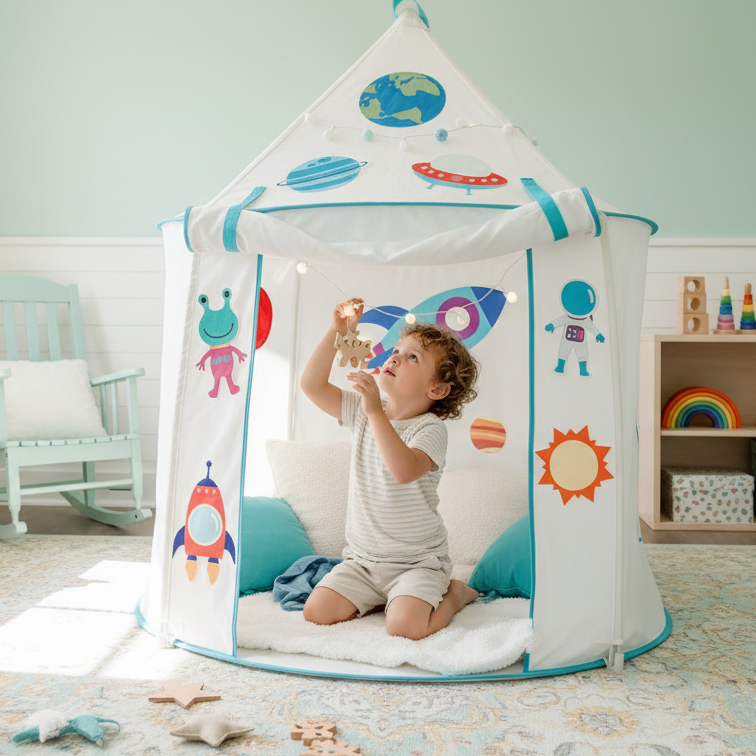
This is why many families choose adaptable play spaces rather than collections of single-purpose toys. ZeeZee Adventures, for example, is designed around the idea of one imaginative play environment that evolves alongside a child's changing interests through interchangeable StickeeZ themes. Whether today's adventure involves dinosaurs, outer space, magical kingdoms, or ocean exploration, the familiar play space can transform without losing the sense of comfort and ownership children value. This approach supports independent, screen-free, child-led play while encouraging children to revisit and expand their stories over time.
More important than any individual product, however, is the principle behind it:
Children flourish when they have spaces that invite imagination rather than dictate it.
When we provide environments that adapt to their creativity instead of limiting it, we're supporting skills that extend far beyond childhood.
Action Checklist: Encouraging Lifelong Skills Through Open-Ended Play
You don't need to completely change your parenting style to make a meaningful difference. Small, consistent opportunities for child-led play can have a lasting impact on your child's development.
Use this simple checklist as a guide:
✅ Set aside at least 30–60 minutes each day for uninterrupted, child-led play.
✅ Choose toys and materials that can be used in many different ways instead of only one.
✅ Resist the urge to solve every problem immediately—give your child time to think.
✅ Ask open-ended questions like "What do you think?" or "What could happen next?"
✅ Welcome boredom instead of rushing to fill every quiet moment.
✅ Rotate a few familiar play materials rather than constantly introducing new toys.
✅ Celebrate effort, creativity, and persistence instead of focusing only on finished results.
✅ Create a calm, inviting play space where your child feels free to imagine, experiment, and explore.
Remember, your role isn't to direct every adventure—it's to provide the time, space, and encouragement for your child's ideas to flourish.
Frequently Asked Questions
Why is open-ended play important?
Open-ended play allows children to think independently, make decisions, solve problems, and express their creativity without being limited by predetermined rules or outcomes. These experiences help develop lifelong cognitive, social, emotional, and executive functioning skills.
What skills does open-ended play develop?
Open-ended play supports a wide range of developmental skills, including:
-
Creative thinking
-
Problem-solving
-
Communication
-
Emotional regulation
-
Executive functioning
-
Confidence
-
Independence
-
Collaboration
-
Flexible thinking
-
Resilience
Rather than developing one skill at a time, children often strengthen several abilities simultaneously through imaginative play.
Is open-ended play good for brain development?
Yes. Open-ended play encourages children to plan, organize ideas, remember information, adapt to changing situations, and think creatively. These experiences strengthen neural pathways involved in learning, decision-making, and self-regulation.
Does open-ended play prepare children for school?
Absolutely.
Many of the abilities associated with school readiness—such as attention, planning, communication, emotional regulation, and problem-solving—are naturally practiced during child-led play. While open-ended play doesn't replace academic learning, it helps build the foundational skills that support success in the classroom.
Can open-ended play improve confidence?
Yes.
When children make their own decisions, solve their own challenges, and create something from their own imagination, they begin to trust their abilities. This sense of competence builds genuine confidence that extends beyond playtime.
How much open-ended play does my child need?
There isn't a universal number of minutes that works for every family. However, many child development experts encourage providing opportunities for uninterrupted, child-led play every day.
Even 30–60 minutes of screen-free, self-directed play can create meaningful opportunities for learning, exploration, and creativity.
The quality of play is often more important than the quantity.
Do children need expensive toys for open-ended play?
Not at all.
Some of the richest imaginative play happens with everyday household items such as cardboard boxes, blankets, wooden spoons, cushions, scarves, and recycled materials.
Simple toys that can be used in many different ways often inspire more creativity than toys with a single intended purpose.
Final Thoughts
As parents, it's easy to focus on the milestones we can measure.
First words.
First steps.
Learning to read.
Good grades.
These achievements are certainly worth celebrating.
But some of the most important skills children develop are much quieter.
The confidence to try again after something doesn't work.
The curiosity to ask, "What if?"
The resilience to keep going when a challenge feels difficult.
The creativity to imagine possibilities that don't yet exist.
The empathy to understand someone else's perspective.
These are the qualities that shape not only successful students but also thoughtful friends, capable problem-solvers, adaptable employees, caring partners, and lifelong learners.
And remarkably, many of these abilities begin with something as simple as pretending a cardboard box is a spaceship or transforming a pile of cushions into a mountain expedition.
Open-ended play isn't about keeping children busy.
It's about giving them the freedom to think, create, experiment, and grow.
The greatest gift we can offer isn't a perfectly planned activity or the newest toy.
It's the opportunity to explore a world where their ideas matter.
Because when children are trusted to lead their own play, they aren't just creating imaginary adventures.
They're building the lifelong skills they'll carry into every real adventure that follows.





Comment (0)