
Open-Ended Play vs Structured Play: Which Is Better for Child Development?
Quick Answer
Both open-ended play and structured play support healthy child development, but they nurture different skills. Structured play helps children learn specific concepts, routines, and rules, while open-ended play encourages creativity, problem-solving, independence, emotional regulation, and flexible thinking. Rather than choosing one over the other, children benefit most from a balanced play routine that includes opportunities for both guided learning and child-led exploration.
Introduction
Imagine two children on a Saturday morning.
The first is sitting at the dining table, carefully following instructions to complete a craft kit.
Step one.
Glue here.
Place sticker there.
Color inside the lines.
Thirty minutes later, the project is finished.
The second child is in the living room surrounded by cushions, cardboard boxes, blankets, and stuffed animals.
There are no instructions.
No finished picture to copy.
No one explaining what comes next.
One moment the cushions become a castle.
Ten minutes later they're transformed into a pirate ship.
Soon they're a veterinary clinic where every stuffed animal needs emergency care.
Hours pass.
The story continues to grow.
Both children are learning.
Both experiences have value.
But they're developing different skills.
One activity teaches children how to follow directions, complete tasks, and achieve a defined goal.
The other encourages them to imagine possibilities, solve unexpected problems, make decisions independently, and create something entirely their own.
This comparison often leaves parents wondering:
Should my child spend more time in structured activities or open-ended play?
It's a fair question.
Today's children have more organized opportunities than ever before.
Sports practices.
Music lessons.
Coding classes.
Art workshops.
Educational apps.
After-school programs.
These experiences can be incredibly enriching.
At the same time, many childhood experts have raised concerns that children's opportunities for self-directed, imaginative play have steadily declined as schedules become increasingly full.
The result isn't that structured play is bad.
Nor is open-ended play the only path to healthy development.
The real question isn't which type of play is better.
It's what each type of play teaches—and why children need both.
Understanding the difference allows parents to make thoughtful decisions about how children spend their time, ensuring they develop not only academic skills but also creativity, resilience, confidence, communication, and the ability to think independently.
In this guide, we'll explore how open-ended play and structured play differ, the unique developmental benefits each provides, and how families can create a healthy balance that supports lifelong learning.
Understanding the Two Types of Play
Before comparing the benefits of each approach, it's important to understand what these terms actually mean.
Although they're often discussed as opposites, open-ended play and structured play are simply two different ways children learn.
Each serves a unique purpose in healthy development.
When families understand the strengths of both, it becomes easier to create play experiences that support a child's whole development rather than focusing on just one area.
Let's look at each type more closely.
What Is Open-Ended Play?
Open-ended play is child-led play without a predetermined outcome.
Instead of following instructions or working toward one "correct" answer, children decide what to create, how to play, and when the activity changes.
There are no winners or losers.
No script to follow.
No expectation that every child will produce the same result.
A cardboard box might become a spaceship today.
Tomorrow it becomes a bakery.
The next day it's transformed into a dragon's cave.
Nothing about the object changes.
Only the child's imagination does.
That's the beauty of open-ended play.
Children control the experience from beginning to end.
They make decisions.
Solve problems.
Invent stories.
Experiment with ideas.
Adapt when things don't work as expected.
This freedom allows children to practice creativity, executive functioning, emotional regulation, communication, and independent thinking—all while simply enjoying themselves.
Common Examples of Open-Ended Play
-
Building forts with blankets and cushions
-
Pretend restaurants or grocery stores
-
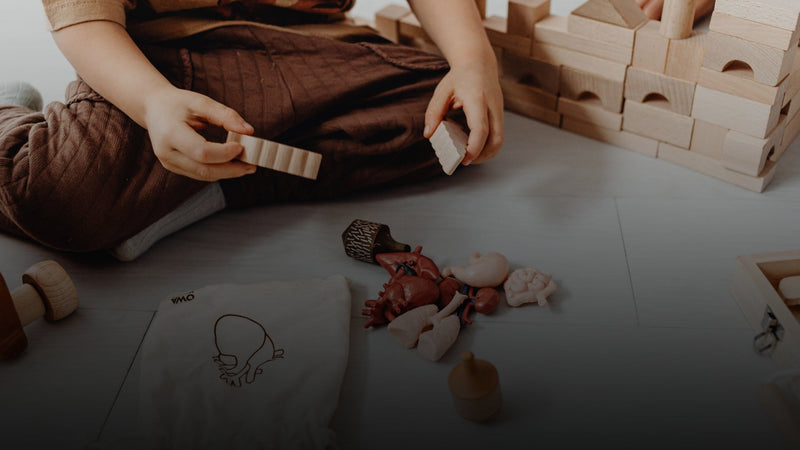
Playing with blocks, magnetic tiles, or loose parts
-
Storytelling with stuffed animals or dolls
-
Drawing, painting, or sculpting without instructions
-
Nature play using sticks, leaves, rocks, and sand
-
Creating imaginary worlds with cardboard boxes
-
Free construction using recycled materials
Notice that none of these activities have a single correct outcome.
Every child will approach them differently.
And that's exactly the point.
Expert Insight
Occupational therapists often value open-ended play because it allows children to combine movement, imagination, communication, emotional regulation, and problem-solving into one meaningful experience. Since children direct the activity themselves, they're more likely to stay engaged, explore new ideas, and develop confidence through their own discoveries.
What Is Structured Play?
Structured play is adult-guided or rule-based play with a clear objective or expected outcome.
The activity may still be fun and engaging, but it usually follows a plan.
Children know:
-
What they're making.
-
How they're expected to participate.
-
What the finished result should look like.
-
Which rules need to be followed.
Examples include completing a craft by following instructions, participating in a soccer practice, assembling a model from a kit, or playing a board game with established rules.
In these situations, adults often provide guidance, feedback, demonstrations, or encouragement to help children achieve a specific goal.
Structured play can be especially valuable when introducing new skills.
Children may learn:
-
Letter recognition
-
Counting
-
Fine motor skills
-
Teamwork
-
Turn-taking
-
Following directions
-
Sports techniques
-
Musical skills
These experiences provide consistency and help children practice working within boundaries—an important part of school and everyday life.
Common Examples of Structured Play
-
Organized sports
-
Dance classes
-
Music lessons
-
Guided craft activities
-
Board games
-
Puzzles with one solution
-
Cooking from a recipe
-
STEM building kits
-
Teacher-led classroom activities
-
Educational games with defined objectives
Unlike open-ended play, structured activities often have a measurable goal.
Children know when they've completed the task successfully.
Why Comparing Them Matters
It's easy to assume that one approach must be better than the other.
After all, comparison articles often encourage readers to choose a winner.
But child development doesn't work that way.
Open-ended play and structured play aren't competitors.
They're partners.
Each strengthens different areas of development, and together they create a richer, more balanced learning experience.
Structured play teaches children how to work within rules, build specific skills, and achieve defined goals.
Open-ended play teaches them how to think beyond those rules, imagine new possibilities, adapt to change, and create solutions that don't already exist.
A child who only experiences structured activities may become excellent at following directions but have fewer opportunities to develop independent thinking.
On the other hand, a child who only experiences open-ended play may miss chances to practice teamwork, routines, and learning within organized settings.
The healthiest approach isn't choosing one over the other.
It's understanding when each type of play serves your child's development best.
In the next section, we'll explore the unique strengths and limitations of both approaches—and why finding the right balance is often more valuable than choosing sides.
The Benefits of Structured Play
Structured play is sometimes misunderstood as being less creative or less valuable than child-led play.
In reality, structured play plays an important role in healthy child development.
From music lessons and sports practices to teacher-guided classroom activities and family board games, structured experiences help children develop specific skills that prepare them for everyday life.
The key difference is that structured play usually has a clear objective, defined rules, or adult guidance.
Children know what they're expected to do and what success looks like.
This type of learning provides predictability, routine, and opportunities to master new abilities through repetition and practice.
Let's explore the developmental strengths structured play offers.
1. Structured Play Teaches Foundational Skills
Many early childhood skills are easier to learn through guided experiences.
When adults provide step-by-step instruction, children can focus on practicing one specific ability at a time.
For example:
-
Learning to hold scissors correctly
-
Identifying letters and numbers
-
Following a recipe
-
Learning the rules of a sport
-
Playing a musical instrument
-
Completing a science experiment
These activities help children develop important academic, physical, and practical skills that require demonstration and repetition.
Without some level of structure, many of these concepts would be much harder to introduce effectively.
2. It Helps Children Follow Directions
Throughout life, children will regularly encounter situations that require listening carefully and following instructions.
School classrooms.
Sports teams.
Music lessons.
Workplaces.
Structured play gently introduces these expectations in enjoyable ways.
Children practice:
-
Listening carefully
-
Completing tasks in order
-
Paying attention
-
Remembering multiple steps
-
Working toward a shared goal
These experiences gradually build the self-discipline needed for more formal learning environments.
3. It Encourages Teamwork and Cooperation
Many structured activities involve working with others.
Whether children are playing soccer, participating in a relay race, or completing a classroom project, they learn that success often depends on cooperation.
Structured play teaches children how to:
-
Take turns
-
Share responsibilities
-
Follow agreed-upon rules
-
Respect teammates
-
Celebrate shared achievements
-
Resolve disagreements respectfully
These social skills become increasingly valuable throughout school and adulthood.
4. It Builds Persistence Through Practice
Some skills simply require repetition.
Children rarely learn to ride a bicycle, swim confidently, or play the piano after a single attempt.
Structured activities encourage consistent practice while providing guidance and encouragement along the way.
Over time, children discover that improvement doesn't happen instantly.
Instead, they learn that effort, patience, and persistence lead to growth.
This mindset supports long-term learning across many areas of life.
Expert Insight
Structured play helps children develop important learning habits by providing clear expectations, consistent routines, and opportunities to practice specific skills repeatedly. Adult guidance can be especially valuable when introducing new concepts that children are not yet able to discover independently.
Potential Limitations of Structured Play
Although structured play offers many benefits, relying on it exclusively may unintentionally limit opportunities for independent exploration.
This isn't because structured activities are harmful.
Rather, it's because every learning experience emphasizes different developmental skills.
Understanding these limitations helps families create a healthier balance.
Limited Opportunities for Independent Decision-Making
In many structured activities, adults decide:
-
What children will do.
-
How they should do it.
-
When they're finished.
-
Whether the outcome is correct.
While this guidance can be helpful, children have fewer opportunities to make their own choices.
Decision-making is an important life skill.
Children need chances to experience the consequences of their own ideas—not just follow someone else's plan.
Creativity May Become Secondary
Structured activities often prioritize achieving a specific outcome.
Imagine two art projects.
In one classroom, every child paints the exact same butterfly by following identical instructions.
In another, children receive paints, paper, and brushes with one invitation:
"Create something that makes you happy."
Both activities teach valuable skills.
But the second allows for much greater creative expression.
When children always work toward one expected result, they have fewer opportunities to explore original ideas.
Less Practice Solving Unexpected Problems
Because structured activities usually provide instructions, many decisions have already been made.
Children spend less time asking:
"What could I try?"
"What happens if I change this?"
"Is there another way?"
As a result, they may have fewer opportunities to develop flexible thinking through experimentation.
The Benefits of Open-Ended Play
If structured play teaches children what to do, open-ended play often teaches them how to think.
Instead of following instructions, children become the architects of their own experiences.
They invent.
Experiment.
Question.
Revise.
Imagine.
Every decision belongs to them.
This freedom creates unique developmental opportunities that structured activities cannot always provide.
1. It Encourages Creative Thinking
Open-ended play gives children permission to explore unlimited possibilities.
There isn't one correct answer.
There are dozens.
Perhaps hundreds.
A cardboard box can become:
-
A rocket ship
-
A bakery
-
A submarine
-
A castle
-
A dinosaur museum
Each new idea strengthens divergent thinking—the ability to generate multiple possible solutions to a single challenge.
Creative thinking developed during childhood later supports innovation, adaptability, and curiosity throughout life.
2. It Strengthens Problem-Solving
Imagine a child building a fort.
The blanket keeps falling.
The cushions slide apart.
The chairs move.
No adult steps in immediately.
Instead, the child experiments.
They move the chairs closer together.
Use another blanket.
Stack more cushions.
Try again.
Every failed attempt becomes valuable information.
Instead of fearing mistakes, children begin seeing problems as opportunities to explore different solutions.
3. It Builds Confidence Through Ownership
One of the greatest advantages of child-led play is ownership.
Children decide:
-
What to build.
-
Which story to tell.
-
What happens next.
When they overcome challenges using their own ideas, confidence develops naturally.
Not because someone praised them.
But because they experienced success that genuinely belonged to them.
Children begin thinking:
"I can figure things out."
That belief often becomes more valuable than the activity itself.
4. It Develops Executive Function
Open-ended play continuously exercises the brain's management system.
Children plan adventures.
Remember storylines.
Organize materials.
Switch strategies.
Control impulses.
Solve new challenges.
These executive functioning skills support:
-
Attention
-
Planning
-
Working memory
-
Self-control
-
Flexible thinking
They also play a major role in school readiness and lifelong learning.
5. It Encourages Emotional Resilience
Not every imaginative adventure goes according to plan.
A tower falls.
A bridge collapses.
The story suddenly changes.
Children learn to adapt.
Rather than giving up, they modify their ideas and continue playing.
These repeated experiences teach children that setbacks are temporary and manageable.
Resilience develops naturally through practice.
Expert Insight
One of the greatest strengths of open-ended play is that children remain in control of the learning process. Because the experience is driven by curiosity rather than instruction, children often stay engaged longer, solve more problems independently, and develop greater confidence in their own thinking.
Potential Limitations of Open-Ended Play
Open-ended play offers tremendous developmental benefits, but it isn't designed to teach every skill.
Like structured play, it has its own limitations.
Understanding these helps parents appreciate why balance—not extremes—is the healthiest approach.
Some Skills Require Direct Instruction
Certain abilities are difficult to discover independently.
Children generally benefit from guidance when learning:
-
Road safety
-
Swimming
-
Reading fundamentals
-
Musical technique
-
Sports skills
-
Using tools safely
Adult teaching remains essential in these situations.
Some Children Need Extra Support
Not every child immediately knows how to begin imaginative play.
Some children may initially benefit from:
-
Gentle prompts
-
Shared storytelling
-
Demonstrations
-
A thoughtfully prepared play environment
As confidence grows, adults can gradually step back and allow children to take the lead.
Side-by-Side Comparison
|
Development Area |
Structured Play |
Open-Ended Play |
|
Creativity |
Moderate |
Excellent |
|
Problem-solving |
Guided |
Self-directed |
|
Following Directions |
Excellent |
Limited |
|
Executive Function |
Moderate |
Excellent |
|
Confidence |
Adult-supported |
Self-developed |
|
Emotional Regulation |
Moderate |
Strong |
|
Independent Thinking |
Limited |
Excellent |
|
Teamwork |
Excellent |
Strong (when playing with others) |
|
Academic Skill Practice |
Excellent |
Moderate |
|
Adaptability |
Moderate |
Excellent |
The comparison makes one thing clear:
Neither approach is inherently better.
Each develops different skills that children need throughout life.
The question isn't whether families should choose structured play or open-ended play.
It's how to thoughtfully include both in a child's everyday experiences.
Which Type of Play Is Better at Different Ages?
One of the most common questions parents ask is:
"Should my child be doing more structured activities or more free play?"
The honest answer is:
It depends on your child's age, developmental stage, personality, and individual needs.
Children don't stop needing one type of play when another becomes important.
Instead, their play naturally evolves as they grow.
In the early years, children learn primarily by exploring the world through their senses and imagination.
As they get older, they gradually become ready for more structured learning experiences that introduce new skills, teamwork, and responsibilities.
Rather than replacing open-ended play, structured activities should build upon it.
Let's look at how this balance changes throughout childhood.
Infants and Toddlers (0–3 Years)
During the first three years of life, children learn by exploring everything around them.
Every texture, sound, movement, and object becomes an opportunity for discovery.
At this stage, play is less about achieving goals and more about understanding how the world works.
Simple experiences such as:
-
Stacking cups
-
Filling and emptying containers
-
Crawling through cushions
-
Exploring sensory materials
-
Pretend play with everyday household objects
help build the foundations of cognitive, physical, and emotional development.
While short structured activities like singing songs or reading books are valuable, toddlers generally benefit most from having plenty of time for child-led exploration.
The focus should be curiosity—not performance.
Preschoolers (3–5 Years)
The preschool years are often considered the golden age of imagination.
This is when children begin creating elaborate pretend worlds, inventing characters, and transforming ordinary objects into extraordinary adventures.
Open-ended play becomes especially powerful because it strengthens:
-
Language development
-
Storytelling
-
Creative thinking
-
Problem-solving
-
Emotional regulation
-
Social interaction
At the same time, preschoolers also begin enjoying simple structured activities such as:
-
Board games
-
Beginner sports
-
Guided crafts
-
Music classes
-
Group story time
The healthiest balance is to let structured activities introduce new experiences while protecting plenty of uninterrupted time for imaginative play.
School-Age Children (6–12 Years)
As children enter school, structured learning naturally becomes a much larger part of everyday life.
Their days are filled with:
-
Classroom lessons
-
Homework
-
Organized sports
-
Clubs
-
Music lessons
-
Extracurricular activities
These experiences provide important opportunities to develop discipline, teamwork, and academic knowledge.
However, this also means many children have significantly less time for independent play than previous generations.
Ironically, this is often when they need it most.
Open-ended play gives school-age children an opportunity to:
-
Recharge mentally
-
Express creativity
-
Reduce stress
-
Solve problems independently
-
Build confidence outside academic performance
Even older children continue benefiting from imaginative building, storytelling, art, outdoor exploration, and creative construction.
Play doesn't become less important because children grow older.
It simply changes.
Teenagers
Although teenagers may no longer build blanket forts, they still benefit from open-ended creativity.
Creative hobbies such as:
-
Writing
-
Music
-
Photography
-
Designing
-
Filmmaking
-
Building projects
-
Entrepreneurship
are all forms of open-ended exploration.
Likewise, structured activities such as sports, volunteering, debate clubs, and performing arts continue developing teamwork, discipline, and leadership.
The principles remain exactly the same.
Healthy development comes from balancing structure with opportunities for independent creativity.
Expert Insight
Development isn't about moving from play to work. Children continue learning through playful exploration well into adolescence. As they grow, the form of play changes—but the need for creativity, curiosity, and self-directed learning remains remarkably consistent.
Finding the Right Balance
Parents often feel pressure to optimize every hour of their child's day.
Should they enroll in another class?
Should they practice more reading?
Would another extracurricular activity help prepare them for the future?
While these questions come from a place of love, they can unintentionally crowd out one of childhood's greatest teachers:
Free, uninterrupted play.
The goal isn't to choose between structured activities and open-ended play.
It's to recognize that each supports different aspects of development.
Think of them as complementary rather than competing.
Structured play teaches children how to work within systems.
Open-ended play teaches them how to think beyond them.
One develops knowledge.
The other develops imagination.
One builds specific skills.
The other builds adaptable thinkers.
Children need both.
A Helpful Way to Think About It
Imagine childhood as a tree.
Structured play helps strengthen the trunk.
It builds routines, discipline, coordination, and foundational knowledge.
Open-ended play grows the branches.
It encourages creativity, flexibility, confidence, resilience, and independent thinking.
A healthy tree needs both.
Without a strong trunk, branches struggle to grow.
Without branches, the tree never reaches its full potential.
Child development works in much the same way.
Signs Your Child May Need More Open-Ended Play
Modern family life can become busy very quickly.
School.
Homework.
Sports.
Music lessons.
Playdates.
Screen time.
By the end of the day, children may have spent hours following instructions and very little time creating their own ideas.
Your child may benefit from more open-ended play if they:
-
Frequently ask, "What should I do now?"
-
Become frustrated when there isn't one correct answer.
-
Give up quickly when something doesn't work.
-
Depend heavily on adults for entertainment.
-
Prefer watching rather than creating.
-
Have little time for imaginative play because of a busy schedule.
Adding even small periods of child-led play each day can help rebuild confidence, creativity, and independence.
How Parents Can Support Both Types of Play
Fortunately, supporting balanced play doesn't require expensive toys or perfectly planned schedules.
It begins with creating opportunities.
Here are a few simple ways to encourage both structured and open-ended learning:
Protect Unstructured Time
Avoid filling every afternoon with organized activities.
Children need time to become bored, curious, and imaginative.
Some of the richest play begins after the initial "I don't know what to do."
Let Children Lead Sometimes
Not every activity needs adult direction.
Allow children to decide:
-
What they'll play.
-
Which materials they'll use.
-
How long the game lasts.
-
How the story changes.
Ownership builds confidence.
Use Everyday Materials
Children rarely need complicated equipment to create meaningful adventures.
Cardboard boxes.
Blankets.
Wooden spoons.
Blocks.
Scarves.
Recycled materials.
Nature treasures.
These often inspire richer play than highly specialized toys because they leave room for imagination.
Think About the Environment, Not Just the Toys
One of the most effective ways to encourage open-ended play is to create an environment that invites creativity rather than directing it.
Many families discover that children don't necessarily need more toys—they need spaces that evolve alongside their imagination.
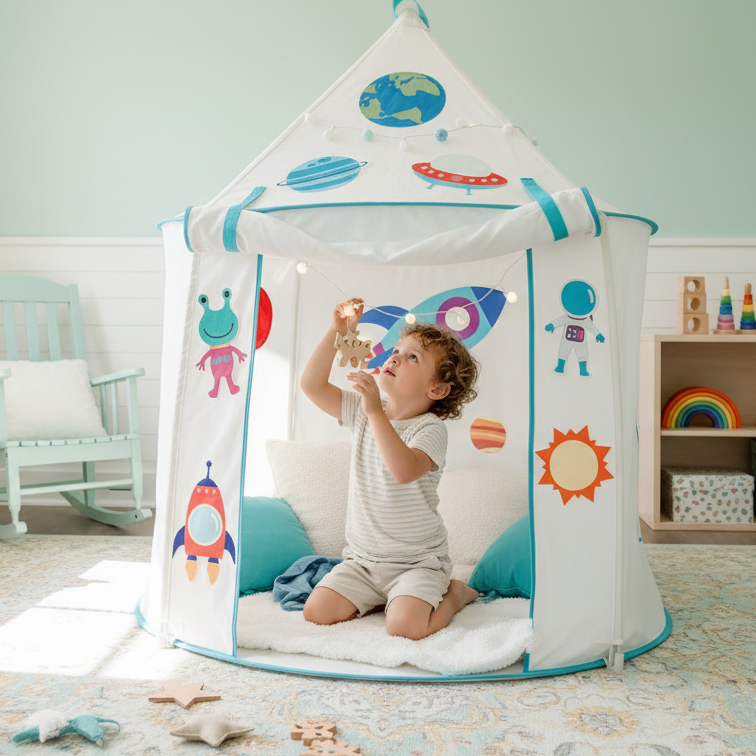
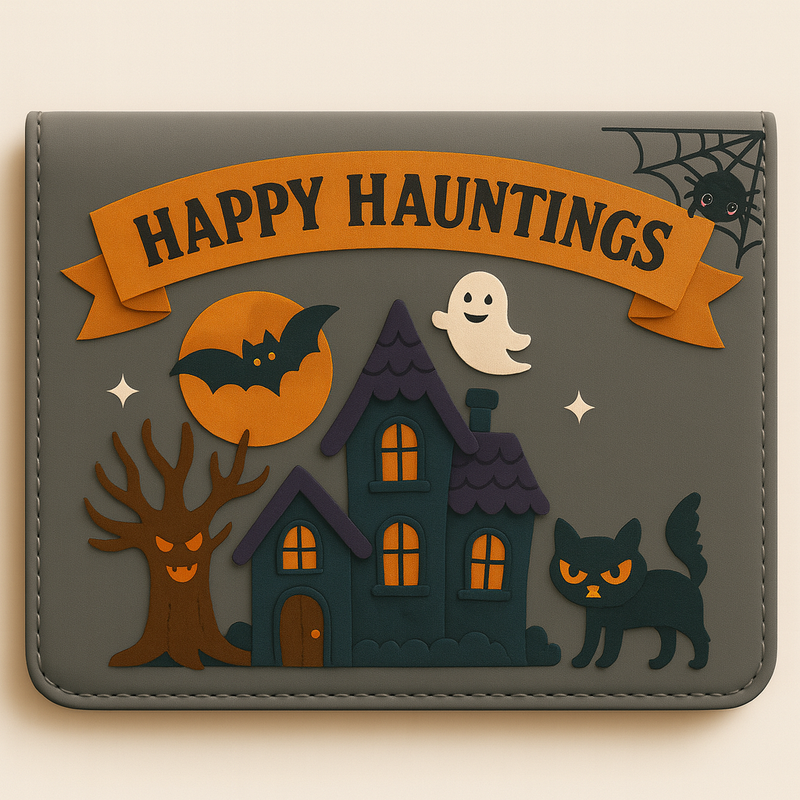
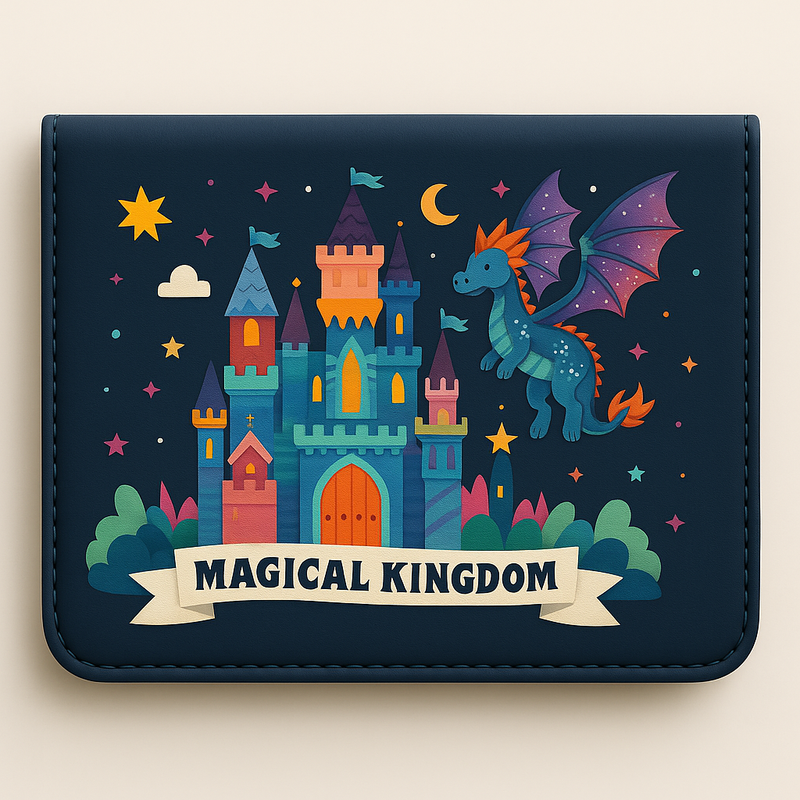
This philosophy is reflected in ZeeZee Adventures, which was designed as an adaptable play environment rather than a single-purpose toy. Through interchangeable StickeeZ themes, children can transform the same familiar play space into a dinosaur expedition one day, an underwater adventure the next, or a magical kingdom the following week. By allowing the environment to change while remaining comfortably familiar, children are encouraged to revisit their stories, extend their ideas, and engage in longer periods of independent, screen-free, imaginative play.
Whether families choose a dedicated play tent, a cozy reading corner, or simply a basket of open-ended materials, the principle remains the same:
Children thrive when their environment encourages exploration rather than prescribing exactly how they should play.

Remember: Balance Looks Different for Every Family
There is no perfect ratio of structured play to open-ended play.
Some weeks may include more sports.
Others may involve rainy afternoons filled with imaginative storytelling.
Some children naturally enjoy organized activities.
Others prefer building imaginary worlds for hours.
The goal isn't perfection.
The goal is variety.
When children experience both guided learning and self-directed exploration, they develop a broader range of skills that support them throughout childhood and beyond.
By embracing both approaches, parents can help raise children who know how to follow instructions and who also have the confidence to write their own stories.
Myth vs. Fact: Open-Ended Play vs. Structured Play
Many parenting conversations unintentionally present open-ended play and structured play as opposites.
In reality, both are valuable—and many of the common beliefs about them are misconceptions.
|
Myth |
Fact |
|
Open-ended play is just children "playing around." |
Open-ended play develops creativity, executive functioning, emotional regulation, communication, confidence, and problem-solving. |
|
Structured play limits development. |
Structured play is essential for learning specific skills, routines, teamwork, and following directions. |
|
Children need expensive educational toys to learn. |
Many of the richest learning experiences begin with simple materials like cardboard boxes, blankets, blocks, or recycled items. |
|
More structured activities always lead to better outcomes. |
Overscheduling can reduce opportunities for creativity, independent thinking, and self-directed problem-solving. |
|
Open-ended play means adults shouldn't participate. |
Adults play an important role by creating opportunities, offering encouragement, and stepping in when support is genuinely needed—without taking over the play. |
|
Parents must choose one style of play. |
Healthy child development is supported by a thoughtful balance of structured learning and child-led exploration. |
Understanding these myths helps parents move away from an "either-or" mindset and toward a more balanced approach that supports the whole child.
Action Checklist: Creating a Healthy Balance
You don't need to redesign your family's routine overnight.
Small changes can create more opportunities for both guided learning and imaginative exploration.
Use this checklist as a practical starting point.
✅ Schedule time each day for uninterrupted child-led play.
✅ Balance organized activities with unstructured free time.
✅ Choose toys that encourage creativity instead of only one way to play.
✅ Resist solving every challenge immediately—allow children time to think.
✅ Ask open-ended questions like:
-
"What do you think?"
-
"How could you solve that?"
-
"What happens next?"
✅ Welcome boredom as the beginning of creativity.
✅ Encourage outdoor exploration whenever possible.
✅ Remember that play doesn't always need a finished product.
✅ Celebrate curiosity, effort, and problem-solving—not just perfect results.
Frequently Asked Questions
Is open-ended play better than structured play?
Neither type of play is inherently better.
Structured play helps children learn specific skills, routines, teamwork, and discipline, while open-ended play develops creativity, confidence, executive functioning, emotional regulation, and independent thinking.
Children benefit most when they experience both regularly.
How much structured play should children have?
The amount varies depending on a child's age, interests, and family routine.
School-age children naturally experience many hours of structured learning through school and extracurricular activities, making it especially important to protect time for child-led play outside those commitments.
Can children have too many organized activities?
A busy schedule isn't necessarily harmful, but when children have very little time for imaginative, self-directed play, they may miss valuable opportunities to develop creativity, independence, and flexible problem-solving.
Finding a healthy balance is often more beneficial than constantly adding new activities.
Does open-ended play prepare children for school?
Yes.
Open-ended play strengthens many of the foundational skills associated with school readiness, including attention, executive functioning, language development, emotional regulation, problem-solving, and social interaction.
These skills support learning across all subjects.
What are examples of structured play?
Examples include:
-
Sports practice
-
Dance classes
-
Music lessons
-
Guided craft projects
-
Board games
-
STEM kits
-
Cooking with a recipe
-
Teacher-led classroom activities
These experiences help children develop specific knowledge and skills within a structured framework.
What are examples of open-ended play?
Open-ended play includes activities without predetermined outcomes, such as:
-
Building blanket forts
-
Pretend play
-
Block building
-
Storytelling
-
Painting freely
-
Playing with loose parts
-
Nature exploration
-
Creating with recycled materials
Each child can approach these activities differently.
How can I encourage more open-ended play at home?
Start simple.
Offer a few versatile materials, create an inviting play space, reduce unnecessary interruptions, and allow children to direct their own play.
The goal isn't to entertain them constantly—it's to give them opportunities to imagine, experiment, and discover.
Final Thoughts
Parents often ask:
"Which type of play is best?"
It's an understandable question.
We all want to make the best choices for our children.
But after years of studying child development, one truth becomes increasingly clear:
The strongest childhoods aren't built by choosing one approach over another.
They're built through balance.
Structured play helps children learn how to participate in the world.
They discover routines.
Practice teamwork.
Develop specific skills.
Build discipline.
Open-ended play helps children shape the world.
They imagine possibilities.
Create solutions.
Develop resilience.
Build confidence.
Learn to trust their own ideas.
Together, these experiences prepare children not only for school but also for life.
The child who learns to follow instructions becomes capable.
The child who also learns to ask, "What if?" becomes innovative.
The child who practices routines becomes responsible.
The child who creates imaginary worlds becomes adaptable.
Both skills matter.
Both deserve space in childhood.
Rather than asking whether children should spend more time in structured activities or open-ended play, perhaps a better question is:
"Does my child have enough opportunities to experience both?"
When the answer is yes, children gain the best of both worlds—guidance when they need it and freedom when they need it most.
Because the goal of childhood isn't simply to raise children who can follow directions.
It's to raise children who can think, create, adapt, and confidently navigate whatever adventures life brings next.




Comment (0)