
Best Toys for Independent Play (By Age and Why They Matter More Than You Think)
Independent play is often misunderstood.
Many parents assume it is something children either naturally develop or struggle with, depending on temperament. Some children seem capable of entertaining themselves for long periods, while others appear to require constant engagement, guidance, or stimulation.
However, research in child development suggests that independent play is not simply a personality trait. It is strongly influenced by the environments children experience, the type of toys they are given, and how well those toys align with their developmental stage.
The question, therefore, is not simply “What are the best toys?” but rather, “What kinds of play experiences encourage children to explore, imagine, and engage independently over time?”
Understanding this shift in perspective changes everything.
Why Independent Play Matters
Independent play is far more than a way to keep children occupied. It plays a crucial role in cognitive, emotional, and social development.
When children engage in independent play, they learn to:
- solve problems without immediate assistance
- build focus and sustained attention
- develop creativity and imagination
- regulate emotions
- explore ideas at their own pace
Unlike structured or adult-led activities, independent play allows children to take ownership of their experiences. They become decision-makers, storytellers, and creators rather than passive participants.
This is particularly important in a world where children are increasingly exposed to constant stimulation, screens, and highly structured routines.
Independent play provides something different: space.
Space to think.
Space to experiment.
Space to imagine.
The Problem With “Busy Toys”
Many modern toys are designed to capture attention instantly.
They light up, make sounds, move automatically, or guide children through pre-set experiences. While these toys can be entertaining in the short term, they often have a limitation that is rarely discussed.
They leave very little room for imagination.
When a toy performs most of the actions, the child’s role becomes reactive rather than creative. Over time, this can reduce engagement and shorten the duration of play.
This is one of the reasons children often lose interest in toys quickly.
Independent play, by contrast, is sustained by curiosity and possibility. Toys that support it tend to be:
- open-ended
- adaptable
- simple enough to allow reinterpretation
- flexible across different stages of development
The most effective toys are not those that do the most, but those that allow children to do more.
Ages 1–2: Sensory Exploration and Repetition
At the earliest stage of development, play is driven by sensory discovery.
Children explore the world through touch, movement, sound, and repetition. They are learning fundamental concepts such as cause and effect, object permanence, and spatial awareness.
Toys that support independent play at this stage are typically:
- soft blocks and stacking toys
- textured objects
- simple shape sorters
- nesting items
- push-and-pull toys
These toys may appear simple, but their simplicity is what makes them effective. They allow children to repeat actions over and over again without requiring adult instruction.
Repetition is essential at this age. It helps strengthen neural connections and builds confidence through mastery.
An object that can be stacked, knocked down, and rebuilt repeatedly offers more value than a toy that performs a single action once.
Ages 2–3: Early Imagination and Symbolic Play
As children grow, their play begins to shift from purely sensory experiences to symbolic understanding.
They start to recognise that objects can represent other things.
A block can become a car.
A spoon can become a microphone.
A corner of the room can become a “house”.
This is the beginning of imaginative play.
Toys that support this stage include:
- dolls and figurines
- simple play kitchens or tools
- building blocks
- animal figures
- soft play structures
Independent play increases during this stage because children begin to create meaning. They are no longer just interacting with objects; they are interpreting them.
The most effective toys are those that do not limit interpretation.
Ages 3–5: Expanding Imagination and Storytelling
This stage is often considered the golden period for imaginative play.
Children begin to construct elaborate narratives, take on roles, and create entire worlds within their play.
They may act out scenarios, build environments, or repeat stories in new variations.
Toys that support independent play at this stage include:
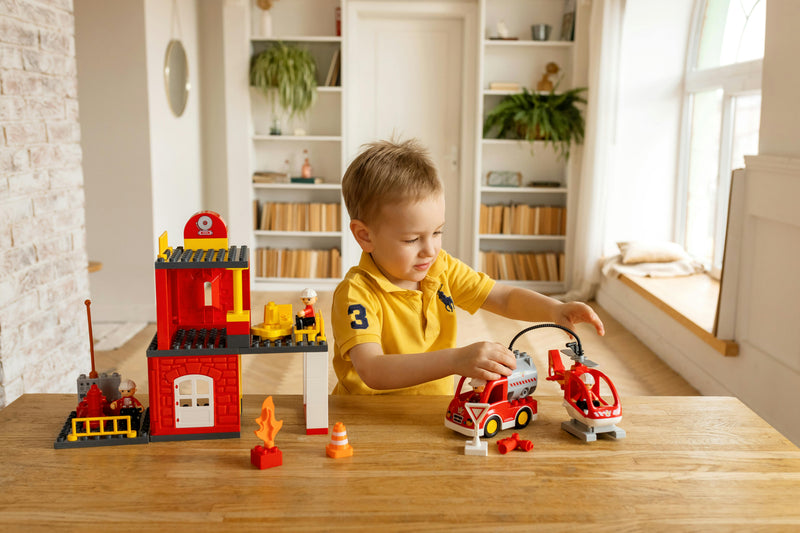
- open-ended building systems
- dress-up materials
- art and craft supplies
- imaginative play structures
At this point, the environment itself becomes just as important as the toys.
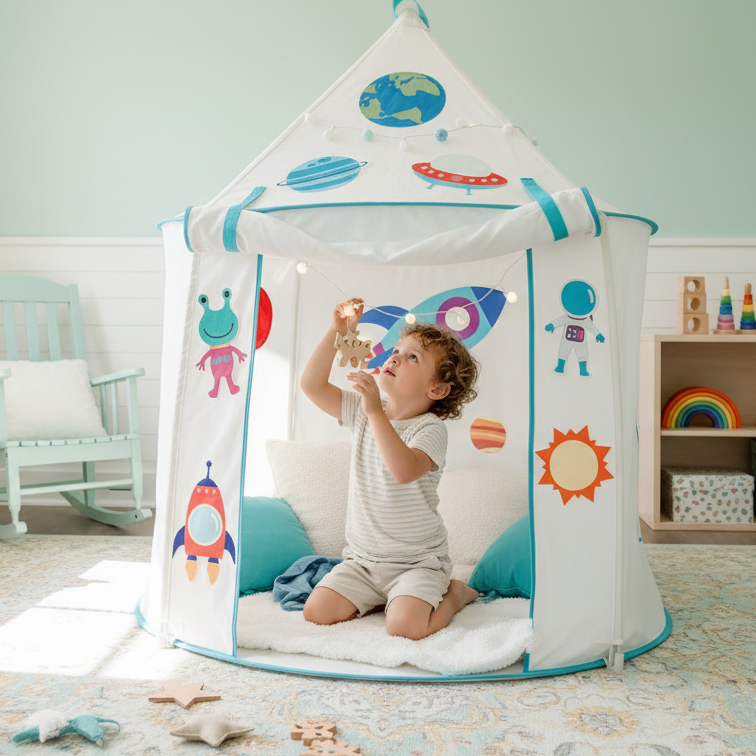
Spaces that allow children to immerse themselves in play—such as cosy corners, forts, or adaptable play areas—can significantly extend the duration and depth of independent play.
For example, a flexible play environment such as ZeeZee Adventures can serve as a neutral space that transforms alongside the child’s imagination, rather than directing it.
One day, it may become a reading nook.
Next, a spaceship.
Then a quiet retreat.
Because the space evolves, the play evolves.
Ages 5–7: Structured Creativity and Problem Solving
As children enter early school years, their cognitive abilities expand rapidly.
They begin to enjoy activities that involve:
- planning
- building
- experimenting
- solving challenges
Independent play becomes more sustained when it includes an element of problem solving.
Toys that support this stage include:
- construction sets
- puzzles with multiple solutions
- creative kits
- modular building systems
Children at this age are often motivated by mastery. They enjoy overcoming challenges and improving their skills.
However, it is still important that toys remain flexible enough to allow creativity, rather than becoming overly rigid or instruction-based.
Ages 7+: Deep Engagement and Personal Interests
As children grow older, their play becomes more individualised.
They develop specific interests and may engage in long-term projects, such as building models, creating stories, or designing their own games.
Independent play at this stage is often characterised by:
- deep focus
- sustained attention
- self-directed learning
Toys and tools that support this include:
- advanced building systems
- art materials
- science kits
- creative workspaces
At this point, the role of the environment becomes even more significant.
Children benefit from having a dedicated space where they can focus without distraction, experiment freely, and return to their projects over time.
Creating an Environment That Supports Independent Play
While toys are important, they are only part of the equation.
The environment in which children play can either support or limit independent engagement.
Effective play environments tend to include:
- fewer, carefully selected toys
- organised and accessible storage
- calm, uncluttered surroundings
- flexible play areas
- comfortable and inviting spaces
When children are not overwhelmed by choices or distractions, they are more likely to engage deeply with what is available.
A Shift in Perspective
Rather than asking, “What is the best toy for my child?”, a more effective question may be:
“What kind of play experience will keep evolving as my child grows?”
The answer often lies not in quantity, but in quality.
Not in stimulation, but in possibility.
Not in complexity, but in flexibility.
Conclusion
Independent play is not something that happens by chance.
It is shaped by thoughtful choices, supportive environments, and developmentally appropriate experiences.
The toys that sustain independent play are not necessarily the most advanced or the most entertaining in the traditional sense.
They are the ones that leave room.
Room for curiosity.
Room for creativity.
Room for imagination to grow.
Frequently Asked Questions
1. What is independent play, and why is it important for children?
Independent play is when children engage in activities on their own without direct adult guidance. It is important because it supports cognitive development, builds concentration, encourages creativity, and helps children develop problem-solving and emotional regulation skills.
2. At what age should children start playing independently?
Children can begin engaging in short periods of independent play as early as 12 to 18 months. However, the duration and complexity of play increase gradually as children grow and develop greater focus, imagination, and confidence.
3. Why do some children struggle with independent play?
Children may struggle with independent play due to overstimulating environments, too many toy options, or toys that do not encourage creativity. In some cases, they may also be accustomed to constant interaction or structured activities, making it harder to engage independently.
4. What types of toys best support independent play?
Toys that are open-ended and flexible tend to support independent play the most. Examples include building blocks, art materials, figurines, and imaginative play setups that allow children to create their own experiences rather than follow fixed instructions.
5. How many toys should a child have for effective independent play?
Research suggests that fewer, well-chosen toys often lead to deeper and more meaningful play. When children have too many options, they may become distracted and move quickly between activities instead of engaging fully with one.
6. How can parents encourage more independent play at home?
Parents can support independent play by creating a calm, organised play environment, limiting distractions, offering open-ended toys, and allowing children time and space to explore without constant interruption or direction.
7. Does independent play mean children should play alone all the time?
No. Independent play is just one part of a balanced play routine. Children also benefit from social play, cooperative activities, and guided interactions. Independent play complements these experiences by fostering self-reliance and creativity.
8. How long should independent play last for different age groups?
The duration of independent play varies by age. Toddlers may engage for 5–10 minutes, while preschoolers can often play independently for 20–40 minutes. Older children may sustain focus for an hour or more when deeply engaged in activities they enjoy.




Comment (0)