
Rainy Day Activities for Kids That Aren’t Screens
Rainy days often arrive quietly, altering the rhythm of a household in subtle yet noticeable ways. Outdoor plans are postponed, routines shift indoors, and what initially feels calm and cosy can gradually give way to restlessness. For many families, the challenge is not simply keeping children occupied, but maintaining meaningful engagement in an environment that suddenly feels limited.
In such moments, screens often become the default solution. They are immediate, effective, and require minimal preparation. However, while digital entertainment can provide temporary relief, it rarely supports the deeper developmental experiences children need. Research in child development consistently highlights the importance of active engagement, imaginative play, and self-directed exploration—elements that screens, by their nature, tend to reduce.
This raises an important question: what kinds of activities truly support children on slower, indoor days?
The answer lies not in filling time, but in shaping environments that encourage curiosity, creativity, and sustained attention.
Understanding the Indoor Energy Shift
Rainy days do more than confine children physically; they alter how energy is expressed. Without access to outdoor space, natural movement is reduced, and children often struggle to channel their energy effectively. This can manifest as restlessness, short attention spans, or a tendency to move rapidly from one activity to another.
Rather than attempting to suppress this energy, it is more productive to redirect it. Activities that combine imagination, light physical movement, and cognitive engagement tend to be the most effective. These experiences provide an outlet for energy while also supporting developmental growth.
The Limitations of Screen-Based Engagement
Screens are designed to capture attention through constant stimulation. Bright visuals, rapid transitions, and immediate feedback create a highly engaging experience. However, this form of engagement is largely passive. Children respond to content rather than generating it.
Over time, excessive reliance on screens can reduce opportunities for:
- independent problem-solving
- imaginative thinking
- sustained concentration
- emotional regulation
Rainy days, therefore, present an opportunity to rebalance this dynamic. Instead of relying on passive entertainment, families can introduce activities that encourage children to become active participants in their own play.
Creating Environments, Not Just Activities
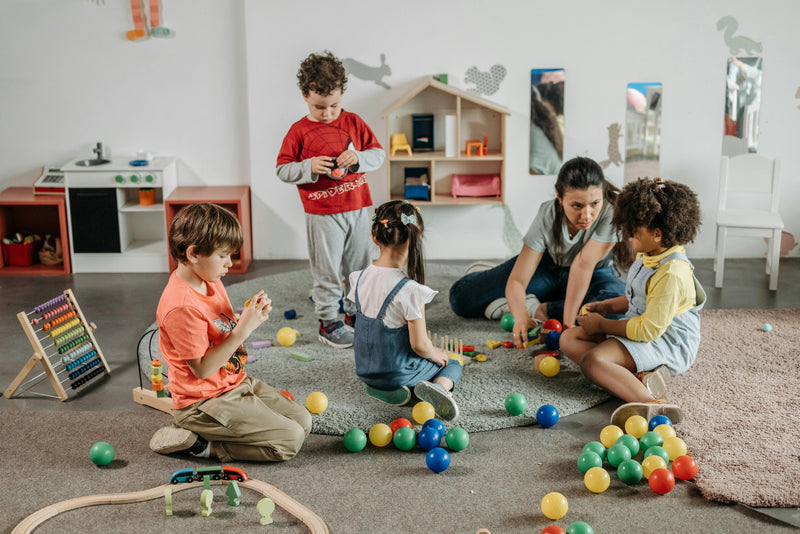
One of the most effective ways to support engagement is to shift focus from individual activities to the broader environment. Children respond not only to what they are given, but to the space in which they are invited to play.
A thoughtfully arranged environment can encourage exploration, storytelling, and creativity without requiring constant adult direction.
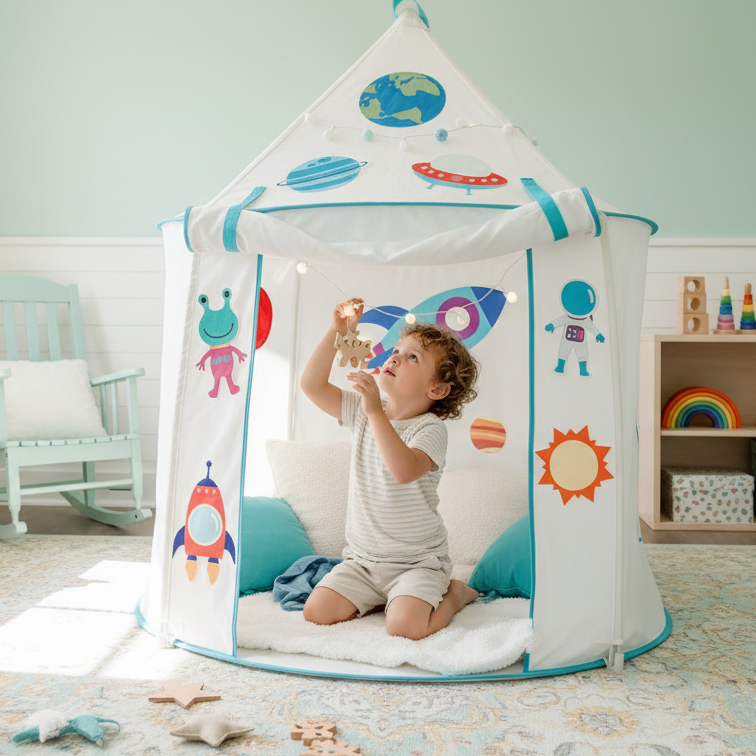
For example, a simple rearrangement of furniture, combined with soft furnishings and open-ended materials, can transform a standard living space into an imaginative setting. Many families find that creating a small, adaptable play area—such as a cosy corner or a structured yet flexible play space—provides a foundation for extended engagement. Designs that allow children to personalise and reinterpret the space, such as those seen in modular play environments like ZeeZee’s open-ended tent concepts, can be particularly effective for sustaining long-term imaginative play.
Building Imaginative Worlds Indoors
One of the most enduring forms of rainy-day engagement is the creation of imaginative worlds. Using everyday household items, children can construct environments that evolve over time.
Blankets, cushions, chairs, and soft lighting can be arranged to form structures that serve multiple purposes. A single setup may begin as a fort, transform into a spaceship, and later become a reading retreat. The key is not to define the structure too rigidly. When children are given the freedom to reinterpret their environment, they remain engaged for longer periods.
This process supports narrative thinking, spatial awareness, and creative problem-solving. It also allows children to take ownership of their play experience, which significantly increases engagement.
Encouraging Open-Ended Creativity
Creative activities are often most effective when they are not outcome-driven. Instead of structured crafts with predetermined results, open-ended materials provide greater flexibility.
Paper, cardboard, fabrics, and recyclable items can be offered alongside simple tools such as tape, crayons, or paints. Rather than giving detailed instructions, adults can introduce prompts that encourage exploration. For instance, asking a child to design an imaginary creature or build an object that serves a purpose invites deeper thinking.
This approach allows children to experiment, make decisions, and refine their ideas, all of which contribute to cognitive development and confidence.
Designing Thoughtful Indoor Challenges
Structured challenges can also provide meaningful engagement, particularly when they involve elements of problem-solving and discovery. Activities such as indoor treasure hunts can be adapted to suit different age groups and interests.
By creating clues, hiding objects, and encouraging children to design their own challenges, these activities support logical reasoning, memory, and planning skills. Importantly, they can be revisited and modified, ensuring that they remain engaging over time.
The Role of Storytelling in Engagement
Storytelling is another powerful tool for rainy day engagement. While reading is valuable, active participation in storytelling offers additional benefits.
Children can be encouraged to invent characters, develop narratives, and act out scenarios using simple props or toys. This not only enhances language skills but also supports emotional expression and social understanding.
When children create their own stories, they move from passive listeners to active creators, which significantly deepens engagement.
The Importance of Calm Spaces
Not all indoor activities need to be energetic. In fact, calm environments play a crucial role in supporting focus and emotional regulation.
Creating a quiet corner with soft lighting, comfortable seating, and a limited selection of materials can provide children with a space to reset. These areas often become places where children read, imagine, or engage in quiet creative activities.
Such spaces are particularly valuable in modern homes, where constant stimulation can make it difficult for children to focus. A calm environment allows for deeper engagement and more sustained attention.
Allowing Space for Boredom
One of the most overlooked aspects of rainy day play is the role of boredom. While it may initially seem counterproductive, boredom can be a catalyst for creativity.
When children are not immediately entertained, they begin to explore their surroundings, invent games, and develop their own ideas. This process requires patience, but it often leads to more meaningful and self-directed play.
Rather than intervening too quickly, allowing children time to navigate boredom can support independence and imaginative thinking.
Rethinking Rainy Days
Rainy days need not be seen as a limitation. Instead, they can be viewed as an opportunity to create environments that support deeper forms of engagement.
By focusing on flexibility, creativity, and thoughtful design, families can transform indoor time into a meaningful experience. Rather than relying on screens, they can encourage children to explore, imagine, and create in ways that contribute to long-term development.
Ultimately, the goal is not simply to keep children occupied, but to provide them with the conditions they need to thrive.






Comment (0)