
Easy Screen-Free Activities for Kids at Home (By Age)
Screens have become one of the easiest solutions in modern parenting. They calm boredom quickly, create temporary quiet, and help parents manage busy days filled with work, responsibilities, and exhaustion. Whether it is tablets during dinner preparation, cartoons on rainy afternoons, or short videos during difficult moments, screens now fill many small gaps throughout childhood.
For many families, this is understandable.
Modern parenting is demanding.
Yet many parents are beginning to notice something else happening quietly alongside this convenience. Children often struggle to entertain themselves without digital stimulation. Boredom tolerance decreases. Attention spans shorten. Independent play becomes more difficult. Emotional outbursts after screen time become increasingly common.
This is why more families are now searching for realistic screen-free activities that actually work at home.
Importantly, screen-free parenting does not mean creating perfect educational setups or entertaining children every minute of the day. In fact, one of the biggest misconceptions about reducing screen time is the belief that parents must constantly organise complicated activities.
Children do not necessarily need endless entertainment.
They need opportunities for imagination, movement, creativity, curiosity, and connection.
The best screen-free activities are often the simplest ones because they leave room for children to actively participate instead of passively consuming stimulation.
Why Screen-Free Play Matters More Than Ever
Modern childhood is increasingly shaped by rapid stimulation. Children move between short videos, gaming rewards, notifications, streaming platforms, and highly stimulating digital entertainment throughout the day. While technology certainly has benefits, excessive stimulation can affect how children experience boredom, creativity, focus, emotional regulation, and independent thinking.
Many children now struggle with slower activities because their brains have become accustomed to constant novelty and instant rewards. Reading feels difficult. Creative play feels “boring”. Independent engagement becomes shorter.
Screen-free activities help restore balance.
They encourage children to slow down, imagine, move, solve problems, and create experiences independently. These moments support healthy cognitive and emotional development in ways passive entertainment often cannot fully replace.
Importantly, screen-free play is not about perfection or completely eliminating technology.
It is about making sure children still have enough opportunities to engage deeply with the world around them without constant external stimulation.
The Hidden Benefits of Boredom
One of the biggest reasons parents reach for screens is to eliminate boredom quickly.
But boredom itself is not necessarily harmful.
In fact, boredom often becomes the starting point for creativity.
When children are not immediately distracted with digital entertainment, the brain begins searching internally for engagement. This is often where imagination begins to emerge.
Children invent games.
Build forts.
Create stories.
Roleplay adventures.
Draw imaginary worlds.
Explore ideas independently.
Many of childhood’s most creative moments begin after children move through boredom rather than escaping it immediately.
This is why parents should not feel guilty every time children complain that they are bored. Boredom is often the transition point before deeper engagement begins.
Why Screen-Free Activities Support Attention Span
Attention span develops through practice.
Children strengthen focus when they remain engaged in meaningful experiences for longer periods of time without constant interruption or rapid rewards.
Activities such as puzzles, building, reading, drawing, imaginative play, storytelling, and sensory exploration all help exercise sustained attention naturally.
Digital entertainment works differently because it often relies on fast transitions, instant stimulation, and continuous novelty. Over time, this can make slower forms of engagement feel more difficult for children.
Screen-free activities help children practise concentration in healthier ways.
Importantly, this does not happen instantly. Children highly accustomed to rapid digital stimulation may initially resist slower activities. However, once they move beyond that adjustment period, many children become calmer, more creative, and more deeply engaged.
Why Independent Play Matters
Independent play is one of the most valuable developmental experiences children can have.
When children create their own games, solve problems independently, and direct their own attention, they strengthen:
- Creativity
- Confidence
- Patience
- Emotional regulation
- Problem-solving skills
- Independent thinking
- Resilience
Modern parenting culture often creates pressure to constantly entertain children, but children actually benefit from opportunities to create experiences independently.
Importantly, independent play is a skill that develops gradually. Some children initially struggle with it because they are accustomed to constant stimulation or adult-led entertainment.
This is normal.
The goal is not perfection.
The goal is creating enough space for creativity to emerge naturally over time.
Screen-Free Activities by Age
Toddlers (1–3 Years)
Toddlers learn through movement, sensory exploration, repetition, and curiosity. At this age, simple activities are often the most effective because young children do not need complicated entertainment.
Sensory play is especially valuable for toddlers because it helps regulate emotions while supporting cognitive development. Water play, scooping rice, playdough, finger painting, bubbles, or safe kitchen exploration all encourage curiosity and focus naturally.
Toddlers also benefit enormously from movement-based activities indoors. Dancing, obstacle courses made from cushions, crawling games, balloon play, and animal roleplay help release physical energy while strengthening coordination and emotional regulation.
Simple imaginative experiences begin developing during this stage as well. Pretend tea parties, toy kitchens, dolls, stuffed animals, and small play spaces encourage early imagination and language development.
Reading aloud is another incredibly important screen-free activity during toddlerhood. Even if toddlers appear distracted at times, regular reading strengthens language, attention span, emotional connection, and listening skills over time.
Importantly, toddlers do not need constant stimulation. Quiet moments matter too. Looking through books independently, stacking blocks, exploring safe household objects, or simply observing the environment all support healthy brain development.
Preschoolers (3–5 Years)
Preschool-aged children experience huge imaginative growth. This is often the age where pretend play becomes deeply immersive and creative.
Blanket forts become castles.
Living rooms become jungle safaris.
Play kitchens become cafés.
Cardboard boxes become rockets.
This is why open-ended play becomes incredibly valuable during these years.
Open-ended activities allow children to lead the experience themselves rather than following fixed instructions. Building blocks, magnetic tiles, dolls, figurines, art materials, costumes, and imaginative play spaces all support creativity naturally.
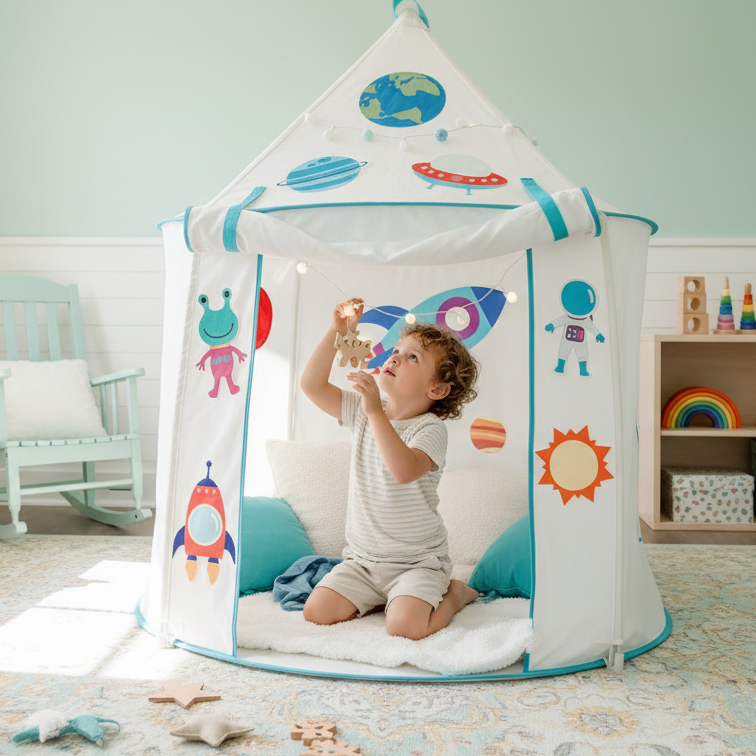
At ZeeZee Adventures, many families create calm imaginative spaces where preschoolers can role-play stories, build worlds, and engage independently without relying entirely on digital entertainment. These slower forms of imaginative engagement help strengthen creativity, attention span, and emotional regulation.
Preschoolers also enjoy hands-on creative activities such as painting, cutting paper, sticker books, sensory bins, baking, and nature crafts. Importantly, the process matters far more than the final result. Children benefit most when they are free to explore creatively without pressure for perfection.
Movement remains equally important at this stage. Indoor scavenger hunts, dancing, yoga, obstacle courses, and pretend adventures all help preschoolers regulate energy and emotions in healthy ways.
Early Primary Years (5–8 Years)
Children between five and eight years old often begin balancing independent interests with imaginative play. This age group benefits from activities that challenge creativity, concentration, and problem-solving.
Reading becomes especially important during these years because it strengthens attention span and imagination simultaneously. Creating cosy reading spaces at home can help children associate books with comfort and calm rather than obligation.
Creative building activities are also highly valuable. LEGO, magnetic tiles, puzzles, cardboard engineering, marble runs, and construction projects encourage persistence and focus naturally.
Many children in this age group also enjoy practical activities such as baking, gardening, simple science experiments, treasure hunts, journalling, or craft projects.
Importantly, children still need large amounts of free play during these years. Modern childhood has become increasingly structured, leaving very little space for self-directed exploration. Free imaginative play continues supporting emotional intelligence, storytelling abilities, and creativity long after the preschool years.
Board games are another excellent screen-free activity because they strengthen patience, communication, turn-taking, and emotional regulation while also creating family connection.
Older Children (8–12 Years)
As children grow older, many parents assume screen-free play naturally disappears. However, older children still deeply benefit from creative and hands-on experiences.
This age group often enjoys activities involving challenge, mastery, and independence. Art projects, journalling, creative writing, coding without internet distractions, building kits, photography, music, sewing, cooking, and DIY projects all encourage focus and creativity naturally.
Outdoor exploration also becomes increasingly valuable during these years. Nature walks, cycling, scavenger hunts, den-building, gardening, and independent outdoor adventures help older children regulate emotions while reducing overstimulation.
Many older children also benefit emotionally from slower hobbies because modern academic and social pressures can create significant mental overload. Calm activities such as reading, sketching, puzzles, or crafting often provide important emotional recovery from highly stimulating environments.
Importantly, older children still need opportunities for imaginative thinking, even if it looks different than early childhood pretend play. Creativity continues supporting emotional resilience, problem-solving, and cognitive flexibility throughout development.
Why Calm Play Spaces Matter
Modern homes are often filled with constant stimulation.
Background television.
Notifications.
Bright screens.
Clutter.
Noise.
Children’s nervous systems can quickly become overwhelmed in these environments.
This is why calm play spaces matter so much.
Children often engage more deeply when environments feel emotionally safe and visually calming. Soft lighting, cosy reading corners, organised play materials, imaginative spaces, and quieter routines help children settle into deeper engagement naturally.
Importantly, these environments do not need to be expensive or perfectly designed.
Simple changes often create the biggest difference.
A reading corner with blankets.
A basket of open-ended toys.
An art station.
A play tent.
A calm sensory space.
Children do not always need more stimulation.
Sometimes they simply need environments where imagination feels safe enough to grow.
How To Reduce Screen Reliance Without Daily Battles
One of the biggest mistakes families make when reducing screen time is removing screens suddenly without replacing them with meaningful alternatives.
Children highly accustomed to rapid digital stimulation often need time to adjust to slower forms of engagement.
Parents should expect resistance initially.
This is normal.
The goal is not creating punishment around screens. The goal is creating healthier balance.
Helpful approaches include:
Creating predictable screen-free routines.
Protecting outdoor time.
Making creative materials easily accessible.
Reducing background television.
Encouraging independent play gradually.
Avoiding screens during meals and before bedtime.
Allowing boredom sometimes instead of solving it instantly.
Importantly, children often follow adult behaviour as well. When families create calmer home environments overall, children usually adapt more naturally over time.
Why Simple Play Often Creates the Deepest Engagement
Modern parenting culture often promotes elaborate activities and constant entertainment. Yet many children become most deeply engaged through remarkably simple experiences.
Blanket forts.
Drawing.
Cardboard boxes.
Building blocks.
Storytelling.
Baking.
Reading together.
Pretend adventures.
Dancing in the living room.
These activities may seem ordinary, but they support attention span, creativity, emotional regulation, and family connection in profound ways.
Children do not always need more stimulation.
They need more opportunities to participate actively in creating experiences themselves.
Final Thoughts
Screen-free activities are not about creating perfect childhoods or eliminating technology completely.
They are about restoring balance.
Children still need opportunities to imagine, explore, move, create, become bored sometimes, and engage deeply with the world around them without constant digital stimulation.
The most valuable screen-free activities are often the simplest because they leave room for creativity, curiosity, and emotional connection to emerge naturally.
A cardboard box can become a rocket ship.
A blanket can become a castle.
A quiet afternoon can become an entire imaginary adventure.
And within those ordinary moments, children are developing something incredibly important.
The ability to think independently, focus deeply, create freely, and experience the world beyond a screen.
- Baby Registry
- Baby Shower
- Best gifts
- best play tent
- Best toys
- Best toys 2026
- birthday gift ideas for 3 year old
- birthday gift ideas for 4 year old
- birthday gift ideas for 5 year old
- birthday gift ideas for 6 year old
- birthday gift ideas for 7 year old
- Blog
- calming toys
- child development
- children
- christmas gift ideas
- customizable play tent
- gift for kids ages 3–8
- Holidaygiftguide
- jeanpiaget
- kids play tent
- Montesoori
- montessori
- Montessori Gifts
- Montessori play
- open-endedplay
- openendedplay
- parenting
- parents
- play tent
- Play Tents
- playroom inspo
- pretend play
- sahm
- Sensory Play
- sensory play gifts
- teepee play tent
- toddler toys
- tonies
- toyclutter
- toys
- ZeeZee
- ZeeZee Adventure
- ZeeZee Adventure Tent
- ZeeZee Adventures





Comment (0)