

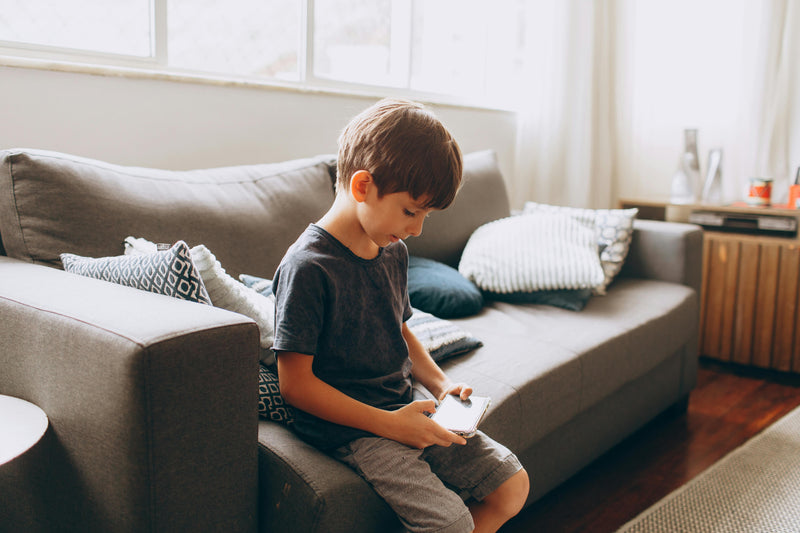
Why Screens Affect the Brain Differently During Childhood
Children’s brains are still developing, which makes them far more sensitive to stimulation than adults. During childhood, the brain is constantly building neural pathways related to attention, emotional regulation, communication, and problem-solving. Highly stimulating digital environments can influence how these pathways develop over time.
Rapid scene changes, instant rewards, autoplay systems, and endless scrolling train the brain to expect frequent stimulation. As a result, slower activities such as reading, imaginative play, or problem-solving may begin to feel less rewarding by comparison. This is why many children struggle to remain engaged in activities that require patience and sustained attention after extended screen exposure.
Importantly, the concern is not simply the amount of screen time. The quality and pace of the content matter significantly as well.
The Connection Between Screens and Reduced Frustration Tolerance
One subtle effect parents often notice is that children become less tolerant of frustration after excessive screen use. Digital entertainment provides immediate responses and instant gratification, meaning children rarely need to wait, struggle, or work through discomfort for long periods.
Real-life activities function differently.
Building something takes time.
Reading requires patience.
Creative play develops gradually.
Problem-solving involves trial and error.
Children who become highly accustomed to immediate digital rewards may struggle more with delayed gratification in everyday situations. This can affect emotional regulation, resilience, and patience over time.
Allowing children to experience slower activities helps strengthen their ability to tolerate frustration and remain emotionally engaged even when tasks are not instantly rewarding.
Why Multitasking Is Quietly Weakening Focus
Modern digital environments encourage constant attention switching. Children often move quickly between videos, games, apps, notifications, and conversations without fully concentrating on one thing for very long.
While this may appear harmless, frequent multitasking can weaken deep focus over time because the brain becomes accustomed to constant shifting rather than sustained engagement.
Children develop stronger concentration when they remain immersed in one meaningful activity for longer periods without interruption. Reading, imaginative play, building projects, storytelling, and creative hobbies all help strengthen this ability naturally.
This is one reason uninterrupted playtime has become increasingly important in modern childhood.
The Role of Independent Play in Strengthening Attention Span
Independent play is one of the most powerful ways children naturally strengthen focus. When children direct their own play, solve problems independently, and create imaginary worlds without constant external stimulation, they exercise sustained attention in healthy ways.
Unfortunately, many modern children receive very little uninterrupted independent play because screens continuously fill quiet moments.
At ZeeZee Adventures, many families intentionally create imaginative environments where children can engage in storytelling, pretend adventures, and deep creative play without relying entirely on digital entertainment. These slower forms of engagement help children practice concentration while also strengthening imagination and emotional regulation.
Children often become calmer and more focused when they are given opportunities to engage deeply rather than constantly consuming stimulation passively.
Why Sleep Quality Also Impacts Attention
One overlooked factor in the screen conversation is sleep. Excessive evening screen exposure can interfere with children’s ability to settle their nervous systems before bedtime. Poor sleep quality directly affects focus, emotional regulation, learning, and behaviour the following day.
Children who are overtired often appear distracted, emotionally reactive, restless, or unable to concentrate properly. In many cases, parents assume the issue is behavioural when the nervous system is actually exhausted.
Reducing highly stimulating screen exposure before bed and replacing it with calmer routines such as reading, storytelling, quiet play, or conversation can significantly improve both sleep quality and attention span over time.
Why Outdoor Play Helps Restore Attention Naturally
Research increasingly shows that outdoor environments support attention restoration in children. Nature provides sensory stimulation that feels calmer and less overwhelming than digital environments. Outdoor play encourages curiosity, movement, exploration, and imaginative engagement without constant, rapid rewards.
Children who spend more time outdoors often show improvements in emotional regulation, creativity, and concentration because natural environments allow the brain to recover from overstimulation.
Even simple outdoor experiences such as walking, observing nature, climbing, collecting leaves, or free exploration can help support healthier attention patterns.
The Difference Between “Busy” and “Engaged”
Many modern activities keep children busy, but not all activities create meaningful engagement.
Passive entertainment often occupies attention temporarily without requiring deeper thinking or creativity. True engagement happens when children actively participate mentally, emotionally, and imaginatively in an experience.
A child quietly scrolling videos may appear occupied, but a child building an imaginary world, solving a puzzle, reading a story, or creating artwork is exercising concentration much more deeply.
This distinction matters because children strengthen attention through active engagement rather than passive stimulation alone.
Why Attention Span Is Becoming One of the Most Valuable Future Skills
We are living in one of the most distracted periods in human history. Notifications, scrolling, multitasking, and endless digital stimulation constantly compete for attention. As technology continues evolving, the ability to focus deeply may become one of the most valuable skills future generations can possess.
Children who regularly practice deep engagement through reading, imaginative play, creative projects, and independent exploration are strengthening skills that support long-term learning, emotional resilience, communication, and innovation.
Ironically, some of the simplest childhood experiences may become the most important developmental tools for the future.
Because in a world designed to constantly capture attention, children who can think deeply and focus independently will have a powerful advantage.
FAQ Section
Do screens permanently damage children’s attention spans?
No. Attention span can improve significantly when children experience a healthier balance between screen use, imaginative play, movement, reading, and slower forms of engagement.
Is all screen time harmful?
No. Educational content, creative tools, family films, and intentional digital experiences can all have value. The concern is excessive overstimulation and imbalance rather than the screens themselves.
Why does my child become emotional after screen time?
Highly stimulating digital content can overwhelm the nervous system, making transitions and emotional regulation more difficult afterwards.
What type of screen content affects focus the most?
Fast-paced short-form content with constant scene changes and rapid rewards tends to have the strongest impact on attention patterns because it trains the brain to expect continuous novelty.
How can parents improve their attention span naturally?
Reading, imaginative play, outdoor exploration, puzzles, storytelling, sensory play, and uninterrupted creative activities all help strengthen concentration over time.
Why do children say slower activities are “boring”?
Children accustomed to rapid stimulation may initially struggle with slower forms of engagement because their brains expect faster rewards. Creativity often begins after moving through boredom.
How much screen time is too much?
There is no universal number for every child or family. Problems usually appear when screens consistently replace movement, creativity, sleep, emotional connection, and independent play.
Does imaginative play help attention span?
Yes. Imaginative play strengthens sustained attention because children must actively create stories, solve problems, and remain mentally engaged without constant external stimulation.
Should parents feel guilty about using screens sometimes?
No. Modern parenting is demanding, and screens are part of modern life. The goal is not perfection. The goal is to create a healthier balance over time.
What is the biggest thing children need alongside screens?
Children need opportunities for slower, deeper engagement through movement, creativity, independent play, reading, emotional connection, and quiet moments where imagination can emerge naturally.
- Baby Registry
- Baby Shower
- Best gifts
- best play tent
- Best toys
- Best toys 2026
- birthday gift ideas for 3 year old
- birthday gift ideas for 4 year old
- birthday gift ideas for 5 year old
- birthday gift ideas for 6 year old
- birthday gift ideas for 7 year old
- Blog
- calming toys
- child development
- children
- christmas gift ideas
- customizable play tent
- gift for kids ages 3–8
- Holidaygiftguide
- jeanpiaget
- kids play tent
- Montesoori
- montessori
- Montessori Gifts
- Montessori play
- open-endedplay
- openendedplay
- parenting
- parents
- play tent
- Play Tents
- playroom inspo
- pretend play
- sahm
- Sensory Play
- sensory play gifts
- teepee play tent
- toddler toys
- tonies
- toyclutter
- toys
- ZeeZee
- ZeeZee Adventure
- ZeeZee Adventure Tent
- ZeeZee Adventures






Comment (0)