

How Pretend Play Builds Real-Life Skills (That Kids Will Use for Years)
Imagine walking into your living room and finding your child deep inside an imaginary world.
A cardboard box has become a spaceship.
The family dog is suddenly a patient at a busy veterinary clinic.
A blanket draped over two chairs is now a medieval castle guarded by dragons.
To adults, it can look like simple fun.
To a child's brain, it's serious work.
Every imaginary adventure is helping build communication, creativity, emotional intelligence, problem-solving, and confidence—skills that will support them in school, friendships, future careers, and everyday life.
In a world increasingly filled with passive entertainment and screen-based experiences, pretend play remains one of childhood's most powerful learning tools.
The best part?
Children believe they're simply playing.
Quick Answer
Pretend play helps children develop communication, creativity, emotional intelligence, executive function, and problem-solving skills by encouraging them to invent stories, explore different perspectives, and navigate imaginary challenges. Because children actively create experiences instead of consuming them, pretend play supports healthy brain development and prepares them for real-world situations they'll encounter throughout life.
Why Modern Childhood Offers Fewer Opportunities for Imagination
Children today have access to more entertainment than any generation before them.
Videos.
Apps.
Games.
Streaming platforms.
Interactive technology.
While these experiences certainly have value, they often share one important characteristic:
Someone else creates the story.
Someone else decides the characters.
Someone else solves the problems.
Children become participants rather than creators.
Pretend play reverses that process.
Children become the author.
The director.
The problem-solver.
The storyteller.
That difference changes how the brain works.

What Child Development Experts Want Parents to Know
Developmental psychologists have long recognized pretend play as one of childhood's richest learning experiences.
When children pretend, they're practicing real-world thinking in a low-pressure environment.
Rather than memorizing information, they're actively building cognitive, emotional, and social skills through experience.
This is one reason imaginative play continues to be recommended by pediatric and child development experts.
How Pretend Play Builds Real-Life Skills
Communication and Language Development
Every pretend scenario requires communication.
Whether children are playing with siblings, friends, parents, or even stuffed animals, they naturally practice:
- Expressing ideas
- Explaining rules
- Asking questions
- Listening
- Storytelling
- Expanding vocabulary
These interactions strengthen both language development and conversational confidence.
Executive Function and Problem-Solving
Executive function refers to the brain skills responsible for:
- Planning
- Decision-making
- Flexible thinking
- Self-control
- Working memory
Pretend play exercises all of these abilities.
The spaceship has run out of fuel.
The bakery has too many customers.
The dragon needs rescuing.
Children must invent solutions, adapt their plans, and keep the story moving.
This kind of flexible thinking becomes valuable throughout school and adulthood.
Emotional Intelligence
Pretend play invites children to step into someone else's perspective.
A child pretending to be:
- A doctor
- A teacher
- A firefighter
- A parent
- A veterinarian
begins considering how other people think and feel.
Over time, these experiences strengthen:
- Empathy
- Perspective-taking
- Emotional awareness
- Social understanding
These skills form the foundation of healthy relationships.
Creativity and Innovation
Innovation always begins with imagination.
Children who regularly engage in pretend play learn to see possibilities where others see ordinary objects.
A couch becomes a mountain.
A tent becomes a castle.
A cardboard box becomes a submarine.
This ability to think beyond what's immediately visible is one of creativity's greatest strengths.
Confidence and Independence
Every imaginary adventure places children in charge.
They make decisions.
Solve problems.
Lead conversations.
Create new worlds.
Each successful experience reinforces confidence in their own ideas and abilities.
Over time, that confidence extends beyond play into everyday life.
Why Pretend Play Matters More Than Ever
Modern childhood looks very different from previous generations.
Many children spend more time with structured schedules and digital entertainment than with open-ended, self-directed play.
Parents frequently express concerns about:
- Excessive screen time
- Shorter attention spans
- Reduced creativity
- Difficulty playing independently
Pretend play offers a meaningful balance.
Unlike passive entertainment, it asks children to actively imagine rather than simply consume.
They're not watching someone else's adventure.
They're building their own.
That distinction has lasting developmental benefits.
Practical Ways to Encourage More Pretend Play
Create Spaces That Invite Imagination
Children often engage more deeply when they have a dedicated area for imaginative play.
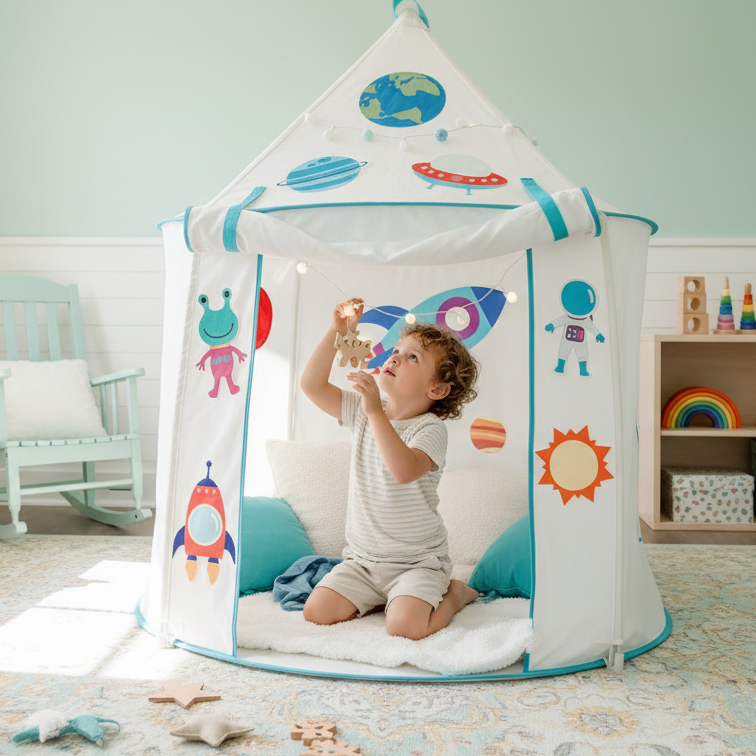
A cozy corner or play tent helps signal that this is a place where stories begin.
Offer Open-Ended Materials
Some of the best pretend play tools cost very little.
Consider providing:
- Blankets
- Cardboard boxes
- Costumes
- Stuffed animals
- Building blocks
- Craft supplies
The fewer instructions an object comes with, the more imagination it often inspires.
Follow Your Child's Interests
If your child loves space, encourage astronaut adventures.
If they're fascinated by animals, create a pretend wildlife rescue center.
When play connects with existing interests, children often stay engaged longer.
Protect Unstructured Time
Pretend play needs uninterrupted time to grow.
Avoid filling every free moment with scheduled activities.
Sometimes the richest adventures begin after children have had a chance to feel "bored."
Let Children Direct the Story
Parents don't need to become the narrator.
Instead, ask questions.
"What happens next?"
"Who lives in this castle?"
"What problem does your explorer need to solve today?"
Allow children to lead the adventure.
The Power of Environment
Children's environments influence how deeply they play.
Spaces that feel calm, inviting, and free from constant distractions naturally encourage longer periods of imaginative exploration.
Instead of competing for attention, these environments support:
- Creativity
- Focus
- Independent thinking
- Storytelling
- Emotional regulation
Sometimes changing the environment changes the quality of play.
The ZeeZee Solution
One of the simplest ways to encourage pretend play is to create a space that inspires imagination from the moment a child steps inside.
That's the idea behind ZeeZee Adventures.
Rather than offering a single fixed play experience, the adventure tent becomes whatever children imagine it to be.
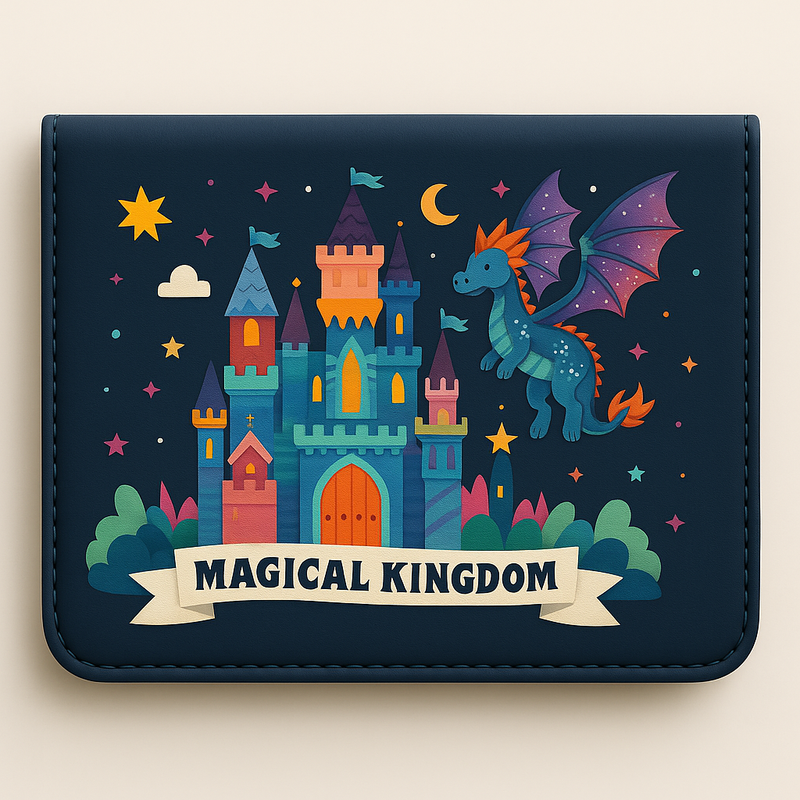
Its sensory-friendly design creates a calm, cozy environment that supports independent play, storytelling, and quiet exploration. As children's interests evolve, interchangeable StickeeZ themes allow the same space to transform into new adventures without replacing the entire play system.
One day, it's a magical kingdom.
Next, a space station.
Tomorrow, an explorer's base camp.
Instead of following someone else's story, children become the storytellers.
Conclusion
Pretend play may appear simple.
In reality, it's helping children rehearse for life.
Every imaginary adventure strengthens communication, creativity, emotional intelligence, confidence, and problem-solving.
These aren't just childhood skills.
They're lifelong skills.
As technology becomes an increasingly common part of childhood, pretend play offers something screens cannot fully replace:
The opportunity to imagine.
To create.
To lead.
Because when children pretend to be astronauts, teachers, chefs, veterinarians, or explorers, they aren't escaping reality.
They're practicing for it.
Frequently Asked Questions
Why is pretend play important for child development?
Pretend play supports language development, creativity, executive function, emotional intelligence, problem-solving, and independent thinking through child-led imaginative experiences.
At what age does pretend play begin?
Most children begin simple pretend play between 18 and 24 months, with increasingly complex role-play developing throughout the preschool and early elementary years.
Can pretend play reduce screen dependence?
Yes. Rich imaginative play provides engaging alternatives to passive entertainment, helping children spend more time creating rather than consuming experiences.
What toys encourage pretend play?
Open-ended materials such as play tents, costumes, blocks, dolls, stuffed animals, cardboard boxes, and craft supplies encourage the greatest variety of imaginative play
.
Should parents participate in pretend play?
Occasionally, yes. However, children gain the greatest developmental benefits when they lead the story and make their own decisions.
Internal Linking Suggestions
- Why Modern Kids Struggle With Boredom More Than Ever
- How to Create a Screen-Smart Home Without Going Extreme
- Why Independent Play Matters More Than Ever
- The Science Behind Open-Ended Play
- Screen-Free Activities That Spark Creativity
Author Bio
The ZeeZee Play Experts
The ZeeZee Play Experts combine child development research with practical parenting insights to help families create environments where imagination can flourish. Their work focuses on sensory-friendly, open-ended play experiences that encourage creativity, independence, and meaningful childhood memories.





Comment (0)