
How Pretend Worlds Help Children Solve Real Problems
Quick Answer
Pretend play is far more than childhood entertainment. When children create imaginary worlds, take on different roles, and solve make-believe challenges, they are strengthening real-life skills such as problem-solving, creativity, emotional regulation, communication, executive functioning, and resilience. These experiences help children learn to think independently, adapt to unexpected situations, and confidently navigate challenges they will encounter throughout life.
Key Takeaways
-
Pretend play gives children a safe space to practice solving problems before facing them in real life.
-
Make-believe adventures strengthen creativity, decision-making, and flexible thinking.
-
Children process emotions and build resilience through imaginary stories and role-play.
-
Pretend play develops communication, empathy, and collaboration with others.
-
In today's highly structured, screen-filled world, child-led pretend play is more valuable than ever.
Introduction
A stuffed rabbit is trapped inside a volcano.
The bridge has collapsed.
The dragon refuses to share the treasure.
The doctor has run out of medicine.
The spaceship has lost power halfway to Mars.
To an adult, none of these problems are real.
To a child, they're urgent.
Important.
Worth solving.
Within minutes, the child begins thinking.
"How can I rescue the rabbit?"
"Can I build another bridge?"
"Maybe the dragon isn't angry—maybe it's lonely."
"What could power the spaceship instead?"
Without realizing it, the child has become an engineer.
A negotiator.
A scientist.
A storyteller.
A leader.
This is the extraordinary power of pretend play.
Children willingly create challenges simply so they can figure out how to overcome them.
Unlike many adult problems, these imaginary situations are completely safe.
There is room to experiment.
Room to fail.
Room to try again.
That's exactly why pretend play is such a powerful teacher.
As adults, it's easy to think children are "just pretending."
We see cardboard castles.
Imaginary monsters.
Invisible tea parties.
Superhero capes.
Puppet conversations.
But beneath every imaginary adventure, something much more important is happening.
Children are rehearsing for real life.
They're learning how to plan.
Adapt.
Collaborate.
Communicate.
Manage emotions.
Recover from mistakes.
And solve problems that don't always have obvious answers.
As a pediatric occupational therapist, I've watched children reveal remarkable abilities during pretend play that rarely appear in more structured activities.
A child who hesitates to speak during group activities confidently becomes the captain of an imaginary pirate ship.
Another who struggles with frustration patiently rebuilds a pretend village after it "collapses."
A child nervous about visiting the doctor spends an afternoon happily caring for stuffed animals in a make-believe clinic.
Pretend play creates opportunities that formal instruction often cannot.
It allows children to explore challenges while remaining completely in control of the story.
That sense of safety encourages curiosity instead of fear.
Experimentation instead of perfection.
Confidence instead of hesitation.
In today's world—where many children's activities are increasingly guided by screens, schedules, and predetermined outcomes—these opportunities have become more valuable than ever.
In this article, we'll explore why pretend worlds are much more than childhood fantasy and discover how the problems children solve during make-believe adventures prepare them for the real challenges they'll face throughout life.
Pretend Play Is More Than "Just Pretending"
Adults often separate play from learning.
Children don't.
To a child, pretending isn't an escape from reality.
It's one of the ways they begin understanding it.
Imagine two children playing restaurant.
One becomes the chef.
The other greets customers.
Soon a problem appears.
A customer orders pizza.
The restaurant only serves soup.
The children pause.
They discuss possibilities.
Maybe the restaurant should add pizza to the menu.
Maybe today's special is tomato soup that tastes like pizza.
Maybe they should open a second restaurant next door.
There isn't one correct answer.
There are endless possibilities.
Every decision requires imagination, communication, compromise, and creative thinking.
That's exactly what makes pretend play so valuable.
Unlike activities where success depends on following instructions, pretend play encourages children to create their own path forward.
They aren't memorizing information.
They're generating ideas.
Testing solutions.
Changing plans.
Evaluating outcomes.
These are the same thinking processes adults use every day when solving problems at work, managing relationships, or adapting to unexpected situations.
The difference is that children practice them through stories instead of spreadsheets.

Why Children Create Pretend Worlds
From an early age, children are naturally curious about the world around them.
They wonder:
"What would it feel like to fly?"
"What if animals could talk?"
"How do doctors help people?"
"Could I be the king of a castle?"
Pretend play allows children to explore these questions long before they fully understand the real world.
Instead of simply observing life, they actively participate in it.
They experiment with different roles.
Different perspectives.
Different endings.
A child pretending to be a firefighter isn't only spraying imaginary water.
They're exploring courage.
Responsibility.
Helping others.
A child pretending to teach a classroom isn't just copying their teacher.
They're experimenting with leadership, communication, and problem-solving.
Pretend play gives children something incredibly valuable:
The freedom to ask,
"What if?"
Without worrying about getting the answer wrong.
Expert Insight
Pediatric occupational therapists often describe pretend play as a "practice ground for life." By experimenting with imaginary situations, children develop cognitive, emotional, and social skills in an environment where mistakes are safe, curiosity is encouraged, and there are no grades or right answers.
The Science Behind Pretend Worlds
Although pretend play may appear spontaneous, it involves remarkably complex thinking.
A single make-believe adventure activates multiple areas of development at the same time.
Consider a child pretending to be an astronaut.
To keep the story going, they must:
-
Remember the mission.
-
Plan what happens next.
-
Solve unexpected challenges.
-
Stay in character.
-
Adapt when the story changes.
-
Communicate with imaginary teammates.
-
Regulate emotions if the mission doesn't go as planned.
These aren't isolated skills.
They're interconnected cognitive processes that help children manage everyday life.
Developmental psychologists often refer to pretend play as a form of symbolic play because children learn to let one object represent another.
A wooden spoon becomes a microphone.
A blanket becomes the ocean.
A cardboard box becomes mission control.
This ability to think symbolically is an important milestone in early childhood development.
It supports later learning in reading, writing, mathematics, storytelling, and abstract thinking.
Pretend play also encourages divergent thinking—the ability to generate multiple possible solutions rather than searching for a single correct answer.
When a pretend bridge collapses, children don't stop playing.
They adapt.
They invent.
They rebuild.
That flexibility becomes one of the foundations of resilient problem-solving throughout life.
Perhaps most importantly, pretend worlds allow children to experience challenges at a scale they can manage.
Real life can sometimes feel overwhelming.
Imaginary life gives children the opportunity to practice courage, persistence, empathy, and creativity within stories they control.
And that's exactly why those stories matter.
How Pretend Play Builds Real-Life Skills
One of the greatest misconceptions about pretend play is that it's separate from "real" learning.
In reality, pretend play is where many of life's most important skills begin.
Every imaginary adventure asks children to think, adapt, communicate, and make decisions in ways that few structured activities can match.
Whether they're rescuing a stranded astronaut, running a pretend bakery, or organizing a dinosaur rescue mission, children are practicing the same thinking processes they'll rely on throughout school, work, relationships, and everyday life.
Let's look at how these imaginary worlds quietly prepare children for real-world challenges.
1. Pretend Play Teaches Children How to Solve Problems
Every good story has a problem.
The castle is under attack.
The puppy has gone missing.
The spaceship has run out of fuel.
The bakery has no flour left.
Without realizing it, children naturally create challenges that require solutions.
Unlike puzzles or worksheets with one correct answer, pretend play encourages children to invent their own.
Imagine two children pretending to camp in the forest.
Suddenly, an imaginary storm arrives.
Their tent isn't strong enough.
They begin discussing possibilities.
Should they build a stronger shelter?
Move to higher ground?
Ask friendly animals for help?
Turn the canoe into a roof?
There isn't one perfect solution.
There are dozens.
Each idea requires planning, experimentation, and evaluation.
Even when one solution doesn't work, children simply adjust the story and try again.
That willingness to experiment without fear of failure is one of the foundations of lifelong problem-solving.
Expert Insight
Occupational therapists frequently use pretend play to observe how children approach challenges. Rather than focusing on whether a child finds the "correct" answer, they look at how the child plans, experiments, adapts, and persists when unexpected obstacles arise.
2. Pretend Play Strengthens Flexible Thinking
Real life rarely unfolds exactly as planned.
Plans change.
Mistakes happen.
Unexpected challenges appear.
Children need opportunities to practice adapting.
Pretend play provides those opportunities every single day.
Imagine a child pretending to run a zoo.
Halfway through the story, one of the stuffed animals escapes.
Now the child must rethink everything.
The visitors need to stay safe.
Someone has to rescue the animal.
The story changes.
Instead of becoming frustrated, children naturally adjust.
They rewrite the adventure.
This ability to shift strategies when circumstances change is known as cognitive flexibility, and it's one of the brain's most important executive functioning skills.
Flexible thinkers are more likely to:
-
Adapt to change.
-
Consider multiple solutions.
-
Recover from setbacks.
-
Think creatively under pressure.
-
Approach challenges with curiosity instead of fear.
Pretend play offers constant opportunities to strengthen this skill because imaginary worlds rarely stay predictable for long.
3. Pretend Play Develops Executive Function
Executive function is often described as the brain's "management system."
These mental skills help children:
-
Plan.
-
Organize.
-
Focus attention.
-
Remember information.
-
Control impulses.
-
Complete tasks.
-
Switch between ideas.
During pretend play, children use these abilities continuously.
Imagine a child organizing an imaginary birthday party.
First, they decide who is invited.
Then they prepare decorations.
Next comes the cake.
The guests arrive.
Someone forgets a present.
The story changes again.
To keep the game going, the child must remember roles, sequence events, solve problems, and stay engaged with the unfolding narrative.
Unlike structured activities where adults provide instructions, pretend play requires children to become both the planner and the participant.
That independence makes executive functioning stronger through repeated practice.
4. Pretend Play Encourages Creative Thinking
Creativity isn't simply about making art.
It's about generating original ideas and seeing possibilities others might overlook.
Pretend play naturally encourages this type of thinking.
A cardboard box doesn't have one identity.
Today it's a submarine.
Tomorrow it's a castle.
Next week it's a robot repair station.
Children continuously ask themselves:
"What else could this become?"
This kind of thinking—known as divergent thinking—helps children move beyond fixed answers and imagine multiple possibilities.
As they grow older, this same skill supports:
-
Innovation
-
Scientific thinking
-
Writing
-
Design
-
Entrepreneurship
-
Everyday problem-solving
Creativity begins with imagination.
Pretend play gives it room to grow.
Expert Insight
Creative confidence develops when children know there isn't only one "right" answer. Pretend play encourages experimentation, originality, and curiosity by allowing children to invent ideas without worrying about being correct.
5. Pretend Play Builds Decision-Making Skills
Children make hundreds of decisions during imaginative play.
Who should be the captain?
Where does the story begin?
Should the dragon become friendly?
How can everyone be rescued?
What happens next?
Each decision strengthens independence.
Unlike adult-directed activities, pretend play places children in charge of their own thinking.
They're constantly weighing options.
Predicting outcomes.
Making choices.
Adjusting plans.
These small decisions prepare children for increasingly complex choices throughout life.
Decision-making becomes less intimidating because they've practiced making choices in environments where mistakes are simply part of the story.
6. Pretend Play Builds Confidence Through Ownership
Perhaps one of pretend play's greatest gifts is ownership.
Children aren't completing someone else's project.
They're creating something entirely their own.
The ideas belong to them.
The characters belong to them.
The solutions belong to them.
That ownership changes how children see themselves.
Instead of waiting for instructions, they begin trusting their own judgment.
Every successful adventure reinforces a powerful belief:
"I can think for myself."
Confidence built this way isn't based on praise or rewards.
It's built through experience.
A child who invents an entire imaginary world learns something much more valuable than how to play.
They learn that their ideas have value.
That belief often carries into classrooms, friendships, sports, and future careers.
Children become more willing to:
-
Share ideas.
-
Ask questions.
-
Try unfamiliar activities.
-
Recover after mistakes.
-
Keep learning when challenges arise.
Confidence doesn't come from always succeeding.
It comes from believing you're capable of finding a way forward.
Pretend play gives children opportunities to practice exactly that.
Why These Skills Matter Together
Each of these abilities—problem-solving, flexible thinking, executive functioning, creativity, decision-making, and confidence—is important on its own.
But pretend play develops them all at once.
Imagine a child leading an imaginary rescue mission.
To complete the adventure, they must:
-
Identify a problem.
-
Develop a plan.
-
Assign roles.
-
Remember the story.
-
Adapt when something unexpected happens.
-
Encourage their teammates.
-
Invent creative solutions.
-
Decide how the story ends.
In just one afternoon of pretend play, a child has practiced many of the same cognitive skills adults rely on every day.
And they did it without realizing they were learning.
That's the remarkable power of play.
Children experience it as joy.
Their brains experience it as growth.
How Pretend Play Helps Children Understand Big Feelings
Children don't always have the words to explain what's happening inside them.
A preschooler may not be able to say,
"I'm anxious about starting school."
Or,
"I'm frustrated because I feel left out."
Or even,
"I'm worried about going to the doctor."
But give that same child a doll, a stuffed animal, or a few toy figures, and those emotions often appear through play.
The teddy bear suddenly becomes nervous about getting a vaccination.
The dinosaur is afraid of sleeping alone.
The superhero feels lonely after losing their friends.
To adults, these stories may seem imaginary.
To children, they're incredibly real.
Pretend play gives children a safe space to explore emotions that might otherwise feel confusing or overwhelming.
Instead of talking about difficult feelings directly, they can place those feelings onto characters.
That small emotional distance makes those experiences easier to understand.
Unlike real-life situations, pretend worlds are completely manageable.
Children control the story.
They decide what happens.
They choose how problems are solved.
That sense of control builds emotional confidence while helping children process experiences in a way that feels safe rather than stressful.
Expert Insight
Pediatric occupational therapists often observe children processing real-life experiences through pretend play. By acting out situations in a safe, imaginative setting, children can explore emotions, practice coping strategies, and gradually build emotional resilience without the pressure of real-world consequences.
Pretend Play Builds Emotional Resilience
Life doesn't always go according to plan.
Friendships change.
Games are lost.
Mistakes happen.
Unexpected challenges appear.
Children need opportunities to practice recovering from disappointment before those challenges become larger and more complex.
Pretend play naturally provides those opportunities.
Imagine a child pretending to run an animal rescue center.
Halfway through the story, a storm damages the shelter.
Some of the animals become separated.
Now the child has choices.
They can rebuild.
Ask for help.
Invent a rescue team.
Create a safer home.
Every obstacle becomes another opportunity to adapt.
Unlike real setbacks, pretend setbacks feel manageable.
Children experience frustration in small, safe doses.
Then they discover they can overcome it.
Each successful recovery quietly teaches an important lesson:
"Problems can be solved."
That belief becomes the foundation of resilience.
Children who regularly experience manageable challenges through play become more comfortable facing uncertainty in everyday life because they've already practiced adapting, trying again, and finding new solutions.
Pretend Play Helps Children Develop Empathy
One of the most beautiful aspects of pretend play is that children rarely stay themselves.
They become firefighters.
Doctors.
Teachers.
Parents.
Veterinarians.
Astronauts.
Shopkeepers.
Animals.
Even dragons.
Every new role invites children to see the world from someone else's perspective.
A child pretending to care for an injured puppy begins thinking about comfort and kindness.
Another pretending to be a teacher considers how to help imaginary students learn.
A child playing parent comforts a crying doll before putting it to bed.
These moments may seem simple, but they encourage children to ask an important question:
"How might someone else be feeling?"
That's empathy.
It isn't taught through lectures.
It's experienced through stories.
As children step into different roles, they begin understanding emotions, perspectives, and relationships beyond their own.
Those experiences help build stronger friendships, healthier communication, and greater compassion throughout life.
Communication Grows Naturally Through Pretend Play
Pretend play is filled with conversation.
Whether children play alone or with others, they constantly use language to create and maintain their stories.
They explain ideas.
Negotiate rules.
Assign roles.
Describe problems.
Invent dialogue.
Ask questions.
Solve disagreements.
Imagine two children pretending to operate a space station.
One becomes the astronaut.
The other controls mission headquarters.
Soon they begin discussing:
"There's a meteor coming."
"We need another rocket."
"I'll fix the engine."
"You rescue the scientist."
Without realizing it, they're practicing communication in meaningful, purposeful ways.
Unlike memorizing vocabulary, pretend play encourages children to use language to solve real (imaginary) problems.
The result is richer conversations, stronger storytelling skills, and growing confidence in expressing ideas.
Even children who prefer solitary play often narrate their adventures aloud.
This self-talk helps organize thoughts, strengthen language, and develop planning skills.
Expert Insight
Language develops most naturally when children have a meaningful reason to communicate. Pretend play provides authentic opportunities to describe ideas, negotiate solutions, explain thinking, and build stories—all essential foundations for literacy and communication.
Collaboration Begins With Shared Stories
Pretend play is one of childhood's earliest lessons in teamwork.
Unlike games with fixed rules, make-believe requires children to create the rules together.
Imagine three children building an imaginary zoo.
One wants lions.
Another wants dinosaurs.
A third insists the zoo should also have dragons.
Instead of arguing over the "correct" answer, they negotiate.
Perhaps the zoo becomes a magical wildlife park.
Everyone's idea becomes part of the story.
Throughout the adventure, children learn to:
-
Listen to different ideas.
-
Compromise.
-
Share leadership.
-
Respect different perspectives.
-
Solve disagreements peacefully.
-
Work toward a common goal.
These collaborative skills extend far beyond childhood play.
They're the same interpersonal abilities children will use in classrooms, workplaces, families, and communities throughout their lives.
Why Children Need Pretend Play More Than Ever
Today's children are growing up in a world unlike any previous generation.
Technology is woven into everyday life.
Entertainment is available instantly.
Many toys already come with built-in stories, sounds, and instructions.
At the same time, childhood schedules are often busier than ever.
School.
Homework.
Sports.
Music lessons.
Extracurricular activities.
Structured enrichment.
These experiences certainly have value.
But they leave less room for one essential ingredient of healthy development:
Child-led imagination.
Pretend play asks children to become creators instead of consumers.
Instead of following someone else's story, they invent their own.
Instead of waiting for answers, they ask questions.
Instead of being entertained, they become imaginative thinkers.
These abilities are becoming increasingly valuable.
The future won't simply reward children who remember information.
It will reward those who can imagine new possibilities, solve unfamiliar problems, collaborate creatively, and adapt to constant change.
Pretend play quietly develops all of those abilities.
Perhaps that's why protecting time for imaginative play isn't taking children away from learning.
It's preparing them for it.
Creating Environments Where Imagination Can Flourish
Children don't need elaborate settings to tell extraordinary stories.
They simply need environments that leave room for possibility.
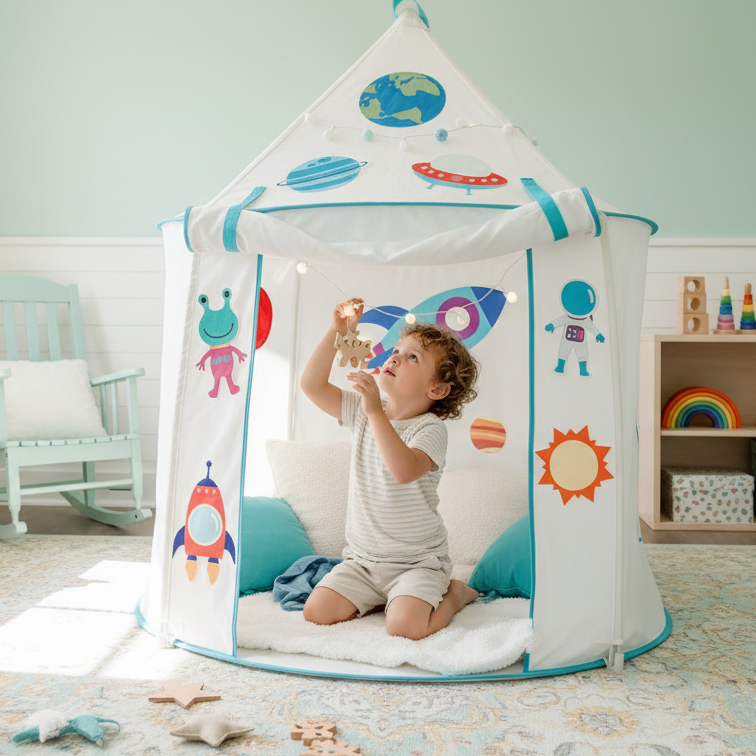
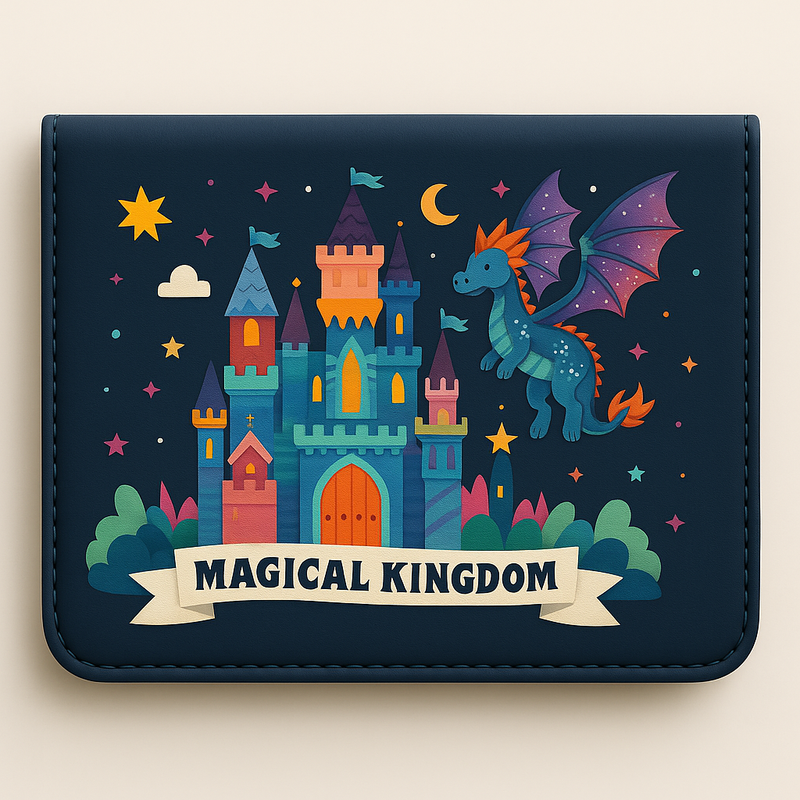
This philosophy is reflected in ZeeZee Adventures, which was created to support child-led, screen-free imaginative play rather than a single fixed storyline. With interchangeable StickeeZ themes—including outer space, dinosaurs, underwater adventures, magical kingdoms, and more—the same familiar play environment can evolve alongside a child's changing interests. Instead of replacing imagination with pre-written narratives, adaptable environments encourage children to invent their own characters, solve their own problems, and create new adventures every time they play. That flexibility helps children remain engaged longer while strengthening creativity, independence, and problem-solving through open-ended exploration.
Whether that imaginative world begins inside a play tent, beneath a dining table draped with blankets, or in the corner of a living room doesn't matter nearly as much as the freedom children feel within it.
Because the greatest learning doesn't come from the setting.
It comes from the stories children create inside it.
Everyday Pretend Play Ideas That Build Real-Life Skills
Pretend play doesn't require expensive toys, elaborate costumes, or a dedicated playroom.
In fact, some of the richest imaginative experiences begin with the simplest materials.
A cardboard box.
A blanket.
A few stuffed animals.
A handful of wooden blocks.
The goal isn't to create the perfect activity.
It's to create opportunities where children can ask,
"What could happen next?"
Here are some simple ways to encourage meaningful pretend play at home.
Create a Pretend Restaurant
Gather a few bowls, spoons, recycled food containers, and notepads.
Let your child become the chef, server, or customer.
Soon they'll be:
-
Taking orders
-
Solving customer problems
-
Counting pretend money
-
Negotiating menu changes
-
Inventing new recipes
They're practicing communication, planning, creativity, and flexible thinking—all while "serving dinner."
Open an Animal Rescue Center
Stuffed animals make wonderful patients.
Invite your child to:
-
Diagnose injuries
-
Build animal homes
-
Create treatment plans
-
Comfort frightened animals
-
Reunite lost pets with their families
This type of role-play encourages empathy, nurturing behaviors, and emotional understanding.
Build an Expedition
Using cushions, blankets, chairs, and boxes, children can create:
-
A jungle
-
An Arctic research station
-
A pirate island
-
A mountain expedition
-
An underwater laboratory
-
A safari adventure
Along the way, they'll naturally encounter imaginary problems that require creative solutions.
Become Story Builders
Instead of reading a story and putting the book away, continue the adventure.
Ask questions like:
-
"What happened after the last page?"
-
"Could you visit that world?"
-
"What would your character do there?"
-
"Can we build the setting together?"
Books become inspiration rather than the ending.
Everyday Objects Become Extraordinary
Children rarely need realistic props.
Encourage them to transform ordinary household items.
For example:
-
A scarf becomes a superhero cape.
-
A wooden spoon becomes a microphone.
-
A laundry basket becomes a race car.
-
A cardboard tube becomes a telescope.
-
A blanket becomes an ocean.
-
Cushions become mountains.
The object stays the same.
The child's imagination does the rest.
Myth vs. Fact
|
Myth |
Fact |
|
Pretend play is just entertainment. |
Pretend play develops problem-solving, creativity, emotional regulation, communication, and executive functioning. |
|
Children need expensive toys to play imaginatively. |
Everyday household objects often inspire richer pretend play than highly specialized toys. |
|
Adults should direct pretend play to make it educational. |
Children learn most when they lead the story and adults support rather than control it. |
|
Pretend play ends in preschool. |
Imaginative thinking continues to support creativity, innovation, and flexible thinking throughout childhood. |
|
Screen-based entertainment provides the same benefits as pretend play. |
Digital entertainment and pretend play develop different skills. Pretend play uniquely encourages children to create rather than consume. |
Action Checklist
Use these simple habits to encourage richer pretend play every day.
✅ Protect time for uninterrupted, child-led play.
✅ Keep open-ended materials easily accessible.
✅ Resist solving every imaginary problem.
✅ Ask open-ended questions like, "What do you think happens next?"
✅ Welcome creativity, even when it becomes a little messy.
✅ Rotate pretend-play props instead of constantly buying new toys.
✅ Read stories that inspire imaginative adventures.
✅ Balance structured activities with free play.
✅ Celebrate original ideas instead of perfect outcomes.
✅ Join the story when invited—but let your child remain the director.
Remember:
Children don't need adults to tell better stories.
They need adults who believe their stories matter.
Frequently Asked Questions
How does pretend play help children solve real problems?
Pretend play allows children to practice planning, experimenting, adapting, communicating, and making decisions in a safe environment. These same thinking skills help them navigate real-life challenges at school, home, and in relationships.
Is pretend play important for brain development?
Yes.
Pretend play strengthens executive functioning, language development, symbolic thinking, creativity, memory, and cognitive flexibility. These abilities support learning across many areas of development.
At what age should children begin pretend play?
Simple pretend play often begins around 18–24 months and becomes increasingly complex throughout the preschool and early school years. Older children also benefit from imaginative storytelling, role-playing, and creative world-building.
Should parents participate in pretend play?
Yes—but as partners rather than directors.
Follow your child's lead, ask curious questions, and allow them to make the important decisions within the story.
My child prefers screens. How can I encourage pretend play?
Start small.
Offer interesting open-ended materials, reduce distractions, and allow time without structured entertainment. Avoid forcing imaginative play—many children begin creating their own stories once they have the space and opportunity to do so.
Can pretend play help shy or anxious children?
For many children, yes.
Pretend play provides a low-pressure environment where they can explore emotions, rehearse social situations, and build confidence without fear of making mistakes. Every child is different, but imaginative play can be a valuable way to practice new ideas and interactions.
Final Thoughts
A child pretending to rescue a rabbit from a dragon isn't avoiding reality.
They're learning how to face it.
They're practicing how to solve problems when things don't go as planned.
They're discovering how to stay calm when challenges appear.
They're learning that every obstacle has more than one possible solution.
These are lessons that no worksheet can fully teach.
Pretend play gives children something uniquely valuable:
A place where mistakes become new storylines.
Where problems invite creativity.
Where curiosity is rewarded.
Where failure simply means trying another idea.
As adults, it's easy to focus on what children are pretending.
A castle.
A spaceship.
A bakery.
A superhero headquarters.
But the setting isn't the most important part.
What's happening inside the child's mind is.
Every imaginary adventure strengthens skills they'll use long after the costumes have been put away and the blanket forts have come down.
The future belongs to people who can adapt, collaborate, communicate, imagine, and solve problems that don't yet have obvious answers.
Those abilities don't suddenly appear in adulthood.
They begin much earlier.
Sometimes they begin with a cardboard box.
Sometimes with a stuffed rabbit.
Sometimes with an imaginary dragon.
And almost always with one simple question:
"What if?"





Comment (0)