
How to Choose Toys That Kids Actually Use
Most parents know the cycle.
A new toy arrives at home. The excitement is immediate. Children open the box enthusiastically, play with it constantly for a few days, and then — almost without warning — the toy disappears into the background. Soon it sits untouched on a shelf or buried at the bottom of a toy basket while attention moves elsewhere.
It can feel frustrating, especially when so much money, effort, and thought often go into choosing toys for children.
Many parents assume children lose interest because they always want something new. But child development research suggests the issue is often more connected to how toys are designed rather than how children behave.
The toys children actually return to again and again tend to share something important in common:
They leave room for imagination.
The toys that last longest are rarely the loudest, most complicated, or most technologically advanced. Instead, they are often the simplest, most flexible, and most open-ended.
Choosing toys thoughtfully is not about buying more.
It is about understanding what truly supports long-term engagement, creativity, emotional development, and independent play.
Why So Many Toys Lose Their Appeal Quickly
Modern toys are often designed to capture attention instantly.
Flashing lights, sounds, buttons, and built-in storylines create immediate excitement because they provide fast stimulation. But while these toys are excellent at attracting attention, they often struggle to hold attention long-term.
Why?
Because many toys have limited possibilities.
A battery-powered toy performs the same action repeatedly. A themed toy follows one predictable storyline. A puzzle has one correct solution. Once children fully understand everything the toy can do, the sense of discovery begins to fade.
Psychologists sometimes refer to this as novelty decay — the natural decline of excitement after repeated exposure to the same experience.
Children are naturally curious and imaginative. When a toy no longer offers opportunities for exploration or creativity, engagement often disappears too.
Why Open-Ended Toys Work Better
The toys children use most consistently are usually open-ended.
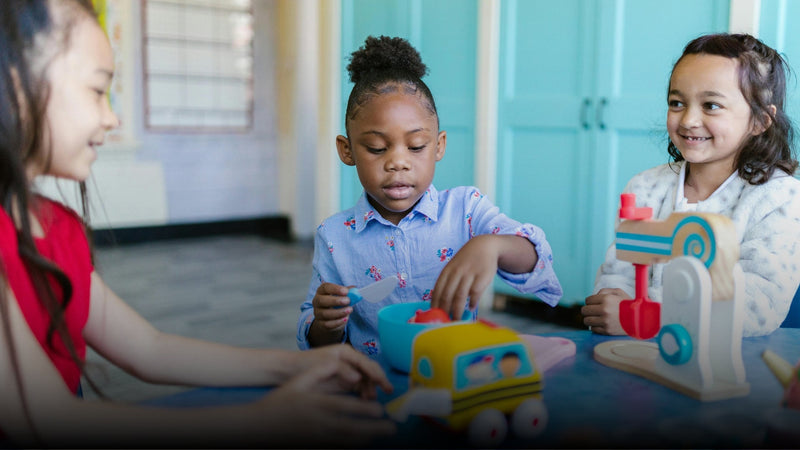
Open-ended toys do not tell children exactly how to play. Instead, they allow children to create their own stories, rules, and possibilities.
Examples include:
- building blocks
- figurines
- dolls
- art supplies
- pretend-play materials
- sensory objects
- dress-up items
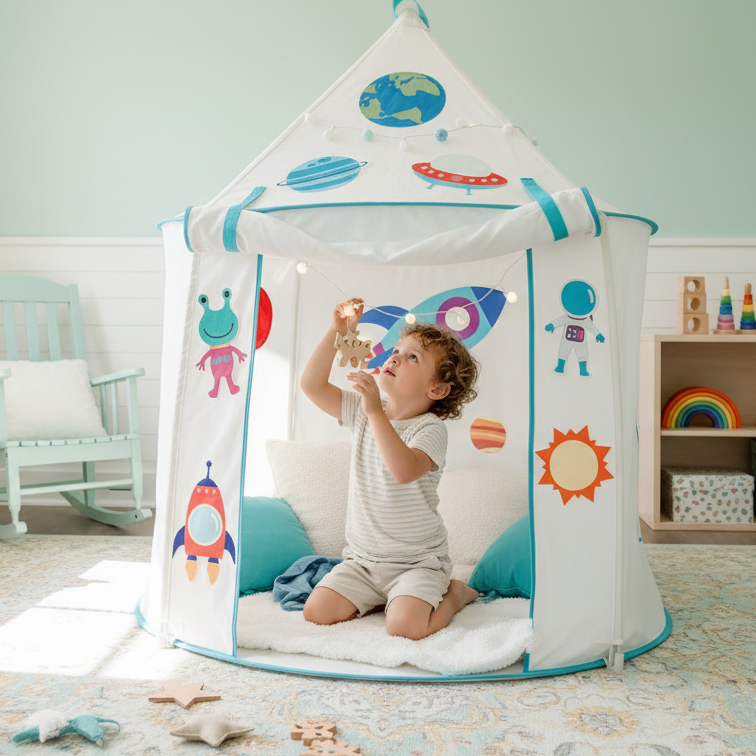
- forts and play tents
These toys remain interesting because the play experience keeps evolving.
A simple blanket fort may become:
- a castle
- a pirate ship
- a secret cave
- a reading nook
- a spaceship
The toy itself stays the same.
The child’s imagination changes the experience.
Because imagination evolves constantly, open-ended toys often remain engaging for years rather than weeks.

The Difference Between Entertainment and Engagement
Many toys are designed primarily for entertainment.
They entertain children by providing stimulation directly through lights, sounds, movement, or technology.
But entertainment and engagement are not the same thing.
True engagement requires participation.
It asks children to:
- create stories
- solve problems
- make decisions
- experiment
- imagine possibilities
When children actively contribute to the experience, the brain remains involved much longer.
This is why children often become deeply immersed in surprisingly simple objects while quickly abandoning expensive electronic toys.
Simple toys encourage children to become creators instead of passive observers.
Why Fewer Toys Often Lead to Better Play
When children seem bored with toys, the instinct is often to buy more.
But research increasingly suggests that too many toys can actually reduce the quality of play.
Highly cluttered play environments can overwhelm children’s attention systems. When too many choices compete for focus, children may move rapidly between toys without becoming deeply engaged in any of them.
Studies have shown that children often:
- play longer
- focus more deeply
- Use more imagination
- Explore toys more creatively
when fewer toys are available.
This does not mean children need empty playrooms.
It means thoughtful selection matters more than quantity.
A smaller number of meaningful, flexible toys often supports better play experiences than shelves overflowing with overstimulating options.
What Makes a Toy Worth Returning To?
The best toys tend to grow alongside the child.
They continue adapting to new interests, developmental stages, and imaginative abilities over time.
When choosing toys, it helps to ask:
Can this toy be used in different ways?
Does it encourage imagination?
Will it still feel interesting in six months?
Can the child actively participate in shaping the play?
Toys with only one fixed purpose often lose appeal faster because children quickly exhaust the available possibilities.
By contrast, open-ended environments and imaginative spaces continue evolving alongside the child’s creativity.
Flexible, imaginative environments such as ZeeZee Adventures naturally support this type of long-term engagement because they become whatever the child imagines. One day the space may become a quiet reading retreat. The next day it transforms into a jungle hideout, a rocket ship, or a storytelling corner.
The environment itself remains adaptable.
That adaptability is what keeps play feeling fresh.
Choose Toys Based on Development, Not Trends
Many toys are marketed aggressively based on trends rather than developmental value.
But children often benefit more from toys that support:
- creativity
- motor skills
- concentration
- storytelling
- problem-solving
- emotional expression
than toys designed purely for novelty or instant excitement.
Developmentally supportive toys usually encourage active participation rather than passive entertainment.
Children generally remain more engaged when they feel mentally involved in the play experience.
Why Imagination Matters More Than Features
Parents are often encouraged to believe that more features automatically make toys better.
In reality, the opposite is frequently true.
The more a toy does for the child, the less room remains for the child’s imagination.
Highly scripted toys can unintentionally limit creativity because the play becomes predictable and repetitive.
Imagination thrives when children are invited to:
- invent stories
- create rules
- explore possibilities
- transform environments
- experiment freely
This is why some of the most loved childhood play experiences involve surprisingly simple materials:
- blankets
- cardboard boxes
- cushions
- forts
- blocks
- dress-up clothes
Children do not necessarily need complicated toys.
They need possibilities.
Why Calm Toys Often Hold Attention Longer
Highly stimulating toys may create excitement quickly, but they can also contribute to shorter attention spans.
When toys constantly flash, move, or make noise automatically, children become passive recipients of stimulation rather than active participants.
Calmer toys often encourage:
- longer concentration
- slower imaginative thinking
- emotional regulation
- deeper engagement
Children frequently settle into more meaningful play when the environment itself feels less overwhelming.
This is especially important in modern childhood, where children are already surrounded by significant amounts of stimulation through screens, fast-paced entertainment, and crowded schedules.
Age Matters When Choosing Toys
Children’s play needs change dramatically across development.
A toddler may benefit most from:
- sensory toys
- stacking materials
- simple pretend-play objects
Preschoolers often engage deeply with:
- imaginative environments
- dress-up
- figurines
- storytelling materials
Older children may prefer:
- creative projects
- advanced building
- role-playing games
- artistic exploration
The best toys evolve alongside these changing developmental needs.
Why Children Need Spaces, Not Just Toys
Sometimes the most meaningful play experiences come not from individual toys, but from environments.
Children often play more deeply when they have:
- cosy corners
- reading nooks
- forts
- imaginative hideaways
- flexible play environments
These spaces create emotional immersion.
Children feel as though they are stepping into a world of their own imagination.
Interestingly, children often engage longer inside smaller imaginative spaces because they feel emotionally safe and protected from distraction.
The environment becomes part of the story itself.
Avoid Toys That Do Everything
Parents are often drawn towards toys with many functions because they seem more exciting or educational.
But toys that “do everything” often leave very little for the child to do mentally.
The best toys usually invite participation rather than replacing it.
Children build stronger developmental skills when they:
- solve problems independently
- invent narratives
- experiment creatively
- direct the play themselves
The child’s imagination should remain the centre of the experience.
Why Boredom Helps Children Choose Better Play
Modern children are rarely bored for long.
Entertainment is almost always immediately available through screens, noisy toys, or constant activities.
But boredom plays an important developmental role.
When children are not externally entertained, the brain begins generating ideas internally. This process stimulates:
- creativity
- storytelling
- imagination
- independent thinking
Often, the best play begins only after boredom.
Children start building forts, inventing characters, or creating imaginary worlds because they are searching for meaningful engagement.
Open-ended toys support this process far better than passive entertainment.
Signs a Toy Will Probably Last Longer
Toys children return to repeatedly often share several qualities.
They:
- can be used differently each time
- encourage imagination
- allow storytelling
- support independent play
- adapt to multiple ages
- invite creativity
- feel emotionally engaging
These toys rarely rely on constant stimulation.
Instead, they invite children to create the stimulation themselves.
That internal engagement is what makes the experience lasting.
A Different Way to Think About Buying Toys
Perhaps the goal is not finding toys that entertain children most intensely.
Perhaps the goal is finding toys that invite children to think, imagine, and create most deeply.
The toys children remember longest are often not the most expensive or technologically advanced.
They are the toys that became part of their stories.
A tent that became a castle.
A box that became a spaceship.
A fort that became an entire imaginary world.
Because ultimately, the toys children use most are usually not the ones that do the most.
They are the ones that leave the most room for imagination.
Frequently Asked Questions
Why do children lose interest in toys quickly?
Children often lose interest when toys have limited possibilities or repetitive interactions. Once the novelty fades, the play experience may no longer feel engaging.
What are open-ended toys?
Open-ended toys are toys that can be used in many different ways depending on the child’s imagination. Examples include blocks, art materials, figurines, and imaginative play spaces.
Do children need fewer toys?
Research suggests children often play more creatively and focus more deeply when they have fewer toys available because it reduces overstimulation.
What kind of toys support creativity best?
Toys that encourage storytelling, imagination, problem-solving, and independent exploration usually support creativity most effectively.
Are electronic toys bad for children?
Not necessarily, but highly stimulating electronic toys can sometimes reduce opportunities for slower imaginative play and deep concentration.
Why do simple toys often last longer?
Simple toys leave more room for imagination, allowing children to continually create new play experiences as they grow.
How can parents choose better toys?
Focus on toys that are flexible, open-ended, developmentally appropriate, and capable of supporting multiple types of play over time.
Why do children love forts and imaginative spaces?
Small imaginative environments often create feelings of emotional safety and immersion, helping children engage more deeply in storytelling and pretend play.
- Baby Registry
- Baby Shower
- Best gifts
- best play tent
- Best toys
- Best toys 2025
- Best toys 2026
- Blog
- calming toys
- child development
- children
- christmas gift ideas
- customizable play tent
- Holidaygiftguide
- jeanpiaget
- kids play tent
- Montesoori
- montessori
- Montessori Gifts
- Montessori play
- open-endedplay
- openendedplay
- parenting
- parents
- play tent
- Play Tents
- playroom inspo
- pretend play
- sahm
- Sensory Play
- sensory play gifts
- teepee play tent
- toddler toys
- tonies
- toyclutter
- toys
- ZeeZee
- ZeeZee Adventure
- ZeeZee Adventure Tent
- ZeeZee Adventures




Comment (0)