
How to Create an Open-Ended Play Space at Home
Quick Answer
An effective open-ended play space doesn't need to be large or filled with expensive toys. The best play environments are simple, flexible, and accessible, giving children the freedom to imagine, explore, and create their own adventures. By choosing versatile materials, minimizing distractions, and allowing children to lead their play, parents can create a space that supports creativity, confidence, problem-solving, and independent learning every day.
Introduction
When many parents imagine the perfect playroom, they picture beautifully designed spaces filled with shelves of toys, colorful furniture, and every activity a child could possibly want.
It looks inspiring.
Organized.
Picture-perfect.
But if you watch children closely, something interesting happens.
They often ignore the expensive toy.
Instead, they become completely absorbed by a cardboard box.
A pile of cushions.
A blanket draped over two chairs.
A basket filled with scarves.
A few wooden blocks.
Suddenly the living room becomes an airport.
Then a dinosaur museum.
Then a secret hideout hidden deep in the jungle.
The space itself hasn't changed.
Only the child's imagination has.
This is one of the most important lessons about child development:
Children don't need elaborate environments to play creatively.
They need environments that invite imagination rather than direct it.
An open-ended play space isn't designed to tell children what to do.
It doesn't provide one story.
One activity.
Or one correct outcome.
Instead, it offers possibilities.
It permits children to ask:
"What could this become?"
That simple question changes everything.
Instead of following instructions, children become storytellers, builders, explorers, inventors, artists, engineers, and problem-solvers.
The environment quietly supports their ideas without taking control of them.
As a pediatric occupational therapist, one of the most common concerns I hear from parents is:
"I don't think we have enough space."
Or:
"I can't afford a beautiful playroom."
The reassuring news is this:
Children don't measure a play space by its size.
They measure it by its possibilities.
Whether you live in a small apartment, a busy family home, or somewhere in between, you can create an environment that encourages creativity, independence, and meaningful play.
In this guide, you'll learn how to design an open-ended play space that grows with your child, supports healthy development, and inspires countless imaginative adventures—without requiring an entire room or an overflowing collection of toys.
Why the Play Environment Matters
Children don't play in isolation.
They respond to the environments around them.
A thoughtfully designed space can quietly encourage curiosity, creativity, and independence before a single toy is picked up.
Likewise, a cluttered, overstimulating, or difficult-to-use environment can unintentionally make play feel overwhelming.
The goal isn't to create a magazine-worthy playroom.
It's to create an environment that says:
"You're free to explore here."
Children are naturally curious.
When materials are visible, accessible, and easy to use, they're far more likely to begin playing independently.
When everything is stored out of reach or hidden inside overflowing toy bins, children often become dependent on adults to decide what comes next.
The environment becomes a silent teacher.
It communicates whether children are expected to observe…
Or participate.
Whether they should follow instructions…
Or invent their own.
Small design choices can make a surprisingly large difference.
For example:
-
Low shelves encourage independence.
-
Clearly organized materials reduce frustration.
-
Open floor space invites movement and construction.
-
Cozy corners encourage storytelling and quiet play.
-
Flexible materials inspire imagination.
These elements don't entertain children.
They empower them.
And that's a very different goal.
Expert Insight
Occupational therapists often describe the environment as a "third teacher" because it influences how children move, explore, interact, and learn. A well-designed play space doesn't replace adult guidance—it creates opportunities for children to practice independence, creativity, and problem-solving through everyday experiences.
What Makes a Play Space "Open-Ended"?
Not every playroom encourages open-ended play.
Two rooms can contain the same number of toys and look equally inviting, yet inspire completely different experiences.
The difference isn't usually the furniture.
It's the philosophy behind the space.
An open-ended play space is designed around one simple principle:
Children lead the play.
The environment supports their imagination instead of directing it.
Rather than encouraging children to complete one activity and move on, the space invites them to create, experiment, revisit ideas, and transform materials in countless different ways.
Imagine walking into two different playrooms.
In the first, every activity has a single intended purpose.
A button lights up.
A puzzle has one solution.
A craft kit produces one finished picture.
The toys are entertaining—but the possibilities are limited.
Now imagine another room.
There are blocks.
Scarves.
Cardboard tubes.
Wooden animals.
Blankets.
Art materials.
Loose parts.
Nothing announces exactly what it should become.
The child decides.
That freedom changes the entire learning experience.
Instead of asking,
"What does this toy do?"
Children begin asking,
"What could I do with this?"
That single shift encourages creativity, flexible thinking, confidence, and independent problem-solving.
An open-ended play space isn't defined by the number of toys it contains.
It's defined by the number of possibilities it creates.
The Five Principles of an Open-Ended Play Space
Whether you're transforming an entire playroom or creating a small play corner in your living room, these five principles can help guide every decision.
1. Flexibility Over Perfection
Children's interests change constantly.
Yesterday they were fascinated by dinosaurs.
Today they're astronauts.
Tomorrow they may become veterinarians.
A good play space grows alongside these changing interests instead of locking children into one permanent theme.
Choose materials that can become many different things rather than serving only one purpose.
A simple basket of scarves can become superhero capes, picnic blankets, rivers, tents, costumes, or magical forests.
The more flexible the materials, the richer the imagination.
2. Accessibility Encourages Independence
Children play more confidently when they can reach their own materials.
Low shelves.
Open baskets.
Clearly visible toys.
Simple organization.
These small choices encourage children to begin playing without waiting for adult assistance.
When children can choose materials independently, they also begin taking greater ownership of their play.
3. Simplicity Inspires Creativity
It may seem surprising, but fewer toys often lead to deeper play.
When children are surrounded by too many choices, they can become overwhelmed.
A carefully selected collection of versatile materials encourages longer attention spans and more meaningful exploration.
Simple doesn't mean empty.
It means intentional.
4. Comfort Supports Longer Play
Children are more likely to remain deeply engaged when a space feels welcoming.
Soft lighting.
Comfortable seating.
Floor cushions.
Cozy reading nooks.
Quiet corners.
These elements create an environment where children feel safe to settle into imaginative play without constant interruption.
5. The Child Is the Creator
Perhaps the most important principle is remembering who the space is actually for.
Adults often focus on making a playroom look beautiful.
Children focus on what they can imagine inside it.
An open-ended play space isn't meant to impress visitors.
It's meant to inspire children.
When the environment encourages curiosity instead of perfection, children begin creating worlds far more extraordinary than anything adults could design for them.
In the next section, we'll explore exactly how to build an open-ended play space—from choosing the right location and organizing materials to selecting toys that encourage creativity, independence, and lifelong learning.
Step 1: Choose the Right Location
One of the biggest misconceptions about creating an open-ended play space is that it requires an entire room.
It doesn't.
Children don't measure a play space by its square footage.
They measure it by how inviting it feels.
Some of the most imaginative play happens in:
-
A quiet corner of the living room
-
An unused space beneath the stairs
-
Part of a bedroom
-
A sunny corner near a window
-
A section of the family room
-
Even a hallway nook transformed with a few thoughtful additions
The goal isn't to separate children from the rest of the family.
In fact, younger children often play longer when they know a trusted adult is nearby.
This concept is sometimes called secure independence.
Children feel confident exploring because they know support is available if they need it.
Rather than asking,
"Where can I build a playroom?"
Ask yourself,
"Where does my child naturally enjoy spending time?"
That location is often the perfect place to begin.
Look at Your Home Through Your Child's Eyes
Spend a few minutes sitting on the floor.
Notice what your child sees.
Can they reach their books?
Can they choose toys independently?
Is there enough floor space to build?
Can they leave a project unfinished and return later?
Children are far more likely to begin imaginative play when they don't need adult permission for every small decision.
The environment should quietly communicate:
"You're welcome to create here."
Expert Insight
Children develop greater independence when they can access and put away their own play materials. A thoughtfully arranged environment reduces unnecessary dependence on adults while encouraging confidence and self-directed exploration.
Step 2: Keep the Space Simple, Not Empty
Many parents assume that adding more toys will automatically create better play.
In reality, the opposite is often true.
Children can become overwhelmed when they're surrounded by too many choices.
Imagine walking into a library where every single book has been pulled off the shelves and scattered across the floor.
Finding one story becomes difficult.
Playrooms can feel the same way.
When dozens of toys compete for attention, children may jump quickly from one activity to another without becoming deeply engaged.
A simpler environment helps children focus.
It encourages them to stay with one idea long enough for creativity to develop.
Instead of asking,
"What should I play with?"
They begin asking,
"What can I create with this?"
The "Less, But Better" Approach
Rather than displaying everything at once, consider offering a smaller collection of versatile materials.
For example:
-
A basket of blocks
-
A few pretend-play props
-
Art supplies
-
Loose parts
-
Books
-
One building set
Keeping the selection intentional helps children notice possibilities instead of feeling overwhelmed by options.
You don't need fewer opportunities for play.
You need fewer distractions.
Step 3: Choose Materials That Grow With Your Child
One of the defining characteristics of an open-ended play space is flexibility.
The best materials don't tell children exactly what they should become.
Instead, they encourage children to decide.
Think about the difference between a toy spaceship and a cardboard box.
A toy spaceship will almost always remain a spaceship.
A cardboard box can become almost anything.
That's the power of open-ended materials.
They adapt to a child's imagination instead of limiting it.
Examples of Open-Ended Play Materials
Building Materials
-
Wooden blocks
-
Magnetic tiles
-
Cardboard boxes
-
Cardboard tubes
-
Cork blocks
-
Large foam blocks
These materials encourage engineering, spatial awareness, creativity, and problem-solving.
Loose Parts
Loose parts are everyday objects that children can move, combine, redesign, and use in countless different ways.
Examples include:
-
Pinecones
-
Shells
-
Stones
-
Bottle caps
-
Wooden rings
-
Fabric scraps
-
Popsicle sticks
-
Natural branches
Because there isn't one "correct" use, loose parts encourage experimentation and innovation.
Pretend Play Props
Simple props inspire storytelling.
Consider including:
-
Scarves
-
Hats
-
Toy animals
-
Dolls
-
Puppets
-
Play food
-
Empty containers
-
Wooden spoons
-
Old telephones
-
Recycled packaging
Children rarely need realistic toys to tell meaningful stories.
Sometimes the simplest objects inspire the richest adventures.
Art Materials
Choose materials that encourage creation rather than copying.
For example:
-
Blank paper
-
Washable paints
-
Crayons
-
Colored pencils
-
Clay
-
Glue
-
Safety scissors
-
Recycled craft materials
Instead of asking children to recreate an example, invite them to invent something entirely their own.
Books
Books deserve a place in every open-ended play space.
Stories naturally inspire imaginative play.
A book about dinosaurs may become a week-long excavation adventure.
A story about the ocean might inspire underwater exploration using blankets and cushions.
Books don't end when reading finishes.
They often become the beginning of play.
Step 4: Organize Materials So Children Can Use Them Independently
A beautifully designed play space loses much of its value if children can't find—or return—their own materials.
Good organization isn't about perfection.
It's about independence.
Children should be able to:
-
See what is available.
-
Reach it safely.
-
Choose it independently.
-
Put it away with minimal help.
This encourages responsibility while reducing interruptions during play.
Use Open Storage
Clear baskets.
Low shelves.
Wooden crates.
Fabric bins.
These make materials visible and inviting.
Avoid deep toy boxes where favorite items disappear beneath piles of other toys.
When children can see what they have, they're more likely to use it creatively.
Group Similar Materials Together
Simple organization helps children think more clearly.
For example:
Building Area
-
Blocks
-
Magnetic tiles
-
Cardboard tubes
Creative Area
-
Paper
-
Paint
-
Glue
-
Markers
Pretend Play Area
-
Costumes
-
Scarves
-
Toy animals
-
Kitchen items
Children quickly learn where everything belongs, making both play and clean-up easier.
Leave Room for "Works in Progress"
Not every masterpiece needs to be packed away immediately.
Children often return to the same imaginative story over several days.
A castle may become a city tomorrow.
The city might become a zoo by the weekend.
Whenever possible, leave space for unfinished creations.
Returning to previous ideas encourages deeper thinking, longer attention spans, and more complex storytelling.
Expert Insight
Deep play often develops over multiple sessions rather than in a single afternoon. Allowing children to revisit unfinished projects supports planning, memory, creativity, and sustained attention.
Step 5: Reduce Distractions So Imagination Can Lead
Children's attention is naturally drawn toward movement, flashing lights, and constant stimulation.
If every toy sings, lights up, or announces exactly how it should be used, there is less space for children to contribute their own ideas.
This doesn't mean electronic toys have no place.
It simply means they shouldn't dominate the environment.
Instead, let the child become the most active part of the play experience.
Create a space where imagination is louder than the toys.
Simple ways to reduce distractions include:
-
Keeping screens out of the primary play area whenever possible.
-
Rotating toys instead of displaying everything at once.
-
Limiting background television during playtime.
-
Choosing calm lighting over overly bright or flashing lights.
-
Allowing moments of quiet without feeling the need to constantly entertain.
A peaceful environment gives children room to think, imagine, and stay engaged for longer periods.
When fewer distractions compete for their attention, children often discover that the most exciting adventures come from their own ideas—not from the toy itself.
Step 6: Design for Imagination, Not Entertainment
When parents create a play space, it's natural to think about making it exciting.
Bright colors.
Interactive toys.
The latest gadgets.
Walls covered in decorations.
But children don't need a room that constantly entertains them.
They need a space that inspires them.
There's an important difference.
An entertaining environment captures attention.
An imaginative environment invites participation.
In one, the toys do most of the work.
In the other, the child does.
That's where deeper learning begins.
A thoughtfully designed play space leaves room for unfinished ideas.
It doesn't answer every question.
It encourages children to ask their own.
Instead of filling every corner with activities, leave open space for building, pretending, creating, and experimenting.
Sometimes the most valuable part of a playroom isn't another toy.
It's the empty floor waiting to become something extraordinary.
Leave Space for Big Ideas
Children don't just play with objects.
They play with space.
A clear section of floor can become:
-
A train station
-
A jungle
-
A hospital
-
A city
-
A campsite
-
A pirate island
Large open areas encourage movement, collaboration, and construction.
Avoid arranging furniture so tightly that children feel confined to one small activity.
Flexibility is one of the greatest strengths of an open-ended play environment.
Add Cozy Spaces
Not every adventure is loud.
Some of the richest imaginative play happens in quiet moments.
A small reading corner.
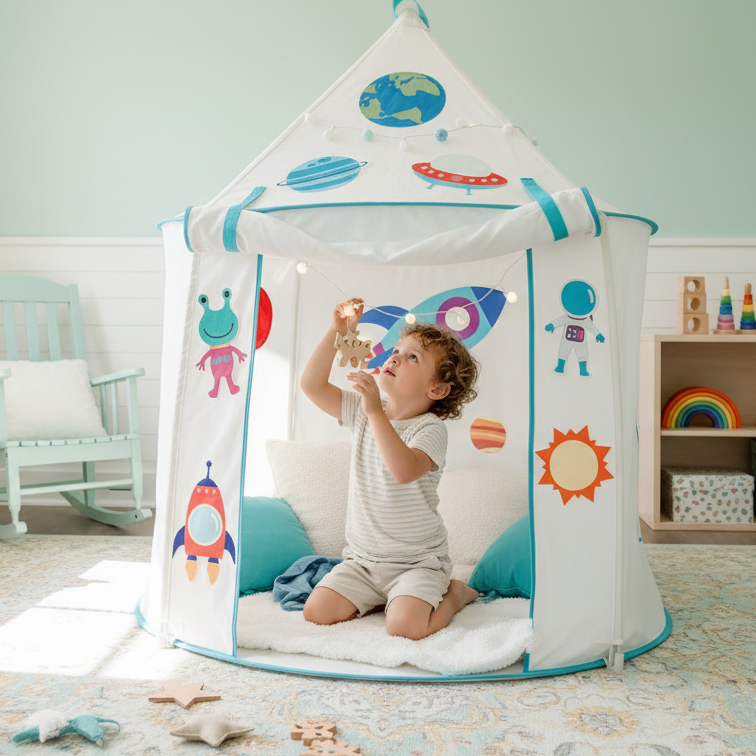
A canopy draped over cushions.
A soft rug beside a bookshelf.
A tent-like hideaway.
These cozy areas provide children with places to:
-
Read independently
-
Tell stories
-
Calm their bodies
-
Process emotions
-
Engage in quiet pretend play
Children often move naturally between active and calm play throughout the day.
A well-designed environment supports both.
Expert Insight
Children engage in deeper imaginative play when they feel emotionally safe and physically comfortable. Calm, inviting spaces reduce overstimulation and allow children to remain focused on their own ideas for longer periods.
Step 7: Create a Space That Evolves With Your Child
One of the biggest mistakes parents make is designing a play space around a single interest.
Perhaps your child loves dinosaurs today.
So the entire room becomes dinosaur-themed.
Six months later?
They're fascinated by astronauts.
Then pirates.
Then veterinarians.
Then castles.
Then dragons.
Childhood interests change quickly.
Your play space should be flexible enough to change with them.
Instead of redesigning the room every few months, build a foundation that adapts.
Think of the environment as a stage.
The stories will naturally change.
The stage simply supports them.
Rotate Materials Instead of Buying More
Many families feel pressure to constantly purchase new toys.
In reality, children often rediscover familiar materials when they're presented differently.
Consider rotating:
-
Books
-
Building materials
-
Loose parts
-
Pretend play props
-
Art supplies
Every few weeks, put some materials away and bring others back.
To adults, they may seem familiar.
To children, they often feel wonderfully new again.
Toy rotation isn't about limiting play.
It's about refreshing curiosity.
Follow Your Child's Interests
Observe rather than direct.
Ask yourself:
What stories does my child keep returning to?
What materials do they naturally choose?
What captures their attention for the longest time?
These observations provide valuable clues.
Instead of designing the play space around trends, design it around your child.
When children feel ownership over their environment, they naturally engage more deeply.
Open-Ended Play in Small Homes
One of the most reassuring truths about open-ended play is this:
You don't need a dedicated playroom to create meaningful play experiences.
Some of the most imaginative children grow up in small apartments, shared bedrooms, or homes with limited space.
What matters isn't the size of the room.
It's how thoughtfully it's used.
Small Space Ideas
If space is limited, try:
A Mobile Play Basket
Keep a basket filled with open-ended materials that can move from room to room.
Include:
-
Scarves
-
Wooden blocks
-
Toy animals
-
Art supplies
-
Loose parts
-
Storytelling props
When playtime begins, the basket becomes the playroom.
Fold-Away Play Spaces
Use foldable mats, lightweight furniture, or portable play elements that can be packed away after use.
This keeps family living spaces functional while still encouraging imaginative play.
Vertical Storage
Low shelves aren't the only option.
Wall-mounted bookshelves.
Hanging organizers.
Small baskets.
Hooks for costumes.
These keep materials accessible without taking up valuable floor space.
Outdoor Extensions
If indoor space is limited, let nature become part of the play environment.
Parks.
Gardens.
Backyards.
Balconies.
Even a small outdoor area provides opportunities for:
-
Nature collecting
-
Pretend camping
-
Building
-
Water play
-
Storytelling
Children rarely distinguish between indoor imagination and outdoor imagination.
Both become part of the same adventure.
Common Mistakes Parents Make
Creating an open-ended play space doesn't require perfection.
But there are a few common habits that can unintentionally limit children's creativity.
Recognizing these makes it easier to create a space that truly supports child-led play.
Mistake 1: Too Many Toys
More toys don't necessarily create more play.
They often create more decisions.
Children benefit from thoughtfully selected materials rather than overwhelming choices.
Quality and versatility usually matter more than quantity.
Mistake 2: Expecting Everything to Stay Tidy
Creative play is naturally dynamic.
Blocks spread across the floor.
Blankets become forts.
Art supplies migrate to unexpected places.
A perfectly tidy room isn't always a sign of meaningful play.
Sometimes a room full of ideas looks a little messy.
Mistake 3: Interrupting Too Often
Children need uninterrupted time to enter deep imaginative play.
Frequent interruptions can break concentration and shorten creative thinking.
Whenever possible, allow children to finish their stories before stepping in.
Mistake 4: Solving Every Problem
If a tower falls or a fort collapses, resist fixing it immediately.
Instead, ask:
"What could you try?"
"What do you notice?"
Problem-solving grows through experience—not instant solutions.
Creating a Space That Grows With Imagination
Perhaps the most important principle is remembering that children don't simply play in a space.
They build relationships with it.
When a play environment remains flexible, familiar, and adaptable, children return to it with new ideas instead of needing something entirely new every week.
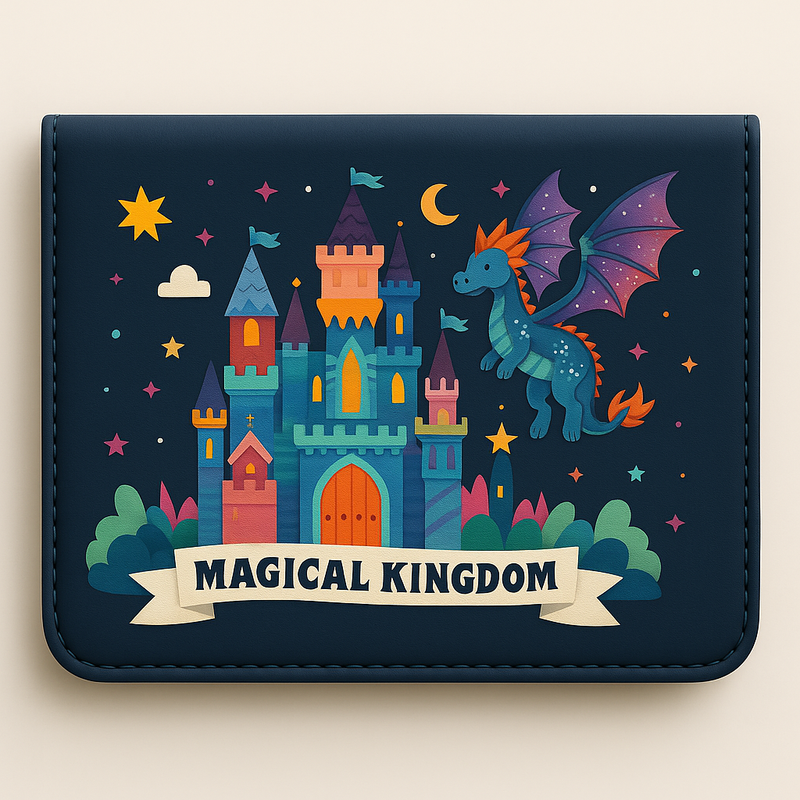
This is the philosophy behind ZeeZee Adventures. Rather than creating a play space centered around a single story, ZeeZee was designed as an imaginative environment that evolves with children over time. Through interchangeable StickeeZ themes—from dinosaurs and magical kingdoms to outer space and ocean adventures—the same familiar play space can transform alongside a child's changing interests while still providing the comfort of a place that feels uniquely their own. This adaptable approach encourages longer periods of independent, screen-free, child-led play by giving children endless opportunities to reinvent their adventures.
Whether your child's imaginative world is built inside a dedicated play tent, a cozy reading nook, or a blanket fort in the living room, the underlying principle remains the same:
The environment shouldn't tell children what to imagine.
It should give them the freedom to imagine anything.
In the final section, we'll bring everything together with a room-by-room inspiration guide, a practical action checklist, frequently asked questions, and simple next steps for creating an open-ended play space that grows with your child.
Room-by-Room Ideas for an Open-Ended Play Space
An open-ended play environment isn't limited to a dedicated playroom. With a little creativity, almost any area of your home can become a place where imagination flourishes.
The goal isn't to recreate a Pinterest-perfect room.
It's to create spaces that quietly invite children to wonder,
"What could I create here?"
Here are a few ideas for different areas of the home.
Living Room
The living room is often where families spend the most time together, making it an excellent place for independent play.
Consider including:
-
A basket of blocks or magnetic tiles
-
A few favorite books
-
Loose parts in small containers
-
Floor cushions
-
Blankets for fort building
-
A tray with drawing materials
Keeping materials neatly organized but easily accessible allows children to begin imaginative play while remaining close to the family.
Bedroom
A child's bedroom doesn't need to hold every toy they own.
Instead, think of it as a calm retreat for creativity.
Ideas include:
-
A cozy reading corner
-
A small art station
-
Soft lighting
-
Open shelving with a limited selection of toys
-
Space for pretend play
-
Floor area for building
A less cluttered bedroom often supports calmer, more focused play.
Playroom
If your family has a dedicated playroom, resist the temptation to fill every wall and shelf.
Instead, organize the room into flexible zones.
Building Zone
-
Blocks
-
Magnetic tiles
-
Loose construction materials
Pretend Play Zone
-
Dress-up clothes
-
Scarves
-
Toy animals
-
Kitchen items
-
Puppets
Creative Zone
-
Paper
-
Paint
-
Clay
-
Recycled craft materials
Reading Corner
-
Books
-
Floor cushions
-
Soft blanket
-
Comfortable chair
Keeping each area simple allows children to combine materials freely rather than feeling restricted to one activity.
Outdoor Space
Nature may be the ultimate open-ended play environment.
Even a small backyard, balcony, or nearby park offers opportunities for endless exploration.
Encourage activities such as:
-
Nature collecting
-
Building with sticks
-
Water play
-
Mud kitchens
-
Treasure hunts
-
Rock painting
-
Leaf collages
Natural materials rarely dictate how they should be used.
Children supply the imagination.
Action Checklist
Creating an inspiring play environment doesn't require perfection.
Start small.
Make changes gradually.
Use this checklist to guide your progress.
✅ Choose a location where your child naturally enjoys spending time.
✅ Keep toys visible and easy to reach.
✅ Reduce clutter by displaying fewer, more versatile materials.
✅ Include open-ended items such as blocks, scarves, cardboard boxes, loose parts, and art supplies.
✅ Create both active and quiet play areas.
✅ Rotate materials every few weeks instead of constantly buying new toys.
✅ Leave space for unfinished projects.
✅ Allow children to choose how they play.
✅ Welcome a little mess as part of creative exploration.
✅ Observe your child's interests and let the environment evolve alongside them.
Remember:
The best play spaces aren't finished.
They're always growing with the child.
Frequently Asked Questions
What is an open-ended play space?
An open-ended play space is an environment designed to encourage child-led exploration rather than predetermined activities.
Instead of telling children exactly what to do, it provides flexible materials that can be used in many different ways, encouraging creativity, problem-solving, and independent thinking.
Do I need a dedicated playroom?
Not at all.
Many families successfully create open-ended play spaces in living rooms, bedrooms, shared family spaces, or even small apartment corners.
The quality of the environment matters far more than its size.
What toys are best for an open-ended play space?
Look for materials that encourage multiple uses rather than one fixed purpose.
Examples include:
-
Wooden blocks
-
Magnetic tiles
-
Loose parts
-
Cardboard boxes
-
Scarves
-
Dolls and animals
-
Art materials
-
Books
-
Natural objects
Versatility is often more valuable than complexity.
How many toys should I keep out?
There isn't one perfect number.
However, many children become more engaged when presented with a carefully chosen selection rather than an overwhelming collection.
Rotating toys regularly helps maintain interest while reducing visual clutter.
How do I encourage independent play?
Start by creating an accessible environment.
Allow children to choose their own materials.
Avoid interrupting unnecessarily.
Offer encouragement instead of instructions.
Most importantly, give children uninterrupted time to become deeply engaged in their own ideas.
Can an open-ended play space work for siblings of different ages?
Yes.
Open-ended materials naturally adapt to different developmental stages.
A toddler may stack blocks while an older sibling uses the same blocks to build a castle or design an entire city.
Because there isn't one correct way to play, children of different ages can often enjoy the same materials together.
Final Thoughts
Parents often believe that creating a better play environment means buying more.
More toys.
More storage.
More decorations.
More activities.
But meaningful play rarely begins with "more."
It begins with possibility.
Children don't need rooms filled with entertainment.
They need spaces that invite exploration.
Places where a blanket can become a cave.
Where a cardboard box becomes a spaceship.
Where a handful of wooden blocks transforms into a bustling city.
These aren't just games.
They're opportunities for children to practice creativity, confidence, communication, emotional regulation, and problem-solving in ways that feel joyful and meaningful.
The beauty of an open-ended play space is that it grows alongside your child.
Today's veterinarian clinic may become tomorrow's pirate ship.
Next week's bakery might become a dinosaur museum.
The environment remains familiar.
The adventures never stop changing.
You don't need the biggest house.
You don't need the most expensive toys.
You don't even need a perfect playroom.
What children remember most isn't how beautifully a space was decorated.
They remember how it made them feel.
Safe enough to explore.
Confident enough to create.
Curious enough to ask, "What if?"
And sometimes, that's all an extraordinary childhood really needs.





Comment (0)