
How to Improve Your Child’s Attention Span Naturally
Attention has become one of the most discussed challenges in modern childhood.
Parents frequently describe the same concerns. A child moves quickly from one activity to another, struggles to stay focused during tasks, loses interest easily, or becomes restless within minutes. In a world filled with constant stimulation, shortened attention spans are often treated as inevitable.
Yet child development research suggests something important: attention is not simply an inborn trait. It is a skill shaped by environment, experience, routine, and the quality of engagement children have with the world around them.
The encouraging reality is that attention can be strengthened naturally. Not through pressure or rigid control, but through thoughtful environments and experiences that allow children to develop focus gradually over time.
The question is not how to force children to concentrate longer. It is how to create conditions where concentration emerges naturally.
Understanding Attention in Childhood
Attention is not a single ability. It is a collection of cognitive skills that develop gradually throughout childhood.
Young children are not designed to focus like adults. Their brains are still developing the systems responsible for impulse control, emotional regulation, memory, and sustained concentration. This means attention naturally grows in stages.
A toddler may only focus on one activity for a few minutes. A preschooler may remain engaged longer when deeply interested. Older children gradually develop the ability to sustain concentration for extended periods.
This developmental process is influenced heavily by the child’s environment. Constant interruptions, overstimulation, and fast-paced entertainment can fragment attention, while calmer, more immersive experiences tend to strengthen it.
Attention grows where depth is encouraged.
Why Modern Environments Make Focus Harder
Modern childhood environments are filled with stimulation.
Screens change rapidly. Toys flash and respond instantly. Notifications, sounds, bright colours, and endless choices constantly compete for attention.
While these experiences are highly engaging, they often train the brain to expect frequent novelty. The result is that slower activities can begin to feel difficult or uninteresting by comparison.
This does not mean technology is inherently harmful. However, when children become accustomed to rapid stimulation, quieter forms of concentration require more effort.
Attention is shaped by what the brain repeatedly experiences.
If children spend most of their time consuming fast-moving input, sustained focus becomes more challenging. If they regularly engage in slower, immersive activities, the brain gradually adapts to deeper concentration.
The Difference Between Engagement and Focus
One of the biggest misunderstandings around attention is confusing engagement with focus.
A child watching a fast-moving cartoon may appear attentive, but the experience is largely passive. The stimulation comes externally, requiring little sustained mental effort.
True focus is different.
Focus requires children to actively direct their attention, solve problems, imagine possibilities, and remain mentally involved without constant external stimulation.
This is why activities such as building, drawing, storytelling, or imaginative play often support attention more effectively than highly stimulating entertainment.
These activities require the child to generate the experience rather than simply consume it.
Why Boredom Matters More Than We Realise
Many parents feel pressure to keep children constantly occupied. Yet boredom plays a surprisingly important role in developing attention.
When children experience moments without immediate stimulation, the brain begins searching for engagement internally rather than externally.
This process encourages:
- imagination
- experimentation
- problem solving
- self-directed focus
Children who always receive instant entertainment rarely experience this transition. Their attention becomes dependent on external stimulation rather than internal curiosity.
Allowing children moments of boredom can initially feel uncomfortable. However, these moments often become the starting point for deeper concentration and creativity.
The Role of Independent Play in Building Focus
Independent play is one of the most powerful ways children naturally develop attention span.
When children engage independently, they control the pace of the experience. They repeat actions, solve problems, invent stories, and remain immersed for longer periods because the play belongs to them.
Research consistently shows that open-ended play supports sustained engagement better than highly structured activities.
This is because open-ended experiences evolve.
A child building with blocks may continue adjusting and experimenting for long periods because there is no fixed endpoint. A pretend-play scenario may continue expanding as the child develops new ideas.
The activity adapts alongside the child’s imagination.
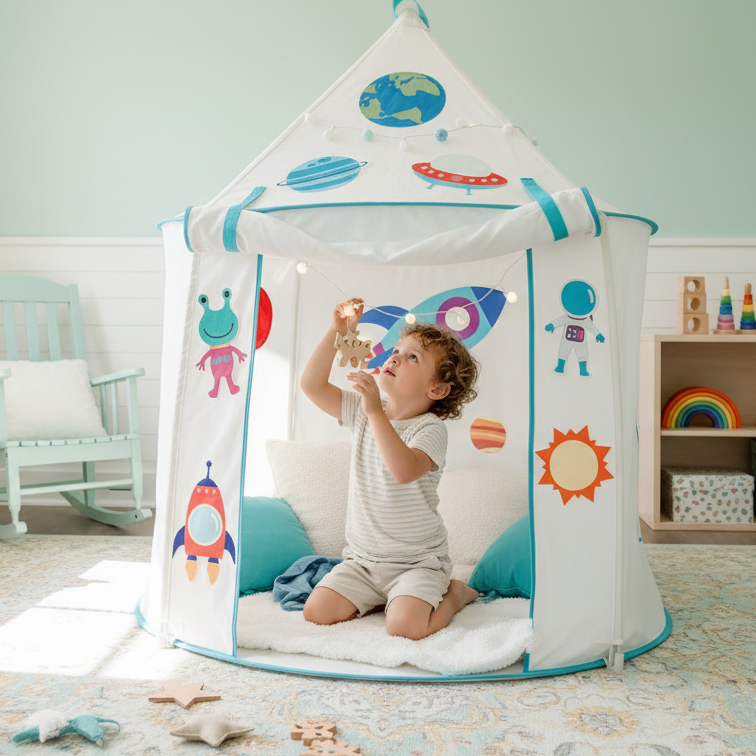
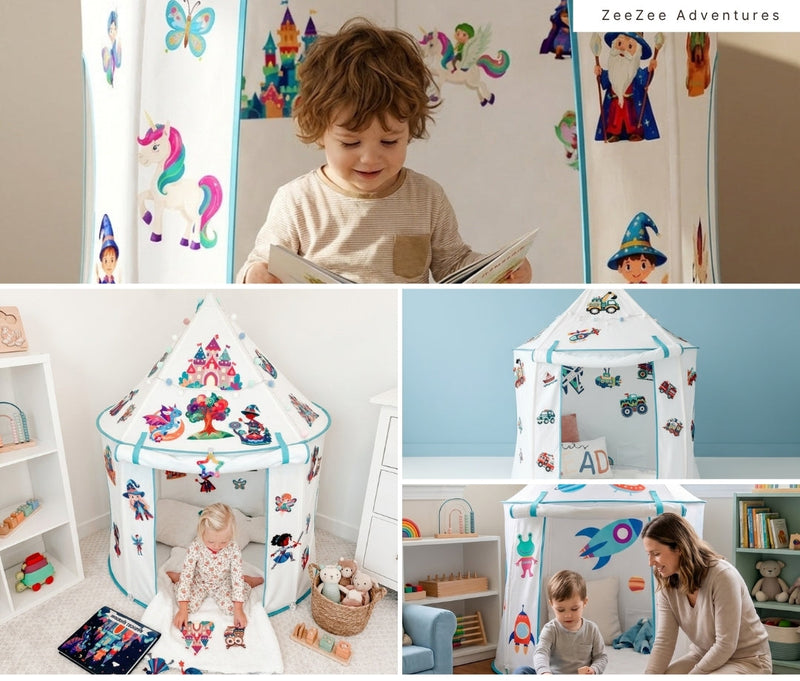
This is one reason why calm, flexible play environments often encourage longer periods of focused engagement. Spaces such as ZeeZee Adventures are particularly effective because they provide an adaptable environment that children can reinterpret repeatedly through storytelling, reading, imaginative play, or quiet retreat.
Rather than directing attention, these environments invite it.
How Physical Environment Affects Attention
Children focus differently depending on the environments around them.
Cluttered, noisy, overstimulating spaces make sustained attention more difficult because the brain must process excessive sensory input.
Calmer environments tend to support concentration more effectively.
Research in environmental psychology suggests that children focus better in spaces with:
- fewer distractions
- softer colour palettes
- organised materials
- defined play or learning areas
- reduced visual noise
This does not mean children need perfectly minimal spaces. However, when everything competes for attention, concentration naturally fragments.
A quieter environment often creates a quieter mind.
Why Open-Ended Toys Improve Concentration
Many modern toys are designed for quick entertainment. They perform actions automatically, provide instant rewards, or direct the child through a fixed experience.
These toys can capture attention immediately, but often struggle to sustain it over time.
Open-ended toys work differently.
Instead of performing for the child, they require the child to participate actively.
Building materials, imaginative play objects, art supplies, and flexible play environments encourage children to remain mentally involved because the experience depends on their ideas.
This active participation strengthens sustained attention naturally.
Reading and Attention Development
Reading remains one of the most effective ways to strengthen attention span.
Unlike rapid digital media, books require children to sustain focus internally. They must imagine scenes, follow narratives, and remain mentally engaged without constant visual stimulation.
Even short reading routines can significantly strengthen concentration over time.
Importantly, reading should not feel forced or pressured. Children engage more deeply when books align with their interests and when reading feels calm and enjoyable rather than performance-driven.
Creating cosy reading spaces can also make a significant difference. Children are more likely to settle into focused reading when the environment feels safe, comfortable, and distraction-free.
The Importance of Slower Activities
Modern culture often celebrates speed and productivity, yet children benefit enormously from slower experiences.
Activities such as:
- drawing
- crafting
- gardening
- puzzles
- imaginative play
- building projects
all encourage sustained concentration because they unfold gradually.
These activities require patience, experimentation, and continued involvement.
Unlike fast entertainment, they do not provide constant novelty. Instead, they reward persistence.
And persistence is one of the foundations of attention.
Why Emotional Regulation Affects Focus
Attention and emotional regulation are deeply connected.
When children feel anxious, overstimulated, overtired, or emotionally overwhelmed, focus naturally declines.
This is why routines matter.
Predictable routines help children feel secure, which allows the brain to allocate more energy towards concentration rather than stress management.
Sleep, physical movement, downtime, and emotional connection all contribute significantly to attention span.
Sometimes improving focus has less to do with concentration exercises and more to do with supporting overall emotional well-being.
The Role of Nature in Attention Restoration
Research increasingly suggests that time spent in nature supports cognitive restoration and attention recovery.
Natural environments provide sensory stimulation that feels calming rather than overwhelming. Trees, water, and outdoor spaces engage attention gently without demanding constant focus.
Children who spend time outdoors often return calmer and more regulated afterwards.
Unstructured outdoor play also encourages curiosity, exploration, and problem-solving in ways that support attention naturally.
Nature slows the pace of experience.
And slower experiences often strengthen concentration.
Why Attention Cannot Be Forced
One of the most important truths about attention is that it rarely develops through pressure alone.
Children forced into prolonged concentration without emotional readiness often become frustrated or resistant.
Attention grows best when children feel:
- curious
- emotionally safe
- internally motivated
- appropriately challenged
The goal is not to demand perfect focus immediately.
It is to gradually build the child’s capacity for immersion.
And immersion happens when experiences feel meaningful.
A Different Way to Think About Focus
Many conversations around attention focus on reducing distraction.
But perhaps the more important question is:
What kinds of experiences naturally encourage children to stay?
Because children are capable of remarkable focus when deeply engaged.
The challenge is not that children cannot concentrate.
It is that modern environments often compete too aggressively for their attention.
When children are given calmer spaces, flexible play, meaningful activities, and opportunities for deep engagement, concentration often develops naturally.
Conclusion
Attention span is not fixed.
It is shaped by environment, experience, routine, and the quality of engagement children encounter every day.
Improving focus naturally does not require rigid systems or constant correction. Often, it involves slowing things down.
Creating calmer environments.
Offering open-ended experiences.
Allowing boredom.
Protecting time for deep play.
Because when children are given the space to engage meaningfully with the world around them, attention stops feeling forced.
It becomes something natural.
And in those moments of deep concentration, imagination, curiosity, and learning begin to flourish together.
- Baby Registry
- Baby Shower
- Best gifts
- best play tent
- Best toys
- birthday gift ideas for 3 year old
- Blog
- calming toys
- child development
- children
- christmas gift ideas
- customizable play tent
- gift for kids ages 3–8
- Holidaygiftguide
- jeanpiaget
- kids play tent
- Montesoori
- montessori
- Montessori Gifts
- Montessori play
- open-endedplay
- openendedplay
- parenting
- parents
- play tent
- Play Tents
- playroom inspo
- pretend play
- sahm
- Sensory Play
- sensory play gifts
- teepee play tent
- toddler toys
- tonies
- toyclutter
- toys
- ZeeZee
- ZeeZee Adventure
- ZeeZee Adventure Tent
- ZeeZee Adventures






Comment (0)