

Struggling With Misbehavior? This Positive Parenting Strategy Can Actually Change It
Modern parenting can often feel exhausting. Many parents are not simply managing tantrums, backtalk, emotional outbursts, sibling conflict, refusal to listen, or endless negotiation — they are attempting to do so while balancing work, overstimulation, screen exposure, social pressure, and constant mental fatigue.
What many families quietly discover, however, is that children’s behaviour is often not improved through harsher punishment, louder discipline, or more control. In many cases, behaviour improves when children feel emotionally safe, deeply connected, understood, and supported through calmer, more intentional parenting approaches.
This is where positive parenting becomes incredibly powerful.
Positive parenting is not permissive parenting. It is not about allowing children to do whatever they want without boundaries. Instead, it is a thoughtful approach centred around emotional regulation, respectful communication, consistent boundaries, and long-term emotional development.
For many parents, this shift changes everything.
Rather than asking:
“How do I stop this behaviour?”
Positive parenting asks:
“What is this behaviour trying to communicate?”
That single shift often changes the entire parent-child dynamic.
Why Misbehavior Is Often Misunderstood
Children are not miniature adults. Their brains are still developing, particularly the areas responsible for emotional regulation, impulse control, patience, reasoning, and communication.
When children become overwhelmed, tired, overstimulated, frustrated, disconnected, hungry, anxious, or emotionally dysregulated, behaviour often becomes the language they use to communicate those feelings.
This does not mean all behaviour should be accepted.
It means behaviour should first be understood.
Many parents unintentionally respond only to the visible behaviour:
- shouting
- hitting
- refusal
- whining
- defiance
- emotional meltdowns
But beneath the behaviour is often:
- overstimulation
- emotional exhaustion
- sensory overwhelm
- lack of connection
- need for autonomy
- difficulty processing emotions
- stress
- unmet developmental needs
Children frequently lack the language to explain these internal experiences.
Instead, they act them out.
The Positive Parenting Strategy That Changes Behaviour
One of the most effective positive parenting strategies is called connection before correction.
This principle sounds simple, but its impact is significant.
Many traditional discipline methods attempt correction first:
“Stop doing that.”
“Go to your room.”
“Enough.”
“Why are you acting like this?”
But when a child is emotionally dysregulated, correction alone rarely reaches them.
Their nervous system is already overwhelmed.
Connection before correction means helping the child feel emotionally safe and regulated first — then guiding behaviour afterwards.
This approach does not remove consequences or boundaries.
It simply recognises that children learn better when they feel calm, connected, and understood.
Why Emotional Safety Matters So Much
Neuroscience increasingly shows that children learn emotional regulation through co-regulation.
In simple terms, children borrow calm from adults.
When adults remain regulated during difficult moments, children gradually learn how to regulate themselves.
However, when adults respond to emotional intensity with more emotional intensity, the child’s nervous system often escalates further.
This is why shouting frequently creates more shouting.
Punishment may stop behaviour temporarily through fear or compliance, but it often does not teach emotional skills.
Positive parenting focuses on skill-building rather than fear-based obedience.
Over time, children begin developing:
- emotional awareness
- communication skills
- empathy
- confidence
- self-regulation
- resilience
- problem-solving abilities
These are long-term life skills, not simply short-term behavioural fixes.
What Connection Before Correction Looks Like in Real Life
Imagine a child throws toys after becoming frustrated.
A traditional response might immediately focus on punishment.
A positive parenting response may sound more like:
“I can see you’re really frustrated right now.”
“I’m here.”
“We’re not throwing toys. Let’s calm down together first.”
Once the child feels calmer, the parent can address boundaries:
“Toys are not for throwing because someone could get hurt.”
“Let’s find another way to show frustration.”
This approach still maintains limits.
But it teaches emotional regulation alongside behaviour.
Why Modern Childhood Is Creating More Behavioural Challenges
Many children today are navigating environments filled with constant stimulation.
Fast-paced entertainment, excessive noise, crowded schedules, screen exposure, limited downtime, and highly stimulating toys can leave children emotionally overloaded.
Parents often notice behavioural struggles increase after:
- long periods of screen time
- busy weekends
- overstimulating environments
- disrupted sleep
- transitions
- emotionally chaotic days
Children need calm spaces far more than many adults realise.
This is partly why more parents are becoming intentional about creating slower, more imaginative environments at home.
Screen-free play, open-ended toys, quiet corners, and sensory-friendly play spaces often help children regulate themselves more naturally.
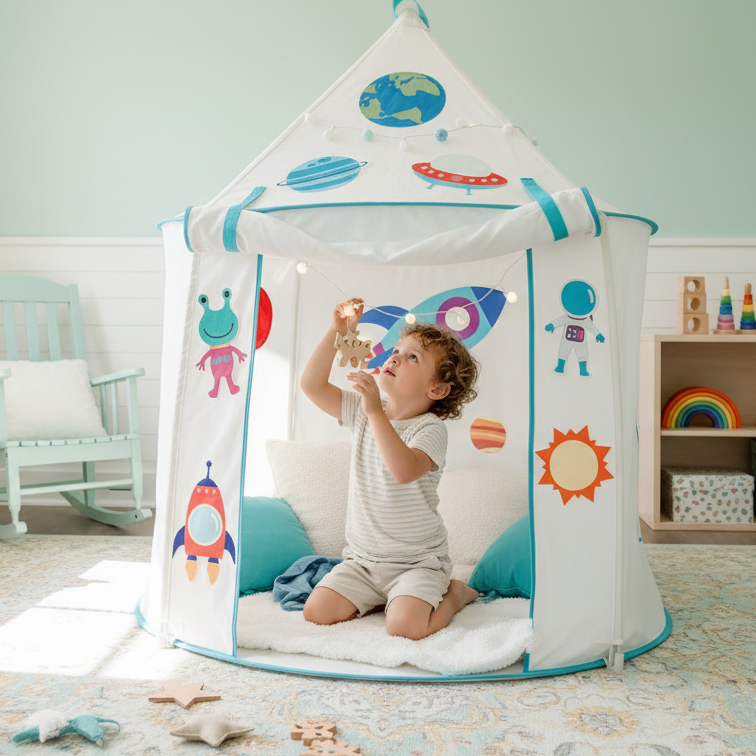
Brands such as ZeeZee Adventures have become increasingly popular among families seeking calmer forms of imaginative play because children often behave differently when they feel emotionally safe, creatively engaged, and less overstimulated.
Many parents are surprised by how dramatically behaviour improves when children have environments designed for calm, independent exploration.

The Hidden Need Behind “Attention-Seeking” Behaviour
Many children labelled as “attention-seeking” are actually connection-seeking.
There is an important difference.
Children naturally crave emotional connection.
When children feel disconnected, ignored, rushed, criticised, or emotionally distant from caregivers, behaviour often intensifies.
Negative behaviour can become an attempt to reconnect.
Even negative attention can feel emotionally preferable to emotional disconnection.
This is why short moments of intentional connection throughout the day can dramatically improve behaviour.
Simple moments matter:
- uninterrupted eye contact
- reading together
- floor play
- bedtime conversations
- cuddles
- shared laughter
- imaginative storytelling
- calm routines
Children often cooperate more when connection feels secure.
Boundaries Still Matter
Positive parenting is frequently misunderstood as “gentle parenting without rules.”
In reality, healthy boundaries are essential.
Children feel safer when limits are clear, predictable, and calmly enforced.
The difference lies in how those boundaries are delivered.
Instead of punishment rooted in fear or shame, positive parenting focuses on respectful firmness.
For example:
“We are not hitting.”
“I won’t let you hurt your brother.”
“You’re upset, but the boundary stays the same.”
This allows children to feel emotionally accepted while still learning appropriate behaviour.
The goal is not control.
The goal is guidance.
Why Shame Often Backfires
Many adults were raised with shame-based discipline:
“What’s wrong with you?”
“You’re so difficult.”
“Bad boys don’t act like that.”
“Stop crying.”
These responses may create compliance temporarily, but they often damage emotional security and self-worth over time.
Children internalise repeated messages.
Eventually, behaviour shifts from:
“I made a mistake.”
to:
“I am bad.”
Positive parenting separates behaviour from identity.
A child can make poor choices while still feeling loved, valued, and emotionally secure.
This distinction is critical for healthy emotional development.
The Importance of Teaching Emotional Vocabulary
Many behavioural struggles improve when children learn how to name emotions.
Young children frequently experience emotions that feel enormous and confusing.
Without language, those feelings often emerge physically.
Parents can support emotional intelligence by regularly naming emotions:
“You seem disappointed.”
“That felt frustrating.”
“You were really excited.”
“You look overwhelmed.”
This helps children gradually build emotional awareness.
Children who can identify emotions are often better equipped to regulate them.
Why Independent Play Supports Better Behaviour
Independent play is deeply connected to emotional development.
Children who regularly engage in open-ended, imaginative play often develop:
- stronger problem-solving skills
- patience
- creativity
- self-confidence
- emotional processing abilities
- resilience
Unfortunately, many modern environments leave little room for deep play.
Children are frequently over-entertained rather than allowed to explore boredom, imagination, and creativity naturally.
This is why calm, imaginative spaces matter.
Play environments designed for storytelling, pretend play, sensory comfort, and emotional safety can support emotional regulation far more effectively than highly stimulating entertainment.
Many families intentionally create calming play areas using cosy tents, reading nooks, sensory-friendly textures, and open-ended toys to encourage deeper forms of play.
ZeeZee Adventures play tents are one example of how families are reintroducing calm imaginative environments into modern homes, helping children build confidence through quieter, more meaningful play experiences.
The Power of Routine in Behavioural Regulation
Children thrive on predictability.
Consistent routines reduce anxiety because children know what to expect.
When routines become chaotic, behaviour often becomes more difficult.
Simple routines support emotional regulation:
- predictable mornings
- calming bedtime rituals
- regular mealtimes
- quiet transitions
- daily outdoor play
- screen-free wind-down periods
Routines help children feel secure.
Security often reduces behavioural intensity.
Repair Matters More Than Perfection
No parent responds perfectly all the time.
Every parent loses patience.
Every family experiences difficult days.
Positive parenting is not about becoming endlessly calm or perfectly regulated.
It is about repair.
Repair teaches children that relationships can recover after conflict.
Simple repair sounds like:
“I’m sorry I shouted earlier.”
“I was overwhelmed too.”
“I love you even when we have hard moments.”
These conversations teach accountability, emotional honesty, and resilience.
Children do not need perfect parents.
They need emotionally safe relationships.
Why Behaviour Is Often Worse After School
Many parents notice children “hold it together” all day and then emotionally unravel at home.
This phenomenon is common.
School environments require significant emotional regulation:
- following instructions
- social interaction
- sensory input
- emotional restraint
- concentration
- transitions
By the time children return home, emotional exhaustion often appears through behaviour.
Rather than viewing this as manipulation, many experts encourage parents to see it as emotional decompression.
Children often release emotions where they feel safest.
This does not excuse hurtful behaviour.
But understanding the emotional context changes how parents respond.
The Difference Between Punishment and Consequences
Punishment focuses on making children suffer for behaviour.
Consequences focus on teaching responsibility.
For example:
Punishment:
“You yelled, so no toys for a week.”
Consequence:
“You threw the toy, so we need to put it away until you’re calm enough to use it safely.”
Consequences are most effective when they are:
- calm
- respectful
- consistent
- logical
- connected to behaviour
This helps children learn responsibility without shame.
Why Calm Parenting Feels So Difficult
Many parents struggle with positive parenting because they themselves were not raised this way.
When stress rises, adults often instinctively return to the discipline methods they experienced as children.
Positive parenting frequently requires adults to regulate themselves first.
That can be incredibly challenging.
Parents are also navigating:
- burnout
- work pressure
- lack of support
- sleep deprivation
- mental overload
- financial stress
This is why self-compassion matters.
Parents cannot pour calm from an empty cup.
Supporting children emotionally also requires supporting parents emotionally.
Small Shifts That Make a Big Difference
Positive parenting does not require dramatic transformation overnight.
Small changes often create meaningful results.
Examples include:
- lowering your voice instead of raising it
- pausing before reacting
- validating feelings before correcting behaviour
- creating calmer play spaces
- reducing overstimulation
- prioritising connection time
- simplifying routines
- allowing independent play
- modelling emotional regulation
Children gradually absorb these emotional patterns over time.
Why Emotional Regulation Is More Important Than Obedience
Many traditional parenting approaches prioritise obedience.
But emotionally healthy adults require far more than obedience.
Children eventually need:
- emotional intelligence
- confidence
- self-awareness
- empathy
- resilience
- communication skills
- problem-solving abilities
Positive parenting aims to develop these internal skills.
A child who behaves only out of fear may struggle once external control disappears.
A child who understands emotions, boundaries, empathy, and regulation is often better equipped for life long-term.
The Role of Environment in Behaviour
Environment strongly affects behaviour.
Highly cluttered, noisy, overstimulating spaces can increase emotional dysregulation.
Calm environments often support calmer nervous systems.
This is why many families are becoming more intentional about:
- reducing clutter
- simplifying toys
- creating sensory-friendly spaces
- encouraging imaginative play
- limiting excessive stimulation
Children often behave differently when their environment supports emotional regulation.
A calm play environment is not simply aesthetic.
It can directly influence behaviour, focus, and emotional wellbeing.
Final Thoughts
Children are not problems to fix.
They are human beings learning emotional skills in real time.
Behaviour is communication.
And often, the most transformative parenting shifts happen when adults stop asking:
“How do I control this behaviour?”
and begin asking:
“What does my child need right now?”
Positive parenting does not create perfect children.
It creates emotionally safer relationships.
And those relationships often become the foundation for calmer behaviour, stronger confidence, deeper connection, and healthier emotional development.
In a world that increasingly overstimulates children, calmer forms of connection, imaginative play, emotional safety, and respectful guidance may matter more than ever.






Comment (0)