
Screen Time Alternatives That Actually Keep Kids Busy
There is a familiar moment in many homes today, and it often unfolds in exactly the same way. A child becomes restless. The day slows down for a brief second. There is a pause—small, almost invisible—and then, almost instinctively, a screen is introduced to fill it. What follows is predictable. Attention is captured immediately. The restlessness disappears. The moment is resolved.
On the surface, it feels like an efficient solution.
And in many ways, it is.
Screens are remarkably effective at holding attention. They combine sound, motion, colour, and narrative in ways that require very little effort from the viewer. They provide instant engagement, immediate feedback, and a constant stream of new content. From a behavioural perspective, they are designed to work.
Yet over time, many parents begin to notice a subtle shift. The more screens are used to fill those in-between moments, the more difficult it becomes for children to engage deeply with anything else. Activities that once held their attention begin to feel less appealing. Quiet play becomes harder to sustain. Imagination, while still present, seems to require more effort to access.
This does not necessarily mean that screens are inherently harmful. Rather, they reshape expectations.
They set a pace.
They define a level of stimulation.
They create a pattern of passive engagement.
And when that pattern becomes dominant, alternatives must do more than simply exist—they must compete.
This is where the challenge lies.
If screen time is reduced, what genuinely replaces it? What actually keeps children not just occupied, but meaningfully engaged?
The answer does not lie in simply removing screens. It lies in understanding what makes an activity compelling in the first place.
Why Screens Are So Difficult to Replace
To create effective alternatives, it is important to first understand why screens are so successful at capturing attention.
Digital content is engineered for engagement. It delivers stimulation in carefully timed intervals, often combining visual and auditory cues to maintain focus. There is little waiting involved, no uncertainty, and no requirement for the child to initiate anything.
Everything is provided.
The story unfolds automatically.
The pace is externally controlled.
The experience continues without interruption.
In contrast, most real-world activities operate differently. They require participation. They ask the child to make decisions, to interpret, to imagine, or to act. This difference can feel subtle, but it is significant.
When a child transitions away from screen-based content, they are not just changing activities. They are shifting from passive consumption to active engagement.
Without the right environment or materials, that shift can feel difficult.
This is why many common “screen-free” solutions fail. They do not replicate the depth of engagement; they simply attempt to fill time.
And filling time is not the same as sustaining attention.
Engagement Versus Absorption
One of the most important distinctions in this discussion is the difference between engagement and absorption.
Engagement is often immediate. It captures attention quickly but does not necessarily hold it for long. Many activities, including certain toys and structured tasks, can achieve this.
Absorption, however, is different.
It occurs when a child becomes deeply involved in something. Time begins to pass unnoticed. The activity becomes self-sustaining. The child returns to it not because they are prompted, but because they are genuinely interested.
Screen time excels at creating engagement. But meaningful alternatives must aim for absorption.
This requires a different approach.
It requires activities that are not just interesting but expandable. Not just stimulating, but immersive.
Creative Activities That Do Not End
One of the most effective categories of screen time alternatives is creative activity, particularly when it is open-ended.
Creative engagement works because it evolves.
A drawing does not need to be completed in one sitting. It can be revisited, altered, and expanded. A simple idea can develop into something more complex over time. A structure can be built, dismantled, and rebuilt in a different form.
What matters is not the initial activity, but the possibility it creates.
Closed activities—those with a fixed outcome—tend to have a natural endpoint. Once completed, they lose their appeal. Open-ended activities, by contrast, continue to offer new possibilities.
This is why they sustain attention more effectively.
They do not “finish”.
They transform.
The Power of Imaginative Play
Closely related to creative activity is imaginative play, which remains one of the most powerful and underutilised alternatives to screen time.
Imaginative play is fundamentally different from digital entertainment.
Instead of consuming stories, children create them.
They assign roles.
They construct scenarios.
They explore narratives that shift and evolve.
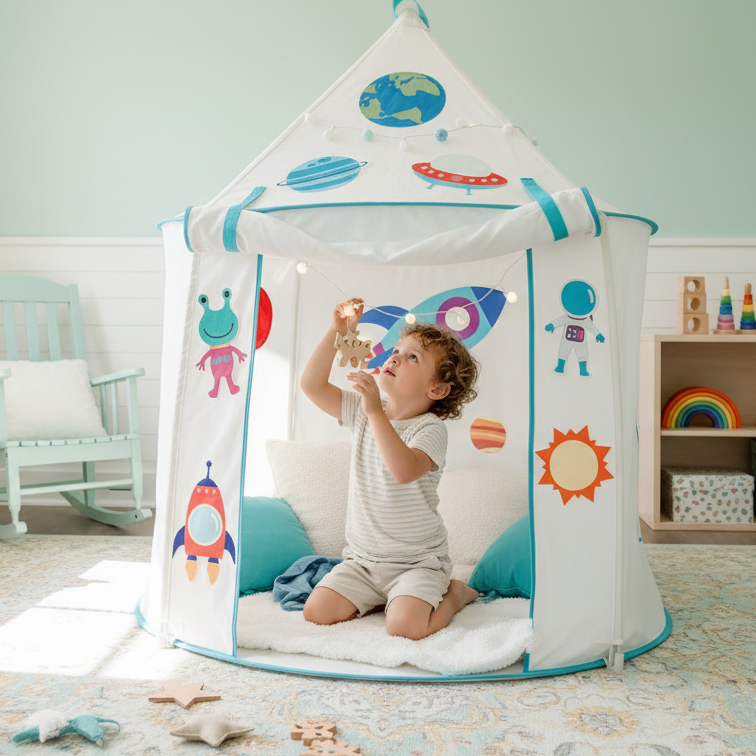
A simple space can become something entirely different depending on the day. A quiet corner may turn into a reading retreat, a secret hideaway, or a place for storytelling. The value lies not in the physical structure itself, but in its flexibility.
This is where thoughtfully designed play environments can play an important role. When children have access to adaptable spaces—such as small, contained environments that feel separate from the rest of the home—they are more likely to engage in sustained imaginative play. A setup like ZeeZee Adventures, for instance, can function not as a fixed toy, but as a neutral canvas that children reinterpret over time. One day it may serve as a calm retreat, another day as part of a larger imaginative world.
The key is not the object itself, but what it allows the child to do.
Movement and Physical Engagement
Another essential alternative to screen time lies in physical activity.
Screens encourage stillness. They require minimal physical effort, which can lead to a build-up of energy that has no outlet.
Physical play provides that outlet.
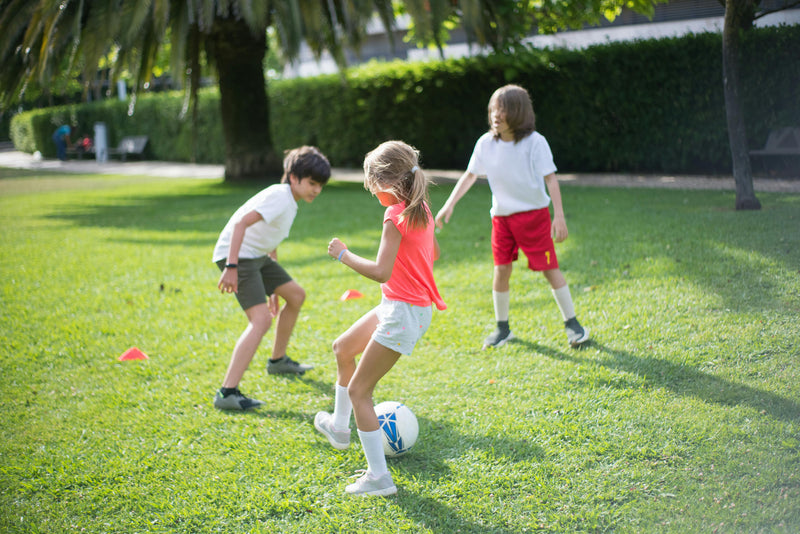
It introduces movement, variation, and sensory engagement. Activities that involve building, climbing, balancing, or even simple motion help regulate energy levels and improve focus.
Interestingly, physical activity often enhances subsequent concentration. After moving, children are more capable of engaging in quieter, more focused tasks.
This natural rhythm—movement followed by stillness—is something that screens tend to disrupt.
Reintroducing it can significantly improve overall engagement.
The Importance of Calm Environments
Modern environments are often filled with constant stimulation. Noise, visual clutter, and multiple simultaneous activities can make it difficult for children to focus.
In contrast, calm environments support deeper engagement.
A quieter space reduces distractions. It allows the child to concentrate on a single activity without competing stimuli. This does not mean removing all forms of stimulation, but rather balancing them.
Soft lighting, organised materials, and defined play areas can make a significant difference.
When the environment feels intentional, attention becomes more sustainable.
Fewer Choices, Deeper Play
It may seem counterintuitive, but offering fewer options often leads to better outcomes.
When children are presented with too many choices, their attention becomes fragmented. They move quickly from one activity to another without fully engaging in any of them.
Limitation, in this context, can be beneficial.
A smaller number of carefully selected activities encourages exploration. Children spend more time with each option. They experiment, adapt, and extend their play.
This is where depth replaces variety.
And depth is what sustains engagement.
The Role of Boredom in Creativity
Boredom is often perceived as a problem to be solved. Yet it plays a critical role in independent engagement.
When children experience boredom, they are confronted with a decision. They can wait for external stimulation, or they can create something themselves.
The transition between these two states is not always comfortable. There is often a brief period of restlessness.
However, if that moment is not immediately filled, something important happens.
Children begin to generate their own ideas.
They look for possibilities within their environment. They experiment. They create.
Boredom, therefore, is not the absence of activity. It is the beginning of it.
Why Some Alternatives Do Not Work
Not all screen-free activities are equally effective.
Some fail because they mimic the limitations of screens. They provide a structured experience with little room for variation.
Activities that are overly guided, highly prescriptive, or outcome-focused may engage initially, but they rarely sustain attention.
Once the task is completed, there is little reason to return.
Effective alternatives must offer continuity.
They must allow for change.
They must invite the child to participate actively, rather than follow instructions passively.
Creating Conditions for Independent Engagement
Ultimately, the goal is not to replace screen time with a specific set of activities.
It is to create conditions that naturally support engagement.
This involves several key elements.
First, the environment should be conducive to focus. This means reducing unnecessary distractions and organising materials in a way that invites use.
Second, the activities available should be flexible. They should allow for reinterpretation and variation over time.
Third, there should be space for unstructured time. Without it, children do not have the opportunity to initiate their own ideas.
When these conditions are present, engagement becomes self-sustaining.
Children begin to explore independently. They create, adapt, and return to activities without prompting.
A Shift in Perspective
The conversation around screen time often focuses on restriction.
How much is too much?
When should it be limited?
What rules should be set?
While these questions are important, they do not address the underlying issue.
The real question is not what is removed, but what replaces it.
If alternatives are shallow, engagement will remain short-lived.
If alternatives are meaningful, engagement will deepen naturally.
This requires a shift in perspective.
From control to design.
From restriction to intention.
From distraction to engagement.
Conclusion
Screen time is effective because it captures attention.
But capturing attention is not the same as holding it.
The activities that truly keep children engaged are those that allow them to participate fully. Those that evolve over time. Those that invite creativity, imagination, and exploration.
They are not always louder, faster, or more stimulating.
In fact, they are often the opposite.
They are quieter.
More flexible.
More open.
And it is precisely this openness that makes them powerful.
Because when children are given the space to engage in this way, something shifts.
They do not just stay occupied.
They become absorbed.
And in that absorption, they discover something far more valuable than entertainment.
They discover how to create it themselves.
- Baby Registry
- Baby Shower
- Best gifts
- best play tent
- Best toys
- Best toys 2025
- Best toys 2026
- Blog
- calming toys
- child development
- children
- christmas gift ideas
- customizable play tent
- Holidaygiftguide
- jeanpiaget
- kids play tent
- Montesoori
- montessori
- Montessori Gifts
- Montessori play
- open-endedplay
- openendedplay
- parenting
- parents
- play tent
- Play Tents
- playroom inspo
- pretend play
- sahm
- Sensory Play
- sensory play gifts
- teepee play tent
- toddler toys
- tonies
- toyclutter
- toys
- ZeeZee
- ZeeZee Adventure
- ZeeZee Adventure Tent
- ZeeZee Adventures






Comment (0)