
Kids Don’t Play Like They Used To—Here’s Why
Walk into any neighbourhood today, and you may notice something that feels subtly different.
Fewer children are playing outdoors.
Less unstructured noise.
Fewer groups are inventing games that exist only for an afternoon.
Instead, play often appears organised, scheduled, or mediated through screens.
It is easy to romanticise the past, to assume this is simply nostalgia speaking. But research across child development, education, and behavioural science suggests something more grounded.
Children are not playing less because they have lost interest in play.
They are playing differently because the conditions that shape play have changed.
To understand this shift, it is necessary to look beyond toys and into the environments, expectations, and structures that now define childhood.
Play Has Shifted From Open to Structured
Historically, much of children’s play was unstructured.
It took place outdoors, in shared spaces, and without adult direction. Children invented rules, negotiated roles, and adapted games in real time.
Today, play is increasingly structured.
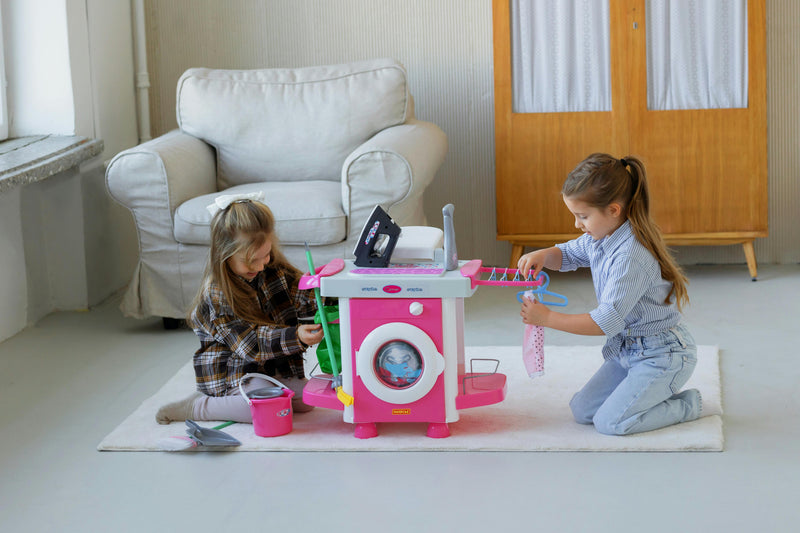
Activities are organised into classes, clubs, or supervised sessions. Even at home, play is often influenced by pre-designed toys, guided activities, or digital platforms that provide instructions.
While structured play has clear benefits—particularly for skill-building and social learning—it leaves less space for spontaneous creativity.
Unstructured play, by contrast, requires children to:
- make decisions
- resolve conflicts
- invent ideas
- manage boredom
When this type of play becomes limited, something important is reduced: the opportunity to think independently.
The Rise of Screen-Based Play
One of the most significant changes in modern childhood is the presence of screens.
Digital play is not inherently negative. It can offer educational content, creative tools, and interactive experiences.
However, it differs from traditional play in one fundamental way.
It is often designed.
The outcomes, rules, and interactions are pre-defined.
Even in interactive games, the possibilities are bounded by programming.
This contrasts with open-ended physical play, where a simple object can become anything.
A stick can be a sword, a wand, or a tool.
A space can be transformed into an entire world.
Screens tend to reduce this ambiguity.
And it is within ambiguity that imagination often thrives.
The Overstimulation Problem
Modern environments are rich in stimulation.
Bright colours.
Constant sounds.
Fast-paced interactions.
Many toys and digital experiences are designed to capture attention immediately.
But attention captured quickly is not always sustained deeply.
Research suggests that overstimulation can reduce a child’s ability to focus for extended periods.
When everything is designed to be engaging, the threshold for engagement rises.
Simple experiences—those that require imagination—may begin to feel less interesting.
This has a direct impact on play.
Children may move quickly from one activity to another, not because they lack focus, but because their environment does not support it.
The Decline of Boredom
Boredom is often seen as something to avoid.
In reality, it plays an important role in childhood.
Boredom creates a gap.
And in that gap, children begin to invent.
They create games.
They explore ideas.
They imagine scenarios.
When children are constantly occupied—whether through structured activities or digital entertainment—that gap disappears.
Without it, there is less opportunity for self-directed creativity.|
Parental Influence and Safety Concerns
Another significant shift comes from changes in parenting practices.
Modern parenting often involves greater supervision, driven by legitimate concerns around safety, education, and development.
Children spend more time indoors and less time navigating environments independently.
While this increases safety, it also reduces exposure to risk-taking, exploration, and unsupervised problem-solving.
In previous generations, much of play occurred without direct adult involvement.
Children negotiated rules, resolved disagreements, and managed their own experiences.
These opportunities are now less frequent.
The Role of Environment
The environment shapes behaviour.
A cluttered, overstimulating space can make it difficult for children to engage deeply.
A calm, open environment encourages focus.
Today’s homes often contain:
- more toys
- more digital devices
- more structured spaces
Interestingly, research suggests that fewer toys can lead to more meaningful play.
When options are limited, children explore more deeply.
They extend play.
They invent new uses.
They remain engaged for longer.
The quality of play improves, even as the quantity of toys decreases.
What Children Actually Need From Play
Despite all these changes, one thing has not shifted.
Children still need play that allows them to:
- imagine
- create
- explore
- think independently
The form may change, but the underlying need remains.
The most valuable play experiences are those that:
- are open-ended
- allow reinterpretation
- evolve over time
- support both activity and calm
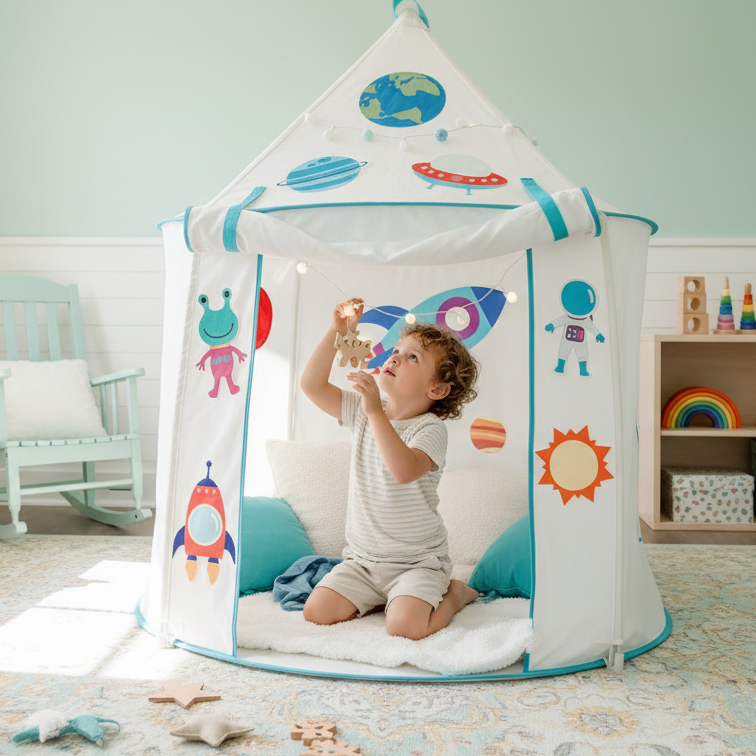
Flexible play environments, for example, can provide a balance between structure and freedom. A simple adaptable space—such as those explored in ZeeZee Adventures—can become whatever the child needs it to be, rather than directing the experience.
This adaptability is key.
Because when play can evolve, it continues to engage.
A Different Way to Think About Play Today
The question is not whether modern play is better or worse.
It is whether it provides the same opportunities for development.
Structured activities, digital tools, and educational toys all have value.
But they should not replace open-ended play.
They should complement it.
Children need both:
- guidance and freedom
- structure and imagination
- stimulation and calm
When these are balanced, play becomes richer.
Conclusion
Children do not play like they used to.
Not because they have changed fundamentally, but because their environments have.
Play has become more structured, more digital, and more supervised.
At the same time, opportunities for open-ended exploration have decreased.
Understanding this shift is the first step.
The next is intentionality.
Creating spaces, experiences, and opportunities where children can still imagine freely.
Because the most important part of play has never been the tools.
It has always been the possibilities.





Comment (0)