
Play, Feelings, and the Spaces That Help Children Cope
Play, Feelings, and the Spaces That Help Children Cope
Mental health doesn’t start in adulthood.
It starts quietly, long before children can name what they’re feeling — in how safe they feel, how often they’re overwhelmed, and whether they have space to process the world at their own pace. For children, mental health isn’t about diagnoses or labels.
It’s about regulation, resilience, and feeling understood when emotions run big, and words feel small.
One of the most powerful tools children use to care for their mental well-being isn’t therapy or instruction.
It’s a play.
Why Play Matters for Children’s Mental Health
 Children experience stress just like adults do — they just experience it differently.
Loud environments, rushed schedules, transitions, social dynamics, and constant stimulation can all create emotional overload. When children don’t yet have language for those feelings, their bodies and behaviors do the talking.
Play becomes the outlet.
Through play, children:
-
Release tension
-
Explore emotions safely
-
Rehearse real-life situations
-
Regain a sense of control
-
Calm their nervous systems
Imaginative Play as Emotional Processing

When a child pretends, they’re not “escaping reality.”
They’re practicing it. A child replaying the same story again and again isn’t stuck — they’re working something through. A child who builds, destroys, and rebuilds isn’t being difficult — they’re regulating.
Imaginative play allows children to:
-
Act out fears without consequences
-
Explore power and vulnerability
-
Recreate moments they didn’t fully understand
- Find comfort in repetition
From a mental health perspective, this kind of play is deeply protective. It gives children a safe way to process emotions without pressure or judgment.
The Role of Environment in Emotional Well-Being
Where play happens matters just as much as what children play with.
Highly stimulating environments — loud toys, flashing lights, constant interruptions — can actually make it harder for children to regulate emotionally.
Calmer, more contained spaces tend to support:
-
Longer focus
-
Deeper play
-
Reduced overwhelm
-
Easier transitions
This is why many child development specialists emphasize the importance of play environments, not just toys.
A quiet corner.
A cozy nook.
A space that feels slightly enclosed and predictable.
These environments send a powerful signal to a child’s nervous system:
“You’re safe here.”
Why Enclosed and Predictable Spaces Help
Children often gravitate toward small, defined spaces for a reason.
Enclosed play areas can:
-
Reduce sensory input
-
Provide emotional containment
-
Create a sense of ownership
-
Help children self-soothe
For children who feel easily overwhelmed — or who struggle with transitions, anxiety, or big emotions — these spaces can become emotional anchors throughout the day.
It’s not about isolation.
It’s about giving children control over when and how they engage.
Mental Health Isn’t About Fixing Feelings
One of the most common misconceptions around children’s mental health is that uncomfortable emotions need to be corrected quickly.
In reality, children don’t need their feelings fixed.
They need them acknowledged.
Play offers something uniquely powerful here:
a way to express emotions without having to explain them.
When children are given time, space, and permission to play freely, they often find their own way back to calm.
Supporting Mental Health Through Everyday Play
Parents don’t need specialized tools to support their child’s mental well-being.
Often, the most helpful changes are small:
-
Slowing down transitions
-
Reducing overstimulation
-
Creating predictable play spaces
-
Allowing play to unfold without interruption
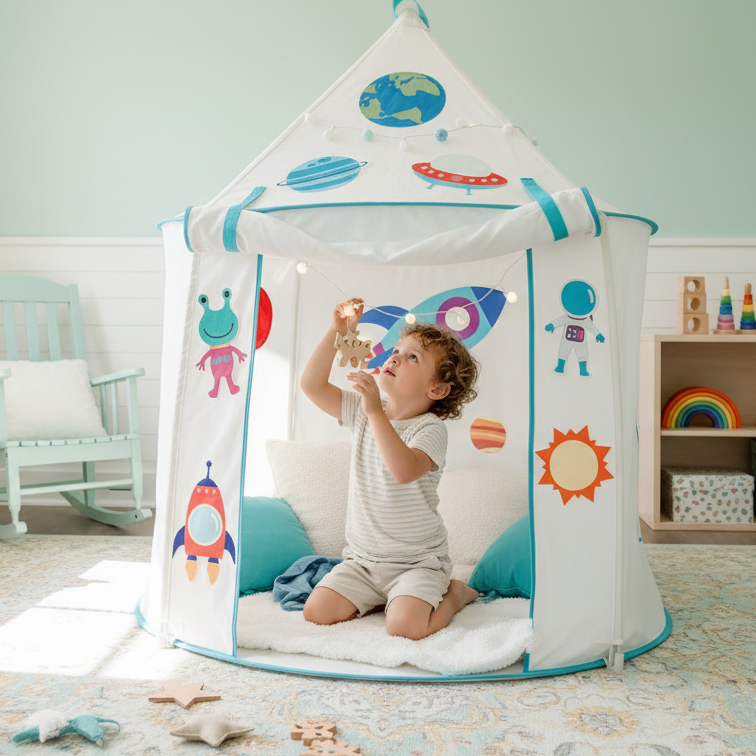
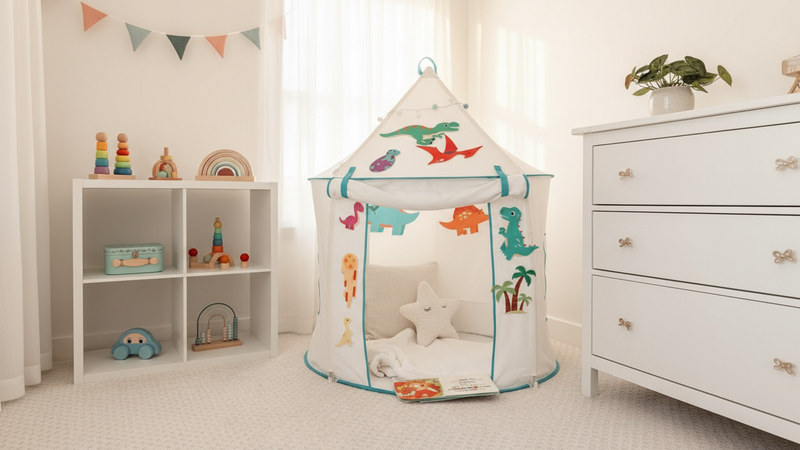
Many families find that adaptable play environments — such as customizable play tents like ZeeZee Adventures — naturally support this kind of emotional regulation. The same space can become a calm retreat one day and an imaginative world the next, depending on what a child needs.
The value isn’t in the product itself — it’s in giving children a space that grows with their emotional world.
The Long-Term Impact of Play on Mental Health
Children who are given space to process emotions through play tend to develop:
-
Better self-awareness
-
Stronger coping skills
-
Greater emotional resilience
-
More confidence in expressing themselves
These skills don’t disappear with age.
They form the foundation for mental health later in life.
A Final Thought
Mental health support doesn’t always look like talking.
Sometimes, it looks like a child sitting quietly inside a space they feel safe in, building a world only they understand.
When we protect play — especially calm, imaginative, child-led play — we’re not just supporting creativity.
We’re supporting emotional well-being, resilience, and the quiet work of growing up.




Comment (0)