

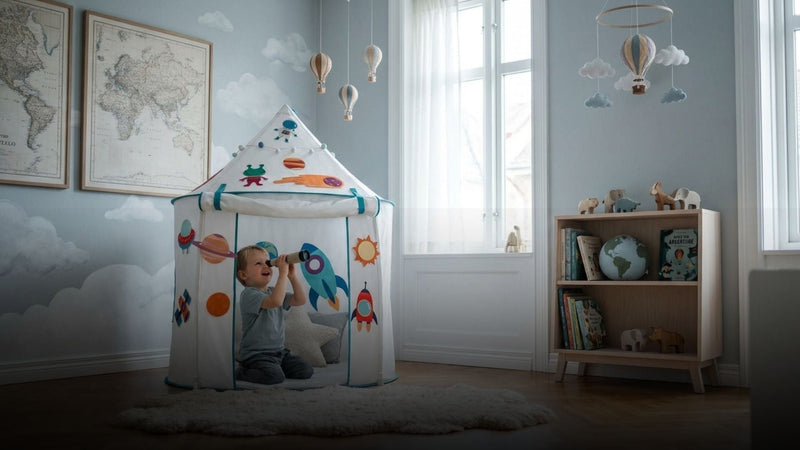
Play Tents for Kids: Are They Worth It? A Parent's Complete Guide
Parents today are more intentional than ever about the products they bring into their homes. With countless toys, gadgets, and educational tools competing for attention, many families are asking an important question before making a purchase: Will this actually benefit my child, or will it become another forgotten toy?
This question frequently arises when parents consider buying a play tent.
At first glance, a play tent might seem like a simple fabric structure designed primarily for entertainment. Compared to electronic learning devices or interactive toys, it can appear surprisingly basic. Yet despite its simplicity, the play tent has remained a childhood favorite for generations. In fact, many child development experts believe that open-ended play environments like tents can provide benefits that highly structured toys often fail to deliver.
So, are play tents for kids worth it?
The answer depends on what you value most as a parent. If you're looking for a product that encourages creativity, independence, problem-solving, and screen-free engagement, a quality play tent may be one of the smartest investments you can make.
What Is a Play Tent?
A play tent is a dedicated space designed specifically for children's play, imagination, and exploration. Unlike traditional toys that serve a single purpose, a play tent acts as a blank canvas that children can transform into almost anything they imagine.
One day it may be a pirate ship sailing across dangerous waters. The next day it becomes a castle, a secret clubhouse, a jungle expedition basecamp, or even a spaceship traveling through distant galaxies.
The tent itself never changes. The child's imagination does.
This ability to support endless possibilities is one reason play tents continue to remain relevant despite changing trends in children's entertainment.
Why Are Play Tents Becoming So Popular Again?
Over the last decade, many parents have become increasingly concerned about excessive screen time and the decline of imaginative play.
Children now have access to smartphones, tablets, streaming services, and interactive games from a very young age. While technology certainly has educational benefits, many families have noticed that constant digital stimulation can reduce opportunities for creative thinking and independent exploration.
As a result, parents are actively searching for products that encourage children to engage with their own ideas rather than simply consuming content.
Play tents provide exactly that opportunity.
They create a dedicated environment where imagination becomes the primary source of entertainment.
Rather than being told what to do by a device, children become the architects of their own adventures.
The Science Behind Imaginative Play
Imaginative play is far more important than many people realize.
Research in child development consistently shows that pretend play contributes to cognitive growth, emotional intelligence, language development, and problem-solving skills.
When children pretend to be explorers, doctors, astronauts, chefs, or teachers, they are practicing real-world thinking skills in a safe and enjoyable environment.
They learn how to create stories, navigate challenges, communicate ideas, and explore different perspectives.
These experiences help strengthen neural pathways associated with creativity and flexible thinking.
In many ways, imaginative play serves as a child's first training ground for innovation.
7 Benefits of Play Tents for Kids
1. Encourages Creativity and Imagination
Perhaps the most obvious benefit of a play tent is its ability to inspire creativity.
Unlike toys with predefined functions, play tents invite children to invent their own experiences. A single tent can support hundreds of different adventures without requiring additional technology or instructions.
This freedom encourages original thinking and helps children develop stronger creative abilities.
2. Supports Independent Play
Many parents struggle with children who constantly seek entertainment from adults.
While family interaction is important, children also benefit from learning how to occupy themselves independently.
A play tent creates a comfortable environment where children can explore ideas on their own. Over time, this helps develop confidence, self-reliance, and decision-making skills.
Parents often notice that children who regularly engage in independent play become more comfortable solving small challenges without immediate assistance.
3. Helps Improve Focus and Attention Span
Modern entertainment often relies on rapid stimulation to capture attention.
In contrast, imaginative play encourages sustained engagement.
A child building stories inside a play tent may remain focused for significantly longer periods because the activity is driven by internal motivation rather than external stimulation.
This type of deep engagement helps strengthen concentration skills that support future learning.
4. Creates a Safe Personal Space
Children benefit from having areas that feel uniquely their own.
Just as adults appreciate private spaces for relaxation or focus, children enjoy environments where they can retreat, think, read, or simply enjoy some quiet time.
A play tent provides this sense of ownership and security.
Many children naturally use their tents as calming spaces during busy or overwhelming days.
5. Encourages Screen-Free Entertainment
One of the biggest advantages of play tents is their ability to provide meaningful alternatives to screens.
The goal is not to eliminate technology completely. Rather, it is to create a healthy balance between digital experiences and imaginative play.
When children become immersed in storytelling, role-playing, or creative activities, they spend less time seeking passive entertainment.
This makes play tents a valuable addition to households working to reduce recreational screen time.
6. Supports Social Development
Play tents are not only useful for solo play.
They also create opportunities for collaboration and social interaction.
When siblings or friends share a play tent, they must communicate, negotiate rules, assign roles, and cooperate within their imaginary worlds.
These interactions help develop social skills that support healthy relationships both inside and outside the home.
7. Grows With the Child
Many toys lose their appeal after a few weeks because they offer limited possibilities.
Play tents are different.
A toddler may use a tent for simple exploration and sensory play.
A preschooler may transform it into a pirate ship or castle.
An older child may use it as a reading nook, creative studio, or private retreat.
Because the tent adapts to changing interests, it often remains valuable for years.
Play Tents vs Electronic Toys
When deciding where to invest their money, many parents compare play tents with electronic toys.
While both categories have benefits, they support different types of engagement.
| Play Tents | Electronic Toys |
|---|---|
| Encourage imagination | Provide programmed entertainment |
| Support independent play | Often require guided interaction |
| Adapt to changing interests | Limited by built-in functions |
| Promote creativity | Focus on stimulation |
| Encourage storytelling | Deliver content directly |
| Long-term versatility | Shorter novelty cycle |
This comparison helps explain why many child development specialists continue to advocate for open-ended play environments.
What Age Is Best for a Play Tent?
Play tents can benefit children across a surprisingly wide age range.
Toddlers (Ages 2-3)
At this stage, children enjoy sensory exploration and simple pretend play. A tent provides a safe environment for discovery.
Preschoolers (Ages 3-5)
This is often the golden age of imaginative play. Children begin creating elaborate stories and role-playing scenarios.
Early Elementary (Ages 6-8)
Play tents remain valuable as adventure spaces, reading corners, and creative environments.
Older Children (Ages 9+)
Many older children continue using tents as cozy retreats, reading spaces, or quiet areas for independent activities.
How to Choose the Right Play Tent
Not every play tent delivers the same experience.
Parents should consider several factors before making a purchase.
Durability
Children can be energetic during play. Look for sturdy materials and reliable construction.
Size
The tent should provide enough space for comfortable movement and various activities.
Open-Ended Design
The best tents encourage imagination rather than limiting it with overly specific themes.
Easy Setup
Parents appreciate products that can be assembled and stored without frustration.
Visual Appeal
A thoughtfully designed tent can complement your home while still providing an exciting environment for children.
Why Dedicated Play Spaces Matter
Environment shapes behavior.
Children are more likely to engage deeply with play when they have a dedicated space designed specifically for exploration and creativity.
This is why many modern parenting experts recommend creating intentional play environments rather than simply accumulating more toys.
Brands like ZeeZee Adventures embrace this philosophy by focusing on immersive play experiences rather than passive entertainment. By creating adventure-inspired spaces that encourage storytelling and imaginative exploration, children are given opportunities to become active participants in their own adventures.
The goal is not simply to occupy children. The goal is to empower them to create.
Common Mistakes Parents Make When Buying Play Tents
Many families make avoidable mistakes when selecting a play tent.
One common mistake is choosing a tent based entirely on appearance.
While aesthetics matter, functionality should remain the primary consideration.
Another mistake is overcrowding the space with excessive toys and accessories. A cluttered environment can actually reduce creativity by overwhelming children with choices.
Parents should also avoid viewing the tent as a standalone solution. The greatest value comes from encouraging children to actively engage with the space through books, storytelling, imaginative play, and creative activities.
Frequently Asked Questions
Are play tents safe for toddlers?
Yes, most play tents are safe when used according to manufacturer guidelines and under appropriate supervision.
Can play tents help reduce screen time?
They can certainly contribute by providing engaging alternatives that encourage active participation and imaginative play.
How long do children typically use play tents?
Many children use play tents for several years because the space evolves alongside their interests and developmental needs.
Are expensive play tents worth it?
Higher-quality tents often provide better durability, comfort, and longevity. However, the most important factor is whether the design encourages meaningful play.
Do play tents help with independent play?
Yes. Play tents create a dedicated environment where children can explore ideas, tell stories, and entertain themselves without constant adult involvement.
Final Verdict: Are Play Tents Worth It?
For families seeking a balance between entertainment and development, play tents offer exceptional value.
They encourage creativity, support independent play, strengthen focus, reduce reliance on screens, and provide children with a space they can truly call their own.
Most importantly, they create opportunities for experiences that modern children increasingly need: imaginative exploration, self-directed learning, and meaningful play.
The best childhood memories rarely come from products that do everything for children. They come from environments that allow children to do something extraordinary themselves.
A quality play tent provides exactly that opportunity.
Whether it becomes a castle, a pirate ship, a secret hideout, or a reading retreat, the true value lies not in the tent itself, but in the adventures children create within it. For parents looking to encourage imagination and independent exploration, thoughtfully designed play spaces, including those offered by ZeeZee Adventures, remain one of the most effective ways to transform ordinary play into extraordinary experiences.





Comment (0)