
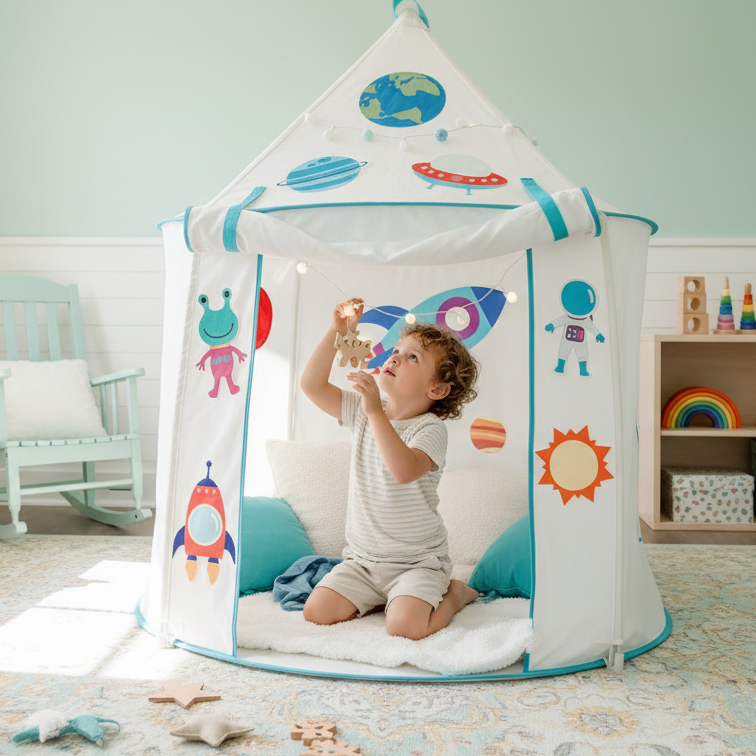
Why Being Bored Is Actually Good for Kids
The Modern Parenting Fear of Boredom
Few phrases trigger a faster reaction from parents than hearing a child say, "I'm bored."
For many families, boredom feels like a problem that needs an immediate solution. Parents instinctively begin suggesting activities, organizing playdates, offering snacks, turning on educational programs, or handing over a tablet. The goal is simple: make the boredom disappear as quickly as possible.
This reaction is understandable. Most parents want their children to be happy, engaged, and stimulated. In today's world, where educational opportunities and entertainment options are available everywhere, boredom often feels unnecessary. If there are hundreds of activities available, why should a child ever be bored?
However, this well-intentioned mindset may be causing parents to overlook something important.
Boredom is not always a problem.
In fact, child development experts increasingly recognize boredom as a critical part of healthy childhood development. While excessive boredom or chronic understimulation can certainly be problematic, occasional boredom creates opportunities for creativity, independence, resilience, and self-discovery.
Ironically, the very thing many parents try hardest to eliminate may be one of the most valuable developmental experiences children can have.
Why Children Today Experience Boredom Differently
Children have always experienced boredom. What has changed is how quickly boredom gets interrupted.
Previous generations often had long stretches of unstructured time. Children played outside, explored neighborhoods, invented games, built forts, and spent hours creating entertainment from whatever resources were available.
Today's children live in a dramatically different environment.
Entertainment is available instantly.
A child can access thousands of videos, games, apps, and activities within seconds. Parents have more educational resources than ever before. Organized sports, extracurricular activities, tutoring sessions, and structured programs often fill much of a child's schedule.
As a result, many children have fewer opportunities to sit with boredom long enough for something meaningful to emerge.
The issue is not that modern children are less creative.
The issue is that creativity often begins after boredom.
When boredom is immediately replaced by stimulation, children never reach the point where imagination has a chance to activate.
The Rise of Constant Entertainment
Modern culture has created what many experts call the "constant entertainment environment."
From the moment children wake up until they go to sleep, they are surrounded by opportunities for stimulation.
Television provides endless content.
Streaming platforms offer unlimited viewing options.
Video games deliver continuous rewards and challenges.
Smartphones place entertainment directly into children's hands.
Even toys have evolved to include sounds, lights, screens, and interactive features.
None of these things are inherently bad. Many offer educational benefits and enjoyable experiences.
The challenge arises when children become accustomed to receiving entertainment rather than creating it.
When external stimulation becomes the default source of engagement, children may struggle when that stimulation disappears.
This is often why a child who has spent hours watching videos may still complain of boredom moments later.
The issue is not a lack of entertainment.
The issue is a lack of practice generating entertainment independently.
The Overscheduled Childhood Problem
In addition to digital entertainment, many children now experience highly structured schedules.
Parents naturally want to provide opportunities for learning and growth. As a result, children's calendars can quickly become filled with sports practices, music lessons, tutoring sessions, clubs, camps, and educational activities.
While these experiences can be beneficial, they can also leave very little room for unstructured exploration.
Unstructured time plays a unique role in development because it allows children to make decisions without adult guidance.
During organized activities, adults often establish the goals, rules, and expectations.
During unstructured time, children must determine those things for themselves.
This process encourages independence, initiative, and creative problem-solving.
When children have too little unstructured time, they may become increasingly dependent on external direction.
The moment organized activities end, they may feel uncertain about what to do next.
This uncertainty is often labeled as boredom.
In reality, it is an opportunity for growth.
What Happens in the Brain During Boredom?
One of the most fascinating aspects of boredom is what happens inside the brain when external stimulation decreases.
When children are actively consuming entertainment, their attention is focused on incoming information. They are responding to content that already exists.
When boredom occurs, the brain begins searching for alternatives.
Researchers often describe this process as a shift from external attention to internal exploration.
Instead of reacting to stimulation, the mind starts generating possibilities.
Children begin asking themselves questions:
What could I build?
What could I draw?
What game could I invent?
What story could I create?
These internal questions activate creative thinking and encourage original ideas.
In many ways, boredom acts as a bridge between passive consumption and active creation.
Without that bridge, imagination may never fully engage.
The Connection Between Boredom and Creativity
Creativity rarely appears instantly.
Many creative breakthroughs begin during moments of mental wandering.
Adults experience this phenomenon regularly.
Some of the best ideas emerge while taking a shower, going for a walk, driving, or sitting quietly. These moments often occur when the brain is not actively focused on a specific task.
Children experience a similar process.
When boredom is allowed to exist, the brain begins searching for ways to fill the gap.
This search often leads to imaginative play.
A cardboard box becomes a spaceship.
A pile of cushions becomes a mountain range.
A blanket becomes a secret hideout.
A backyard becomes an unexplored wilderness.
The remarkable thing is that none of these transformations require expensive equipment or advanced technology.
They require imagination.
And imagination often begins with boredom.

Why Boredom Is Actually Good for Kids
For years, boredom has been treated as a negative experience.
Parents worry that bored children are unhappy.
Educators worry that bored students are disengaged.
Society often assumes that boredom signals a lack of productivity.
However, boredom serves an important developmental function.
It creates a pause between receiving stimulation and generating action.
During this pause, children learn to become self-starters.
Instead of waiting for someone else to provide entertainment, they begin creating their own experiences.
This process develops skills that extend far beyond childhood.
Independent thinking.
Problem-solving.
Initiative.
Resilience.
Creativity.
Self-motivation.
All of these abilities emerge when children learn how to navigate periods of boredom successfully.
The goal is not to make children bored.
The goal is to stop treating boredom as something that must always be eliminated.
Boredom Teaches Children How to Think for Themselves
One of the greatest benefits of boredom is its ability to encourage independent thinking.
When adults constantly provide solutions, children become accustomed to relying on others for direction.
When boredom occurs and adults resist the urge to intervene immediately, children face a simple challenge:
Figure out what to do next.
At first, this may feel uncomfortable.
Many children complain, whine, or repeatedly seek suggestions.
However, if given enough space, they often begin generating ideas on their own.
This process strengthens confidence and decision-making skills.
Children discover that they are capable of solving problems independently.
They learn that they do not always need someone else to provide answers.
This realization becomes increasingly valuable as they grow older.
Why Independent Play Starts With Boredom
Independent play is one of the most important developmental skills children can develop.
Unfortunately, it is becoming increasingly rare.
Many children have become accustomed to adult-led activities, structured schedules, and constant stimulation.
Independent play requires something different.
It requires children to create their own goals, stories, challenges, and experiences.
Boredom often serves as the starting point.
When external entertainment is unavailable, children begin looking for ways to engage themselves.
This is why many child development experts recommend creating environments that support open-ended exploration rather than constant stimulation.
Families often find success by providing imaginative play opportunities through dedicated spaces, creative materials, and adventure-based environments. Products designed around open-ended exploration, such as those offered by ZeeZee Adventures, support this type of self-directed play by encouraging children to invent their own stories and experiences rather than follow predetermined instructions.
The most powerful play experiences are often the ones children create themselves.
And many of those experiences begin immediately after boredom appears.
The Hidden Gift Inside "I'm Bored"
When a child says, "I'm bored," many parents hear a request.
The child may seem to be asking for entertainment, activities, or solutions.
But from a developmental perspective, boredom often represents something entirely different.
It represents possibility.
It is the moment before imagination activates.
It is the gap before creativity begins.
It is the space where children learn how to rely on themselves.
Rather than viewing boredom as evidence that something is missing, parents can begin viewing it as evidence that something valuable is about to happen.
The challenge is allowing enough time for that process to unfold.
And in a world filled with endless distractions, that may be one of the most important gifts parents can offer their children.
10 Powerful Benefits of Boredom for Kids
Once parents understand that boredom is not the enemy, the next question becomes obvious:
What exactly do children gain from it?
The answer goes far beyond simply finding something to do.
When children are allowed to experience healthy periods of boredom, they develop skills that influence their creativity, emotional well-being, learning ability, and long-term independence. Many of the qualities parents hope to encourage in their children are strengthened when boredom is given space to do its work.
Let's explore the most important benefits.
1. Boredom Sparks Creativity
Creativity often begins when there is nothing obvious to do.
When children are constantly entertained, their brains consume ideas created by other people. When entertainment disappears, they must generate ideas themselves.
This shift is incredibly important.
A bored child might invent a new game, create an imaginary world, build a fort from cushions, write a story, or design an obstacle course in the backyard. None of these activities were assigned by an adult. They emerged naturally from the child's imagination.
This is one reason highly creative children are not necessarily those with the most toys. They are often the children who have learned how to transform ordinary objects into extraordinary experiences.
Creativity is like a muscle. The more children practice using it, the stronger it becomes.
Boredom provides the workout.
2. Boredom Encourages Independent Thinking
Modern children receive guidance from almost every direction.
Parents offer instructions.
Teachers provide structure.
Apps tell them what to do next.
Games guide their actions.
Algorithms recommend content.
While guidance has its place, children also need opportunities to think independently.
Boredom creates those opportunities.
When a child faces an empty afternoon without a planned activity, they must make decisions for themselves. They learn how to evaluate options, choose a direction, and take initiative.
Over time, these experiences strengthen confidence and self-reliance.
Instead of waiting for someone else to provide entertainment, children learn to trust their own ideas.
3. Boredom Builds Problem-Solving Skills
Every time a child experiences boredom, they face a problem:
"What should I do now?"
At first, the question may seem simple.
But solving it requires important cognitive skills.
Children must evaluate their surroundings, consider possibilities, experiment with ideas, and adapt when something doesn't work.
These small problem-solving moments happen repeatedly during unstructured play.
A child building a fort discovers the blankets keep falling.
A child creating a game realizes the rules need adjusting.
A child designing an imaginary world encounters obstacles that require creative solutions.
Each challenge strengthens critical thinking abilities.
Many parents focus on academic problem-solving while overlooking the value of everyday problem-solving. Yet both forms of thinking contribute to a child's overall development.
4. Boredom Helps Develop Emotional Resilience
One reason boredom feels uncomfortable is that it creates emotional discomfort.
Children experience frustration.
Restlessness.
Impatience.
Uncertainty.
Learning how to manage these feelings is an important life skill.
When parents immediately remove boredom, children miss opportunities to practice emotional regulation.
When children work through boredom independently, they discover something powerful:
Uncomfortable feelings are temporary.
They learn that they can tolerate frustration without needing an immediate solution.
This ability to sit with discomfort and move through it contributes to emotional resilience, a quality that becomes increasingly valuable throughout life.
5. Boredom Strengthens Focus and Concentration
Many parents worry about declining attention spans.
Children today are surrounded by rapid stimulation. Videos change scenes every few seconds. Apps deliver instant rewards. Games constantly provide new challenges and feedback.
These experiences train the brain to expect frequent stimulation.
Boredom works differently.
When children create their own activities, they often become deeply immersed in them.
A child building a complex imaginary city may focus for an hour.
A child drawing, crafting, reading, or storytelling may become completely absorbed in the experience.
This type of sustained engagement helps strengthen concentration and attention skills.
Interestingly, the path to deep focus often begins with boredom.
6. Boredom Encourages Independent Play
Independent play has become one of the most valuable skills children can develop.
It allows children to explore ideas, experiment with creativity, and build confidence without constant adult involvement.
However, independent play rarely begins immediately.
Most children experience a transition period.
First comes boredom.
Then comes exploration.
Finally comes engagement.
Parents who interrupt this process too early may unintentionally prevent independent play from emerging.
This is why creating environments that encourage self-directed exploration can be so effective. Dedicated imaginative play spaces, such as those created by ZeeZee Adventures, provide children with opportunities to develop stories, adventures, and activities independently.
The environment doesn't provide the entertainment.
The child does.
That distinction is important.
7. Boredom Supports Self-Discovery
Children spend much of their time responding to expectations established by others.
School assignments.
Sports practices.
Family routines.
Social obligations.
Boredom creates a rare opportunity for children to discover what genuinely interests them.
When external direction disappears, personal curiosity often takes over.
A child may develop an interest in drawing.
Another may begin building structures.
Someone else may become fascinated by storytelling, nature, music, or problem-solving.
These interests frequently emerge during unstructured time because children finally have the freedom to follow their curiosity wherever it leads.
In many cases, lifelong passions begin in moments that initially appeared unproductive.
8. Boredom Reduces Dependence on Screens
Many parents are searching for practical ways to reduce recreational screen time.
The solution is not always stricter rules.
Sometimes the solution is providing children with opportunities to discover alternative forms of engagement.
When boredom automatically leads to screens, children learn to associate discomfort with digital stimulation.
When boredom leads to creativity, exploration, and play, children develop healthier habits.
This does not mean eliminating screens entirely.
It means helping children build a balanced relationship with entertainment.
Children who learn how to create their own fun are less dependent on devices for constant stimulation.
9. Boredom Encourages Innovation
Innovation begins with curiosity.
Curiosity often begins with boredom.
Throughout history, many discoveries, inventions, and creative breakthroughs emerged because someone had time to think differently.
Children experience a simplified version of this process.
When they become bored, they begin asking questions.
What if I built this differently?
What if these toys had a different purpose?
What if I created my own game?
These questions drive experimentation.
Experimentation drives innovation.
By allowing children opportunities to explore ideas without predetermined outcomes, parents help cultivate the mindset that fuels creativity and innovation later in life.
10. Boredom Builds Confidence
Perhaps the most overlooked benefit of boredom is confidence.
Every time children solve boredom independently, they gain evidence that they are capable.
They learn:
"I can figure things out."
"I can create my own entertainment."
"I can solve problems."
"I can manage my own time."
These experiences build genuine confidence because the achievement belongs entirely to the child.
The confidence that comes from self-discovery tends to be more durable than confidence created through constant praise or external rewards.
Children trust themselves because they have repeatedly demonstrated their abilities.
Why the Best Learning Often Looks Unproductive
One reason parents struggle with boredom is that its benefits are not always visible immediately.
A worksheet produces a completed assignment.
A lesson produces measurable progress.
A structured activity creates an obvious outcome.
Boredom often produces something less visible.
It produces thinking.
Reflection.
Experimentation.
Imagination.
These processes may not generate immediate results, but they contribute significantly to long-term development.
A child lying on the floor staring at the ceiling may appear unproductive.
Yet that same child may be creating stories, solving problems, generating ideas, or exploring possibilities internally.
From the outside, boredom often looks like nothing.
From a developmental perspective, it can be the beginning of something important.
The Long-Term Impact of Healthy Boredom
The skills developed through boredom do not disappear after childhood.
Adults who can entertain themselves, think independently, solve problems creatively, and remain comfortable without constant stimulation often possess qualities that serve them throughout their lives.
Employers value creativity.
Communities value resilience.
Relationships benefit from emotional regulation.
Innovation depends on original thinking.
All of these qualities can be strengthened through the experiences boredom creates.
This does not mean children should spend their days feeling bored.
It simply means boredom should not be viewed as a developmental failure.
Sometimes it is a developmental opportunity.
The challenge for modern parents is learning to recognize the difference.
In the next section, we'll explore how parents can respond when children say "I'm bored," why overscheduling may be limiting development, and how to create an environment where boredom naturally transforms into creativity, independence, and meaningful play.
How Parents Should Respond When a Child Says, “I’m Bored”
The next time your child announces that they are bored, it may be tempting to jump into problem-solving mode.
Many parents immediately begin offering suggestions.
“Why don't you draw something?”
“Why don't you read a book?”
“Why don't you play with your toys?”
While these responses seem helpful, they often reinforce the idea that solving boredom is the parent's responsibility.
Instead, consider a different approach.
Acknowledge the feeling without taking ownership of it.
You might say:
-
“I understand you're feeling bored.”
-
“Sometimes boredom happens.”
-
“I'm interested to see what you come up with.”
These responses communicate confidence in the child's ability to solve the problem independently.
At first, children may resist. They may complain, negotiate, or continue asking for suggestions.
This is normal.
The key is remaining calm and consistent.
Eventually, many children begin exploring possibilities on their own.
That moment is where growth begins.
The Biggest Mistake Parents Make With Boredom
The most common mistake is treating boredom as an emergency.
Modern parenting culture often creates pressure to maximize every moment of childhood.
Parents feel responsible for providing enrichment, entertainment, education, and engagement at all times.
As a result, free time becomes increasingly rare.
The irony is that many of the skills parents hope to develop, including creativity, independence, resilience, and initiative, often emerge during the very moments they are trying to eliminate.
Children do not need every minute planned.
They need opportunities to explore their own ideas.
When adults constantly intervene, children may begin expecting external solutions for every challenge.
Boredom teaches the opposite lesson.
It teaches children that they can create solutions themselves.
Boredom vs Screen Time: Which Builds More Life Skills?
Parents frequently ask whether boredom is better than allowing children additional screen time.
The answer depends on the situation, but the developmental differences are significant.
Boredom
Boredom encourages:
-
Creativity
-
Imagination
-
Problem-solving
-
Independent thinking
-
Self-motivation
-
Exploration
Passive Screen Consumption
Excessive passive screen use often encourages:
-
Immediate gratification
-
Continuous stimulation
-
Reduced patience
-
Reliance on external entertainment
-
Shorter attention cycles
This does not mean screens are harmful in every situation.
Educational content, creative tools, and interactive learning experiences can provide genuine value.
However, when screens become the default response to boredom, children lose opportunities to develop important skills.
The goal is balance.
Children benefit from both technology and unstructured time.
The problem occurs when one completely replaces the other.
How to Create Healthy Boredom at Home
Healthy boredom doesn't happen accidentally.
Parents can intentionally create environments that encourage exploration and self-directed play.
Simplify Toy Choices
Many children have access to too many toys at once.
Paradoxically, more choices often lead to less engagement.
When children face overwhelming options, they may struggle to commit to any activity.
Consider rotating toys instead of displaying everything simultaneously.
A smaller selection often encourages deeper play.
Protect Unstructured Time
Children need time that belongs entirely to them.
Not every afternoon needs an activity.
Not every weekend requires a packed schedule.
Leaving room for unstructured time allows children to develop independence naturally.
Encourage Open-Ended Play
Open-ended materials invite creativity because they can be used in countless ways.
Examples include:
-
Building blocks
-
Art supplies
-
Dress-up clothes
-
Blankets and cushions
-
Books
-
Craft materials
Unlike highly specialized toys, open-ended materials encourage children to create their own experiences.
Create Dedicated Imaginative Play Spaces
The environment has a powerful influence on behavior.
Children are more likely to engage in independent play when they have spaces specifically designed for exploration and creativity.
Many parents find that dedicated play environments help children transition from boredom to imaginative engagement more quickly. This is one reason adventure-based play spaces from ZeeZee Adventures have become increasingly popular among families looking to encourage independent play and reduce reliance on screens.
The goal is not to provide entertainment.
The goal is to provide opportunity.
Why Environment Matters More Than Most Parents Realize
Children respond to their surroundings.
A room filled with flashing lights, constant noise, and endless distractions often produces short bursts of engagement.
A thoughtfully designed environment encourages deeper focus.
When children have access to books, creative materials, and imaginative play opportunities, they are more likely to generate their own ideas.
This is particularly important during moments of boredom.
Without appropriate opportunities nearby, children may default to the easiest source of stimulation available.
With the right environment, boredom becomes a launching point for creativity.
Many families intentionally create imaginative play corners, reading nooks, and adventure-inspired spaces to support this process. ZeeZee Adventures embraces this philosophy by helping families create environments where storytelling, exploration, and self-directed play become natural parts of everyday life.
What Productive Boredom Looks Like
Parents sometimes worry that boredom means inactivity.
In reality, productive boredom often looks surprisingly ordinary.
A child staring out the window.
A child arranging toys in a new way.
A child pacing around the room.
A child building something without a clear plan.
A child talking to themselves while creating an imaginary story.
From an adult perspective, these moments may appear unremarkable.
From a developmental perspective, they are incredibly valuable.
The child is thinking.
Experimenting.
Exploring possibilities.
Generating ideas.
Many meaningful play experiences begin with these seemingly insignificant moments.
Signs Your Child Is Benefiting From More Unstructured Time
Parents often wonder whether their approach is working.
Several positive signs suggest children are benefiting from healthy boredom.
They begin initiating activities without being prompted.
They spend longer periods engaged in play.
They rely less on screens for entertainment.
They develop stronger imaginative play skills.
They show greater persistence when challenges arise.
They become more comfortable spending time independently.
These changes rarely happen overnight.
Like any developmental skill, independence grows through consistent practice.
Frequently Asked Questions
Is it okay for kids to be bored every day?
Yes, brief periods of boredom are completely normal and healthy. The goal is not constant boredom but regular opportunities for unstructured time.
At what age should children learn to manage boredom?
Children begin developing this skill in early childhood. As they grow, their ability to handle boredom independently generally improves.
Can boredom increase creativity?
Absolutely. Many creative activities begin when children search for ways to occupy themselves without external entertainment.
Should parents give ideas when children are bored?
Occasional guidance is fine, but constantly solving boredom can prevent children from developing independent problem-solving skills.
Is boredom harmful for children?
Healthy, temporary boredom is not harmful. In fact, it often contributes positively to development.
Does boredom improve focus?
Yes. Children who learn to create their own activities often develop stronger attention spans and deeper engagement.
How can I reduce screen dependence without causing frustration?
Focus on creating engaging alternatives rather than simply removing screens. Open-ended play opportunities tend to be especially effective.
Why does my child complain about boredom so often?
Frequent boredom complaints may indicate a reliance on external stimulation. With practice, children can learn to generate their own ideas more easily.
What toys help children work through boredom?
Open-ended materials such as blocks, art supplies, books, and imaginative play environments typically provide the most opportunities for creative exploration.
Can boredom help emotional development?
Yes. Learning to tolerate and work through boredom strengthens emotional resilience and self-regulation.
Is independent play connected to boredom?
Very closely. Independent play often emerges after children move through an initial period of boredom.
Should every moment of a child's day be productive?
No. Children need free time, downtime, and opportunities for self-directed exploration.
What if my child becomes frustrated when bored?
Frustration is part of the learning process. With support and patience, children gradually develop the skills needed to navigate boredom successfully.
How long should parents wait before intervening?
There is no perfect rule. In many cases, giving children additional time before offering solutions allows creativity to emerge naturally.
Can imaginative play reduce boredom?
Yes. Imaginative play is one of the most effective ways children transform boredom into meaningful engagement.
Final Thoughts: The Opportunity Hidden Inside Boredom
Modern parenting often focuses on providing children with more opportunities, more activities, and more stimulation.
Yet one of the most valuable gifts parents can offer may actually be less.
Less scheduling.
Less entertainment.
Less intervention.
When children are allowed to experience healthy periods of boredom, they learn how to create their own opportunities.
They develop creativity.
They strengthen problem-solving skills.
They build resilience.
They discover their interests.
They learn how to think independently.
Most importantly, they gain confidence in their ability to direct their own experiences.
The next time your child says, "I'm bored," try viewing the moment differently.
Instead of seeing a problem that requires an immediate solution, see it as the beginning of a process.
A process that often leads to imagination.
A process that strengthens independence.
A process that helps children become more capable, creative, and self-reliant.
Whether through open-ended play materials, unstructured afternoons, or imaginative environments like those created by ZeeZee Adventures, children thrive when given opportunities to explore their own ideas.
Boredom is not the enemy of childhood.
For many children, it is the starting point of their most creative adventures.


Comment (0)