

Screen-Free Quiet Time Activities for Every Age
Quiet time can look very different from one child to another.
For a toddler, it might mean looking through a picture book with a stuffed animal nearby. For a preschooler, it could be drawing an imaginary world. A school-age child might prefer building, journaling, reading, or creating a story.
And for parents, quiet time can provide something valuable too: a slower part of the day when children have an opportunity to play without a screen while adults finish a task, prepare dinner, or simply take a breath.
The goal isn't to make children sit silently.
It isn't to eliminate screens completely.
And it doesn't have to be another item on an already crowded parenting schedule.
Instead, think of quiet time as a change of pace—a chance for children to engage with something calmly, independently, and at their own rhythm.
The best activities are often simple, flexible, and easy to adapt as children grow.
What Counts as Quiet Time?
Quiet time doesn't necessarily mean doing nothing.
A child can be deeply engaged while sitting relatively quietly.
They might:
-
Look through books
-
Draw
-
Build
-
Complete a puzzle
-
Listen to an audio story
-
Play quietly with stuffed animals
-
Create an imaginary world
-
Look through family photographs
-
Write or journal
-
Rest in a comfortable space
Some children may spend ten minutes on one activity. Others may stay with an idea for much longer.
There is no single correct length or format.
The purpose is simply to create an opportunity for calmer, screen-free engagement.
Quiet Time for Toddlers
Toddlers are still learning how to focus on an activity independently, so quiet time at this age usually works best when it is short, simple, and familiar.
1. Picture Book Basket
Keep a small selection of sturdy picture books within easy reach.
Your toddler might:
-
Look at pictures
-
Turn pages
-
Point at familiar objects
-
Retell a story in their own way
-
Bring the book to you when they want to read together
You don't need to correct how they use the book.
For a toddler, exploring the pages can be the activity.
2. Simple Sorting
Give your child safe, age-appropriate objects that can be sorted by an obvious characteristic.
For example:
-
Large and small
-
Different colors
-
Different types of toys
Keep the task simple and supervised.
You can ask:
“Where should this one go?”
Then let your child experiment.
3. Sticker Play
Large, age-appropriate stickers and paper can provide a simple creative activity.
Your child can place stickers wherever they want.
You can offer a theme:
“Can you make a garden?”
But don't worry if the final picture looks nothing like a garden.
The process is what matters.
4. Stuffed-Animal Story
Choose one or two favorite stuffed animals and let your toddler create a simple story.
The bear might go to sleep.
The rabbit might have a picnic.
The dinosaur might visit a new house.
You can ask occasional questions, but let your child decide what happens.
Quiet Time for Preschoolers
Preschoolers are often ready for activities with a little more imagination and independence.
5. Make an Imaginary World
Give your child a few simple materials:
-
Blocks
-
Stuffed animals
-
Paper
-
Small figures
-
Blankets
Then ask:
“What world are you going to make?”
It could become a zoo, castle, village, space station, or magical forest.
There's no need to provide all the details.
Let the child create them.
6. Drawing Prompts
Try open-ended prompts such as:
“Draw a house for an imaginary creature.”
“Draw a place you would love to explore.”
“What do you think is hiding behind that mountain?”
Open-ended prompts allow children to interpret the idea in their own way.
7. Make a Storybook
Fold a few sheets of paper together and invite your child to make a book.
They can draw the pictures while you write down their words if they aren't writing independently yet.
Ask:
“What's the character's name?”
“What happens next?”
“How does the story end?”
One quiet activity can become a complete little world.
8. Quiet Pretend Play
Create a small pretend-play setup.
It could be:
-
A pretend restaurant
-
A tiny library
-
A doctor's office
-
A campsite
-
A pet shelter
Then step back and let your child decide how the story develops.
Quiet Time for Early School-Age Kids
As children become more independent, quiet activities can become more involved.
9. Building Challenges
Give your child blocks, construction pieces, or other age-appropriate building materials.
Try prompts such as:
“Build a house for three animals.”
“Can you make a bridge?”
“Create a vehicle that could travel somewhere unusual.”
Don't worry if the finished structure doesn't match the original challenge.
Children may discover a completely different idea while building.
10. Reading Adventures
Reading doesn't have to be limited to scheduled reading time.
Create a comfortable reading space and let your child choose the book.
You can also turn reading into an imaginative extension.
After a story, ask:
“What would you do if you were the main character?”
Or:
“What do you think happens tomorrow?”
The book becomes the beginning rather than the end of the activity.
11. Family Photo Stories
Give your child a collection of family photographs and ask them to choose one.
Then ask:
“What do you remember about this day?”
Or:
“What do you think happened before this picture?”
Older children can write captions or create a short story based on the photographs.
12. Puzzle Time
Choose a puzzle that matches your child's interests and ability.
Set it up somewhere comfortable and let them work without rushing.
If they get stuck, instead of immediately giving them the answer, ask:
“What do you notice about these pieces?”
That gives them room to think through the problem.
Quiet Time for Older Kids
Older children often need different kinds of quiet activities.
They may want more control, more complexity, or simply something that feels like it belongs to them.
13. Journaling
A notebook can become a private creative space.
Prompts might include:
-
Something I noticed today
-
A place I'd like to visit
-
A character I invented
-
Something I'm curious about
-
A story idea
-
Three things I enjoyed today
There doesn't need to be a requirement to write a certain amount.
14. Creative Writing
Give older children an opening sentence:
“When I opened the door, I realized the room had disappeared…”
Then let them decide what happens next.
They can write a short story, comic, mystery, or adventure.
15. Drawing or Sketching
Older children might enjoy drawing:
-
Characters
-
Maps
-
Buildings
-
Nature
-
Comics
-
Imaginary worlds
-
Designs for inventions
You don't need to provide a tutorial.
Sometimes having a blank page is enough.
16. Independent Building Projects
Give them materials and a problem to solve.
“Design a tiny home.”
“Build a structure that can hold this toy.”
“Create a model of an imaginary city.”
Older children can decide the materials, design, and process themselves.
Quiet Time That Works Across Ages
Some activities can grow with a child.
That's useful because you don't always need completely different materials as children get older.
17. Storytelling
For a toddler, you might tell a simple story together.
A preschooler can invent characters.
A school-age child can create a longer plot.
An older child can write the story down.
The activity stays the same.
The level of participation changes.
18. Drawing
A toddler may make marks on paper.
A preschooler may draw a character.
A school-age child may create a map.
An older child may illustrate an entire imaginary world.
Again, the material stays simple while the possibilities evolve.
19. Building
Blocks can become:
A tower.
Then a house.
Then a village.
Then a city.
Then a model of an imaginary planet.
The same basic material can support increasingly complex ideas.
Create a Quiet Space, Not Just a List of Activities
The environment matters too.
If quiet time always happens in the middle of the busiest part of the room, children may find it harder to settle into a slower activity.
You don't need a dedicated room.
A small corner can work.
Add:
-
A cushion
-
A blanket
-
A few books
-
Drawing supplies
-
Building materials
-
Stuffed animals
-
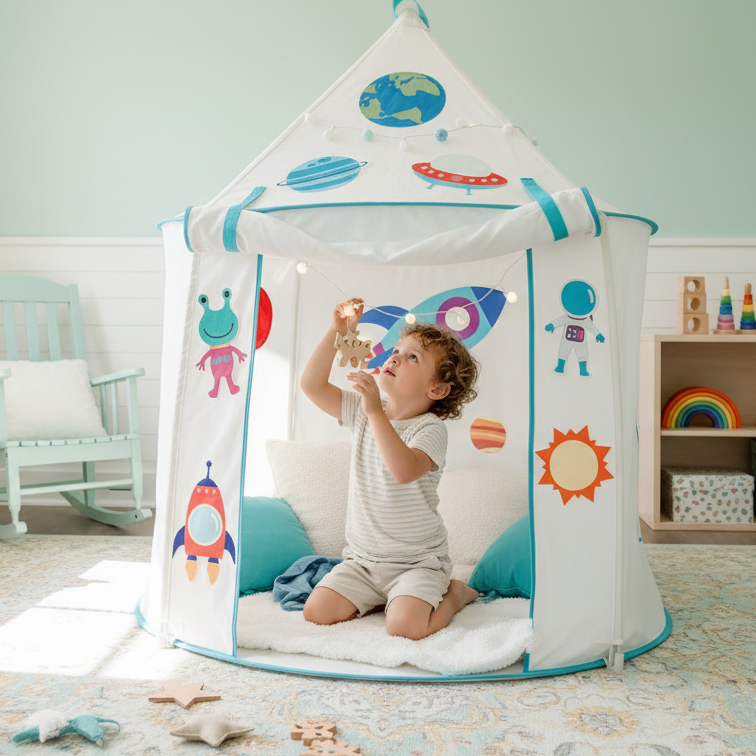
A small play tent
Keep the selection manageable.
The goal is to make quiet activities easy to start.
Let the Space Change With Your Child
A quiet space doesn't have to remain the same.
A play tent might become a reading nook for a toddler.
For a preschooler, it could become a storytelling space.
For an older child, it might become a private creative studio.
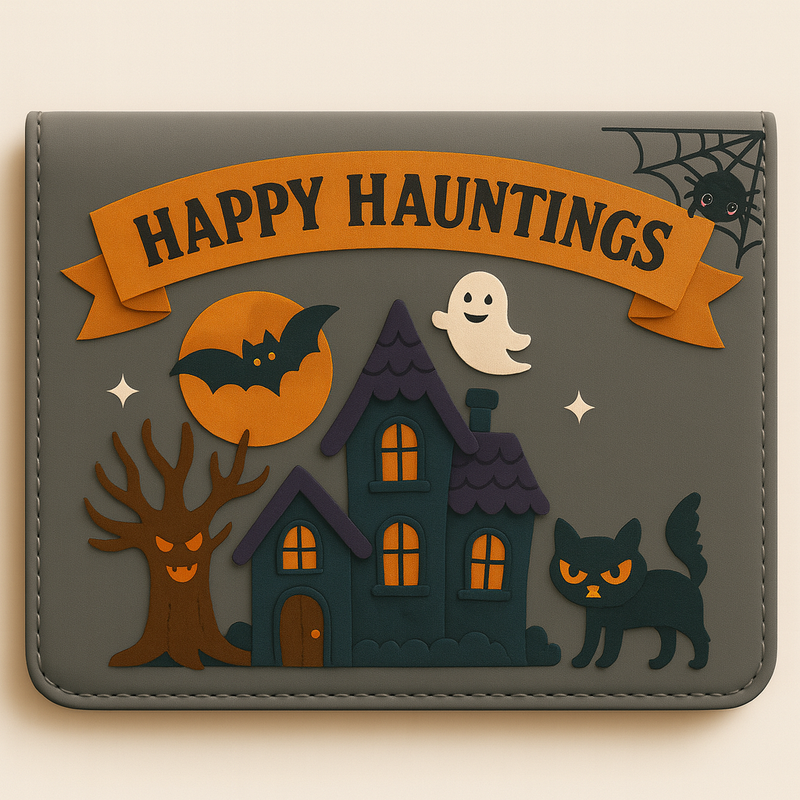
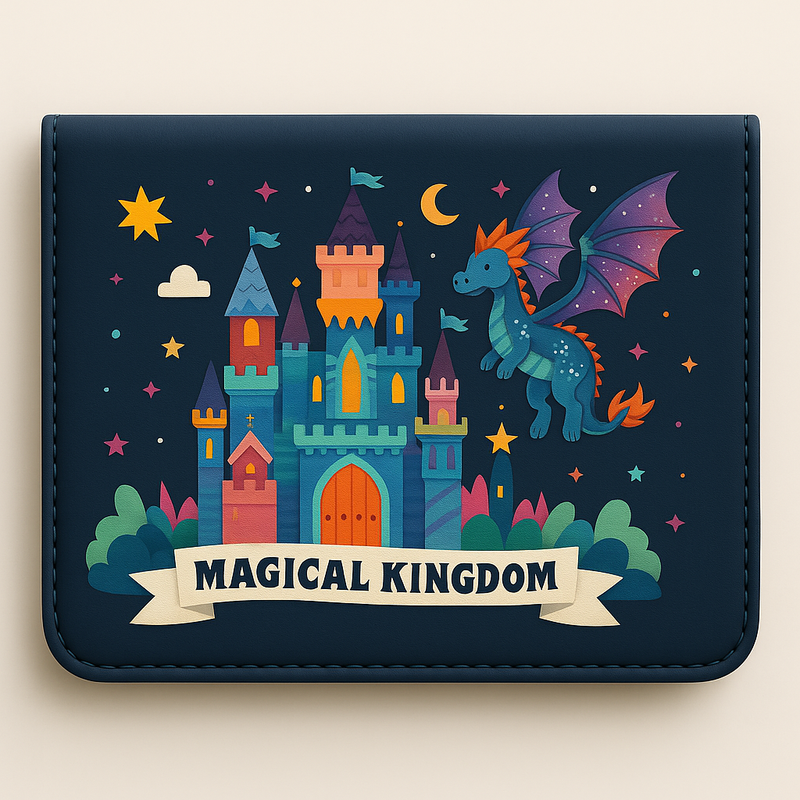
This idea of an adaptable environment is central to ZeeZee Adventures. Its play tent can be transformed using interchangeable StickeeZ themes, allowing the same physical space to support different imaginative settings as children's interests change.
The larger philosophy is simple:
The environment can change even when the physical space stays familiar.
That can make a quiet space useful for longer than a single age or stage.

Screen-Free Doesn't Have to Mean “No Fun”
Sometimes “screen-free” is presented as if children are being asked to give something up.
But quiet play can offer something different.
A story they invent themselves.
A picture that didn't exist before.
A tiny world they build from blocks.
A book they've read so many times they know what happens next.
A pretend adventure that changes every time they play it.
Screens aren't the only source of engaging experiences.
Children can find plenty of interest in activities where they get to make decisions, create, imagine, and participate.
The key is not to make every screen-free activity educational.
It can simply be enjoyable.
Quiet Time Doesn't Have to Look the Same Every Day
One day, your child might want to draw.
Another day, they might want to build.
Another day, they may want to curl up with a book.
And sometimes, they may not want quiet time at all.
That's okay.
Children have different energy levels, interests, personalities, and preferences.
Quiet time works best when it is treated as an opportunity rather than a rigid expectation.
You can offer the space.
You can offer choices.
Your child can decide how to use them.
A Simple Screen-Free Quiet Time Formula
When you're not sure what to offer, try:
COMFORT + CHOICE + CREATIVITY
Comfort: Give children a comfortable place to settle.
Choice: Offer two or three activities.
Creativity: Leave room for them to decide what the activity becomes.
For example:
Comfort: A cushion inside a play tent.
Choice: A book, drawing materials, or building blocks.
Creativity: Let the child decide whether the space becomes a reading nook, art studio, or imaginary world.
That's enough.
You don't need to create a perfect quiet-time schedule.
Quiet Play Can Grow With Children
One of the most useful things about open-ended quiet activities is that they don't have to be outgrown quickly.
A piece of paper can be a drawing surface for a toddler and a comic-book page for an older child.
Blocks can become towers, houses, cities, or inventions.
A play space can become a reading nook, a secret base, a theater, or an imaginary world.
The materials stay familiar.
The child's ideas become more complex.
That is the kind of flexibility that can make screen-free quiet time feel less like a restriction and more like an opportunity.
Final Thought
Quiet time isn't about making children sit still.
Screen-free play isn't about finding a replacement for every minute a child might otherwise spend watching something.
It's about creating opportunities for children to slow down and engage with their own ideas.
For a toddler, that might be turning pages.
For a preschooler, creating a story.
For a school-age child, building a world.
For an older child, writing, drawing, reading, or working on a project of their own.
The activity changes.
The underlying idea stays the same:
Give children a comfortable space, a few possibilities, and enough freedom to decide what happens next.
Sometimes, that's all quiet time needs.
FAQs
1. What are good screen-free quiet time activities for kids?
Reading, drawing, puzzles, building, storytelling, listening to audio stories, looking through photographs, and quiet pretend play are simple options that can work across different ages.
2. What are quiet time activities for toddlers?
Toddlers can look through picture books, explore age-appropriate sorting activities, use large stickers, or create simple stories with familiar stuffed animals.
3. What are good quiet activities for preschoolers?
Preschoolers can create imaginary worlds, draw from open-ended prompts, make simple storybooks, build with blocks, or engage in quiet pretend play.
4. What can school-age children do during screen-free quiet time?
School-age children may enjoy reading, puzzles, building challenges, drawing, family photo stories, creative writing, and independent projects.
5. How long should quiet time last for children?
There isn't one appropriate duration for every child. Quiet time can vary according to age, temperament, daily routine, and the child's interest in the activity.
6. How can I encourage screen-free quiet play?
Create a comfortable space, make a few engaging activities accessible, and offer choices rather than prescribing exactly what the child must do. Open-ended activities can give children more freedom to decide how they play.
7. Can quiet time include imaginative play?
Yes. Imaginative play can be relatively calm and may include storytelling, stuffed-animal play, building imaginary worlds, drawing characters, or creating pretend settings.
8. How can a quiet play space grow with my child?
Rotate books and activities as interests change and allow the space to serve different purposes. A familiar play area can become a reading nook, creative studio, storytelling space, or imaginative world at different ages.




Comment (0)