
The Architecture of Autonomous Play: How Strategic Environmental Design and Non-Intervention Double Early Childhood Focus
The Crisis of Modern Play Interruption
The modern developmental landscape is characterized by an unprecedented level of adult surveillance and structured activity, a trend that inadvertently compromises a child's capacity for sustained independent exploration. When parents or caregivers constantly intervene in a child's play state, they disrupt the formation of deep cognitive focus, often referred to in developmental psychology as the flow state. This psychological phenomenon occurs when an individual is fully immersed in an activity, experiencing a harmonious integration of challenge and capability. In early childhood, achieving this state is critical for executive function development, spatial reasoning, and emotional self-regulation.
Frequent verbal inputs, even when intended as positive reinforcement or well-meaning guidance, signal to the child that their internal locus of control is secondary to external validation. Consequently, the child terminates their self-directed cognitive path, relying instead on the adult to dictate the next sequence of actions. This reliance creates a cycle of dependency where the child becomes easily bored, frequently seeking external stimulation because their internal mechanisms for generating play themes have been underutilized. To reverse this trend, caregivers must shift their role from active directors to silent observers, establishing a secure base from which the child can safely navigate the complexities of their immediate environment without expecting constant instructional feedback.
Understanding the mechanics of non-intervention requires a closer look at how the human brain processes attention during formative years. Young children possess a highly plastic neural architecture that relies heavily on sensory exploration to construct cognitive schemas. When a child is left to manipulate an object independently, they test hypotheses about gravity, weight, balance, and spatial relationships. An adult who steps in to correct a leaning block tower or to demonstrate the correct function of a toy effectively hijacks this scientific method of discovery. The child learns that failure is an error to be corrected by an expert rather than a vital data point in the learning process. Over time, this micro-management diminishes the child's tolerance for frustration, leading to shorter play durations and an increased frequency of attention-seeking behaviors during independent play blocks.
Environmental Catalysts for Sustained Focus
The physical space in which a child operates acts as a silent partner in their developmental progression. Visual overstimulation is a primary, yet frequently overlooked, inhibitor of sustained attention in early childhood environments. Playrooms saturated with high-intensity primary colors, chaotic storage systems, and an excessive volume of accessible toys overwhelm the immature prefrontal cortex, which is responsible for filtering out irrelevant stimuli. When faced with an abundance of choices, a child experiences choice paralysis, moving rapidly from one object to the next without deeply engaging with any single item. This behavioral pattern is often misdiagnosed as a naturally short attention span, whereas it is actually a direct response to a chaotic environment.
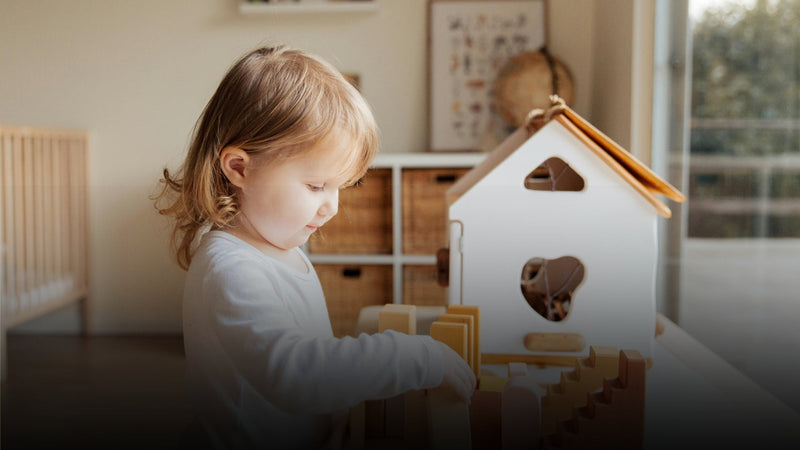
To optimize a space for deep focus, caregivers should implement a strict protocol of toy rotation and minimal presentation. Limiting the number of accessible items to a curated selection of open-ended materials encourages the child to look at familiar objects through a lens of novelty and innovation. A simple wooden block can transform into a vehicle, a phone, or a structural foundation, forcing the cognitive faculties to work harder than they would when interacting with a single-purpose electronic toy. The arrangement of these materials should be deliberate, utilizing low, open shelving where each object has a dedicated, visible home. This spatial predictability reduces cognitive friction, allowing the child to transition smoothly between activities without needing an adult to locate or retrieve materials.
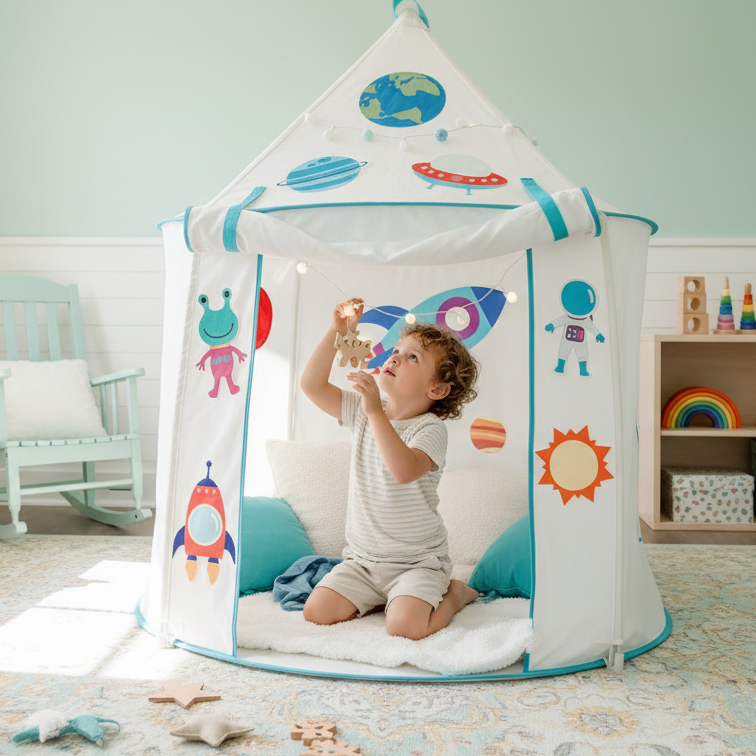
Beyond physical organization, the inclusion of dedicated, stable boundaries within the play space reinforces a sense of physical security and containment. When a child understands the exact parameters of their environment, their cognitive resources are freed from scanning the broader room for potential disruptions and can instead focus entirely on the task at hand. Specialized developmental spaces, such as those curated by premium children's brands like ZeeZee Adventures, demonstrate how purpose-built environments can naturally extend a child's independent play duration by minimizing external distractions and maximizing ergonomic accessibility. By choosing materials that invite open-ended exploration and arranging them within a predictable, clutter-free framework, caregivers create an ecosystem where deep psychological flow is the path of least resistance.
The Psychology of Minimal Intervention
Transitioning from an active play participant to a passive observer is a challenging behavioral shift for many modern parents, yet it is the single most effective catalyst for doubling independent play time. The practice of minimal intervention demands that caregivers master the art of the supportive presence, a state where the adult is physically accessible and emotionally responsive but entirely non-intrusive. This approach builds upon the concept of scaffolding, where assistance is provided only at the absolute perimeter of the child's current capabilities. When a child encounters a structural or logistical problem during play, the adult's immediate response should be a deliberate pause rather than immediate assistance. This intentional delay provides the necessary temporal window for the child to engage problem-solving mechanisms, experience productive struggle, and ultimately achieve a sense of mastery that boosts intrinsic motivation.
When verbal interaction is necessary, the content of the communication must shift from evaluative praise to objective narration. Standard phrases of validation, while well-intentioned, redirect the child's attention away from the process of play and toward the parent's reaction. This shift replaces intrinsic satisfaction with a desire for external approval, making the play duration dependent on the presence of an audience. By replacing evaluative commentary with descriptive tracking, such as noting the color choices or structural patterns aloud without judging them, the caregiver acknowledges the child's effort without interrupting their internal focus. This subtle linguistic adjustment maintains the child's immersion in their imaginative framework, allowing them to continue their exploration seamlessly after the brief interaction concludes.
The long-term benefits of mastering this non-intrusive stance extend far beyond extended periods of daily quiet time for parents. Children who are consistently permitted to navigate their play independently develop a robust internal locus of control, a psychological trait correlated with academic resilience, creative problem-solving, and emotional maturity later in life. They become individuals who are comfortable with solitude, capable of self-directed learning, and less reliant on constant external entertainment or digital stimulation. By reframing independent play not as a period of parental neglect but as a critical developmental laboratory, caregivers can cultivate a profound shift in their child's cognitive endurance, doubling their play time while building the foundational pillars of lifelong intellectual curiosity.






Comment (0)