
The Best Screen-Free Toys for Creative Kids
How to choose toys that encourage imagination, problem-solving, and child-led play without relying on screens.
What if the best toy in your child's playroom isn't the one that does the most?
It might be the one that does the least.
A toy that talks, lights up, and tells children exactly what to do can certainly be entertaining. But when a toy leaves some of the work to the child, something different happens.
A block becomes a tower.
Then a bridge.
Then a spaceship.
A cardboard box becomes a house.
Then a train.
Then a secret headquarters.
The child supplies the story.
That's the heart of screen-free, open-ended play.
And for families looking to reduce screen time while keeping children engaged, choosing toys that invite children to create rather than simply consume can make a meaningful difference.
What Makes a Great Screen-Free Toy?
A screen-free toy doesn't automatically mean a creative toy.
The most useful question isn't:
"Does this toy have a screen?"
It's:
"What does this toy allow my child to do?"
A strong creative-play toy often gives children opportunities to:
-
Make choices
-
Build or construct
-
Imagine scenarios
-
Create stories
-
Experiment
-
Solve problems
-
Play independently
-
Play with others
-
Change the activity from one day to the next
The more possibilities a toy offers, the longer it may remain interesting.
1. Building Blocks
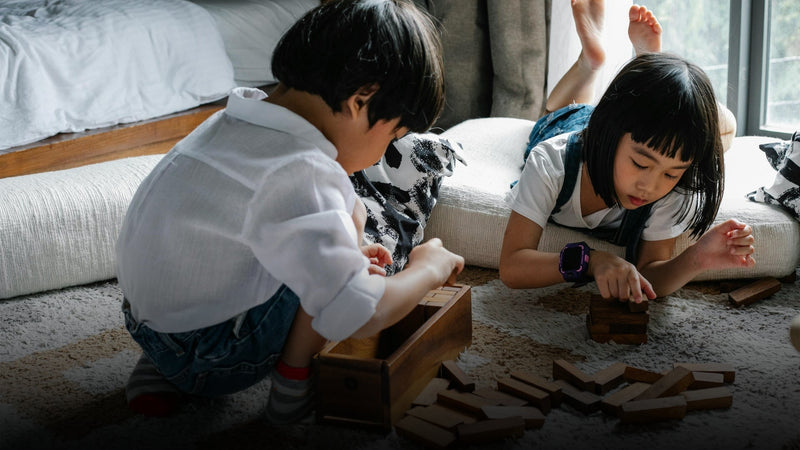
Few toys are as versatile as basic building blocks.
A child can build:
-
Houses
-
Towers
-
Bridges
-
Roads
-
Castles
-
Vehicles
-
Animal habitats
For toddlers, stacking and knocking down can be the entire game.
For preschoolers, blocks can become part of a much larger imaginary world.
The important thing is that there isn't one correct thing to build.
2. Magnetic Building Tiles
Magnetic tiles can introduce children to construction while leaving plenty of room for creativity.
They can build flat designs, towers, houses, and unusual structures.
Children can experiment with balance, shape and construction without necessarily following a fixed set of instructions.
For older children, the structures can become settings for pretend play.
A magnetic-tile castle might become the home of a family of dragons.
3. Art Supplies
Paper and crayons may not look particularly exciting.
That's precisely why they're useful.
A blank sheet of paper doesn't tell a child what to draw.
It asks them to decide.
Keep a small selection of age-appropriate supplies available:
-
Crayons
-
Coloured pencils
-
Washable markers
-
Paper
-
Child-safe scissors where appropriate
-
Glue sticks
The goal isn't perfect artwork.
It's expression.
4. Cardboard Boxes
Never underestimate the cardboard box.
It can become:
A spaceship.
A shop.
A house.
A train.
A garage.
A robot.
And because the box has no fixed purpose, children can decide what it becomes.
For creative play, that flexibility is incredibly valuable.
5. Pretend-Play Props
Children don't necessarily need realistic miniature versions of everything.
A few simple props can be enough.
Try:
-
Soft toys
-
Scarves
-
Baskets
-
Fabric pieces
-
Wooden spoons
-
Toy food
-
Dolls
-
Simple costumes
These objects can support restaurants, hospitals, shops, schools, rescue centres and countless imaginary adventures.
6. Dolls and Soft Toys
A soft toy can become much more than something to cuddle.
It can become:
-
A patient
-
A baby
-
A customer
-
A student
-
An explorer
-
A friend
-
A character in a story
Children can practise caring, storytelling and role play through their interactions with imaginary characters.
7. Puzzles
Puzzles provide a different kind of screen-free experience.
They encourage children to look carefully, experiment with possibilities and work towards a goal.
For younger children, choose simple puzzles with larger pieces.
As children grow, puzzles can become increasingly complex.
The key is finding the right level of challenge.
8. Play Dough
Play dough offers an open-ended sensory experience.
A child can make:
-
Food
-
Animals
-
People
-
Buildings
-
Shapes
-
Imaginary creatures
It can also become part of pretend play.
A child might make pretend cakes for their imaginary bakery.
Or food for a dinosaur restaurant.
Use age-appropriate play dough and supervise younger children according to the product's safety guidance.
9. Dress-Up Clothes
A few scarves, hats and child-safe costumes can transform a child into a completely different character.
Today:
A firefighter.
Tomorrow:
A pirate.
Next week:
A dragon.
Dress-up play doesn't need to be elaborate.
Sometimes one accessory is enough to start an imaginary story.
10. Toy Vehicles
Cars, trains, buses, and other vehicles can support both construction and pretend play.
A few blocks can become a city.
A blanket can become a road.
A cardboard box can become a garage.
Suddenly, the vehicles are part of a much larger world.
11. Play Kitchens
A pretend kitchen can support role play around familiar routines.
Children can pretend to:
-
Cook
-
Serve food
-
Run a restaurant
-
Shop for ingredients
-
Feed a doll
-
Host a tea party
For younger children, the play may focus on copying everyday actions.
Preschoolers can build entire stories around them.
12. Open-Ended Nature Materials
Nature can provide some of the simplest creative materials.
Depending on your environment and your child's age, things like:
-
Leaves
-
Sticks
-
Stones
-
Pinecones
-
Shells
can become props for imaginary games.
A collection of stones might become dinosaur eggs.
Leaves might become pretend food.
Sticks might become magic wands.
Always choose materials appropriate for your child's age and supervise where necessary.
13. Simple Musical Instruments
Screen-free creativity isn't limited to visual art.
Simple instruments can encourage children to explore sound and rhythm.
Try:
-
Shakers
-
Drums
-
Bells
-
Simple rhythm instruments
Children can make up songs, create rhythms or incorporate music into pretend play.
A cardboard box might become a drum.
A wooden spoon might become a microphone.
14. Books
Books are sometimes treated as quiet-time activities rather than play materials.
But stories can become the beginning of imaginative adventures.
Read a story together.
Then ask:
"What do you think happens next?"
Or:
"What if the character went somewhere else?"
Children can recreate the story through toys, drawings or pretend play.
15. Play Tents and Cosy Spaces
A dedicated play space can make screen-free play more inviting.
A tent can become:
-
A reading nook
-
A castle
-
A spaceship
-
A jungle shelter
-
A secret headquarters
-
A cosy retreat
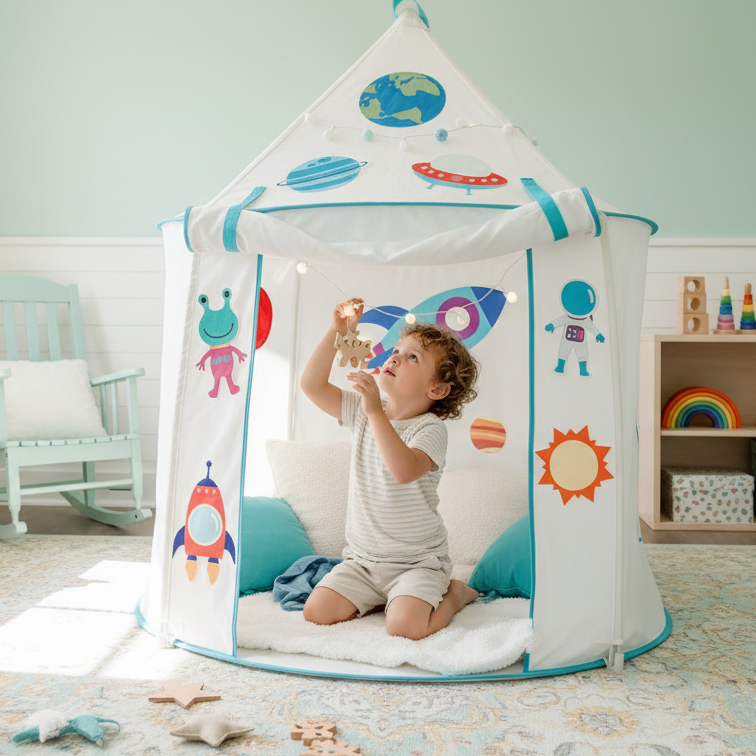
The ZeeZee Adventure Tent is designed around this flexibility.
With interchangeable StickeeZ themes, children can transform the same familiar space into different imaginative environments.
One day, the tent might become a jungle.
Another day, a castle.
Later, it might simply become a quiet place to read or play.
The space creates the invitation.
The child creates the story.
How to Choose the Right Screen-Free Toy
Instead of asking whether a toy is trendy, expensive or visually impressive, ask a few simple questions.
Can my child use it in different ways?
If yes, it has more creative potential.
Does it require imagination?
Does your child have to supply the story?
Can the activity change?
Can today's game become tomorrow's completely different game?
Can my child play without instructions?
A toy that requires constant adult guidance may be less useful for independent exploration.
Can it grow with my child?
The best open-ended materials can often be used at different developmental stages.
The Difference Between Open-Ended and Closed-Ended Toys
This doesn't mean closed-ended toys are bad.
They simply offer different experiences.
A puzzle has a particular goal.
A matching game has rules.
A toy with a fixed sequence may have a specific way to use it.
Open-ended materials are different.
Blocks can become almost anything.
Blank paper can become anything.
A cardboard box can become almost anything.
Children have more control over the outcome.
A healthy playroom can include both types.
The key is balance.
You Don't Need a Room Full of Toys
More toys don't necessarily mean more creative play.
In fact, too many choices can sometimes make it harder for children to decide what to do.
Instead, consider rotating a smaller selection.
Keep some materials accessible.
Put others away.
Then bring them back later.
A familiar toy can feel surprisingly fresh after some time away.
The Best Screen-Free Toy May Not Look Like a Toy
A blanket.
A cardboard box.
A basket.
A few cushions.
A piece of paper.
These ordinary things can sometimes generate more imaginative possibilities than highly specialised toys.
Why?
Because they don't tell children exactly what they are supposed to do.
The child has to decide.
And that decision is where creativity begins.
Screen-Free Doesn't Mean Parent-Free
You don't need to entertain your child constantly.
You can introduce an idea and step back.
Try:
"I wonder what this box could become."
Then wait.
If your child asks you to join, follow their lead.
If they become absorbed in their own game, give them space.
The goal isn't to become the activity director.
It's to create an environment where children can become the creators.
A Simple Screen-Free Toy Starter Kit
If you're starting from scratch, you don't need dozens of products.
Consider beginning with:
Building blocks
Paper and crayons
Cardboard boxes
Soft toys
Play dough
A few dress-up pieces
Books
Simple vehicles
A basket of open-ended household materials
A cosy play space
That collection can support an enormous variety of play.
The 5-Question Toy Test
Before bringing another toy home, ask:
-
Can my child use it in multiple ways?
-
Does it encourage imagination?
-
Can it be used without a screen?
-
Can my child play with it independently or collaboratively?
-
Will it still be interesting a few months from now?
If the answer to most of these is yes, you've probably found a strong candidate.
A Final Thought
The goal of screen-free play isn't to make childhood completely screen-free.
Screens are part of modern life.
The goal is to make sure they aren't the only source of entertainment, stimulation, and creativity.
Children need opportunities to build.
Draw.
Pretend.
Read.
Move.
Explore.
Make mistakes.
Invent stories.
And sometimes simply be bored enough to think of something themselves.
The best screen-free toys don't fill every quiet moment.
They leave some space for the child.
And that space can become a castle.
A spaceship.
A restaurant.
A jungle.
Or something nobody has imagined before.
Give children fewer instructions and more possibilities.
You may be surprised by what they create.
How to Choose Toys That Actually Encourage Creativity
A playroom can be overflowing with toys and still leave a child saying:
"I'm bored."
That's because the number of toys isn't necessarily what matters.
What matters is what those toys allow children to do.
A toy that has one obvious function may be entertaining for a while. A toy that can become many different things can keep inviting children back into play.
Think about a set of blocks.
Today, they might become a house.
Tomorrow, a zoo.
Next week, a spaceship.
The blocks haven't changed.
The story has.
That's the quality to look for when choosing screen-free toys for creative children.
Look for Toys With More Than One Possibility
One of the simplest ways to identify a creative toy is to ask:
"How many ways can my child use this?"
A cardboard box has almost unlimited possibilities.
A blanket can become a tent, cape, river or castle.
Blocks can become buildings, roads or imaginary machines.
A soft toy can become a friend, patient, customer or character.
The more flexible the material, the more opportunity your child has to contribute their own ideas.
Open-Ended Toys vs Toys With One Purpose
Not every toy needs to be open-ended.
Puzzles, board games and matching activities can provide valuable forms of structured play.
But open-ended toys offer something different.
They don't necessarily have one correct outcome.
Consider the difference between:
"Build this exact model."
and
"What can you build?"
Both can be enjoyable.
But the second question puts the child in charge of the outcome.
That freedom is what makes open-ended play so valuable for creativity.
Choose Toys That Leave Some Work for the Child
A toy doesn't need to do everything for your child.
In fact, it can be useful when the child has to supply part of the experience.
A simple wooden block doesn't make a sound.
It doesn't light up.
It doesn't tell a story.
Your child has to decide what it represents.
That's not a limitation.
That's the invitation.
Building Toys: Small Pieces, Big Possibilities
Building materials are among the easiest screen-free toys to use creatively.
Think:
-
Wooden blocks
-
Magnetic tiles
-
Construction pieces
-
Cardboard
-
Reusable building materials
Children can create structures and then use those structures as settings for pretend play.
A block tower becomes a castle.
The castle becomes a dragon's home.
The dragon needs rescuing.
Now construction has become storytelling.
Art Materials Give Children a Blank Canvas
A colouring book tells a child what to colour.
A blank piece of paper asks:
"What do you want to create?"
That's a very different invitation.
Keep simple art supplies available when appropriate:
-
Paper
-
Crayons
-
Coloured pencils
-
Washable markers
-
Child-safe scissors
-
Glue
The objective isn't to create perfect artwork.
Let children draw strange creatures.
Invent imaginary maps.
Create signs for their pretend shops.
Design spaceships.
Make birthday cards for imaginary characters.
Art can become part of almost any other form of play.
Pretend-Play Toys Shouldn't Tell the Whole Story
Pretend play becomes more flexible when children have to fill in some of the gaps.
A simple scarf can be:
A superhero cape.
A royal robe.
A picnic blanket.
A magic carpet.
A river.
A costume.
Compare that with a toy that only functions as one specific character.
The scarf requires the child to decide.
That decision is part of the creative process.
Soft Toys Are More Than Cuddly Companions
A teddy bear can become almost anyone.
A patient.
A customer.
A baby.
A teacher.
A pirate.
A scared animal.
A lost traveller.
Children can create stories around their soft toys and use them to act out situations they recognise.
The toy doesn't need to speak.
The child gives it a voice.
Dress-Up Materials Can Transform a Game
You don't need an elaborate costume collection.
A few simple accessories can be enough.
Try:
-
Hats
-
Scarves
-
Capes
-
Bags
-
Fabric pieces
One scarf can completely change a child's character.
Suddenly they're a superhero.
Or an explorer.
Or a magician.
Or the captain of a ship.
The transformation is part of the fun.
Play Dough Is a Creative Playground
Play dough is another screen-free material with endless possibilities.
Children can make:
-
Food
-
Animals
-
People
-
Buildings
-
Shapes
-
Imaginary creatures
It can also become part of pretend play.
A child might create cakes for a pretend bakery.
Or food for a dinosaur restaurant.
Or "fuel" for a spaceship.
The material stays the same.
The story changes.
Books Can Become Play
A book doesn't have to end when you close the final page.
Take a favourite story and ask:
"What happens next?"
Or:
"What if the character went somewhere else?"
Children can recreate scenes using toys.
They can act out characters.
They can draw alternative endings.
They can invent new adventures.
Reading and pretend play can naturally overlap.
Toys That Encourage Movement
Creative play doesn't always happen sitting down.
Simple props can encourage physical imagination too.
A blanket can become an obstacle.
Cushions can become stepping stones.
A cardboard box can become a vehicle.
A scarf can become a superhero cape.
Children can run, crawl, climb safely, and move through imaginary environments.
Always adapt physical play to your child's age and environment and keep the setup safe.
Create a Toy Rotation Instead of Adding More
If your child has a large collection of toys, consider rotating them.
You don't need to put everything away.
Simply keep a smaller selection accessible and store some items temporarily.
After a while, switch them.
A toy that was ignored last month may suddenly feel interesting again.
This can also make it easier for children to see what is available rather than becoming overwhelmed by too many choices.
Build a Screen-Free "Creative Corner"
You don't need an entire playroom.
A small corner can work.
Consider keeping:
-
A basket of building materials
-
Paper and crayons
-
A few soft toys
-
Books
-
Dress-up pieces
-
Open-ended household objects
Keep the environment simple.
Children should be able to reach appropriate materials without needing an adult to organise everything.
A Cosy Space Can Encourage Longer Play
A defined space can give children somewhere to return to an imaginary world.
It might be a small reading corner.
A blanket fort.
Or a play tent.
The ZeeZee Adventure Tent can become a flexible screen-free play environment.
With interchangeable StickeeZ themes, children can change the visual setting while keeping the same familiar space.
One day it might become a jungle.
Another day, a castle.
Another day, a spaceship.
The space stays familiar.
The possibilities keep changing.

Don't Forget the Power of "Boredom"
Sometimes, parents feel responsible for filling every quiet moment.
But children don't necessarily need constant entertainment.
A little boredom can create a pause.
And that pause can lead to:
"I know what we can do!"
Suddenly, the cardboard box becomes a rocket.
The sofa becomes a mountain.
The soft toy becomes a stranded explorer.
The child has moved from consuming an activity to creating one.
That transition is worth leaving room for.
The Best Screen-Free Toys Don't Need Batteries
This doesn't mean battery-powered toys are bad.
It simply means they aren't the only option.
A healthy play environment can include a mixture of structured and open-ended experiences.
But if you're specifically looking for toys that encourage creativity, start with materials that require children to contribute something.
Blocks.
Paper.
Play dough.
Boxes.
Soft toys.
Fabric.
Books.
Simple props.
These are humble materials.
But they can support remarkably big ideas.
A Simple Toy-Selection Checklist
Before buying a new toy, ask yourself:
1. Can my child use it in more than one way?
2. Does it leave room for imagination?
3. Can my child use it without a screen?
4. Can the game change as my child grows?
5. Can my child play with it independently?
6. Can it be combined with other toys?
7. Will my child create something, rather than simply watch something happen?
If the answer is yes to most of these, you've probably found something with strong creative potential.
What About Expensive Toys?
Price doesn't determine creativity.
An expensive toy can be wonderful.
A cheap cardboard box can also be wonderful.
The important question is what the child can do with it.
Sometimes, the simplest materials provide the most freedom.
You don't need to recreate a catalogue-perfect playroom.
You need a space where children can experiment.
The "Combine It" Test
Here's another useful way to evaluate a toy.
Ask:
"Can my child combine this with something else?"
Blocks + toy animals.
Paper + cardboard box.
Play dough + pretend kitchen.
Blanket + cushions.
Soft toys + books.
When toys can interact with one another, the number of possible play scenarios increases.
A small collection can suddenly become an entire imaginary world.
Give Children Tools, Not Scripts
This might be the simplest philosophy to remember.
Give them:
Materials.
Time.
Space.
Freedom.
Then let them decide.
You can join when invited.
You can offer an idea when they're stuck.
But you don't have to direct every minute.
The best screen-free play often begins when adults stop asking:
"What should my child do?"
and start asking:
"What could my child create?"
Conclusion
Choosing screen-free toys isn't about finding the most impressive toy on the shelf.
It's about finding materials that leave room for imagination.
A block doesn't tell a child what to build.
A blank page doesn't tell them what to draw.
A cardboard box doesn't tell them where they're going.
A soft toy doesn't tell them what story to tell.
And that's exactly why these simple things can be so powerful.
The best creative toys don't fill every gap.
They leave gaps for children to fill themselves.
So when you're choosing your next screen-free toy, don't just ask:
"Will my child like this?"
Ask:
"What could my child make, imagine or invent with it?"
That question can completely change the way you build a playroom.
Choosing Toys by Age, Building a Balanced Toy Collection and Creating a More Creative Play Environment
A good screen-free playroom doesn't need to be packed with toys.
In fact, sometimes the opposite is more useful.
When children have too many choices, it can be difficult to know where to begin. A smaller collection of versatile toys can make it easier to focus, combine materials and return to favourite forms of play.
The goal isn't to create a perfect toy shelf.
It's to create an environment where children can build, imagine, experiment, pretend and create.
And as children grow, the same toys can continue to offer new possibilities.
Choosing Screen-Free Toys by Age
Children's abilities and interests change quickly during the early years.
A toy that seems simple at one age can become much more interesting a year later.
Instead of thinking about toys as having an expiry date, look for materials that can grow with your child's abilities.
Screen-Free Toys for Toddlers
Toddlers often benefit from simple materials that allow them to explore cause and effect, movement, and familiar routines.
Good starting points include:
-
Large building blocks
-
Chunky puzzles
-
Soft toys
-
Board books
-
Large crayons
-
Play dough suitable for their age
-
Simple pretend-play props
-
Stacking and sorting materials
-
Balls and other movement-based toys
At this stage, don't worry about creating elaborate games.
A toddler stacking three blocks is playing.
A toddler feeding a teddy is playing.
A toddler putting objects into a basket and taking them out again is exploring.
Simple can be enough.
Screen-Free Toys for Preschoolers
Preschoolers can often handle more complex pretend scenarios and construction projects.
Consider:
-
Building sets
-
Magnetic tiles
-
Dress-up materials
-
Dolls and soft toys
-
Pretend kitchen accessories
-
Art supplies
-
Play dough
-
Puzzles
-
Simple board games
-
Toy vehicles
-
Books
At this stage, children may start combining different toys.
Blocks become a castle.
Toy animals move into the castle.
A blanket becomes the surrounding forest.
Suddenly, several simple toys have become one large imaginary world.
Screen-Free Toys for Older Preschoolers
Older preschoolers may enjoy toys that give them more control over storytelling and problem-solving.
Try:
-
More complex construction materials
-
Open-ended craft supplies
-
Pretend-play props
-
Puppets
-
Simple strategy games
-
Storytelling materials
-
Dress-up accessories
-
Books
-
Nature materials
-
Larger building projects
The best choices are often those that can be combined with other materials.
A single toy becomes more valuable when it can participate in many different games.
Build a Balanced Toy Collection
You don't need ten versions of the same type of toy.
Instead, think about having a mixture of play experiences.
A balanced collection might include:
Something to Build
Blocks, tiles or construction materials.
Something to Create
Paper, crayons, play dough or craft materials.
Something to Imagine
Soft toys, dolls, dress-up pieces or pretend-play props.
Something to Read
Books and story materials.
Something to Solve
Puzzles, matching games or age-appropriate board games.
Something to Move With
Balls, simple movement toys or materials for active indoor play.
Something to Transform
Boxes, blankets, fabric and other open-ended household objects.
You don't need a huge number in each category.
A few good options can be enough.
Why Open-Ended Toys Are Worth Keeping Around
An open-ended toy can change meaning.
That's what makes it different from a toy with only one obvious function.
A block can be:
A building.
A road.
A wall.
A cake.
A phone.
A spaceship control.
A piece of treasure.
The child decides.
And because the answer can change, the toy can remain useful across many different play sessions.
Try Toy Rotation
If your child has a lot of toys, consider rotating them rather than keeping everything available at once.
You might keep:
-
A few building toys
-
Some pretend-play props
-
A small selection of books
-
Art materials
-
One or two puzzles
accessible.
Other toys can be stored away.
Then rotate them periodically.
This can make familiar toys feel interesting again without constantly buying something new.
Don't Rotate Everything
You don't have to hide half the playroom.
Some favourite items may be worth keeping accessible.
A beloved teddy.
Favourite books.
Frequently used blocks.
Comfort objects.
The goal isn't to create artificial scarcity.
It's simply to make the play environment easier to navigate.
Create Toy Combinations
One of the easiest ways to expand play is to combine different categories.
Try:
Blocks + animals
Now you have a zoo.
Blocks + vehicles
Now you have a city.
Blankets + cushions + soft toys
Now you have a campsite.
Paper + cardboard
Now you have a shop.
Play dough + pretend kitchen
Now you have a bakery.
You don't need more toys.
You may simply need to put existing materials together.
Encourage Children to Create the Setup
Instead of always preparing the activity yourself, give your child the responsibility of creating the environment.
Say:
"What do we need for our restaurant?"
They might bring:
A table.
Cups.
Teddy bears.
Paper menus.
A blanket.
Suddenly, they're not just playing in the restaurant.
They're designing it.
Let the Play Space Change
A creative play environment doesn't need to look the same every day.
Monday:
Jungle
Tuesday:
Castle
Wednesday:
Space station
Thursday:
Animal hospital
The same room can support all four.
This is particularly useful when children have access to flexible spaces.
A play tent can become a defined setting without limiting what happens inside it.
Create a Dedicated Imagination Space
You don't need an entire playroom.
A small corner can work.
You might include:
-
A play tent
-
A few cushions
-
Books
-
Soft toys
-
Open-ended props
-
A basket of creative materials
The space becomes familiar.
Children learn that this is somewhere they can go when they want to play, read, imagine or create.
The ZeeZee Adventure Tent is designed to support this kind of flexible environment.
Its interchangeable StickeeZ themes can change the visual setting while the physical space remains familiar.
One day, the tent can become a jungle.
Another day, a castle.
Another day, a spaceship.
The environment changes without requiring an entirely new collection of toys.
Make Independent Play Easier
If you want your child to spend more time playing independently, consider how accessible their materials are.
Can they reach the books?
Can they see the building blocks?
Can they get the dress-up pieces?
Can they find paper and crayons?
Can they enter their play space without asking you to prepare everything?
When appropriate, accessible materials can reduce the number of times children need an adult to initiate play.
You don't need to remove yourself completely.
Simply make it easier for your child to begin.
But Don't Expect Children to Entertain Themselves Forever
Independent play takes practice.
Some children naturally enjoy it.
Others need more connection.
Don't treat independent play as a test.
Start with small periods.
Sit nearby.
Let your child become absorbed.
Then gradually allow them to continue while you step away for a short task when appropriate.
The goal is not to make children completely self-sufficient.
It's to give them opportunities to discover that they can create their own play.
Don't Use Screens as the Opposite of Everything Fun
Reducing screen time doesn't mean making every screen-free activity educational.
Children can watch something simply because it's entertaining.
They can also play simply because it's fun.
A cardboard-box spaceship doesn't need to teach a lesson.
A pretend restaurant doesn't need a worksheet.
A fort doesn't need a learning objective.
Play has value because children are actively participating in it.
Watch for the "What Can I Make?" Mindset
There's a meaningful difference between:
"What can I watch?"
and:
"What can I make?"
Creative screen-free play often encourages the second question.
What can I build?
What can I draw?
Who can I pretend to be?
What story can I create?
How can I solve this problem?
These questions put the child in an active role.
Don't Buy a New Toy Every Time They Get Bored
Boredom can be uncomfortable for parents.
We often feel responsible for fixing it immediately.
But boredom can also create a pause.
And sometimes, after that pause, a child starts inventing.
They find a box.
They pull out some cushions.
They grab a teddy.
And suddenly, they're playing.
You don't need to eliminate every moment of boredom.
Sometimes, give imagination a chance to appear.
A Screen-Free Toy Doesn't Have to Be a Traditional Toy
This is worth remembering.
A toy can be:
A cardboard box.
A blanket.
A basket.
A wooden spoon.
A piece of fabric.
A few cushions.
A sheet of paper.
These objects can become props within a much bigger imaginary world.
You don't have to spend money to create creative possibilities.
The 7-Question Screen-Free Toy Test
Before buying a new toy, ask:
1. Can my child use it in different ways?
2. Does it encourage active participation?
3. Does it leave room for imagination?
4. Can it be combined with other materials?
5. Can it grow with my child?
6. Can my child use it without constant adult direction?
7. Will it still be useful after the novelty wears off?
If the answer is yes to most of these, it may have long-term creative value.
A Simple Starter Collection
If you want to simplify your child's playroom, start small.
You could build around:
Building:
Blocks or magnetic tiles
Creating:
Paper, crayons and play dough
Pretending:
Soft toys, dolls and simple props
Reading:
A rotating selection of books
Solving:
Age-appropriate puzzles and games
Moving:
Simple active-play materials
Transforming:
Cardboard, fabric, blankets and baskets
Imagining:
A cosy, flexible play space
That's plenty of possibilities without filling every shelf.
Create a Play Space That Doesn't Tell Children What to Do
This is one of the biggest differences between a decorative playroom and a creative one.
A decorative space looks beautiful.
A creative space invites action.
Materials are visible.
Children can reach appropriate items.
There is room to build.
There is somewhere to sit.
There is somewhere to hide.
There is space to make a mess.
And there is enough flexibility for the environment to change.
What Should Parents Actually Do?
You don't have to entertain.
You don't have to constantly suggest activities.
You don't have to explain what every toy is for.
Instead:
Provide
Give children access to appropriate materials.
Invite
Offer an idea when they need a starting point.
Observe
See what naturally captures their attention.
Follow
Join their game when they invite you.
Step back
Give them space when they become absorbed.
It's a simple shift.
From directing play to supporting play.
The Most Creative Toy Might Be the Simplest One
We often look for toys that promise more.
More sounds.
More features.
More functions.
More entertainment.
But creative play sometimes benefits from less.
A blank page.
A pile of blocks.
A cardboard box.
A basket of fabric.
A soft toy.
These things don't tell children what to do.
They ask children to decide.
And that decision is where imagination begins.
Final Thoughts
Building a screen-free play environment isn't about removing every screen from childhood.
It's about creating balance.
Children need opportunities to consume stories, but they also need opportunities to create them.
They need moments to follow instructions, but they also need moments to make their own decisions.
They need toys that are fun, but they can also benefit from toys that leave room for imagination.
So when you're choosing the next addition to your child's play space, don't only ask:
"Will they enjoy this?"
Ask:
"What could they create with this?"
A great screen-free toy doesn't finish the story.
It gives your child somewhere to begin.
And sometimes, the simplest beginning can lead to the biggest adventure.
The Ultimate Guide to Creating a Creative, Screen-Free Playroom
A creative playroom isn't defined by how many toys it contains.
It isn't about having the most beautiful shelves, the trendiest products or a perfectly organised Instagram-worthy corner.
A truly creative play space does something much simpler.
It makes it easy for children to imagine.
When children can see their favourite materials, reach appropriate toys and move freely between building, drawing, pretending, reading and creating, play becomes less dependent on an adult saying:
"What would you like to do?"
The environment itself becomes an invitation.
And you don't need a large room to create one.
Start With What You Already Have
Before buying storage bins or new toys, take a look at your current play space.
You may already have everything you need.
Look for:
-
Building blocks
-
Books
-
Soft toys
-
Art supplies
-
Puzzles
-
Dress-up materials
-
Cardboard boxes
-
Blankets
-
Cushions
-
Baskets
-
Play dough
-
Toy vehicles
The first step isn't adding more.
It's deciding what is genuinely useful.
Declutter Without Removing Everything
A playroom doesn't need to be empty.
But if every toy is visible at the same time, children can sometimes find it difficult to choose where to begin.
Start by separating toys into three groups:
Frequently Used
Keep these accessible.
Occasionally Used
Consider rotating these.
No Longer Used
Donate, store, or pass these on where appropriate.
The goal isn't minimalism for its own sake.
It's creating a space that feels manageable.
Create Simple Play Zones
You don't need walls between every activity.
Instead, think about creating visual or functional areas.
Building Zone
Blocks, tiles, and construction materials.
Creative Zone
Paper, crayons, play dough and craft materials.
Pretend-Play Zone
Soft toys, dress-up materials and open-ended props.
Reading Zone
Books and a comfortable place to sit.
Quiet Zone
A cosy space where children can retreat when they want less stimulation.
These zones don't have to remain fixed.
A building zone can become part of a pretend city.
A reading corner can become a doctor's waiting room.
A quiet tent can become a secret headquarters.
Flexibility matters.
Keep the Most Useful Materials Accessible
If children need an adult to retrieve everything, play becomes dependent on an adult.
Where appropriate, place frequently used materials within easy reach.
Low shelves.
Open baskets.
Visible book displays.
Simple containers.
The objective isn't perfect organisation.
It's independence.
Children should be able to see possibilities and, when safe and appropriate, begin exploring them themselves.
Use Baskets Instead of Complicated Storage
You don't need a sophisticated storage system.
A few labelled or visually distinct baskets can be enough.
For example:
Blocks
Art
Pretend Play
Soft Toys
Books
Vehicles
This also makes tidying easier.
Children can learn that materials have places without needing every individual item to be perfectly arranged.
Don't Hide Everything Behind Closed Doors
Beautiful storage can sometimes make toys difficult to discover.
If everything is packed away, children may forget what they have.
Consider displaying a small number of toys openly.
A few books facing outward.
Blocks in an open basket.
Dress-up materials where children can see them.
Soft toys in an accessible area.
The environment should make play feel possible.
Rotate Toys With Intention
Toy rotation doesn't need to follow a strict schedule.
You don't need to change everything every Monday morning.
Instead, observe.
Which toys are being ignored?
Which ones are being used repeatedly?
Which combinations haven't been explored?
You can then swap a few materials.
For example:
Remove some puzzles.
Bring back a construction set.
Add a few soft toys to the building area.
Now the same blocks have new possibilities.
Rotate Combinations, Not Just Toys
This is an especially useful idea.
Instead of thinking:
"Which toy should I bring out?"
think:
"Which toys could work together?"
Try:
Blocks + Animals
Create a zoo.
Blocks + Vehicles
Build a city.
Cardboard + Paper
Create a shop.
Soft Toys + Blankets
Build an animal hospital.
Books + Dress-Up
Act out a story.
Play Dough + Pretend Kitchen
Create a bakery.
The combination can make familiar toys feel completely different.
Create a Cosy Corner
Not every child wants active play all the time.
A cosy corner gives children somewhere to slow down.
You might include:
-
A soft mat
-
Cushions
-
A few books
-
Soft toys
-
A blanket
-
A small tent
The space doesn't need to be large.
It simply needs to feel different from the more active areas of the room.
A Play Tent Can Become a Flexible World
A tent is more than somewhere to crawl inside.
It can create a defined imaginary environment.
It might become:
A castle.
A spaceship.
A jungle shelter.
A reading nook.
A secret headquarters.
A campsite.
The ZeeZee Adventure Tent is designed to support this kind of flexible imaginative play.
Its interchangeable StickeeZ themes allow children to change the visual setting while keeping the familiar physical space.
The tent doesn't dictate what happens inside.
It simply gives imagination somewhere to happen.
Let Children Change the Space
If your child wants to move cushions around, create a fort or rearrange their pretend shop, don't worry about maintaining the room exactly as you designed it.
A creative play space should be allowed to change.
The environment is part of the play.
A chair becomes a train.
A blanket becomes a river.
A table becomes a shop.
The room becomes part of the story.
Leave Some Empty Space
This is easy to overlook.
Children need somewhere to move.
Somewhere to build.
Somewhere to crawl.
Somewhere to spread materials out.
You don't need to fill every corner with furniture or toys.
Empty floor space can become:
A road.
A dance floor.
A racetrack.
A jungle.
A campsite.
A runway.
Sometimes, an empty space provides more possibilities than another toy.
Make Creativity Easy to Start
A child shouldn't need a twenty-step setup before they can begin playing.
If they want to draw, paper and crayons should be easy to access when appropriate.
If they want to build, blocks should be visible.
If they want to pretend, soft toys and simple props should be nearby.
The fewer barriers between "I want to play" and "I'm playing," the easier it can be for children to begin independently.
Don't Make the Playroom Too Perfect
This might be difficult for adults.
A perfectly tidy playroom looks lovely.
But children are supposed to use it.
A few blocks on the floor aren't necessarily a problem.
A blanket fort isn't necessarily a mess.
A collection of drawings isn't clutter.
A pretend shop spread across the room may simply mean someone is deeply engaged in their story.
Tidy when necessary.
But leave room for play to look like play.
Create a "Yes Space"
A "yes space" is an area where children know they are allowed to explore appropriate materials without constantly hearing:
"Don't touch that."
Of course, boundaries still matter.
But within a safe, child-appropriate environment, try to make as many materials as possible genuinely available.
That can reduce frustration for both children and parents.
Keep Safety in the Design
Creative spaces should always be designed around the child's age and abilities.
Check that:
-
Shelves are stable.
-
Furniture cannot easily tip.
-
Small objects are kept away from children who may put them in their mouths.
-
Art supplies are age-appropriate.
-
Cords are kept out of reach.
-
Fragile items are removed.
-
Play structures are stable.
-
Materials are checked regularly for damage.
A creative space should also be a safe space.
How to Encourage Screen-Free Play Without Making Screens the Enemy
The goal isn't necessarily to make screens forbidden.
It's to create enough appealing alternatives that screens aren't the only obvious option.
A child who has access to:
Books.
Blocks.
Art.
Pretend play.
Outdoor play.
Music.
Building.
Cosy spaces.
Social play.
Has more opportunities to choose from.
Screen-free play becomes one part of a balanced childhood rather than a punishment for using technology.
Don't Fill Every Moment
This is one of the hardest lessons for parents.
We see a child sitting quietly and immediately think:
"They're bored."
Maybe.
But something may happen next.
They might notice the blocks.
Find a cardboard box.
Create a game.
Start drawing.
Invent a story.
Boredom can sometimes be the pause before creativity.
You don't need to eliminate it instantly.
Let Children See You Creating Too
Children learn from what they observe.
You don't need to demonstrate elaborate crafts.
Let them see you:
-
Draw
-
Read
-
Cook
-
Build
-
Write
-
Garden
-
Fix something
-
Make something
Creativity becomes part of everyday life rather than something reserved for a special activity.
Create a Weekly "Make Something" Moment
Once a week, you could create a simple invitation.
For example:
"Let's build a city."
Or:
"Let's make a home for the teddy bears."
Or:
"Let's invent something that can fly."
Provide a few materials.
Then let your child decide how to approach it.
There doesn't need to be a finished product.
The process is the interesting part.
A Simple Creative Playroom Checklist
Take a look around your child's play space.
Do you have:
☐ Something to build?
☐ Something to draw with?
☐ Something to pretend with?
☐ Something to read?
☐ Something to solve?
☐ Something to move with?
☐ Something open-ended?
☐ A cosy place to retreat?
☐ Materials that are easy to access?
☐ Enough empty space to play?
You don't need expensive products for every category.
You simply need opportunities.
A Minimal Screen-Free Starter Collection
If you were starting from almost nothing, you could begin with:
Blocks
For construction.
Paper + Crayons
For creative expression.
Soft Toys
For storytelling and pretend play.
Books
For stories and inspiration.
Play Dough
For sensory and creative exploration.
Cardboard
For transformation.
Blankets
For forts and imaginary settings.
A Few Dress-Up Pieces
For role play.
A Cosy Play Space
For retreating, reading, and imaginative adventures.
That's enough to create an enormous number of possibilities.
The Playroom Doesn't Have to Look Like a Catalogue
There is no perfect playroom.
A beautiful room can support play.
So can a corner of a bedroom.
A living room.
A shared family space.
A tent.
A pile of cushions.
The important question isn't:
"Does this look perfect?"
It's:
"Does my child feel invited to create here?"
The Ultimate Goal: More Possibilities, Fewer Instructions
A creative environment doesn't tell children exactly what to do.
It gives them options.
Build.
Draw.
Pretend.
Read.
Move.
Explore.
Rest.
Combine.
Invent.
Start again.
That's what makes a screen-free play space valuable.
It doesn't need to compete with a screen by being louder, brighter or more stimulating.
It can offer something completely different.
Participation.
Final Thoughts
Creating a screen-free play environment isn't about banning technology.
It's about making room for something else.
A room where a cardboard box can become a spaceship.
A corner where a blanket can become a castle.
A shelf where books can inspire imaginary adventures.
A basket where blocks can become almost anything.
A tent where children can disappear into their own stories.
The best play environment isn't the one with the most toys.
It's the one that gives children the greatest opportunity to decide what happens next.
So start small.
Clear one corner.
Put out a few versatile materials.
Create one cosy space.
Then step back.
You may find that when children have fewer instructions and more possibilities, they don't need to be entertained quite as much as we thought.
They simply need somewhere to begin.
The Complete Screen-Free Toy Guide
Across this four-part series, we've explored what makes screen-free toys valuable, how open-ended materials support creativity, how to choose toys for different ages and how to create an environment that makes imaginative play easier.
The big takeaway is simple:
You don't need more toys. You need more possibilities.
Choose materials that can change.
Create spaces that can evolve.
Leave room for imagination.
And most importantly, let children take the lead.
Because the best screen-free toy isn't necessarily the one that keeps a child occupied.
It's the one that makes them wonder what they can create next.




Comment (0)