
How Open-Ended Play Builds Problem-Solving Skills
Introduction: Rethinking How Children Learn to Solve Problems
Problem-solving is often seen as a skill that develops later in life, associated with education, structured tasks, and logical reasoning. Yet, in reality, the foundation of problem-solving begins much earlier—during childhood, and more specifically, through play.
In many homes, play is viewed as a form of entertainment or relaxation. However, child development research consistently highlights that play is not separate from learning; it is one of the most powerful ways children understand the world around them.
Among the different types of play, one stands out for its long-term developmental impact: open-ended play.
Unlike structured activities that guide children towards a specific outcome, open-ended play invites exploration without predetermined results. It allows children to experiment, make decisions, encounter challenges, and find solutions independently.
This freedom is not accidental. It is precisely what makes open-ended play a powerful engine for developing problem-solving skills.
What Is Open-Ended Play?
Open-ended play refers to activities that do not have a fixed purpose, outcome, or set of instructions. Instead of directing children towards a single correct result, these experiences allow for multiple possibilities.
A child engaging in open-ended play is not trying to “complete” something. They are exploring.
A simple object can become many things depending on the child’s imagination. A structure may evolve over time. A story may shift direction repeatedly.
This type of play is often supported by materials such as building blocks, craft supplies, figurines, or flexible play environments. The key characteristic is not the object itself, but the freedom it offers.
Open-ended play removes the pressure of correctness and replaces it with curiosity.
The Nature of Problem-Solving in Early Childhood
Problem-solving in children does not initially resemble the structured logic often associated with adults.
Instead, it begins with simple questions:
What happens if I do this?
How can I make this work?
Why did that fall?
These questions emerge naturally during play.
When children are not given direct instructions, they must rely on observation, experimentation, and trial and error. This process is the essence of problem-solving.
Rather than being taught solutions, children begin to construct them.
Exploration as the First Step Towards Solutions
Open-ended play encourages exploration.
When a child is presented with a flexible environment, they begin by testing possibilities. They move objects, combine materials, and observe outcomes.
At first glance, this may appear unstructured. However, beneath this exploration lies a structured cognitive process:
-
forming hypotheses
-
testing ideas
-
adjusting based on results
Each action leads to new information, which then informs the next decision.
Over time, this repeated cycle strengthens the child’s ability to approach unfamiliar situations with confidence.
Learning Through Trial and Error
One of the most valuable aspects of open-ended play is the opportunity to fail.
In structured activities, mistakes are often avoided or corrected quickly. In contrast, open-ended play allows children to experience failure without consequence.
A tower collapses.
A structure does not balance.
A plan does not work as expected.
Rather than being guided towards a correct answer, children are encouraged to try again.
This process develops resilience.
Children begin to understand that problems are not obstacles, but part of the experience. They learn to persist, adjust, and refine their approach.
Over time, this builds a mindset that is essential for effective problem-solving.
The Role of Imagination in Problem-Solving
Problem-solving is not purely logical. It also requires imagination.
Open-ended play provides a space where imagination and reasoning work together.
A child building a structure is not only considering balance and stability but also imagining what the structure represents.
A simple setup may become:
-
a bridge that needs reinforcement
-
a shelter that must be stable
-
a vehicle that must “work” within the child’s imagined world
This combination of creativity and logic strengthens flexible thinking.
Children learn that there are multiple ways to approach a problem.
Decision-Making Without External Direction
In structured environments, decisions are often made for the child.
In open-ended play, the child becomes the decision-maker.
They choose:
-
What to build
-
How to build it
-
when to change direction
-
How to respond to challenges
This independence is crucial.
Problem-solving requires not only the ability to find solutions but also the confidence to make decisions without constant guidance.
Through repeated experiences, children develop trust in their own thinking.
Adapting to Changing Situations
One of the defining features of open-ended play is unpredictability.
There is no fixed path. The experience evolves.
As a result, children must constantly adapt.
A structure may not work as planned. A story may change direction. A new idea may emerge mid-play.
This requires flexibility.
Children learn to:
-
reassess situations
-
modify their approach
-
consider alternative solutions
These are essential components of advanced problem-solving.
The Importance of Environment
While open-ended play is driven by the child, the environment plays a significant role in shaping the experience.
An effective play environment supports:
-
focus
-
flexibility
-
exploration
Spaces that are overly cluttered or overly prescriptive can limit engagement.
In contrast, thoughtfully designed environments provide enough structure to support concentration while allowing freedom within that structure.
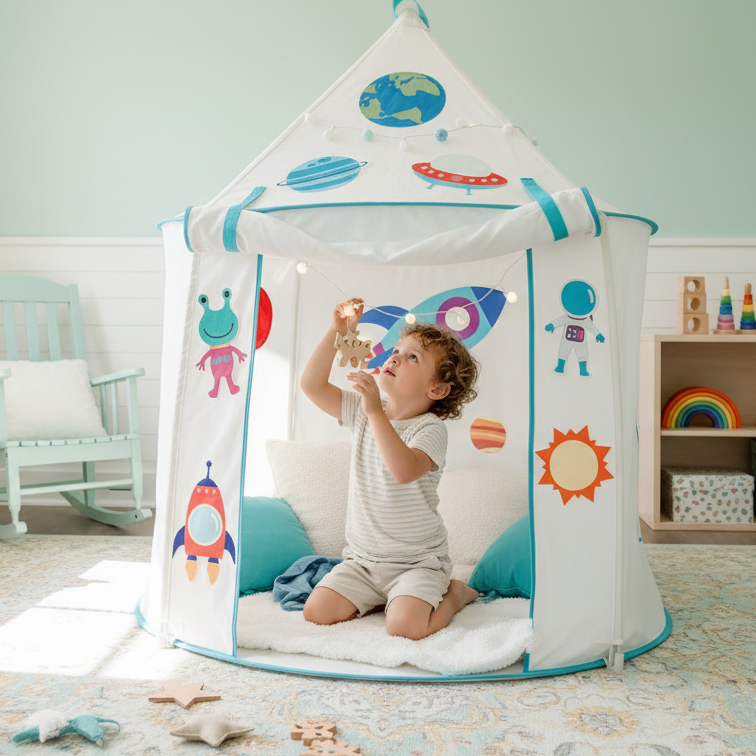
Flexible play systems—such as modular environments like ZeeZee Adventures—illustrate how space itself can become a tool for problem-solving. By allowing children to reconfigure their surroundings, these environments extend problem-solving beyond objects and into spatial thinking.
From Simple Play to Complex Thinking
At first, problem-solving in play may appear simple.
However, over time, these experiences become more complex.
Children begin to:
-
plan ahead
-
anticipate outcomes
-
evaluate different approaches
What begins as spontaneous exploration evolves into intentional thinking.
This gradual progression is one of the most powerful aspects of open-ended play.
Emotional Aspects of Problem-Solving
Problem-solving is not only cognitive but also emotional.
Children often experience frustration when something does not work. Open-ended play provides a safe context for navigating these emotions.
Instead of being given immediate solutions, children learn to manage:
-
frustration
-
uncertainty
-
persistence
These emotional skills are closely linked to effective problem-solving later in life.
Supporting Open-Ended Play at Home
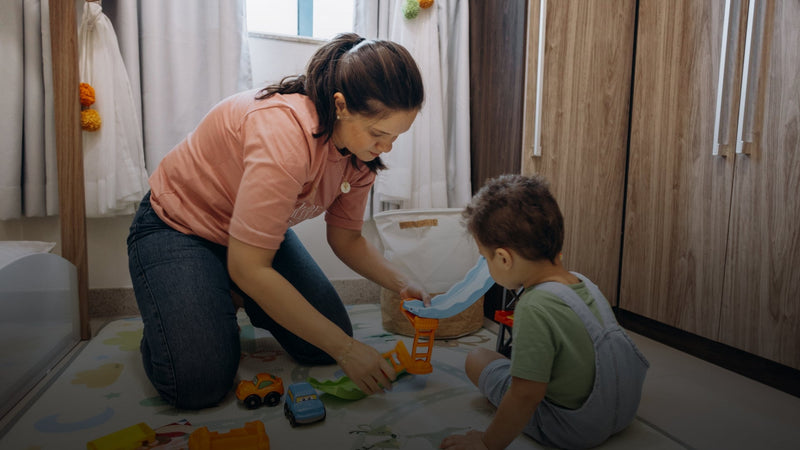
Parents can support problem-solving by creating environments that encourage open-ended play.
This does not require complex setups.
It involves:
-
offering flexible materials
-
allowing time for uninterrupted play
-
resisting the urge to intervene too quickly
Sometimes, the most effective support is simply allowing the child to think.
A Long-Term Perspective
The benefits of open-ended play extend far beyond childhood.
Children who develop strong problem-solving skills are better equipped to:
-
navigate challenges
-
think independently
-
adapt to new situations
These abilities are increasingly valuable in a rapidly changing world.
Conclusion: Where Problem-Solving Truly Begins
Problem-solving does not begin in classrooms or formal lessons.
It begins in moments of curiosity.
It begins when a child asks “what if” and is given the freedom to explore the answer.
Open-ended play provides that freedom.
It transforms simple activities into powerful learning experiences.
And within those experiences, children develop one of the most important skills they will carry throughout life—
the ability to think, adapt, and solve problems independently.



Comment (0)