

The Heart of Motherhood: Nurturing a Strong Emotional Connection Through Play
Motherhood is often spoken about in terms of responsibility. It is associated with routines, caregiving, teaching, protecting, and guiding children through daily life. Mothers spend countless hours preparing meals, organising schedules, solving problems, and ensuring that their children feel safe and supported. Yet beneath all of these visible responsibilities lies something far more powerful and lasting: emotional connection.
Children do not only need physical care in order to thrive. They need to feel emotionally secure, understood, valued, and deeply connected to the people raising them. Long before children fully understand language or logic, they understand emotional presence. They notice warmth in a parent’s voice, comfort in physical closeness, patience in moments of frustration, and joy in shared interaction. These emotional experiences quietly shape how children see themselves and how they understand relationships throughout life.
One of the most meaningful ways this emotional connection develops is through play.
Play may appear simple from an adult perspective, but for children it is one of the most important forms of communication and emotional expression. Through play, children explore the world, process experiences, express feelings, test ideas, and strengthen relationships. When mothers participate in play with genuine attention and emotional presence, children feel emotionally safe in a way that few other experiences can provide.
In many ways, play becomes the language of connection between parent and child.
Why Emotional Connection Matters So Much in Childhood
Emotional connection forms the foundation of healthy child development. Research in developmental psychology consistently shows that children who feel securely connected to caregivers tend to develop stronger emotional resilience, healthier self-esteem, and better social skills. They are often more confident exploring new situations because they feel emotionally supported and secure.
A strong emotional bond helps children develop:
- emotional regulation
- communication skills
- confidence and independence
- empathy and social understanding
- resilience during stressful situations
- trust in relationships
Children who feel emotionally connected to parents are more likely to approach challenges with confidence because they carry an internal sense of safety. They understand, even unconsciously, that support and comfort are available when needed.
Importantly, emotional connection is not built through perfection. Children do not need flawless parenting. They need consistent emotional presence. They need moments where they feel seen, heard, and emotionally understood.
Play naturally creates these moments.
Why Play Is More Than Entertainment
Adults often view play as something recreational or secondary to “important” activities such as learning or productivity. For children, however, play is one of the primary ways they understand life itself.
Through play, children experiment with emotions, relationships, creativity, and problem-solving. They replay experiences, imagine possibilities, and create meaning from the world around them.
A child pretending to run a shop is learning about communication and social interaction. A child building a fort is exploring independence, creativity, and control over space. A child inventing stories is practising emotional expression and imagination simultaneously.
Play allows children to process feelings they may not yet have the vocabulary to explain directly.
When mothers join children in these moments, something deeply important happens. The child experiences emotional attunement. They feel that their inner world matters to someone else.
This sense of emotional responsiveness strengthens attachment more than many parents realise.
Presence Matters More Than Perfection
Modern parenting often carries enormous pressure. Parents frequently feel expected to constantly educate, entertain, and optimise every moment of childhood. Social media and modern parenting culture can create unrealistic expectations about what meaningful parenting should look like.
Yet emotional connection rarely depends on elaborate activities or perfectly planned experiences.
Children are far more sensitive to presence than performance.
A mother who sits beside her child and fully engages in a simple game for fifteen minutes may strengthen emotional connection more deeply than hours spent distracted or multitasking nearby.
Children notice emotional availability. They notice eye contact, responsiveness, patience, and shared attention. When a parent enters a child’s world without rushing or distraction, the child receives an important emotional message:
“You are important to me.”
This message becomes part of the child’s emotional foundation.
Child-Led Play Strengthens Trust
One of the most effective ways to nurture emotional connection through play is to allow the child to lead the experience.
In child-led play, the parent follows the child’s ideas instead of controlling every outcome. The child chooses the story, the direction, or the imaginative world, while the parent participates with curiosity and openness.
This approach strengthens emotional security because children feel respected and heard. Instead of constantly being instructed or corrected, they experience collaboration and emotional freedom.
Child-led play also gives mothers valuable insight into a child’s emotional world. Children often reveal fears, interests, frustrations, and hopes indirectly through imaginative play.
A child pretending a toy is scared may be expressing anxiety. A child repeatedly acting out rescue scenarios may be exploring feelings about safety or protection.
Play becomes a window into emotions that children may struggle to communicate verbally.

The Importance of Shared Laughter
Laughter plays an extraordinary role in emotional bonding.
Moments of shared joy reduce stress and strengthen feelings of closeness between parent and child. During playful interaction, both children and parents experience emotional release and connection simultaneously.
These moments do not need to be complicated.
Laughing during a made-up story.
Building something silly together.
Pretending to be animals.
Inventing games before bedtime.
Simple moments of joy often become emotionally significant memories for children.
Shared laughter also teaches children that relationships can feel safe, flexible, and emotionally warm. These experiences quietly shape how children approach future relationships throughout life.
Why Modern Life Makes Emotional Connection Harder
Modern family life often moves at an exhausting pace. Parents balance work, responsibilities, household management, and constant digital distractions. Children themselves are frequently overscheduled with activities, school demands, and screen-based entertainment.
Even when families spend time together physically, emotional attention can become divided.
Play requires something that modern life rarely encourages:
slowness.
Children naturally connect through unhurried interaction. They need moments where they do not feel rushed, managed, or interrupted constantly.
This does not mean parents must spend endless hours playing every day. Emotional connection is often built through small but fully present moments.
Ten uninterrupted minutes of meaningful play may have more emotional value than an entire distracted afternoon spent nearby.
Imaginative Spaces Encourage Emotional Closeness
Environment influences emotional interaction more than many people realise.
Children tend to engage more openly in spaces that feel calm, safe, and comforting. Small imaginative environments often encourage deeper emotional connection because they create a sense of intimacy and security.
Reading corners, blanket forts, soft play spaces, and imaginative retreats frequently become places where children feel emotionally relaxed and expressive.
These environments reduce outside distractions and allow both parent and child to focus more fully on shared interaction.
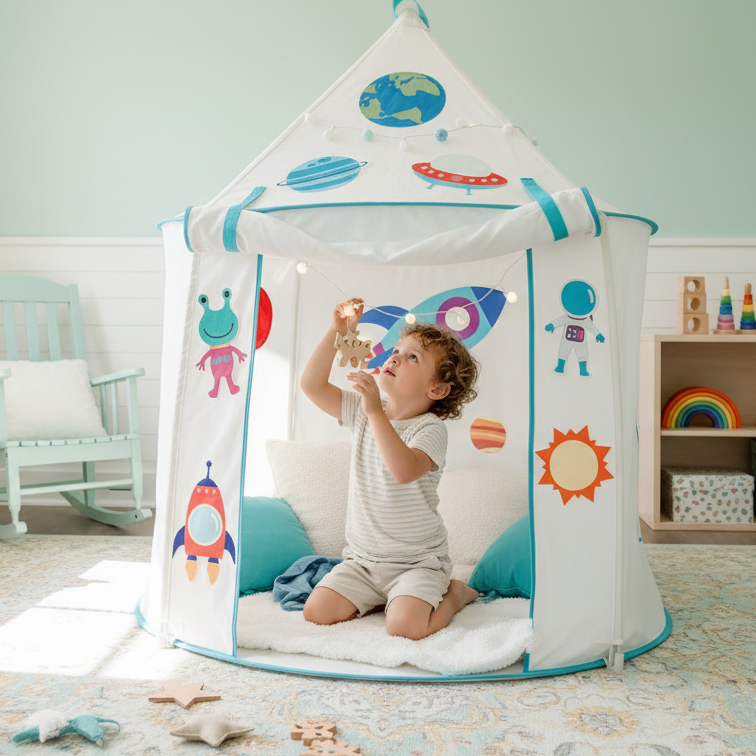
This is one reason flexible play environments like ZeeZee Adventures often become emotionally meaningful within families. Rather than functioning as fixed entertainment, they create adaptable spaces where storytelling, reading, imaginative play, and emotional closeness can unfold naturally over time.
Children often associate these spaces not only with fun, but with feelings of comfort and connection.
Emotional Regulation Through Play
Young children are still learning how to understand and manage emotions. Frustration, disappointment, fear, excitement, and sadness can feel overwhelming because children have not yet developed full emotional regulation skills.
Play creates a safe emotional environment where these feelings can be explored gradually.
Pretend play, storytelling, role-play, and creative activities allow children to rehearse emotional experiences in manageable ways. They can experiment with conflict, bravery, disappointment, or comfort through imagination.
When mothers participate calmly and supportively, children learn emotional regulation indirectly.
They observe:
- patience
- problem-solving
- empathy
- reassurance
- flexibility
These interactions teach emotional skills far more effectively than lectures alone.
Why Open-Ended Play Deepens Connection
Highly structured toys often limit interaction because the toy itself directs the experience.
Open-ended play works differently. It requires imagination, participation, and collaboration.
Building together, inventing stories, creating imaginary worlds, drawing, crafting, or role-playing encourages ongoing interaction between parent and child because there is no fixed outcome.
The relationship itself becomes part of the experience.
Open-ended play also allows children to revisit the same ideas repeatedly while adapting them over time. This continuity creates stronger emotional engagement because the experience evolves alongside the child’s imagination and emotional development.
Eye Contact, Listening, and Emotional Attunement
Small interactions during play carry enormous emotional significance.
Eye contact.
Attentive listening.
Responding enthusiastically.
Following a child’s ideas.
These moments communicate emotional attunement — the feeling of being emotionally understood and acknowledged.
Children feel secure when they sense that a parent is genuinely present with them rather than partially distracted.
In highly distracted modern environments, these moments can become surprisingly rare. Which is why intentional play often feels so meaningful to children.
It offers focused emotional attention in a world full of interruptions.
The Role of Routine in Emotional Connection
Consistent routines also support emotional bonding. Small rituals built around play create predictability and security for children.
Examples include:
- bedtime storytelling
- evening drawing time
- weekend imaginative games
- shared reading routines
- quiet play before sleep
These repeated experiences become emotionally grounding because children begin to associate them with comfort, safety, and connection.
Over time, routines create emotional memory.
Children may forget specific toys or activities, but they often remember how certain moments made them feel.
Why Emotional Connection Shapes Future Relationships
The emotional bonds children experience early in life influence how they approach relationships later.
Children who experience emotional warmth, responsiveness, and secure attachment are often more capable of:
- trusting others
- expressing emotions healthily
- forming stable relationships
- managing conflict constructively
- showing empathy
The way mothers respond during everyday interactions — including play — quietly teaches children what emotional connection feels like.
These lessons stay with them long after childhood ends.
Letting Go of Perfection
One of the most important things mothers can remember is that emotional connection does not require perfection.
There will be stressful days. Busy schedules. Moments of exhaustion and distraction.
What matters most is not flawless parenting, but repair and consistency over time.
Children do not need constant entertainment or endless activities. They need emotional availability. They need moments where they feel safe enough to express themselves freely and loved enough to know their feelings matter.
Often, the simplest forms of play become the most emotionally meaningful.
A quiet conversation during colouring.
A shared story before bedtime.
An imaginary adventure created together.
These moments may appear small, but they become part of the child’s emotional foundation.
The Lasting Power of Play
Play is often underestimated because it looks simple.
But within play, children build trust, emotional security, creativity, resilience, and connection simultaneously.
For mothers, play offers something profound: a way to enter a child’s emotional world without pressure or performance.
Through shared play, children feel accepted, understood, and emotionally safe. These experiences shape not only childhood memories but the emotional patterns children carry throughout life.
Long after specific toys are forgotten, children often remember how they felt during moments of closeness, warmth, laughter, and attention.
Because at the heart of motherhood is not only guidance or protection.
It is a connection.
And sometimes the deepest connections are built in the quietest moments of play.
- Baby Registry
- Baby Shower
- Best gifts
- best play tent
- Best toys
- Blog
- calming toys
- child development
- children
- christmas gift ideas
- customizable play tent
- gift for kids ages 3–8
- Holidaygiftguide
- jeanpiaget
- kids play tent
- Montesoori
- montessori
- Montessori Gifts
- Montessori play
- open-endedplay
- openendedplay
- parenting
- parents
- play tent
- Play Tents
- playroom inspo
- pretend play
- sahm
- Sensory Play
- sensory play gifts
- teepee play tent
- toddler toys
- tonies
- toyclutter
- toys
- ZeeZee
- ZeeZee Adventure
- ZeeZee Adventure Tent
- ZeeZee Adventures






Comment (0)