

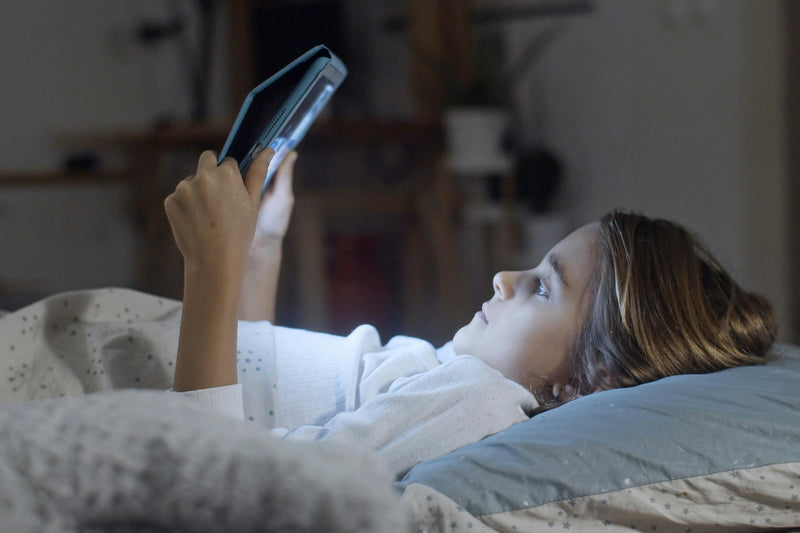
What Happens to a Child’s Brain After Too Much Screen Time?
Screens have become woven into modern childhood.
They entertain during long car rides, calm restless moments, fill waiting rooms, and provide quick distractions during busy days. For many families, screens are no longer occasional tools. They are part of daily life.
Children today are growing up surrounded by phones, tablets, televisions, gaming systems, and digital platforms that compete constantly for attention. In many ways, this has changed the rhythm of childhood itself.
Parents often notice subtle shifts after long periods of screen use. A child may become more irritable when the screen is removed, struggle to focus on slower activities, or move quickly from boredom to frustration. Sleep patterns may change. Attention may feel shorter. Emotional regulation may become more difficult.
These observations have led many families to ask an increasingly important question:
What actually happens to a child’s brain after too much screen time?
The answer is more nuanced than many headlines suggest. Screens themselves are not inherently harmful. Technology can support learning, creativity, and connection when used intentionally. However, excessive or highly stimulating screen exposure can influence how a child’s developing brain processes attention, emotion, reward, and focus.
Childhood is a period of extraordinary neurological development. During these years, the brain is constantly adapting to repeated experiences and environmental patterns. What children repeatedly engage with helps shape how the brain develops over time.
This means screen habits matter not because screens “damage” the brain directly, but because they influence the types of experiences the brain becomes accustomed to.
The Developing Brain Is Highly Adaptable
Children’s brains are designed to adapt rapidly.
This process, known as neuroplasticity, allows the brain to strengthen certain neural pathways based on repeated experiences. When children practise language, movement, creativity, emotional interaction, or problem-solving, the brain strengthens the networks involved in those activities.
The same principle applies to digital stimulation.
Fast-moving videos, rapid scene changes, constant novelty, bright colours, notifications, rewards, and endless scrolling create a very specific kind of sensory experience. Over time, the brain begins adapting to this pattern of stimulation.
The challenge is that many digital experiences are designed to maximise engagement rather than encourage deep concentration.
This can affect how children respond to slower, quieter, and less stimulating environments.
Attention and the Brain’s Reward System
One of the most significant effects of excessive screen exposure relates to attention.
Many digital platforms are intentionally designed around instant feedback. A tap creates a response immediately. Videos change rapidly. Games reward actions quickly. Social platforms constantly introduce novelty.
This activates the brain’s reward system, particularly the release of dopamine, which plays an important role in motivation and pleasure.
Dopamine itself is not harmful. It is essential for learning and engagement. However, when children become highly accustomed to rapid cycles of stimulation and reward, slower activities can begin to feel less satisfying by comparison.
Reading a book.
Building something slowly.
Listening carefully.
Engaging in imaginative play.
These experiences require sustained mental effort without immediate reward.
After long periods of fast digital stimulation, the brain may struggle to remain engaged in slower experiences because it has adapted to expecting frequent novelty.
This is one reason many parents notice shorter attention spans after heavy screen use.
The issue is not that children lose the ability to focus permanently. It is that the brain adapts temporarily to the pace of stimulation it experiences most often.
Why Overstimulation Affects Emotional Regulation
Children’s nervous systems are still developing.
Young brains are less capable of filtering sensory input efficiently, which means highly stimulating experiences can become overwhelming more easily.
Many digital experiences combine:
- rapid visual movement
- constant sound
- bright colours
- immediate feedback
- fast pacing
- emotional intensity
This level of stimulation can leave the nervous system in a heightened state of alertness.
As a result, children may appear emotionally dysregulated after extended screen use. Parents often observe:
- irritability
- frustration when screens are removed
- emotional outbursts
- restlessness
- difficulty transitioning to quieter activities
This happens because the brain and body are adjusting from a high-stimulation environment back to a lower-stimulation one.
In some ways, it is similar to the emotional difficulty adults feel when abruptly shifting from highly stimulating experiences to silence or stillness.
Children simply experience this transition more intensely because emotional regulation systems are still developing.
Sleep and Brain Development
One of the most researched concerns around excessive screen use is sleep disruption.
Sleep plays an essential role in brain development. During sleep, children’s brains consolidate learning, regulate emotion, strengthen memory, and support overall cognitive functioning.
Excessive screen use can interfere with sleep in several ways.
Firstly, highly stimulating content increases mental arousal, making it harder for children to settle emotionally before bedtime.
Secondly, blue light emitted from screens can interfere with melatonin production, the hormone that helps regulate sleep cycles.
Poor sleep can then affect:
- attention
- emotional regulation
- memory
- mood
- learning capacity
This creates a cycle where overstimulation affects sleep, and poor sleep further reduces the brain’s ability to regulate attention and emotion effectively.
The Difference Between Passive and Active Engagement
Not all screen use affects the brain in the same way.
Passive consumption, particularly fast-paced entertainment, tends to impact attention differently from active, creative, or socially interactive digital experiences.
For example, there is a difference between:
- endlessly scrolling short videos
- creating digital artwork
- video calling family members
- watching educational content thoughtfully
- using technology collaboratively
The brain responds differently depending on whether the child is actively participating or passively consuming stimulation.
However, even educational content can become problematic when screen exposure replaces essential developmental experiences such as physical play, imaginative exploration, emotional interaction, movement, or unstructured boredom.
Children’s brains require a balance of experiences to develop fully.

Why Imaginative Play Matters for Brain Development
One of the biggest concerns around excessive screen use is not only what screens provide, but what they may replace.
Imaginative play supports some of the most important areas of neurological development.
Through open-ended play, children strengthen:
- problem-solving skills
- language development
- emotional regulation
- social understanding
- cognitive flexibility
- creativity
- sustained attention
Unlike screen-based entertainment, imaginative play requires children to generate ideas internally.
A child creating a pretend world must actively direct attention, build narratives, regulate emotions, and solve problems continuously.
This process strengthens deeper cognitive engagement.
Open-ended play environments, such as imaginative forts, reading spaces, or adaptable play areas like ZeeZee Adventures, are particularly valuable because they encourage immersion rather than passive consumption. Children create stories, invent roles, and remain mentally involved for extended periods because the experience depends entirely on their imagination.
These slower, self-directed experiences help rebalance attention systems that may become overstimulated through excessive digital input.
The Role of Boredom in Healthy Brain Development
Modern technology has made boredom increasingly rare.
The moment discomfort or restlessness appears, stimulation is immediately available.
Yet boredom serves an important neurological purpose.
When children are not externally entertained, the brain begins searching internally for engagement. This process stimulates imagination, reflection, curiosity, and creativity.
Many meaningful forms of play begin after boredom.
Without opportunities for boredom, children may become increasingly dependent on external stimulation for emotional regulation and engagement.
This can make quiet concentration more difficult over time.
Allowing children moments of unstructured downtime helps strengthen the brain’s ability to generate attention internally rather than relying entirely on external stimulation.
Social Development and Face-to-Face Interaction
Children’s brains develop socially through human interaction.
Eye contact, facial expressions, tone of voice, emotional responsiveness, and conversation all help strengthen social and emotional processing systems.
Excessive screen use may reduce opportunities for these experiences if digital interaction consistently replaces real-world connection.
Young children especially learn emotional understanding through observing and participating in face-to-face relationships.
Shared play, conversation, storytelling, and emotional interaction all strengthen neural systems connected to empathy, communication, and social regulation.
This is why emotionally connected play experiences remain so important during childhood.
Why Physical Movement Matters for the Brain
Children’s brains are deeply connected to movement.
Running, climbing, balancing, building, and physical exploration support neurological development in ways screens cannot fully replicate.
Movement helps strengthen:
- coordination
- sensory processing
- attention regulation
- emotional regulation
- executive functioning
Excessive screen time often reduces opportunities for active movement, particularly when long periods of sitting replace physical play.
The brain develops most effectively through varied sensory and physical experiences rather than prolonged passive input.
The Brain Can Recover Through Balance
Perhaps the most encouraging reality is that children’s brains remain highly adaptable.
This means attention, emotional regulation, and engagement patterns can improve significantly when environments and routines become more balanced.
Children benefit enormously from:
- reduced overstimulation
- consistent routines
- better sleep
- imaginative play
- outdoor exploration
- physical movement
- emotionally connected interaction
- slower activities that require sustained focus
The goal is not necessarily to eliminate screens entirely.
It is to create healthier relationships with stimulation.
Children’s brains thrive when they experience balance between digital interaction and real-world engagement.
A Different Way to Think About Screen Time
The conversation around screen time often becomes overly simplistic.
Screens are not automatically harmful, nor are they entirely harmless.
What matters most is:
- how screens are used
- how much stimulation children receive
- what experiences screens may be replacing
- whether children still experience balance, movement, connection, and imaginative exploration
The real concern is not technology itself.
It is overstimulation.
Children’s brains need moments of quiet concentration, boredom, creativity, movement, and emotional connection in order to develop fully.
When screens dominate childhood experiences, these essential forms of development may gradually receive less space.
Conclusion
Too much screen time does not “ruin” a child’s brain.
But excessive stimulation can influence how the developing brain processes attention, emotion, focus, reward, and regulation.
Children’s brains adapt to the experiences they encounter most frequently.
When childhood becomes dominated by fast-moving stimulation, slower forms of concentration and creativity may begin to feel more difficult.
The encouraging news is that balance matters more than perfection.
Calmer routines.
Open-ended play.
Outdoor exploration.
Meaningful conversation.
Imaginative spaces.
Time without constant stimulation.
These experiences help restore the kinds of deep engagement children’s brains naturally need.
Because ultimately, healthy brain development is not about removing every screen.
It is about making sure children still have enough space to imagine, connect, move, explore, and think deeply beyond them.
- Baby Registry
- Baby Shower
- Best gifts
- best play tent
- Best toys
- Blog
- calming toys
- child development
- children
- customizable play tent
- Holidaygiftguide
- jeanpiaget
- kids play tent
- Montesoori
- montessori
- Montessori Gifts
- Montessori play
- open-endedplay
- openendedplay
- parenting
- parents
- play tent
- Play Tents
- playroom inspo
- pretend play
- sahm
- Sensory Play
- sensory play gifts
- teepee play tent
- toddler toys
- tonies
- toyclutter
- toys
- ZeeZee
- ZeeZee Adventure
- ZeeZee Adventure Tent
- ZeeZee Adventures






Comment (0)