
The Real Reason Kids Jump From Toy to Toy
Every parent has experienced it. A new toy arrives at home and instantly becomes the centre of attention. For a few days, sometimes even weeks, it feels magical. Children carry it everywhere, talk about it constantly, and seem completely absorbed in playing with it. Then suddenly, the excitement fades. The toy gets left in a corner while attention moves somewhere else. Soon another toy replaces it, only for the exact same cycle to happen again.
Many parents assume this happens because children naturally have short attention spans or constantly want something new. But child development research suggests something deeper is happening. Children do not necessarily jump from toy to toy because they are incapable of focus. Often, they lose interest because many modern toys stop offering enough possibilities for imagination and exploration. The issue is not always the child’s attention. Sometimes the play itself simply runs out too quickly.
Why Novelty Fades So Quickly
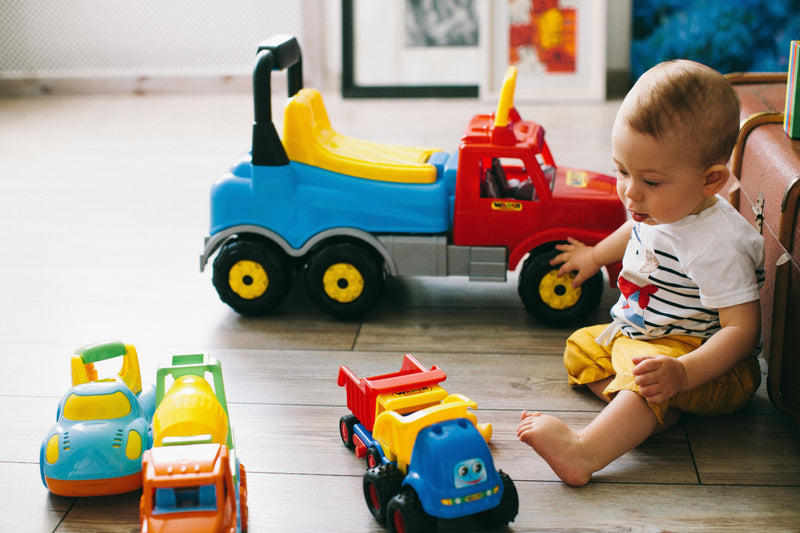
Children’s brains are naturally wired for curiosity. From infancy, they learn by exploring, experimenting, and discovering new possibilities. When a child receives a new toy, the brain responds strongly to novelty. The excitement comes from discovering how the toy works and what it can do. However, many toys are designed around fixed interaction. A battery-powered toy repeats the same sounds and movements. A puzzle has only one correct solution. A themed toy follows one predictable storyline.
Once children fully understand everything the toy can do, the sense of discovery begins to disappear. Psychologists often refer to this as novelty decay — the natural reduction of excitement once something becomes predictable. This does not mean children cannot focus for long periods. It often means the toy no longer provides enough room for imagination or creativity to continue evolving.
Key Insight:
- Children crave possibilities more than constant novelty.
- Predictable toys lose engagement faster.
- Imagination keeps play interesting for longer.
Entertainment vs Meaningful Engagement
Many modern toys are built to entertain children instantly. Lights flash, sounds play automatically, and buttons provide immediate reactions. These toys are excellent at capturing attention quickly because the stimulation comes directly from the toy itself. But capturing attention is not the same as sustaining meaningful engagement.
Deep engagement requires children to actively participate. It asks them to contribute ideas, stories, and imagination instead of simply reacting to stimulation. This is why children often remain interested in surprisingly simple objects for long periods of time. A cardboard box can become a pirate ship, a castle, or a racing car depending entirely on the child’s imagination. The object itself remains simple, but the play experience changes constantly because the child continues creating new possibilities.
Why Simpler Toys Often Work Better:
- They encourage storytelling.
- They allow children to create their own rules.
- They support longer imaginative play sessions.
- They grow alongside the child’s creativity.
Why Open-Ended Toys Hold Attention Longer
Open-ended toys support play differently because they do not tell children exactly how to use them. Instead of controlling the experience, they invite imagination and interpretation. Toys such as building blocks, art materials, dolls, figurines, pretend-play accessories, and forts all encourage children to invent their own worlds.
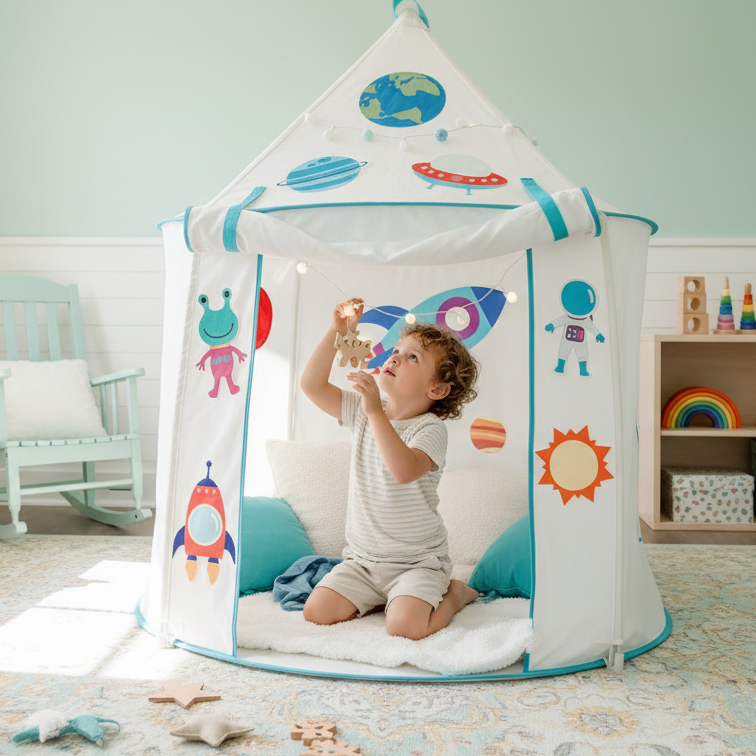
A simple play tent may become a reading corner one day and a secret jungle cave the next. Building blocks may become a city, a zoo, or a spaceship. Because the possibilities remain endless, children continue returning to the same toy repeatedly without the play becoming repetitive.
This is one reason open-ended play environments often support deeper engagement. Flexible, imaginative spaces such as ZeeZee Adventures encourage children to create evolving stories rather than follow fixed instructions. Instead of acting as a single-purpose toy, the environment itself becomes part of the child’s imagination.
Open-Ended Play Supports:
- Creativity
- Problem-solving
- Independent thinking
- Emotional expression
- Longer concentration spans
Why Too Many Toys Can Reduce Focus
When children lose interest in toys quickly, the natural instinct is often to buy more. Parents may believe that more variety will keep children entertained longer. Surprisingly, research suggests the opposite may happen.
Studies have shown that children often play more creatively when they have fewer toys available. Too many options can overwhelm attention. Instead of fully immersing themselves in one activity, children begin moving rapidly between toys seeking constant stimulation.
This creates shallow engagement rather than deep play.
A cluttered playroom filled with endless choices can make it harder for children to settle into imaginative concentration. Calmer environments with fewer distractions often encourage longer periods of meaningful play.
Children Tend to Focus Better When:
- Play spaces are less cluttered.
- Toys are organised and rotated.
- There are fewer distractions.
- Playtime feels calm and unhurried.
Why Modern Childhood Makes Deep Play Harder
Modern childhood is filled with stimulation. Children move between screens, fast-paced entertainment, noisy toys, notifications, and constant sensory input throughout the day. As a result, many become accustomed to rapid novelty and immediate rewards.
This affects how the brain responds to slower forms of play.
Independent imaginative play requires children to generate stimulation internally rather than receiving it externally. It asks them to create stories, invent games, and remain mentally involved without instant feedback. This ability develops gradually through practice.
When children constantly receive fast stimulation, slower forms of play can initially feel less exciting. This does not mean imagination has disappeared. It simply means the brain has adapted to expecting quicker rewards.
Why Boredom Is Actually Important
Many parents see boredom as something negative that should be solved immediately. But boredom plays a surprisingly important role in development. When children are not instantly entertained, the brain begins searching internally for stimulation. This process encourages creativity, imagination, and curiosity.
At first, boredom often looks uncomfortable. Children may complain or wander around, unsure of what to do. But if given time and space instead of immediate distraction, many eventually begin inventing games, creating stories, or building imaginative worlds.
Boredom is often the starting point for deeper creativity.
Healthy Boredom Encourages:
- Independent play
- Creative thinking
- Imagination
- Emotional resilience
- Problem-solving
The Importance of Deep Play
Deep play happens when children become fully absorbed in their own imagination and ideas. During these moments, they lose track of time because they are mentally immersed in the experience they are creating.
This kind of play supports:
- Concentration
- Emotional regulation
- Storytelling ability
- Creativity
- Cognitive flexibility
- Independence
Deep play often unfolds slowly and requires uninterrupted time. Unfortunately, modern environments interrupt it constantly through screens, schedules, and overstimulation. Yet these immersive moments remain one of the healthiest forms of cognitive engagement children can experience.
Environment Shapes Play Behaviour
The physical environment influences play far more than many parents realise. Highly cluttered spaces filled with excessive stimulation can overwhelm children’s attention. When everything competes for focus, meaningful engagement becomes harder.
Children often play more deeply in spaces that feel:
- Calm
- Organised
- Comfortable
- Flexible
- Emotionally safe
Interestingly, children do not necessarily need huge playrooms. They need environments that invite imagination and concentration. Small cosy forts, reading corners, and adaptable imaginative spaces frequently encourage the deepest forms of play because they create a sense of immersion.
A Different Way to Think About Toys
Perhaps children are not naturally becoming more distracted.
Perhaps many toys simply leave too little room for imagination.
The toys children return to repeatedly are often not the loudest or most technologically advanced. They are the toys and environments that continue evolving alongside the child’s creativity.
A blanket becomes a mountain cave.
A fort becomes a spaceship.
A simple tent becomes an entire imaginary world.
Because the possibilities remain open, the play continues to feel meaningful.
What Children Actually Need
Children do not necessarily need more toys. They need more opportunities for creativity, storytelling, exploration, and independent imagination. They need play experiences that invite them to become active creators rather than passive consumers of entertainment.
When children have:
- open-ended toys
- uninterrupted playtime
- calmer environments
- space for boredom
- opportunities for imagination
they often develop deeper focus and longer-lasting engagement naturally.
Because ultimately, the toys that hold attention longest are rarely the ones that do everything for the child.
They are the ones that leave room for the child to do the imagining themselves.
- Baby Registry
- Baby Shower
- Best gifts
- best play tent
- Best toys
- Blog
- calming toys
- child development
- children
- christmas gift ideas
- customizable play tent
- Holidaygiftguide
- jeanpiaget
- kids play tent
- Montesoori
- montessori
- Montessori Gifts
- Montessori play
- open-endedplay
- openendedplay
- parenting
- parents
- play tent
- Play Tents
- playroom inspo
- pretend play
- sahm
- Sensory Play
- sensory play gifts
- teepee play tent
- toddler toys
- tonies
- toyclutter
- toys
- ZeeZee
- ZeeZee Adventure
- ZeeZee Adventure Tent
- ZeeZee Adventures




Comment (0)